
Peak Martech: Has the Great Software Explosion Finally Reached Its Zenith?
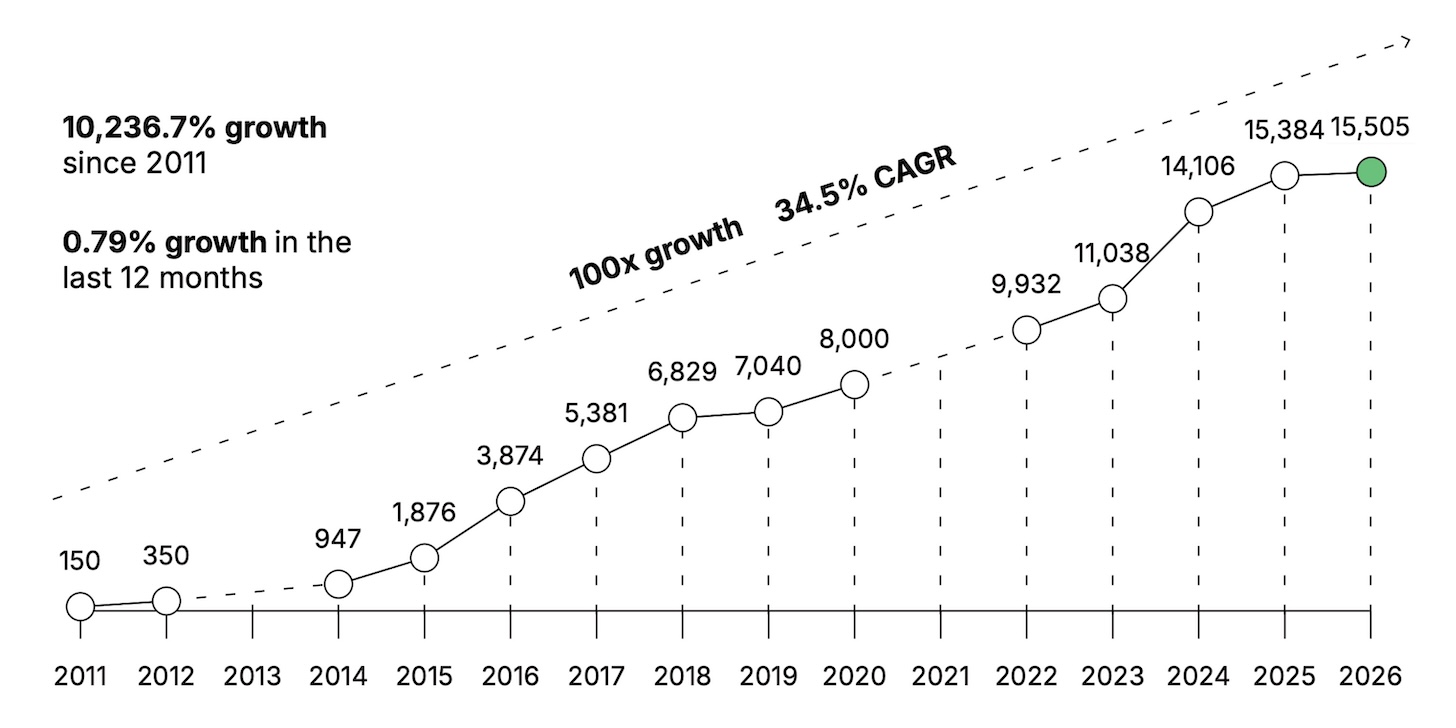
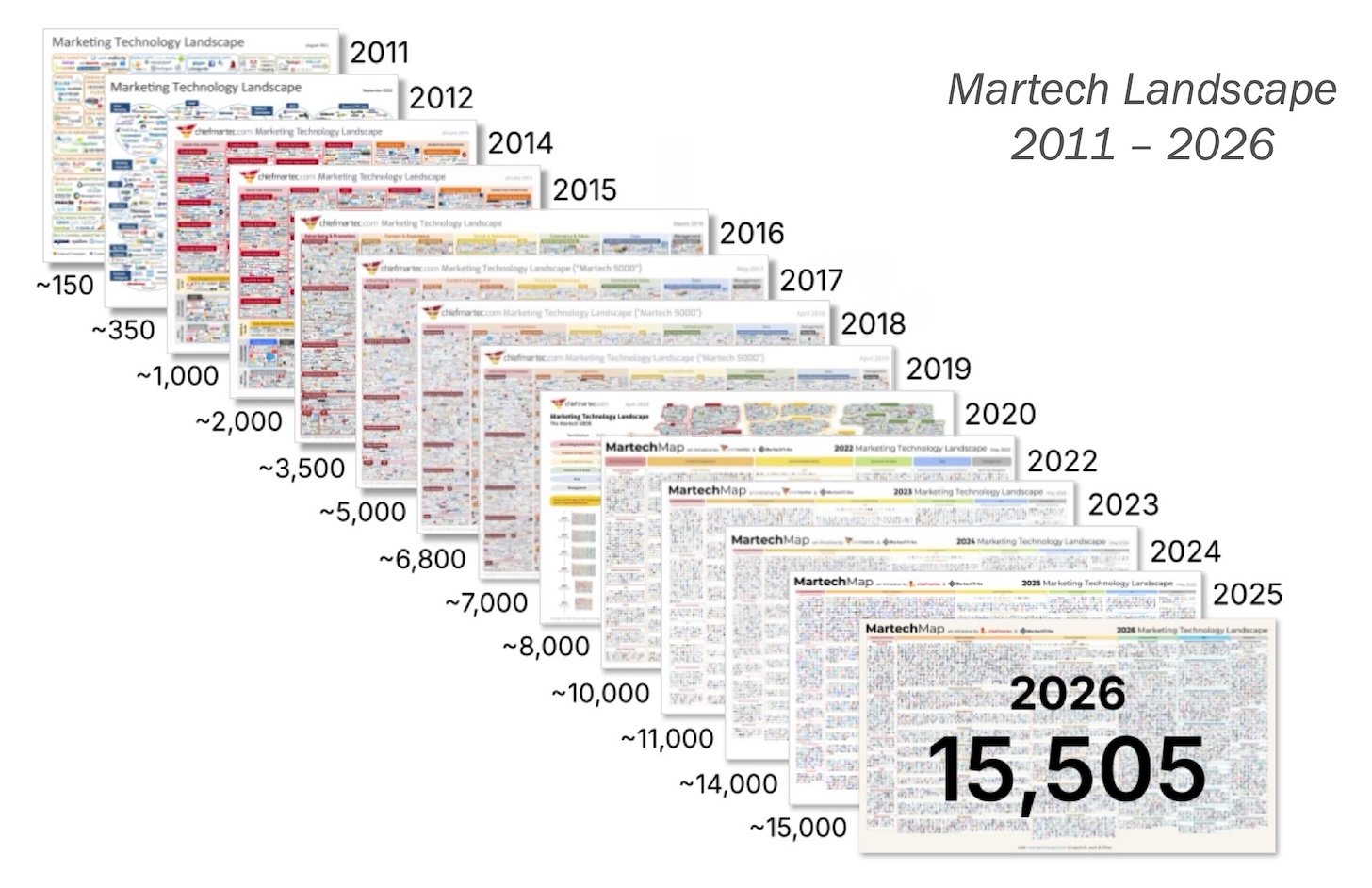
For fifteen years, the marketing technology industry has operated under a singular, relentless mandate: "More." More categories, more logos, more venture capital, and more existential complexity for the CMO tasked with managing a ballooning stack. Since 2011, when the industry consisted of a manageable 150 solutions, the sector has defied gravity, growing over 100-fold to become a sprawling, digital ecosystem that has long seemed impervious to the laws of market consolidation.
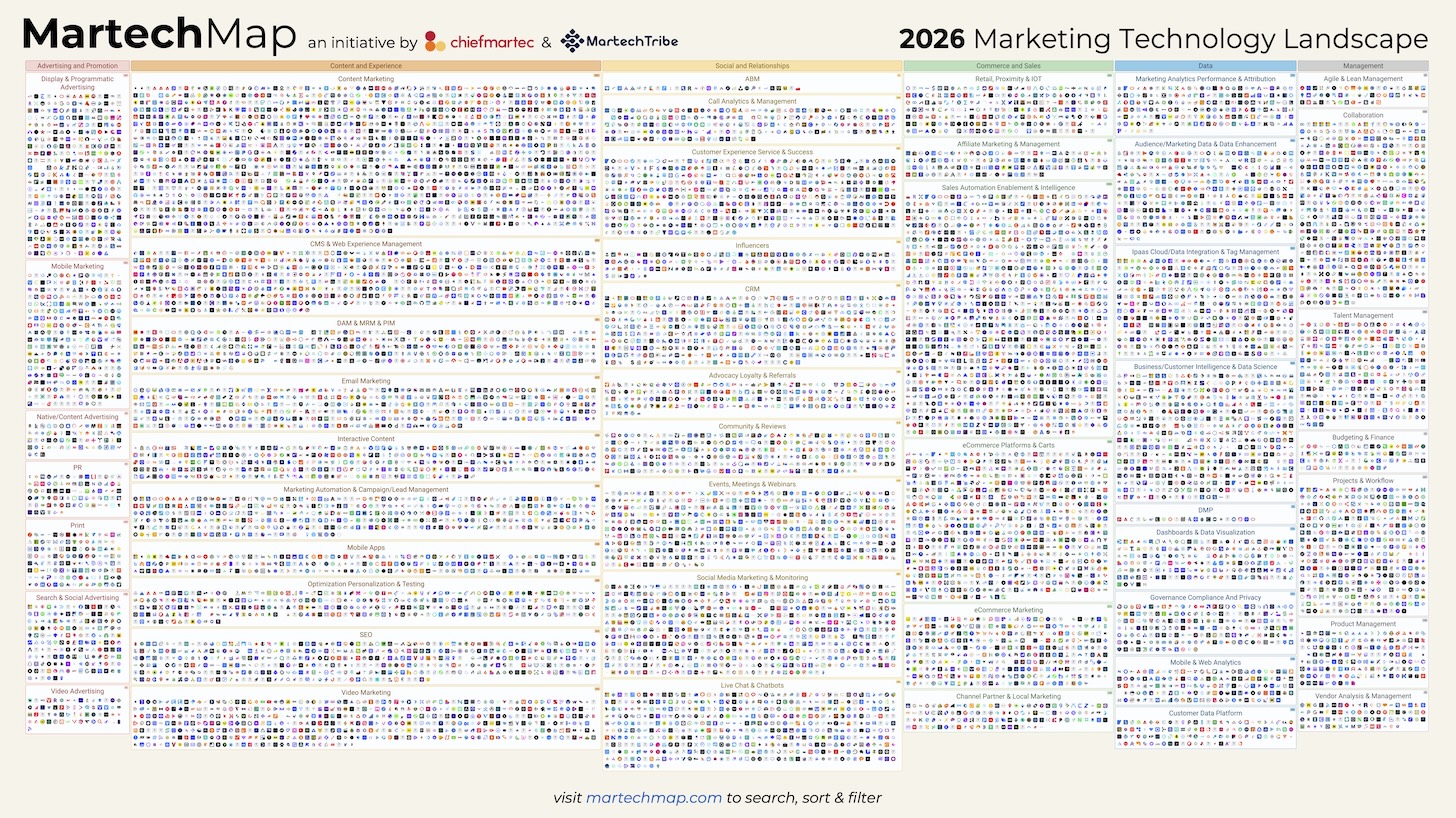
But in 2026, the narrative has shifted. With the release of the annual Marketing Technology Landscape, the data suggests that the era of explosive, unchecked growth has come to a definitive halt. For the first time, we are witnessing a "Peak Martech" moment—a plateau that signals not the death of innovation, but a profound transformation in how software is built, consumed, and discarded.
The State of the Landscape: A Statistical Stagnation
The numbers are sobering for those accustomed to exponential curves. The 2026 Marketing Technology Landscape now tracks exactly 15,505 products. While this is technically an increase from the 15,384 products identified in 2025, the net gain of 121 products represents a growth rate of just 0.79%. In a market that has historically doubled or tripled in size over short windows, this is, for all intents and purposes, a flat line.
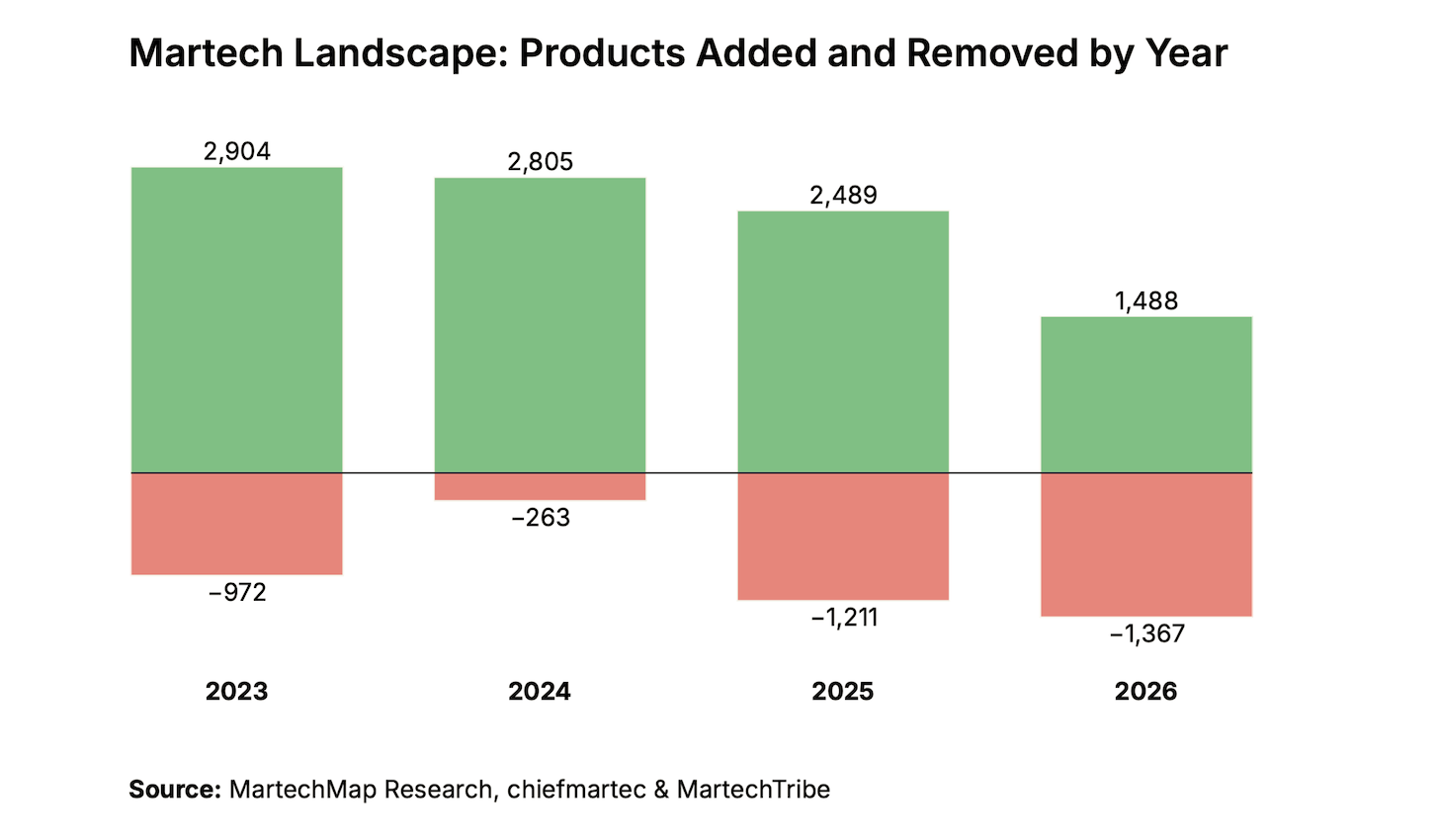
However, viewing this as a period of inactivity would be a grave analytical error. The "flat" headline masks a violent, churning undercurrent. This year, the landscape saw the addition of 1,488 new products—a staggering number in any other industry—but that figure was nearly offset by the removal of 1,367 products.
This churn represents a 40% decline in new market entrants compared to the previous year, coupled with a 13% increase in exits. We are no longer looking at a "land grab" phase where the objective is simply to occupy a space on the map. We are witnessing a shakeout, a maturation of the market where the barrier to entry has shifted from "can you build it?" to "can you sustain it?"
Chronology of a Market Shift
To understand how we reached this plateau, we must look at the trajectory of the last decade.
- 2011-2015: The Infrastructure Era. This period saw the foundational explosion. As companies shifted to digital-first models, the demand for CRM, email marketing, and web analytics created a vacuum that hundreds of startups rushed to fill.
- 2016-2020: The Proliferation Era. The stack grew more complex as niche tools emerged to solve specific friction points—customer data platforms (CDPs), advanced attribution, and social listening tools became standard.
- 2021-2024: The AI Gold Rush. The arrival of generative AI triggered a massive surge in "AI wrappers"—thin layers of software built atop foundational models. These products inflated the landscape, creating the appearance of continued growth while masking the underlying instability of many of these ventures.
- 2025-2026: The Rationalization Era. This current phase is defined by "The Great Squeeze." Incumbents are now bundling AI features directly into their suites, effectively rendering many smaller, point-solution startups redundant. Simultaneously, buyers are suffering from "subscription fatigue" and are actively consolidating their stacks to reduce costs and complexity.
Data Deep-Dive: Who is Exiting and Why?
The attrition rate provides a clear window into the state of the market. The largest cohort of departures (51.7%) came from the first wave of SaaS companies launched between 2010 and 2019. These are not merely failed AI experiments; these are established, mid-market companies that simply ran out of runway.
The data reveals a clear profile of the "at-risk" organization:
- Revenue Squeeze: 45.5% of removed products fell within the $1M–$10M annual revenue bracket.
- Size Vulnerability: Nearly 80% of the exiting companies had 50 employees or fewer.
These firms are victims of a pincer movement. From above, massive incumbents are integrating AI capabilities that neutralize the value proposition of niche tools. From below, agile, AI-native startups are launching with leaner cost structures and better UX, out-innovating the older, legacy SaaS players. The middle-market martech firm, once considered the "goldilocks" zone of growth, is currently the most endangered species in the industry.
The Paradox of Growth: The Rise of the Mature Category
While the total number of products has plateaued, specific sectors are seeing a resurgence. This reveals a critical insight: AI is not just creating new categories; it is breathing new life into old ones.
CMS and Web Experience Management grew by 21.4% (504 to 612 products), and Ecommerce Platforms saw a 19.9% increase. These are among the most "mature" sectors in the entire landscape. Why the sudden spike? The answer lies in the shift toward "Context Engineering."
For decades, web design was centered on the human visitor. Today, websites must cater to a third audience: the machine. As AI search assistants, procurement agents, and shopping bots become the primary interface through which consumers interact with the web, the demand for structured, machine-readable data has exploded. Companies are scrambling to re-architect their CMS and Ecommerce backends to be "AI-ready," creating a new wave of demand for platforms that can facilitate this transition.
Implications: The New Rules of Engagement
What does this mean for the CMO? The "more is better" philosophy is officially dead. In its place, we are entering an era of "curation and connectivity."
1. The Death of the Point Solution
Unless a tool offers an extraordinary, defensible advantage, its days are numbered. Buyers are no longer interested in managing a "Best-of-Breed" stack that includes 100 disparate tools. They are seeking platforms that can handle the connective tissue—iPaaS, data integration, and governance. This is reflected in the 8% growth in integration and 7.1% growth in privacy/governance tools.
2. Context is King
The value of a marketing tool in 2026 is no longer just its feature set, but its ability to provide high-fidelity context to AI agents. Whether it is an AI concierge in an ecommerce store or an internal lead-scoring assistant, the agent’s effectiveness is entirely dependent on the quality of the data it can access. Marketers must now prioritize tools that excel at data structuring and real-time integration.
3. The Re-Orchestration of Work
Marketing Automation and Lead Management grew by 5.9%—a surprising figure for a category many considered "settled." This growth is driven by the realization that AI is not just an additive feature; it is an orchestrator. Old, static workflows are being replaced by dynamic, AI-driven processes, requiring a new generation of automation tools that can handle the ambiguity and complexity of autonomous agents.
Conclusion: Still Waters Run Deep
The 2026 State of Martech report presents a market that has moved past the adolescent phase of reckless expansion and into a more disciplined, albeit volatile, adulthood.
We have hit "Peak Martech" in terms of raw volume, but we are only at the beginning of the "AI Integration" phase. The consolidation of the landscape is not a signal of decline; it is the natural pruning of a forest that has grown too thick. As the "AI wrapper" hype dies down and the focus shifts toward structural, context-aware platforms, the martech landscape will likely become more efficient, more powerful, and significantly more integrated.
For those navigating this landscape, the advice is clear: stop looking for the next "new" category and start looking for the platforms that can turn your existing data into a strategic asset. The era of the "stack" is over; the era of the "system" has begun.
For a full breakdown of the 15,505 products, 70 distinct AI use cases, and deeper analysis on the future of the web, the complete "State of Martech 2026" report is available for download at the ChiefMartec archives.
