
Navigating the Future of Enterprise Assurance: Forrester’s 2026 GRC Insights, Insider Threats, and the Dawn of AI Auditing
By: Enterprise Technology & Governance Desk
Published: April 2026
Main Facts
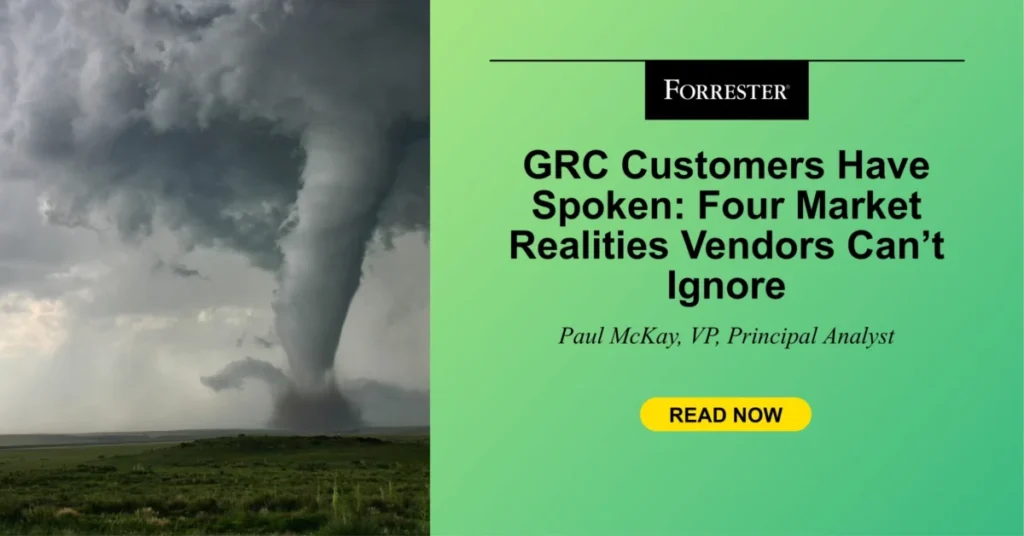
The landscape of corporate governance, risk management, and compliance (GRC) is undergoing a profound structural evolution. Forrester Research has officially released its highly anticipated GRC Buyers Guide for 2026, distilling customer reference data directly from the comprehensive Forrester Wave™: Governance, Risk, and Compliance Platforms, Q2 2026 evaluation. This latest guidance cuts through vendor marketing hype to examine true platform satisfaction, highlighting what is genuinely working—and where the industry continues to fall short—in real-world enterprise deployments.
Simultaneously, enterprise risk management is being pulled into two critical, rapidly accelerating domains: the mitigation of complex insider threats and the rigorous third-party auditing of enterprise artificial intelligence (AI) systems. As National Insider Threat Awareness Month concludes under the banner of "Protect Our Potential," fresh Forrester data reveals that internal actors account for a staggering 25% of all corporate data breaches, with malicious intent driving one-third of those incidents. Concurrently, new legislative frameworks emerging from states like California are fundamentally rewriting the playbook for algorithmic accountability, forcing enterprises to ask a vital, unanswered question: Who will become the trusted assurer of your enterprise AI?
Chronology and Context: The Evolution of Modern Enterprise Risk
To understand the weight of Forrester’s 2026 GRC Buyers Guide, one must examine the trajectory of risk management over the past decade. GRC platforms evolved from fragmented, spreadsheet-heavy compliance checklists into massive, cloud-native operational ecosystems. However, as digital transformation accelerated through the early 2020s, the sheer volume of regulatory frameworks, cyber threats, and third-party dependencies outpaced traditional GRC architectures.
- Early 2020s: Enterprises scrambled to digitize compliance, treating GRC largely as an IT and legal checkbox rather than a strategic business enabler. Platforms grew bloated, and customer satisfaction often lagged behind vendor promises.
- Q2 2026 (The Forrester Wave™ Era): Forrester’s latest market evaluation captured a pivotal market maturation. Vendors began integrating advanced analytics, automated control monitoring, and streamlined user interfaces. Crucially, analyst interactions with Wave reference customers illuminated a stark divide between platforms that merely store data and those that actively reduce enterprise friction.
- Late 2025 to April 2026 (The AI & Insider Threat Convergence): As generative AI permeated business workflows, legislative bodies—most notably in California with Senate Bill 813 and Assembly Bill 1405—began moving past voluntary ethics guidelines. They established formal, legally binding expectations for how algorithms are independently assessed, verified, and audited. This regulatory shift collided with persistent insider vulnerabilities, elevating GRC from a back-office utility to an active boardroom defense mechanism.
Supporting Data: By the Numbers
Forrester’s ongoing evaluative research relies heavily on empirical metrics and direct customer feedback. The 2026 findings are underpinned by hard data points that expose vulnerabilities across modern enterprise operations:
- 25%: The proportion of total enterprise data breaches directly attributed to insider incidents, according to Forrester research.
- 33.3% (One-Third): The subset of insider data breaches explicitly driven by malicious intent, contradicting the long-held corporate assumption that most internal leaks are purely accidental or negligence-based.
- 4: The core set of key takeaways synthesized by Forrester analysts from customer reference interviews during the Q2 2026 Wave process—interviews designed to extract unfiltered truths regarding industry pain points and successes.
- Two Fronts: The dual regulatory and operational pressures facing executives in 2026, marked by new legislative mandates for algorithmic auditing and heightened scrutiny over internal human-vector security.
Official Responses and Analyst Insights
Analyst commentary accompanying the 2026 GRC Buyers Guide emphasizes that customer reference interviews remain the bedrock of objective market analysis. Industry experts note that speaking directly with practitioners during the evaluation process strips away the polished veneer of vendor pitches, exposing the daily operational realities of managing enterprise risk.
"Speaking to customers in evaluative research processes is my favorite part of doing Forrester Waves," lead analysts noted in the foundational research logs. "It helps us to get specific insight into what’s working well in the industry and what isn’t."
Furthermore, Forrester’s research underscores that Wave reference customers bring an invaluable level of pragmatism and candor to evaluations. Their real-world experiences help analysts take the pulse of underlying technological currents—such as user adoption bottlenecks, integration friction with legacy tech stacks, and the true utility of automated risk-scoring models. Enterprises navigating these turbulent waters are being urged to leverage formal guidance sessions and structured inquiries to match their specific organizational needs with vetted platform capabilities.
Implications: Protecting Potential and Assuring Enterprise AI
The convergence of the 2026 GRC Buyers Guide findings, insider threat realities, and emerging AI auditing mandates carries profound implications for Chief Information Security Officers (CISOs), Chief Risk Officers (CROs), and executive boards.
1. Elevating Insider Risk Management Beyond the Checkbox
Despite decades of awareness training, organizations continue to struggle with insider threats. With a quarter of breaches stemming from internal vectors—and a significant portion driven by malice—traditional perimeter-focused cybersecurity is fundamentally incomplete. Organizations must integrate insider risk mitigation directly into their overarching GRC frameworks. Protecting an organization’s "potential" requires real-time behavioral analytics, least-privilege access models, and cross-functional collaboration between HR, legal, and security teams.
2. The Rise of the "Trusted Assurer" for Enterprise AI
Legislative milestones, such as California’s Senate Bill 813 and Assembly Bill 1405, alongside subsequent executive orders, signal a definitive end to the era of self-regulated artificial intelligence. These laws do not merely dictate how AI systems must operate; they formalize expectations for the third-party organizations tasked with auditing, verifying, and assessing those systems.
- Who holds the liability when an enterprise algorithm exhibits systemic bias or hallucinates critical operational data?
- Who qualifies as an objective, trusted assurer?
As these questions crystallize, enterprises will look to advanced GRC platforms to maintain audit trails, algorithmic provenance documents, and compliance documentation capable of satisfying rigorous state and federal oversight.
3. Strategic Platform Selection in 2026
Choosing a GRC platform is no longer a routine software procurement exercise. As highlighted in the GRC Buyers Guide 2026, organizations must select vendors that demonstrate proven customer satisfaction, robust scalability, and the agility to adapt to fast-moving regulatory landscapes—including automated compliance tracking for emerging AI and data privacy laws.
Organizations seeking to decode these findings are encouraged to engage with analyst guidance sessions to ensure their technology investments align with both current operational realities and future regulatory horizons.
Get The Insights At Work Newsletter
Stay ahead of the curve with expert analysis, exclusive research roundups, and strategic guidance delivered straight to your inbox.
- Sign up for the Forrester Insights At Work Newsletter to receive regular updates on enterprise technology trends, survey invitations, and critical updates from across the Forrester analyst community.
(To subscribe, visit the official Forrester subscription portal and complete your business email registration to join thousands of enterprise leaders navigating the future of risk, technology, and business strategy.)
