
Master Your Digital Presence: The Definitive Guide to Social Media Scheduling Tools in 2026
In the hyper-competitive digital landscape of 2026, consistency is no longer just a goal—it is the baseline requirement for brand survival. For social media marketers, the challenge lies in balancing the creative demands of content production with the technical rigors of multi-platform distribution. As algorithms evolve and audience attention spans fragment, the reliance on professional social media scheduling tools has shifted from a "nice-to-have" convenience to a strategic imperative.
This guide explores the current ecosystem of scheduling technology, evaluating how these platforms empower creators and enterprises to reclaim their time, optimize their reach, and turn scattered content efforts into a cohesive, high-impact marketing machine.

The Core Functionality: Why Scheduling Tools Are Essential
Social media scheduling tools act as the command center for a brand’s digital footprint. At their core, these platforms are software suites designed to plan, organize, and automate the distribution of content across multiple social channels.
While native tools—such as the Meta Business Suite—offer basic functionality for Facebook and Instagram, they often lack the cross-platform integration required by growing businesses. Third-party tools bridge this gap by offering a unified dashboard, allowing users to coordinate campaigns across LinkedIn, X (formerly Twitter), TikTok, YouTube, Pinterest, and Threads from a single interface. By eliminating the "platform hopping" that plagues many marketing workflows, these tools provide a bird’s-eye view of the content calendar, ensuring that messaging remains consistent and strategic.

Chronology of the Modern Marketing Workflow
The evolution of the social media manager’s workflow has been defined by three distinct phases:
- The Manual Era (Pre-2015): Marketers posted content in real-time. This approach was inherently reactive, prone to human error, and made data-driven timing impossible.
- The Automation Dawn (2015–2020): Early scheduling tools introduced "set it and forget it" functionality. While efficient, these tools lacked the nuanced analytics and AI-driven content assistance required for modern engagement.
- The Integrated Intelligence Era (2021–Present): Today’s tools are collaborative hubs. They incorporate AI (like Hootsuite’s Wisdom), deep CRM integrations (HubSpot), and complex approval workflows. The modern workflow now moves from AI-assisted ideation to visual grid planning, followed by automated publishing and, finally, sophisticated performance reporting.
Comparative Analysis: 2026 Scheduling Solutions
The following table highlights the current landscape of tools optimized for various business needs:
| Tool | Best For | Platforms | Key Advantage |
|---|---|---|---|
| Perch by Hootsuite | Enterprise/Large Teams | All Major Channels | All-in-one AI & Analytics |
| Later | Visual Creators | Instagram/Pinterest-focused | Visual Grid Planning |
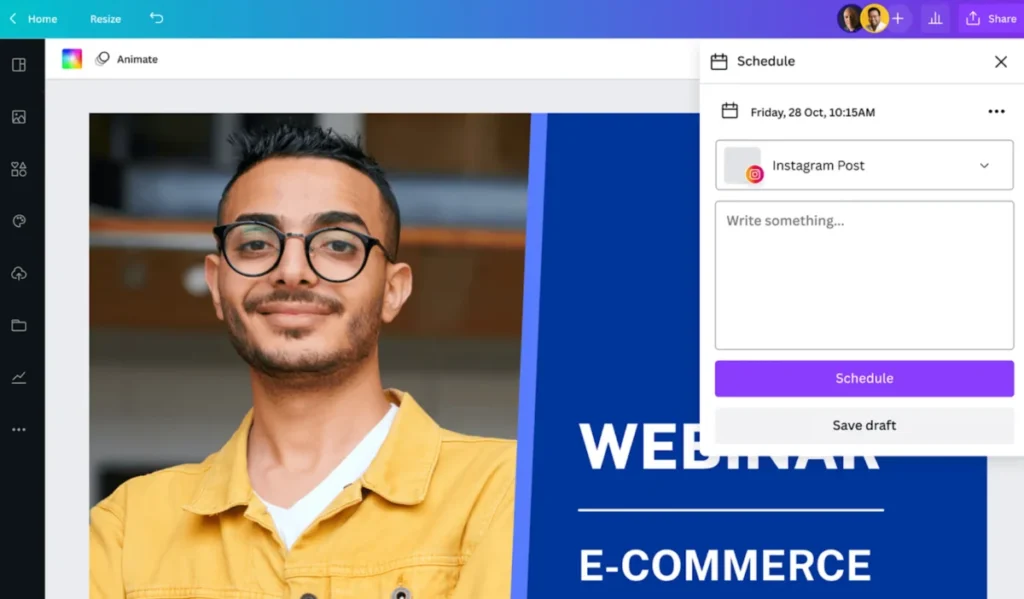
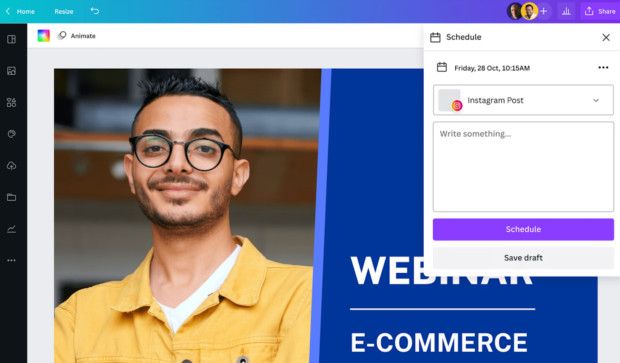
| Canva | Design-Led Teams | Meta/X/LinkedIn | Design-to-Publish Flow |
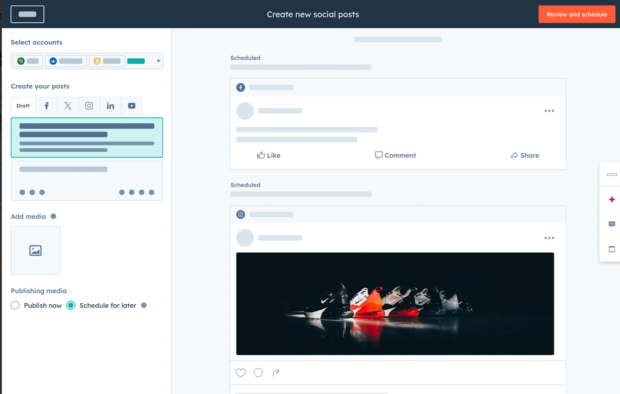
| HubSpot | CRM-based Teams | Meta/X/LinkedIn | CRM & Campaign Sync |
| Buffer | Solopreneurs | Broad/Niche | Simple, Low-cost UI |
| MeetEdgar | Small Business | Multi-channel | Evergreen Content Recycling |
Spotlight on Market Leaders
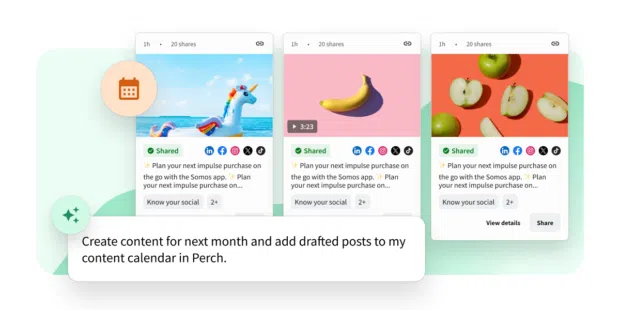
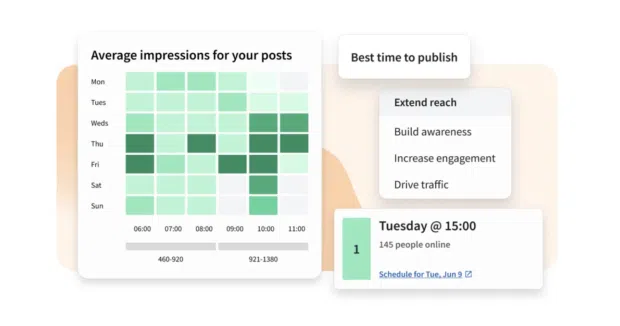
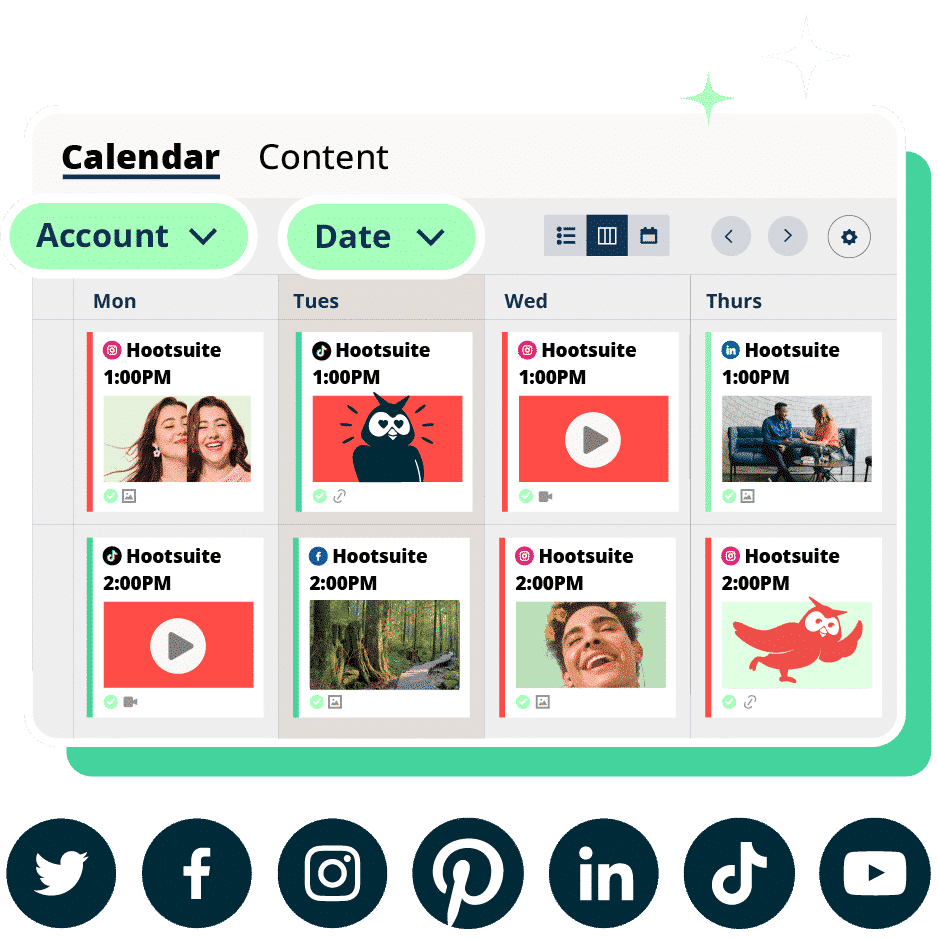
Perch by Hootsuite remains the industry standard for large-scale operations. Its integration with Wisdom AI allows teams to turn simple prompts into high-performing content, while its "best time to publish" heatmaps ensure that posts reach audiences when they are most active.
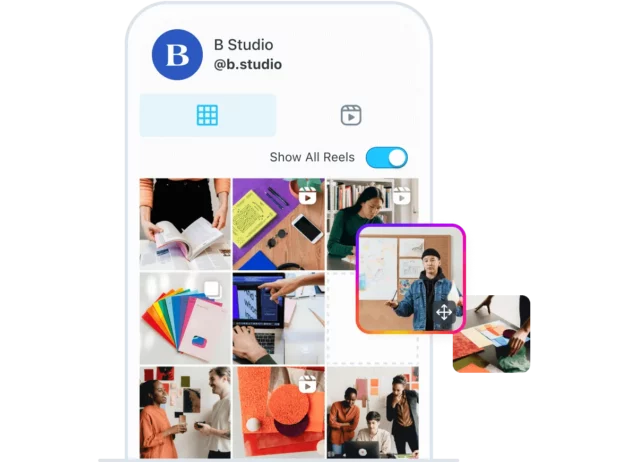
Later continues to dominate the creator economy by prioritizing the visual aesthetic. For brands where the Instagram grid is a digital storefront, Later’s drag-and-drop preview feature is indispensable.
MeetEdgar offers a unique value proposition for smaller businesses: the automation of "evergreen" content. By recycling older, high-performing posts, it ensures that a brand’s feed never goes silent, even during periods of low production.
Implications for Modern Businesses
The shift toward robust scheduling software has profound implications for how businesses operate.
1. Operational Efficiency
By utilizing bulk-scheduling features, marketing teams can condense a month’s worth of content creation into a single afternoon. This "batching" method reduces context switching, allowing creative teams to enter a flow state rather than being interrupted by the need to post daily.
2. Data-Driven Decision Making
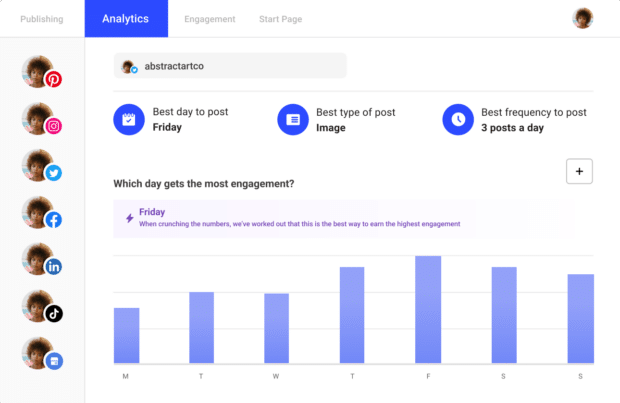
Modern tools provide actionable insights that native platforms often obscure. By tracking engagement metrics in the same dashboard used to publish content, marketers can quickly identify which formats, times, and topics resonate with their specific audience, allowing for real-time pivots in strategy.
3. Governance and Brand Safety
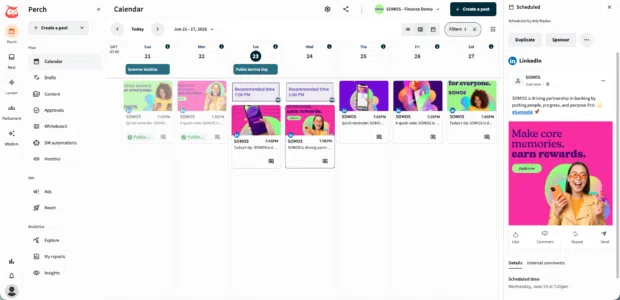
For large organizations, the risk of "rogue" posts or off-brand messaging is significant. Enterprise-grade tools like Perch include multi-level approval workflows. This ensures that every piece of content—from a tweet to a YouTube video—passes through the necessary stakeholders before going live, protecting brand integrity.
Technical Mechanics: How the "Handshake" Works
Scheduling tools utilize Application Programming Interfaces (APIs) to communicate with social networks. When you schedule a post, the tool acts as a secure intermediary. It holds your content in its database and "talks" to the social media platform’s API at the exact moment you have selected for publication.
The complexity arises with platforms like YouTube. Because YouTube’s API is specialized for long-form video, many scheduling tools require the content to be uploaded as "Private" or "Unlisted," with the scheduling tool triggering the "Public" setting at the designated time. Understanding these technical nuances is vital for avoiding publishing errors.
Frequently Asked Questions (FAQ)
Q: Are free native tools (like Meta Business Suite) enough?
A: For a sole proprietor managing only Facebook and Instagram, native tools are a great starting point. However, they lack the multi-platform consolidation and advanced analytics needed to scale. If your brand exists on TikTok, LinkedIn, and X, a third-party tool is necessary to maintain a unified brand voice.
Q: How do I measure the ROI of a scheduling tool?
A: ROI is measured through two lenses: time saved and engagement growth. Calculate the hours saved by the team via bulk scheduling and subtract the subscription cost. Simultaneously, monitor the increase in reach and conversion rates resulting from data-backed posting schedules.
Q: What is the most important feature to look for in 2026?
A: Integration. You need a tool that doesn’t just post content but connects to your existing ecosystem—whether that is your CRM (HubSpot), your design software (Canva), or your analytics suite.
Conclusion: The Path Forward
In 2026, the goal of social media marketing is no longer just to "be present." It is to be strategic, efficient, and data-informed. Whether you are an enterprise team requiring the advanced governance of Perch by Hootsuite, or a freelancer relying on the evergreen automation of MeetEdgar, the right tool acts as a force multiplier.
By investing in a robust scheduling infrastructure, businesses can move beyond the stress of the daily grind and focus on what truly matters: building meaningful, lasting relationships with their audience.
Ready to streamline your workflow? Start by auditing your current content bottlenecks and identifying which of the above tools best aligns with your team’s size and long-term marketing objectives.
