
Google Overhauls AI Search Presentation: A Deep Dive into Link Placement, Preferred Sources, and Creator Profiles
Google is introducing a sweeping series of interface and architectural updates to its AI-powered search experiences, including AI Mode and AI Overviews. According to a recent official blog post authored by Hema Budaraju, Vice President of Product Management at Google, the search giant is rolling out five distinct changes aimed at reshaping how users interact with web links, timely news carousels, and creator content within generative search environments.
These updates reflect Google’s ongoing balancing act: satisfying publishers who demand visibility and traffic from AI-generated answers, while delivering concise, synthesized summaries to everyday searchers. As generative engine optimization (GEO) and search engine optimization (SEO) continue to collide, understanding these five structural shifts is critical for publishers, creators, and digital marketers alike.
Main Facts: What is Changing in Google AI Search?
Google’s latest wave of updates focuses primarily on visual hierarchy, source attribution, and user customization. The five key modifications outlined by Budaraju include:
- Higher Inline Link Placement: Google is increasing the frequency of inline citation links positioned closer to the top of AI-generated response listings.
- Official Source Sections for Task-Based Queries: Google is launching tests for a dedicated top-of-page module that isolates official resources for specific, limited-resource tasks (such as regulatory forms or official refund portals).
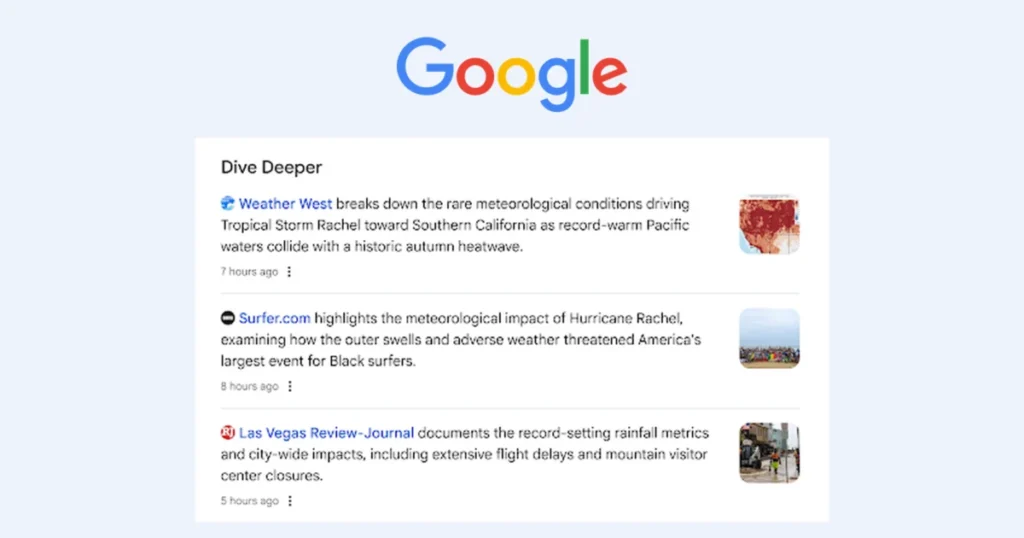
- Redesigned Citations with Thumbnails: Links located at the tail end of AI responses are receiving visual overhauls, incorporating image thumbnails and more prominent, clickable layouts.
- Global Expansion of Timely Article Carousels: Google is expanding its dynamic carousels—which highlight breaking or developing news and leverage user-defined "Preferred Sources"—to broader geographic regions and additional languages.
- Search Profile Integration in AI Mode: Creators and publishers are now seeing their names linked directly to their Google Search profiles within AI Mode video results.
Chronology of Google’s AI Link Evolution
To fully grasp the significance of these updates, it is helpful to view them within the broader timeline of Google’s generative search rollout.
May: The Shift Toward Inline Context and Preferred Sources
Earlier this year, Google laid the groundwork for these current changes during a major platform update. In May, product teams announced that users could expect to see a surge in inline citation links embedded directly next to relevant text segments within AI Overviews.
Concurrently, Google introduced the concept of Preferred Sources—a feature allowing individual searchers to curate a list of trusted domains that they prefer to see highlighted during searches. Initial reports indicated that these preferred outlets would begin populating dedicated carousels for developing, multi-faceted news stories.

June: The Introduction of Search Profiles
In June, Google launched Search Profiles as a centralized digital hub for independent creators, journalists, and publishers. Designed to consolidate an author’s articles, videos, and cross-platform social media posts (spanning YouTube, X, Instagram, and TikTok) into a single unified landing page, these profiles initially became discoverable primarily through mobile knowledge panels and Google Discover.
October: Integration and Expansion
Fast forward to October, and Google is aggressively knitting these disparate threads together. The search giant announced that Preferred Source usage has skyrocketed, multiplying by more than seven times compared to figures from early 2025. Furthermore, Google began testing the integration of Search Profile links directly inside AI Mode video results, bridging the gap between passive video viewing and author discovery.
Supporting Data and Technical Implementation
While Google’s official announcements often lean heavily on directional trends rather than hard metrics, analyzing the available data provides a clearer picture of how these systems operate behind the scenes.
The Growth of Preferred Sources
According to Google’s internal data, user adoption of Preferred Sources has experienced exponential growth, climbing to over seven times its baseline metric from January. However, independent analysts have pointed out that Google omitted exact user counts and failed to clarify the methodology used to calculate this surge.
To qualify a website as a Preferred Source in AI Mode or AI Overviews, site administrators must ensure their platform is actively integrated into Google Search generative features via Search Console. Google documentation also provides specific deep-link buttons that publishers can embed on their own websites to encourage readers to designate them as a Preferred Source.
Search Console Realities for Inline Links
Despite the structural changes moving inline links higher up within AI Overviews, digital marketers must keep technical tracking constraints in mind. According to Google Search Console documentation, links contained within a single AI Overview inherit the overview’s collective ranking position. Consequently, shifting an inline link further up within the generative text block does not inherently alter the reported position of that link inside Search Console performance reports.

Eligibility Criteria for Search Profiles
Google’s documentation outlines strict qualifying requirements for creators and publishers seeking to establish a Search profile:
- Geographic Availability: Primarily active in the United States, Canada, and India.
- Follower Thresholds: Content creators must possess a minimum of 10,000 verified followers across supported platforms (YouTube, Instagram, X, or TikTok).
- Account Restrictions: Setting up and managing a Search profile requires a Google Account managed by an individual aged 18 or older.
Official Responses and Industry Reception
The publishing and SEO communities have responded to Google’s iterative updates with a mixture of cautious optimism and persistent skepticism.
Google’s Perspective
From the perspective of Google’s product leadership, these updates are designed to enhance user trust and streamline information retrieval. By elevating official sources for task-based queries—such as airline refunds or government filings—Google aims to reduce user friction and combat the spread of misinformation in high-stakes informational scenarios. Furthermore, the inclusion of creator and publisher profiles directly inside AI Mode is framed as a win for digital branding, offering independent creators a direct line to build authority and audience loyalty straight from generative video outputs.
Publisher and SEO Criticisms
Conversely, publishers continue to scrutinize the foundational mechanics of AI Overviews and AI Mode. While placing inline links higher up and adding image thumbnails to "Dive Deeper" sections theoretically improves click-through rates (CTR) compared to the text-heavy summaries of 2024, the fundamental issue of zero-click searches remains unresolved. When an AI response fully satisfies a user’s intent, the necessity of clicking any link—regardless of its visual appeal or position—diminishes significantly.
Moreover, smaller publishers have voiced concerns that the heavy prioritization of "Preferred Sources" and "Official Site" modules could create a winner-take-all ecosystem, locking out emerging independent sites that have not yet amassed the massive follower counts required for Search Profiles or user-driven preference loops.
Implications for Publishers, Marketers, and Creators
As these features roll out across global markets and multi-language environments, digital strategists must adapt their optimization tactics to align with Google’s evolving interface.

1. Re-Evaluating GEO and Content Structuring
With Google emphasizing high-placement inline links and task-based official modules, content creators must ensure their web pages are structurally optimized to provide direct, unambiguous answers. If your content serves as a definitive resource for transactional or task-oriented queries, formatting data cleanly can increase the likelihood of being selected for specialized top-of-page modules.
2. Cultivating Preferred Source Status
Because users are increasingly leaning into personalization features like Preferred Sources, publishers can no longer rely solely on organic ranking. Building direct relationships with core audiences—and aggressively utilizing Google’s deep-link buttons to encourage readers to add your domain to their Preferred Sources list—will be a critical defensive and offensive strategy for maintaining organic traffic stability.
3. Leveraging Search Profiles for Brand Authority
For creators and publishers operating video-heavy or multi-platform content strategies, claiming and optimizing a Search Profile is no longer optional. Tying video results in AI Mode directly to verified author profiles means personal branding will heavily influence discovery. Ensuring cross-platform metrics meet Google’s threshold (10,000+ followers) unlocks real estate within generative search that competitors without profiles will miss out on.
Looking Ahead
While Google’s dynamic article carousels are rolling out immediately across supported regions and languages, tests for official-site task modules and expanded AI Mode profile links are still undergoing localized testing. Publishers are advised to closely monitor their Search Console metrics and regional AI search behaviors to catch interface shifts early and adjust their optimization strategies accordingly.
