
Google Finance’s Governance Crisis: Fabricated Earnings Data Persists on Government Domains
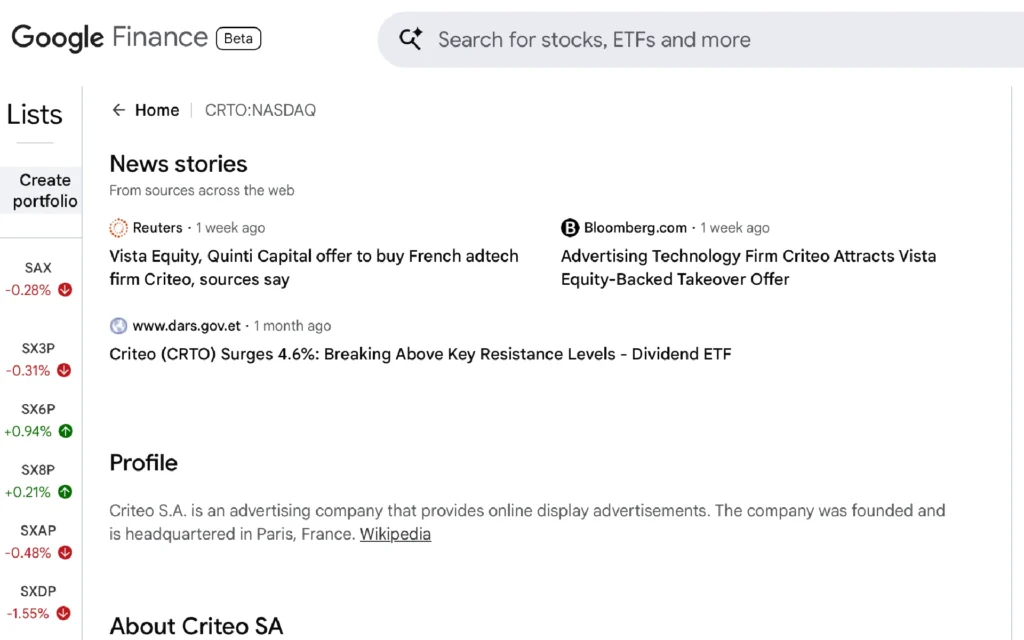
In a troubling development for financial information integrity, Google Finance has been caught ingesting and surfacing fabricated earnings reports hosted on a compromised Ethiopian government domain. This ongoing security failure, which first gained attention on July 13, 2026, has proven to be not a singular oversight but a persistent, evolving pattern.
Recent investigations confirm that Google’s own financial aggregation platform is actively promoting fraudulent articles attributed to dars.gov.et—the official portal for the Ethiopian Documents Authentication and Registration Service. Despite the completion of a major global spam update in late June, these fabricated entries continue to appear alongside legitimate financial reporting, potentially misleading investors and damaging the credibility of Google’s flagship financial product.
The Scope of the Breach: A Growing Pattern
The discovery of a fabricated IDACORP (NYSE: IDA) earnings report, timestamped as recently as July 12, 2026, confirms that the threat is not merely static but expanding. While initial reports highlighted spam on Criteo and Zeta Global ticker pages, the footprint has widened significantly.
A direct search of the dars.gov.et domain reveals a cache of fabricated pages targeting at least four additional tickers: UPS, NCR Voyix, F5, and Wendy’s. The freshest of these pages was created just days ago, while the oldest dates back two weeks. These pages share a consistent, malicious structure: they masquerade as authoritative earnings reports while serving as gateways to WhatsApp-based stock trading "clubs"—a hallmark of predatory financial solicitation schemes.
The technical execution is sophisticated. Rather than utilizing a lookalike domain, the perpetrators have successfully injected content directly into the legitimate Ethiopian government infrastructure. The pages are served via arbitrary path segments such as /first-dry/ and /expert-time/, which bear no relation to the government agency’s mandate of notarization and document authentication.
Chronology: A Failure of Algorithmic Enforcement
The timeline of this incident raises serious questions about the efficacy of Google’s current spam detection mechanisms, specifically the AI-driven "SpamBrain" system.
- June 24–26, 2026: Google executes a global spam update, officially labeled as complete on June 26 at 2:00 PM ET.
- July 12, 2026: A new fabricated IDACORP earnings story is created on the compromised
dars.gov.etserver—sixteen days after the spam update concluded. - July 13, 2026: The incident is first documented by PPC Land, highlighting the presence of fabricated headlines on major finance tickers.
- July 15, 2026: Further investigation reveals the pattern has expanded to include additional tickers like UPS and Wendy’s, confirming that the spam is not only surviving previous updates but is actively proliferating.
The fact that this content was created, indexed, and surfaced within a three-day window—long after the conclusion of a major search quality enforcement cycle—suggests that Google’s detection systems are currently blind to this specific vector of domain abuse.
Technical Analysis: Inside the Compromised Infrastructure
The technical nature of the infiltration provides insight into how the bad actors are bypassing traditional filters. By leveraging the ReturnUrl parameter in an ASP.NET authentication gate, the perpetrators have ensured that their spam pages are routed through the agency’s actual login infrastructure.
When a user or a search engine crawler hits these pages, they inherit the metadata of the legitimate government site, including the page "Official Document Authentication and Authorization Website." Because the content is served from within a trusted .gov.et domain, it bypasses the standard reputation-based triggers that usually flag suspicious content.
This is not a simple case of a website being hacked and abandoned; it is an active, ongoing manipulation of a live application. The Ethiopian federal agency’s mandate—which focuses strictly on Amharic-language legal notarization in Addis Ababa and Dire Dawa—has zero overlap with US equities or English-language earnings analysis. Yet, the content remains live, suggesting that neither the Ethiopian registry (administered by Ethio Telecom) nor Google’s automated systems have moved to remediate the vulnerability.
Official Responses and the Silence from Stakeholders
As of this writing, there has been no public comment from Google, the Ethiopian Documents Authentication and Registration Service, or Ethio Telecom regarding the security breach. The lack of communication is particularly concerning given the sensitivity of the data involved.
Google Finance is not merely a search engine; it is a specialized financial tool that influences the investment decisions of millions of users. By surfacing these links under the "News stories" module—a feature that explicitly claims to draw from "sources across the web"—Google is effectively providing a seal of legitimacy to fraudulent content. When an investor researching the acquisition of a company like Criteo sees a fabricated report sitting alongside legitimate financial news, the potential for market manipulation is extreme.
Implications for Search Quality and AI Mediation
The persistence of these pages exposes a structural gap in Google’s enforcement apparatus. Since the introduction of specific spam policies targeting "expired domain abuse" and "site reputation abuse" in March 2024, the search industry has expected a higher level of protection against the exploitation of high-authority domains.
However, the "dars.gov.et" case illustrates that the lag between policy creation and enforcement capability remains a significant liability. While Google has been aggressive in its 2026 enforcement cycles—having conducted four major ranking incidents in just thirteen weeks—the survival of this spam indicates a failure of the "SpamBrain" AI to correlate the context of the content with the identity of the host.
The Erosion of Trust in Financial Aggregators
The broader implications for the financial technology sector are profound. If a state-sponsored, restricted-access government domain can be turned into a vehicle for financial misinformation without detection for weeks, what does this say about the integrity of the "deep search" tools that Google is currently promoting?
Google Finance exited its beta phase on June 25, 2026, with an ambitious rollout of AI-driven research tools. Yet, the foundation of these tools—the search index—is being compromised by low-effort spam. If the underlying data is poisoned, the synthesis provided by AI assistants becomes a mechanism for the mass-dissemination of financial falsehoods.
What This Means for Investors
For the retail investor, the danger is twofold. First, they are being directed to high-risk, unverified, and potentially malicious WhatsApp groups that often serve as front-ends for "pump and dump" schemes or sophisticated phishing campaigns. Second, they are being subjected to a false narrative regarding the financial health of public companies, which can influence buying and selling decisions in real-time.
The continued presence of these links on Google Finance, nineteen days after the completion of a major global spam update, represents a failure of governance. It highlights a critical disparity: while Google’s search algorithms are becoming increasingly sophisticated at identifying link-based spam, they are currently ill-equipped to police the reputation of the trusted domains they have elevated to the top of their news aggregators.
Summary of Findings
- The Source: The breach is isolated to
dars.gov.et, a legitimate Ethiopian government domain. - The Mechanism: Injecting content into the site’s legitimate ASP.NET architecture allows the spam to inherit the domain’s authority and metadata.
- The Exposure: Google Finance continues to pull this content, displaying it to global users as if it were legitimate financial journalism.
- The Policy Gap: Despite explicit policies regarding site reputation abuse, there is no evidence of active manual or algorithmic intervention.
- The Outlook: Without immediate intervention from Google’s trust and safety teams, the pattern is likely to continue, as the infrastructure currently allows for the automated creation of new, high-ranking pages at will.
The crisis of confidence in Google Finance is growing. As the platform pushes further into the territory of AI-mediated financial advice, the burden of proof for the integrity of its sources must shift from "passive aggregator" to "active gatekeeper." Until then, investors should treat earnings news sourced from unfamiliar or highly incongruous domains with extreme skepticism, regardless of where they appear in the search results.
