

Beyond the Click: Mastering Social Media ROI in a Trillion-Dollar Market
In the modern digital landscape, social media has graduated from a simple communication tool to a primary driver of global commerce. With nearly 5.75 billion users expected by 2026, the stakes for businesses have never been higher. However, as investment in social advertising grows, so does the pressure on marketing teams to prove that every dollar spent generates tangible business value.
While 68% of marketers express concern over their ability to demonstrate return on investment (ROI) to stakeholders, the reality is that social media is increasingly becoming the backbone of revenue growth. With social commerce projected to surpass the $1 trillion mark by 2028, the ability to accurately calculate, report, and optimize social media ROI is no longer just a "nice-to-have"—it is a critical competency for enterprise survival.

The Core Concept: Redefining Social ROI
Social media ROI is the measure of the value a business derives from its social media presence, calculated by weighing the inputs (time, effort, and ad spend) against the outputs (revenue, lead generation, and brand equity).
The traditional, somewhat antiquated ROI formula remains the foundation: ((Value Generated – Costs) / Costs) x 100. However, the modern definition of "value" has evolved. While revenue remains the primary KPI, savvy marketers now incorporate non-monetary metrics—such as sentiment shifts, brand awareness, and community engagement—into their valuation models. By assigning estimated monetary proxies to these qualitative data points, teams can present a more holistic picture of how social media feeds the top, middle, and bottom of the sales funnel.

The Chronology of Measurement: From Vanity to Value
The journey of social media measurement has transitioned through three distinct phases:
- The Era of Vanity Metrics (Pre-2015): Marketing teams focused on "likes," "shares," and "follower counts." While these provided a sense of community growth, they lacked a direct connection to the balance sheet.
- The Rise of Attribution (2015–2020): As tracking tools like Google Analytics and Facebook Pixel became standard, businesses began attempting to map social clicks directly to website conversions. This era was defined by the struggle to prove "last-click" attribution.
- The Age of Unified Analytics (2021–Present): Today, we recognize that social media rarely works in isolation. The modern approach utilizes multi-touch attribution, acknowledging that a user might interact with a brand across multiple channels—Instagram, email, and search—before converting.
Supporting Data: Why Social is Driving Growth
The case for continued social investment is backed by overwhelming data. Statista reports that social commerce is expected to generate $908.5 billion in 2026, a 10.7% year-over-year increase. Furthermore, 46% of marketers cite social media as a primary driver of improved sales.

Beyond direct purchases, social media serves as a vital touchpoint for the customer journey. For B2B organizations, where sales cycles can last months, a LinkedIn interaction or a brand-building campaign is often the catalyst for a relationship that eventually closes as a high-value contract. Ignoring the indirect contribution of social media to these long-term cycles leads to a significant undercounting of the channel’s true impact.
Navigating the Roadblocks to Measurement
Despite the clear benefits, measuring ROI remains notoriously difficult due to several systemic barriers:
- Multi-Touch Attribution: Because customers rarely purchase after a single click, single-touch models fail to account for the "assisted conversions" provided by social media.
- The "Dark Social" Phenomenon: Much of the traffic and conversation occurring on social media happens in private channels (DMs, shared links in private groups), which are often invisible to traditional analytics tools.
- Data Silos: Relying on native dashboards from individual platforms (TikTok, X, LinkedIn, Instagram) creates a fragmented view. Without a centralized management platform, marketers spend more time consolidating data than actually optimizing their strategy.
- Delayed Conversions: In B2B and enterprise sales, social engagement today may not result in a contract for two quarters. Measuring ROI on a month-to-month basis often fails to capture the long-term compounding interest of brand awareness.
The Five-Step Path to Accurate ROI Calculation
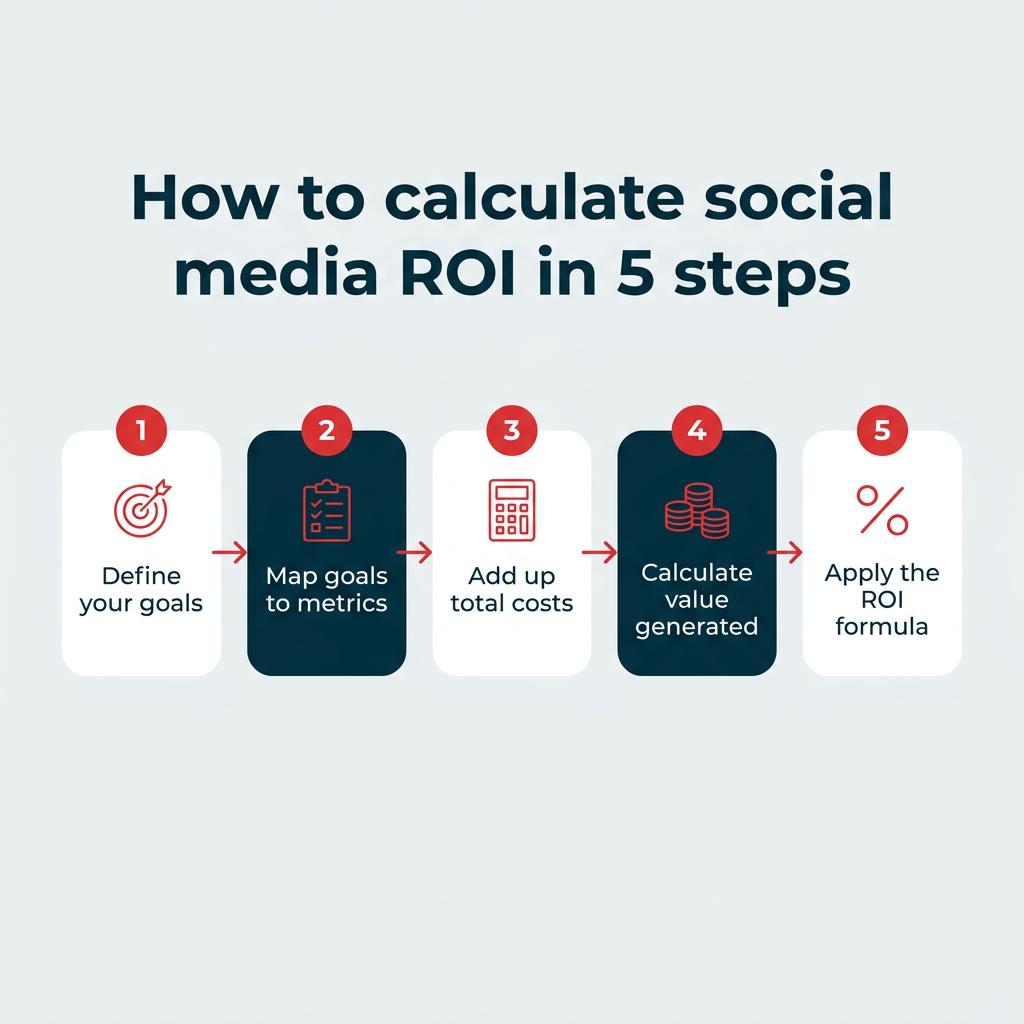
To transform social media from a cost center into a growth engine, marketers should follow a structured five-step approach:
1. Define Strategic Goals
ROI is meaningless without context. Are you looking to generate leads, improve customer service response times, or build long-term brand equity? Quarterly reviews are essential to ensure these goals align with shifting organizational priorities.
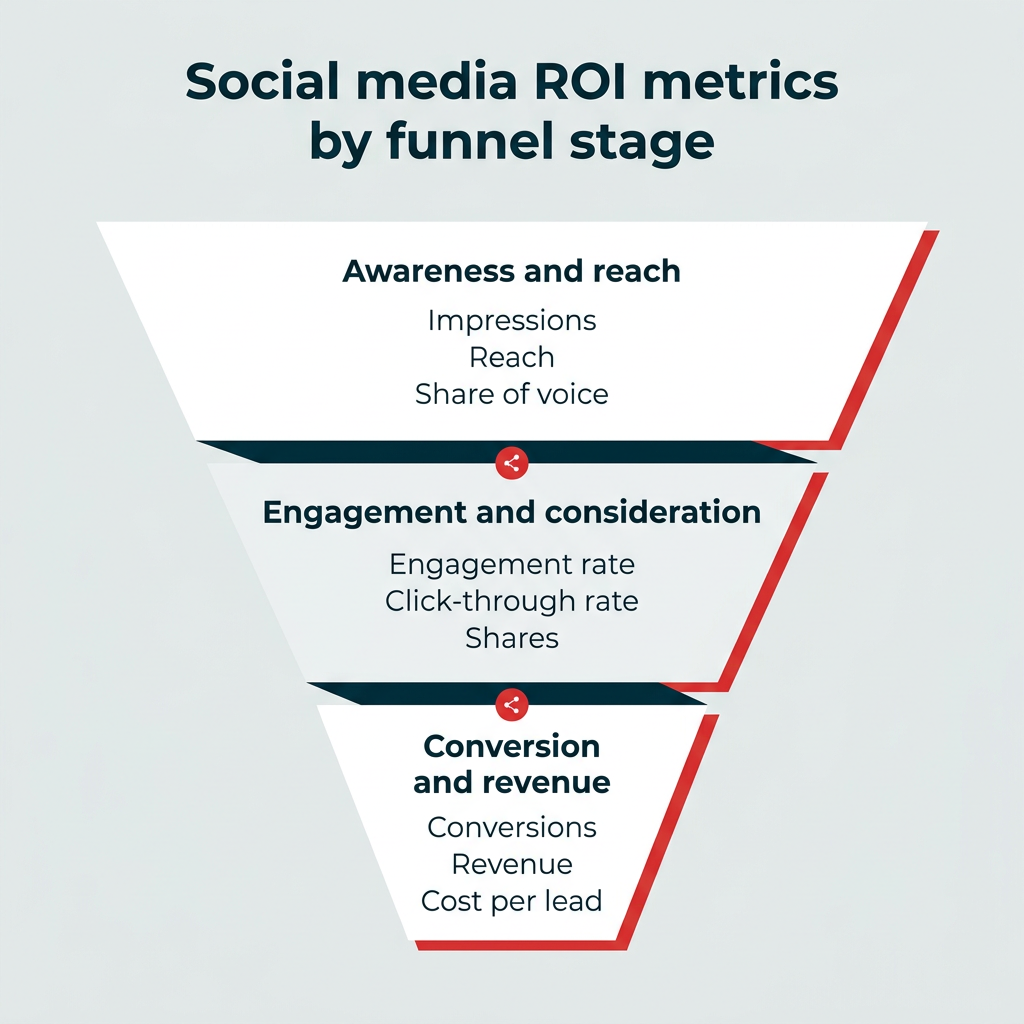
2. Map Metrics to the Funnel
- Awareness: Track impressions, reach, and share of voice.
- Consideration: Monitor engagement rates, video views, and click-through rates (CTR).
- Conversion: Focus on revenue, cost per acquisition (CPA), and return on ad spend (ROAS).
3. Aggregate Total Costs
Be comprehensive. A true ROI calculation includes the cost of software subscriptions (like Hootsuite), content creation resources, staff hours, and, of course, the actual ad spend.
4. Assign Monetary Value to Non-Monetary Actions
If a newsletter signup is worth $5 in potential revenue, assign that value to social media conversions. By using Customer Lifetime Value (CLV) as a proxy, teams can bridge the gap between "likes" and dollars.
5. Apply the Formula and Optimize
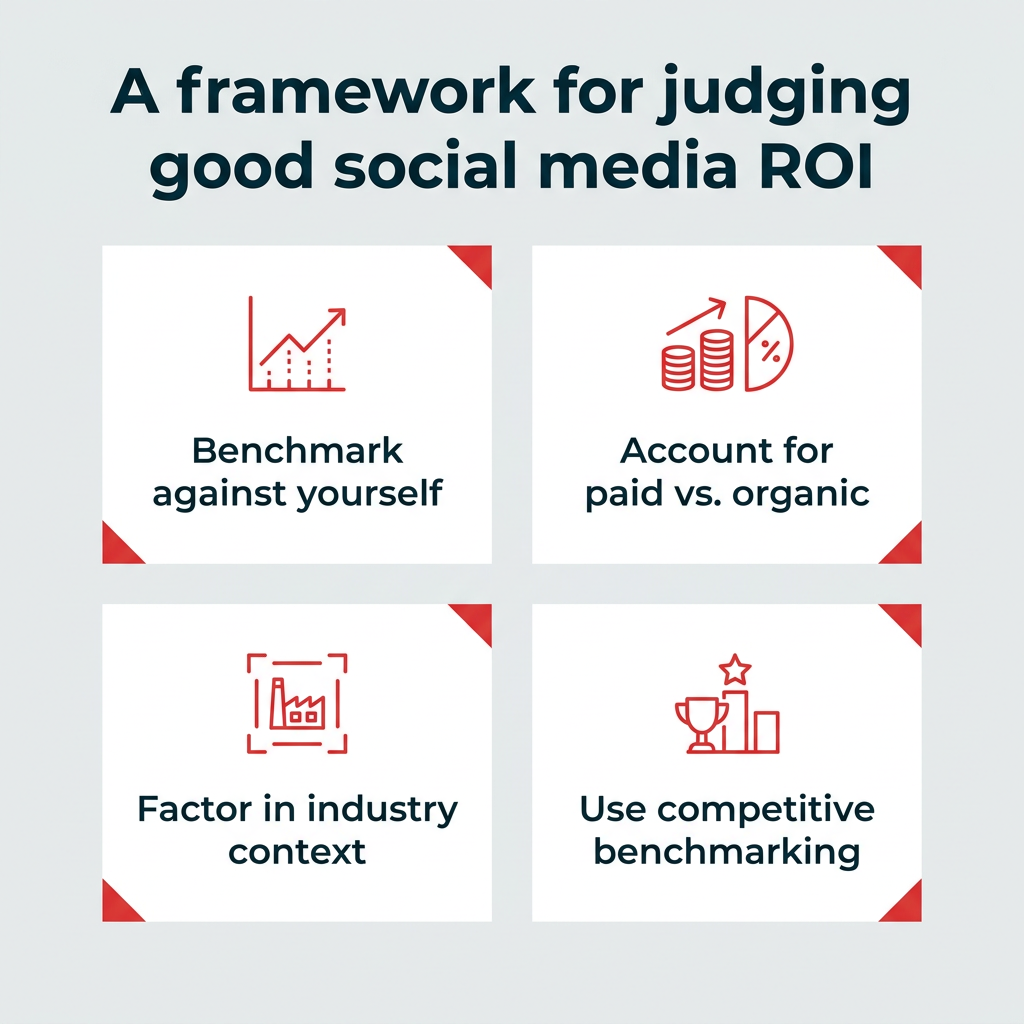
Once you have your final percentage, compare it to historical data. If the ROI is negative, the data should indicate exactly where the bottleneck exists—whether it’s low reach, poor conversion rates, or excessive production costs.
Implications for Executive Reporting
When presenting findings to stakeholders, the goal is to speak the language of the C-suite: revenue, growth, and risk mitigation.

Best Practices for Executive Reporting:
- Contextualize Trends: Do not just present a number; explain why it moved. Did a specific content experiment (like switching from static posts to Reels) drive a 15% increase in engagement?
- Connect to Business Outcomes: Always link social metrics back to the broader business goal, such as reducing the overall customer acquisition cost (CAC).
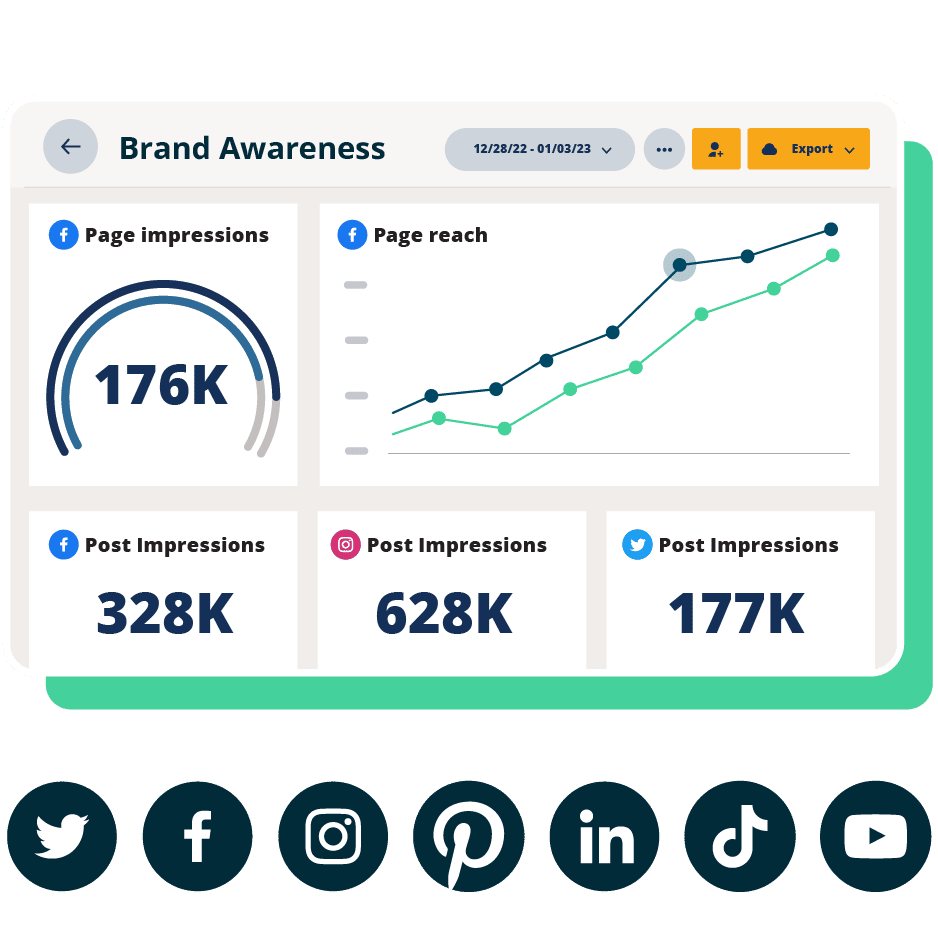
- Use Visuals: Use clear, concise dashboards that show the trajectory of growth rather than overwhelming stakeholders with raw data.
- Benchmark Against Competitors: Utilize tools to show how your brand compares to industry averages. This provides the external validation that stakeholders often require.
The Future of Social Measurement
The future of ROI measurement lies in unification. As AI-powered analytics platforms continue to mature, the ability to synthesize data from disparate sources into a single, cohesive narrative will define the next generation of marketing leaders.
By investing in the right technology—such as Hootsuite’s Advanced Analytics—teams can move away from manual spreadsheets and toward real-time decision-making. These tools allow marketers to track performance across channels, identify which content formats (video, carousels, or text) are outperforming the competition, and use UTM parameters to trace the journey of every user from their first social touchpoint to their final checkout.
Final Word
Proving social media ROI is not about finding a single "magic number." It is about building a robust, transparent framework that shows how social media contributes to the health of the entire organization. By focusing on quality data, consistent testing, and clear reporting, marketing teams can secure their budgets and demonstrate their indispensable value to the business.
The data is clear: those who invest the time to measure their social media ROI accurately are the ones who will lead the $1 trillion social commerce economy. The question is no longer whether social media works—it is whether your team has the tools to prove it.
