
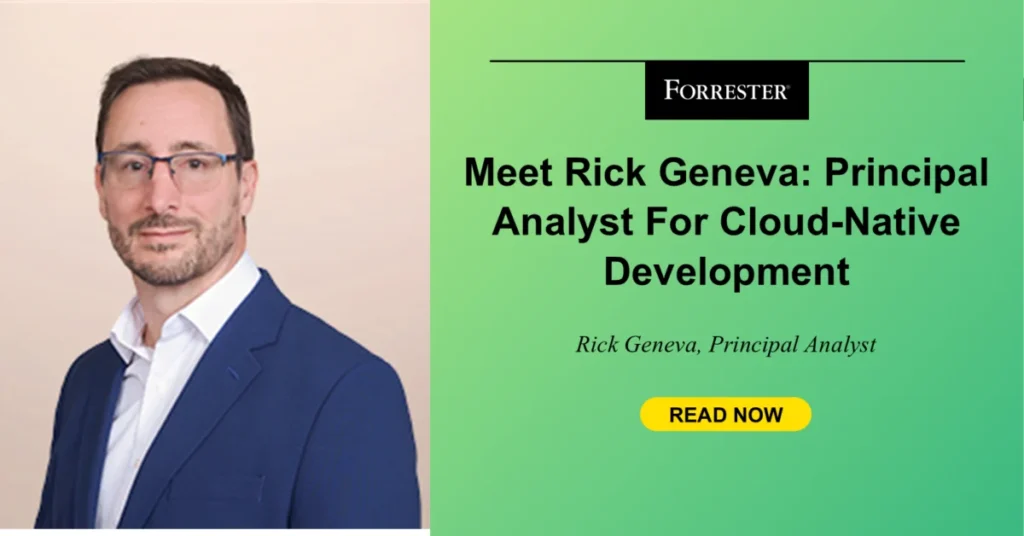
From Systems Engineer to Industry Analyst: A New Perspective on the AI Supercycle
After three decades navigating the rapid currents of the IT industry, the transition from building complex software to analyzing its trajectory marks a significant career pivot. Having witnessed the rise of PC networking, the dot-com explosion, enterprise integration, the cloud-mobile revolution, and now the dawn of the AI era, I am joining Forrester as an analyst. My goal is simple: to transition from the hands-on creation of products to helping enterprises navigate the increasingly complex web of modern technology decisions. My research will be laser-focused on the intersection of cloud-native development, AI-enhanced engineering, edge computing, and large-scale application modernization.
The Evolution of a Technologist: A Chronology of Innovation
My professional journey did not begin in a corporate boardroom, but in the disciplined environment of the US Air Force, where I was responsible for the maintenance and repair of complex electronic systems. This foundational experience taught me the critical importance of systems thinking—a skill that would later define my approach to software architecture.
Following my military service, my hobbyist interest in building PCs evolved into professional network administration and eventually software engineering. The late 1990s placed me at the epicenter of the dot-com boom, where I cut my teeth building B2B and B2C websites. This period was my first real lesson in the hype cycle: seeing technology that promised to change the world either evaporate or become a bedrock for future innovation.
From 2006 to 2013, I shifted my focus to business process management (BPM)—now rebranded as digital process automation. During this era, my team engineered platforms that combined complex event processing, rules engines, and dynamic workflows. Looking back, it is fascinating to observe that many of the architectural concepts we pioneered then are currently resurfacing in modern "agentic" and adaptive workflow patterns.
My most recent chapter saw me working at a major fintech firm as a director of engineering. There, I led initiatives in workflow automation, low-code business logic configuration, and global enterprise integrations. Before that, I spent nine years at a commercial software company, where I helped oversee the painful but necessary transition of legacy procurement and source-to-pay workflows into modern SaaS and mobile-first portal architectures.
The "Magical" Influence: Curiosity as a Professional Compass
My lifelong curiosity about technology has a specific origin story. As a child, I visited a data center with my uncle and watched him connect to computers halfway across the globe. In an era before cellphones or personal computing, this felt like pure, unadulterated magic.
That early impression instilled in me a persistent drive to identify architectures before they become "obvious." In the IT world, true innovation is rarely the loudest trend; it is the quiet, foundational shift that enables everything else. My role at Forrester is to bring this long-term perspective to clients, helping them distinguish between transient hype and the architectural choices that generate genuine, measurable ROI.
Supporting the Enterprise: Bringing a Diverse Skill Set to Forrester
Joining Forrester allows me to leverage both my product management background and my engineering leadership experience. My career has spanned commercial software and mission-critical enterprise applications, providing me with a rare vantage point on the friction between development velocity and operational stability.
Key Focus Areas:
- Cloud-Native Development: Moving beyond microservices to focus on modular, resilient, and observable systems.
- AI-Enhanced Development: Integrating generative AI into the software development lifecycle (SDLC).
- Edge Platforms: Addressing the challenges of distributing intelligence closer to the data and the user.
- Application Modernization: Helping legacy organizations navigate the technical debt of the past to build for the future.
Implications: Why Cloud-Native is the Foundation of the AI Age
As the "AI supercycle" accelerates, there is a dangerous tendency to view AI as a standalone layer. In reality, AI is only as robust as the systems that host and deploy it. Cloud-native development, once considered a disruptive trend, has now become the essential bedrock for the AI era.
From Microservices to Agentic Workflows
The definition of cloud-native has matured. It is no longer just about containers or serverless functions; it is a design philosophy for building software that is portable, connected, and resilient. As we enter a world defined by agentic workflows—where applications, AI agents, data models, and infrastructure must interact seamlessly—the discipline inherent in cloud-native development becomes critical.
Without the rigor of cloud-native deployment, scaling, and monitoring, AI integrations risk becoming fragile, "black-box" layers in an already bloated application stack. AI workloads are inherently dynamic and computationally expensive; they require the infrastructure discipline that cloud-native patterns provide.
The Rise of the Edge
The future of AI will not be centralized. While large language models (LLMs) will handle general-purpose reasoning, smaller, specialized models will increasingly live at the edge. This transition is driven by three key imperatives:
- Performance: Reducing latency by running inference closer to the user or device.
- Data Sovereignty: Keeping sensitive data within regional or corporate boundaries.
- Cost Control: Avoiding the massive overhead of round-tripping every request to a centralized model provider.
As small language models move to the edge, the cloud-native patterns of packaging, deployment, and control are more vital than ever. Cloud-native is moving into the background, becoming a "utility" that supports the next wave of innovation. It is the classic arc of technological maturity: less hype, more foundation.
Official Perspective: The Analyst’s Mandate
As an analyst, I am positioning myself to act as a bridge between the rapid evolution of technology and the strategic needs of the enterprise. My objective is to help organizations build software that survives the test of time.
For the vendor community, my research will focus on the viability and architectural integrity of their platforms. For the enterprise, my guidance will focus on building systems that are not just AI-ready, but AI-resilient. We are currently in a period of intense experimentation, and the firms that will succeed are those that prioritize architectural discipline over the pursuit of the "next big thing."
Balancing the Equation: Life Outside the Server Room
While technology is my passion, I have always believed that a balanced perspective is necessary for clear thinking. My life outside of IT is intentionally analog. As a private pilot for the past 20 years, I have developed an appreciation for checklists, flight planning, and the intersection of human judgment and machine precision. Recently, I have focused on activities that ground me—skiing, kayaking, and motorcycle riding—all of which require a different kind of focus than debugging a distributed system. Most importantly, I prioritize time with my family, which remains my most significant project.
Let’s Connect
The transition to Forrester is not just a job change; it is an invitation to engage in a larger conversation about the future of enterprise software. I am looking forward to collaborating with leaders who are tackling these challenges head-on.
- For Forrester Clients: If you are navigating an application modernization project or struggling to integrate AI into your infrastructure, I invite you to schedule an inquiry or guidance session. Let’s look at your architectural roadmap together.
- For Vendors and Service Providers: If you are building the next generation of cloud or edge platforms, I am interested in seeing how your solutions fit into the broader ecosystem. Please schedule a briefing with me so we can discuss the market impact of your innovations.
The next cycle is already underway. Let’s ensure we are building it on a foundation that lasts.
