
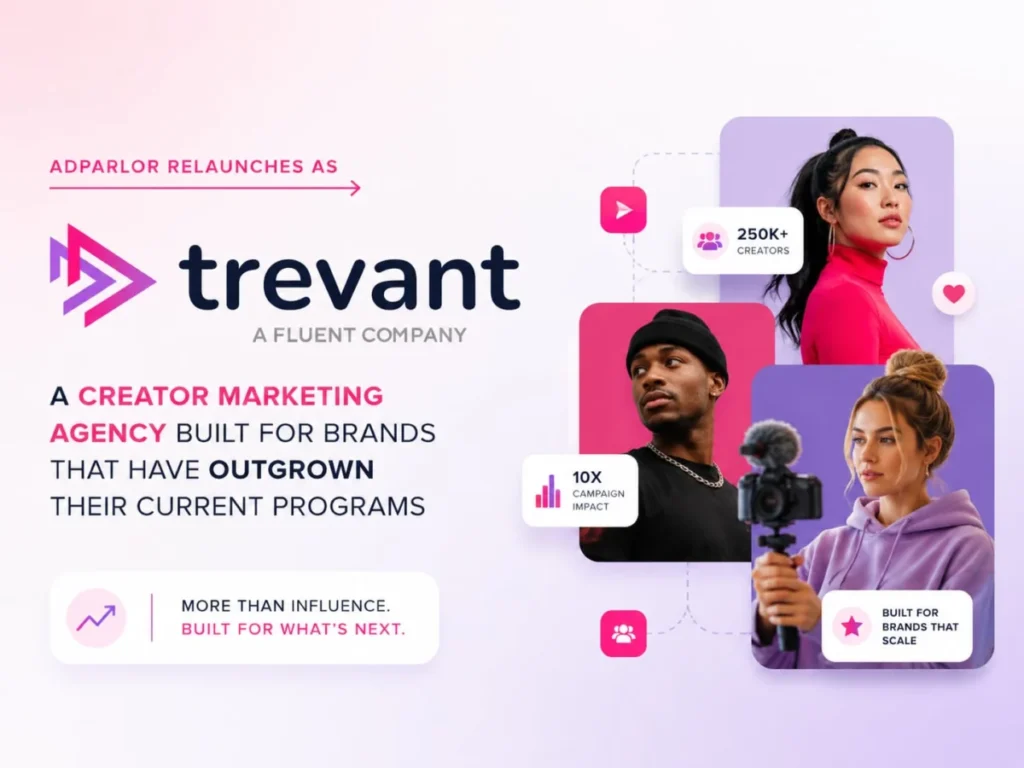
From AdParlor to Trevant: How a Legacy Paid Social Powerhouse is Redefining the Creator Economy
The creator economy has reached a critical inflection point. What began as a fragmented landscape of influencer partnerships and experimental social content has matured into a sophisticated, high-stakes marketing channel. As brands transition from "testing the waters" to integrating creator marketing into their core omnichannel strategies, the demand for enterprise-grade rigor has never been higher.
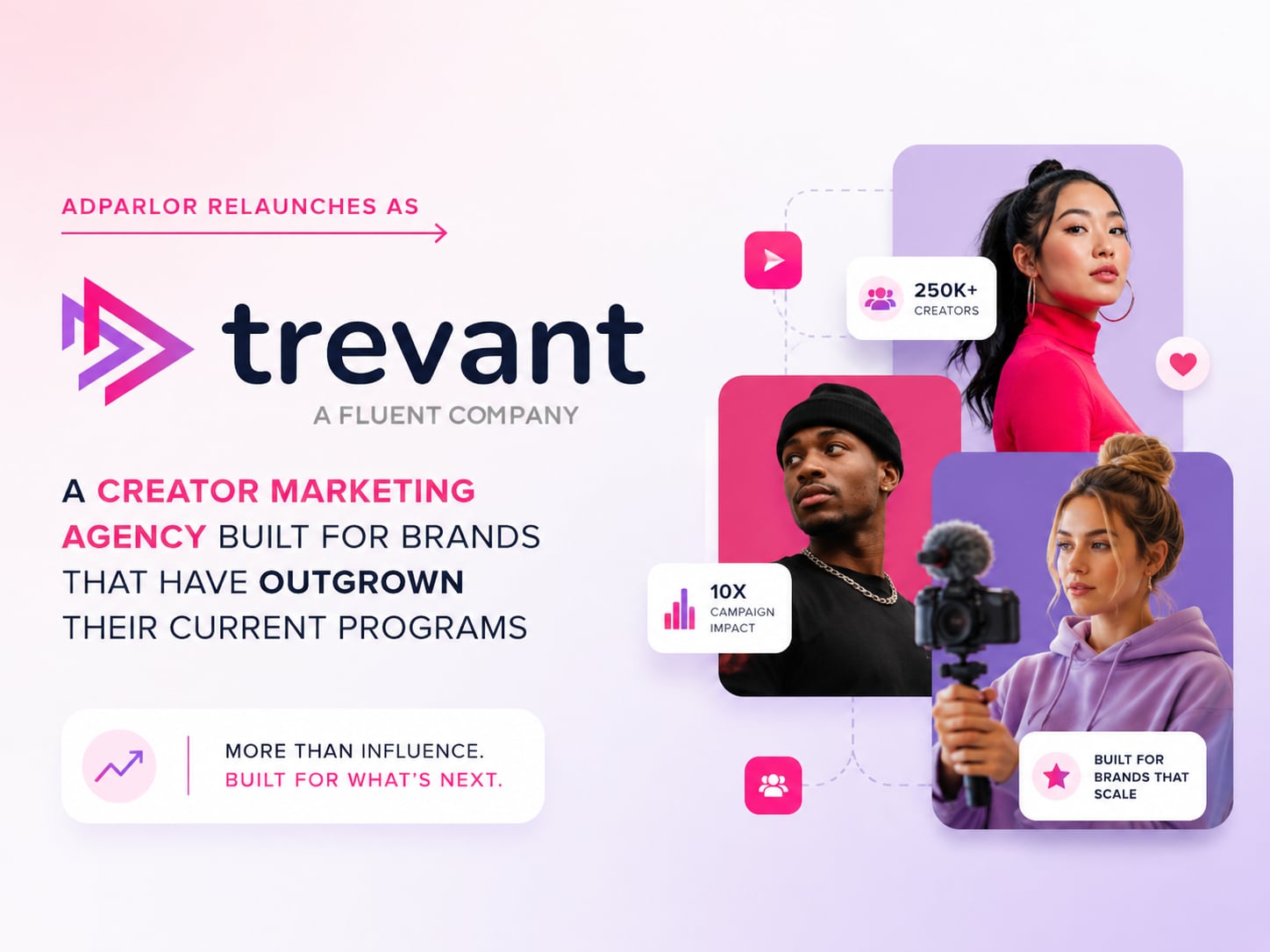
Enter Trevant, a newly launched creator marketing agency engineered specifically to bridge the gap between creative content and fiscal accountability. Born from the evolution of AdParlor—a foundational Meta Business Partner that managed over $1 billion in media and influencer spend—Trevant is positioning itself as the infrastructure layer for brands that have outgrown the "agency-of-the-month" model.
The Chronology of Evolution: From Paid Social to Creator Infrastructure
To understand Trevant, one must look at the lineage of its predecessor. AdParlor built its reputation on the bedrock of operational discipline within the paid social ecosystem. In an era where digital advertising was often plagued by lack of transparency, AdParlor distinguished itself through rigorous attribution, media efficiency, and brand safety protocols.
However, as the creator economy matured, the team behind AdParlor identified a recurring trend: the same brands that trusted them with their paid social budgets were struggling to integrate creator content into those high-performance funnels. While influencer marketing was delivering engagement, it was frequently failing to deliver the "enterprise-scale" data that CFOs demanded.
The launch of Trevant this month represents a strategic pivot. It is not merely a rebranding; it is a structural redesign of how creator marketing is executed. By applying the mathematical precision of paid social to the creative fluidity of influencer marketing, Trevant aims to solve the "operational breakdown" that occurs when brands try to scale creator programs beyond basic pilot phases.
Bridging the Performance Gap: The Trevant Methodology
For mid-market and enterprise organizations, the challenge is rarely about finding creators—it is about the "three pillars of friction": a full-funnel performance gap, operational complexity at scale, and measurement fragmentation.
Most agencies currently operating in the space optimize for "vanity metrics"—clicks, likes, and perhaps a simple add-to-cart. While these are necessary, they are insufficient for a brand looking to defend its Return on Ad Spend (ROAS) to a board of directors or a CFO.
"Most agencies will get you to an add-to-cart or a click and call that performance," says Kristina Coughlin, General Manager of Trevant. "We’re building programs that can defend omnichannel ROAS to a CFO. That’s a different infrastructure problem entirely—and it’s the one most brands are trying to solve on their own right now."
Trevant’s approach is built on three core operational tenets:
- Attribution Integrity: Moving beyond last-click models to understand the true impact of creator-led content on the entire customer journey.
- Scalable Infrastructure: Leveraging the same technology stacks that managed billion-dollar media spends to manage thousands of creator relationships simultaneously.
- Brand Safety at Scale: Ensuring that as programs grow, the quality of content and the risk management protocols remain consistent, regardless of the volume of creators involved.
Supporting Data: Proof of Concept
Trevant enters the market with a pedigree that few startups can claim. Because the agency is an evolution of a established player, it brings with it a robust roster of enterprise clients, including Hill’s Pet Nutrition, Norwegian Cruise Line, QVC, HSN, Jos. A. Bank, TP-Link, and Rocky Mountain Chocolate Factory.
The data provided by the agency highlights a shift away from the "campaign-by-campaign" mindset. With an average enterprise client retention rate of seven years and an average staff tenure of five years, Trevant is signaling that it operates more as an extension of an internal marketing department than a project-based vendor.
Furthermore, the agency’s technical efficiency is evidenced by its scale:
- Vetted Creator Network: Over 5,500 active creators under management.
- Sourcing Pool: Access to a database of 10 million+ creators across all major platforms.
- Operational Velocity: An average time of just 14 days from contract signature to the first piece of content going live.
- Fiscal Performance: An average reported ROAS of 4.36x across recent programs.
Implications for the Creator Economy
The emergence of Trevant suggests a broader industry trend: the professionalization of the creator economy. Brands are moving away from treating creator marketing as a "PR experiment" and are instead treating it as a primary performance channel, akin to Search or Social.
The Death of the "One-Off"
The implication for other agencies is clear: the era of the one-off campaign is ending. As brands consolidate their spend, they are looking for partners who can handle the "plumbing"—the data integration, the legal compliance, the tax infrastructure, and the cross-platform attribution. Agencies that cannot provide this level of operational depth will likely be pushed down-market or squeezed out of enterprise accounts.
The CFO-Led Marketing Era
Marketing departments are under increasing pressure to justify every dollar spent. By focusing on "defending ROAS to a CFO," Trevant is addressing a specific pain point in the modern enterprise. CFOs are no longer satisfied with "engagement rates"; they want to see how creator content impacts Customer Acquisition Cost (CAC) and Lifetime Value (LTV). By positioning themselves as the agency that solves this, Trevant is aligning itself with the current fiscal reality of CMOs.
Looking Ahead: The Path to Scaling
For brands currently stuck in the "scaling trap"—where doubling the budget leads to a breakdown in quality, communication, or measurement—Trevant offers a blueprint for growth. The agency’s focus on long-term program management rather than transactional campaign execution is a direct response to the complexity of the modern marketing ecosystem.
As Trevant continues to operate as a subsidiary of Fluent, Inc. (NASDAQ: FLNT), it benefits from the resources and technical stability of a publicly traded parent company, providing further assurance to enterprise clients who require stability and transparency.
The transition from AdParlor to Trevant is a microcosm of the creator economy’s broader journey. It is a transition from the "wild west" of influencers toward a mature, measurable, and highly disciplined industry. For brands that have proven that creator marketing works but are struggling to turn that success into a consistent, scalable engine of revenue, Trevant’s arrival marks a significant shift in the competitive landscape.
As the industry looks toward the next quarter, the focus will undoubtedly remain on efficiency. The agencies that thrive will be those that treat creators not just as talent, but as the high-performance media nodes they have become. Trevant, with its history of managing massive media spends, appears uniquely positioned to lead this charge into the next phase of digital marketing.
About the author: Nadica Naceva is a veteran content strategist and editor at Influencer Marketing Hub. With a keen eye for industry trends and a commitment to stripping away marketing jargon, she focuses on documenting the evolution of digital marketing and the professionalization of the creator economy.
For more information on the agency’s capabilities, visit trevant.com.
