

Decoding Global Audience Engagement: A Comprehensive Cross-Platform Analysis of News and Politics Media (April–July 2026)
Introduction: The New Geometry of Digital Newsrooms
In the hyper-competitive ecosystem of digital media, modern newsrooms face a paradoxical reality: while global audiences have an insatiable appetite for information, capturing and sustaining their attention has never been more difficult. The era of a one-size-fits-all publishing strategy is officially over. Today, algorithmic fluctuations, fragmented geographic markets, and shifting platform preferences mean that success is dictated not merely by what a story is, but how, when, and where it is delivered.
To decode the mechanics of modern audience engagement, a comprehensive cross-platform analysis was conducted utilizing Tubular Intelligence data spanning from April 22 through July 21, 2026. By examining video length, posting cadences, trending hashtags, and top-performing narratives across the Asia-Pacific (APAC), Latin America (LATAM), Europe, Middle East, and Africa (EMEA), and North America, this data-driven report uncovers the hidden friction points and missed opportunities defining the global digital media landscape.
The core takeaway is profound yet straightforward: publishers must pivot away from high-volume output strategies. Instead, modern editorial growth relies on aligning content distribution with rigorous, regionalized audience behavior, platform mechanics, and nuanced consumer habits.
1. The Main Facts: Global Disconnects Between Output and Engagement
The latest Tubular Intelligence metrics reveal stark operational misalignments between how major media publishers allocate their resources and how audiences actually consume content. Across multiple continents, traditional newsrooms are falling into the trap of over-indexing on saturated content bands while ignoring high-performing anomalies.

- The APAC Duration Mismatch: On YouTube, News & Politics publishers in the Asia-Pacific region heavily concentrate their publishing efforts on mid-length videos (2 to 5 minutes). However, empirical data shows this exact duration tier receives the lowest engagement per video. Conversely, viewer engagement peaks dramatically at both ends of the spectrum: short-form clips (0–30 seconds) and deep-dive explainers (15–20 minutes).
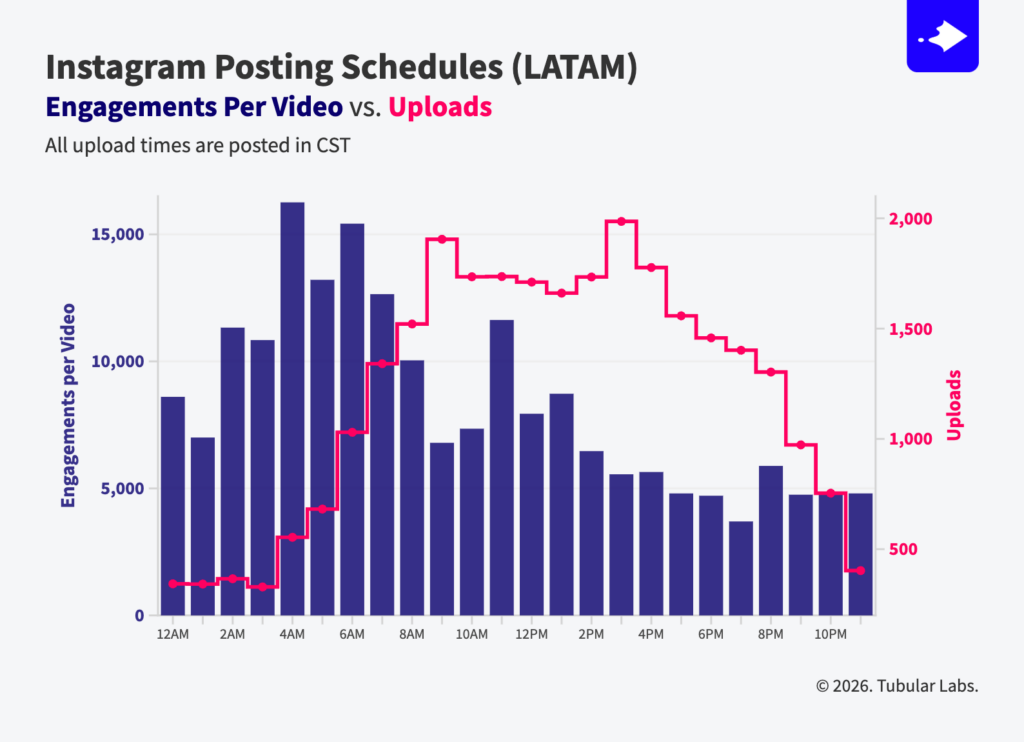
- The LATAM Timing Gap: In Latin America, Instagram data highlights a glaring temporal disconnect. News and Politics publishers flood the platform with content during mid-afternoon windows, whereas audience engagement peaks sharply in the morning. These two prime windows share virtually no overlap, leaving massive amounts of untapped potential on the table.
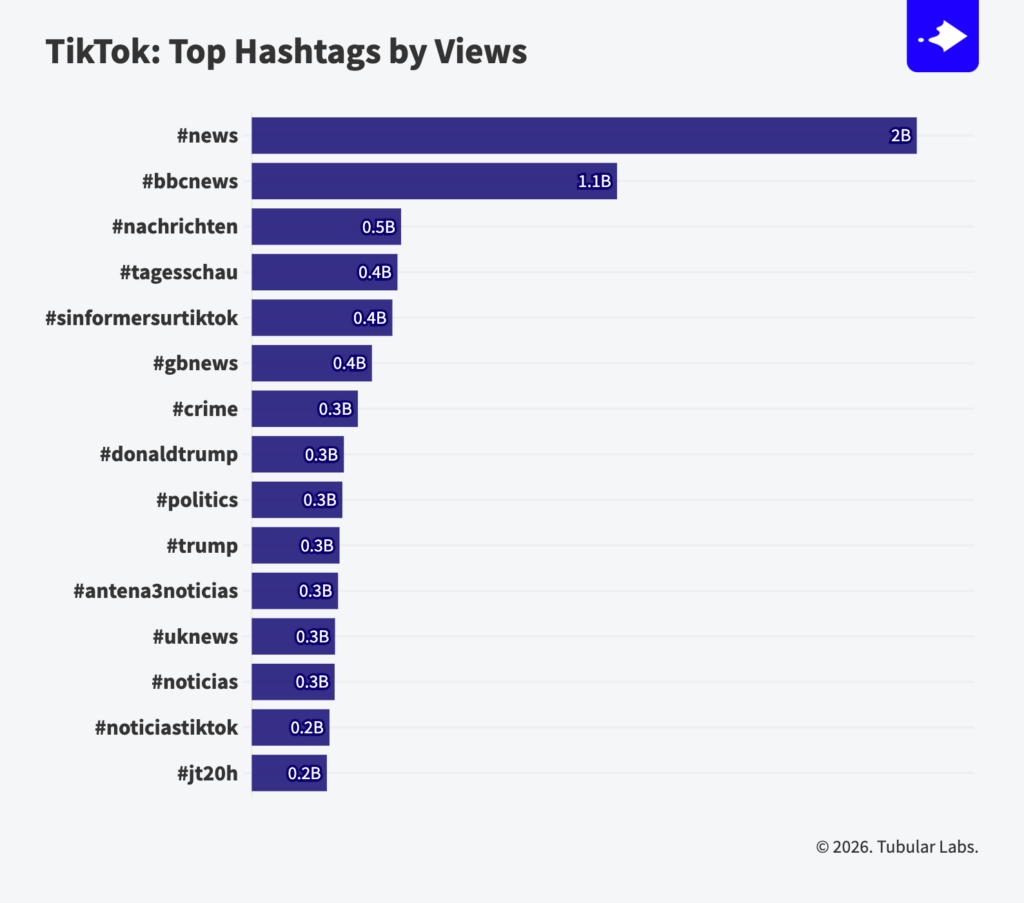
- The EMEA Discovery Matrix: On TikTok, the EMEA region demonstrates a complex web of discovery. Content visibility is heavily driven by a blend of global political flashpoints (such as U.S. presidential figures), proprietary broadcaster branding, and localized multilingual tagging that bridges diverse geographic communities.
- The North American Reach vs. Impact Dichotomy: In the United States, cross-platform analysis proves that raw view counts and active audience engagement often pull in opposite directions. High-intensity breaking news footage commands massive passive view counts, whereas uplifting human-interest narratives generate the high-retention sharing loops necessary for sustained digital presence.
2. Chronology of the Study: Monitoring Content Mechanics (April – July 2026)
To understand how these insights materialized, it is helpful to look at the observation window of the study itself.
- Late April 2026: Tubular Labs initiated its comprehensive cross-platform tracking sweep, focusing specifically on the News & Politics genre across media publishers in APAC, LATAM, EMEA, and North America. Initial data extraction flagged early anomalies in how YouTube creators in APAC were handling video pacing.
- May 2026: Mid-quarter data synthesis isolated regional behaviors on Instagram and TikTok. Researchers mapped out upload timestamps in LATAM against algorithmic engagement spikes, revealing the morning-versus-afternoon distribution lag. Simultaneously, hashtag categorization matrices were deployed across EMEA to track how language fragmentation impacts search visibility.
- June 2026: Focus shifted to North American cross-platform monoliths. Analysts dissected peak viral moments—specifically comparing high-view breaking news videos against high-engagement community-driven human interest pieces.
- July 21, 2026: The observation window officially closed, yielding a massive repository of comparative cross-platform data. The final synthesis confirmed that audience behavior is not only measurable and strategic, but fundamentally actionable for modern publishers willing to re-engineer their distribution workflows.
3. Supporting Data & Regional Deep Dives
A granular look at the regional findings illuminates the exact mechanics governing contemporary digital video consumption.
APAC: Navigating the YouTube Duration Trap
On YouTube, the prevailing institutional wisdom has long dictated that mid-length content—ranging from two to five minutes—strikes the ideal balance between comprehensive reporting and viewer retention. However, Tubular Intelligence data from April to July 2026 shatters this assumption for News & Politics publishers in the APAC region.
Publishers in the region pour more than a quarter (25%+) of their total video uploads into the 2–5 minute mid-length band. Yet, performance metrics indicate that this duration bucket receives the weakest engagement per video.
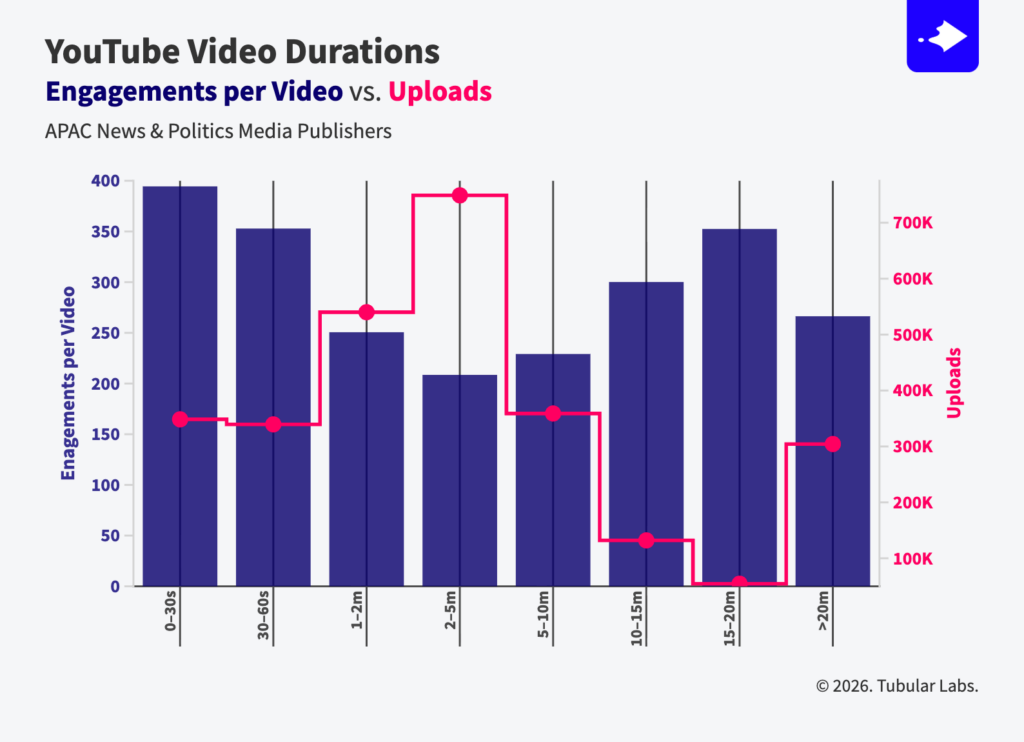
[APAC YouTube News & Politics Content Distribution vs. Engagement]
-----------------------------------------------------------------
Video Duration Band      | Upload Volume (Share) | Engagement Per Video
-----------------------------------------------------------------
0 - 30 Seconds           | Moderate              | PEAK (High)
2 - 5 Minutes            | HEAVY (25%+)          | LOWEST (Weakest)
15 - 20+ Minutes         | Moderate              | PEAK (Highest)
-----------------------------------------------------------------
Strategic Takeaway: Great journalism can theoretically be packaged at any length. However, the resounding success of quick-hit vertical clips that capture immediate visual attention, contrasted with long-form analytical explainers that foster deep intellectual investment, reveals a systemic flaw. Publishers relying heavily on mid-length content are systematically optimizing for simple output volume at the direct expense of cultural impact and audience loyalty.
LATAM: Winning the Morning Race on Instagram
In Latin America, the battlefield for News & Politics visibility on Instagram is defined by a severe timing inefficiency.
Data mapping upload volumes against engagement rates per video demonstrates that regional publishers post most heavily during the mid-afternoon hours. However, audience engagement curves peak sharply during the early morning hours. These two operational windows barely overlap.
Strategic Takeaway: The early-morning engagement window in LATAM is not only the region’s best-performing timeframe; it is also one of its least crowded. Currently, only a tiny sliver of publisher uploads lands in this lucrative morning slot. By shifting distribution schedules forward, digital newsrooms can capture significantly stronger per-video engagement while competing against a fraction of the noise generated during peak afternoon rushes.
EMEA: The Multilingual, Brand-Led TikTok Discovery Matrix
On TikTok across Europe, the Middle East, and Africa, discoverability within the News & Politics category relies on a tripartite structural framework. An analysis of the most-viewed hashtags highlights three undeniable patterns:
- Global Super-Aura of U.S. Politics: Geopolitical curiosity transcends domestic borders. Both
#donaldtrumpand#trumpconsistently rank within EMEA’s top 12 most-viewed hashtags, proving that American presidential politics remains one of the single most dominant news topics across the entire EMEA footprint. - The Power of Proprietary Branding: Branded hashtags punch vastly above their weight class. Broadcaster-specific tags such as
#bbcnewsand#tagesschauare utilized by only a handful of creators—sometimes exclusively by the parent organization itself. This confirms that highly recognizable, branded tags do not merely categorize content; they actively drive organic discovery while reinforcing institutional brand authority. - Linguistic Fragmentation for Search Visibility: Language segmentation dictates how users unearth content. Rather than acting as simple organizational markers, multilingual tags—such as English (
#news), German (#nachrichten), Spanish (#noticias), and French (#sinformersurtiktok)—are actively deployed for search engine optimization (SEO), cross-border branding, and granular performance tracking.
North America: Views vs. Engagements in Breaking News
When evaluating the top-performing videos from major U.S. News & Politics publishers, a clear bifurcation emerges between passive consumption and active community interaction. This dynamic is perfectly encapsulated by contrasting two viral pieces from the tracked period:
- Fox News (Most Viewed): Leveraging raw, visceral footage of a violent, high-stakes breaking news event, Fox News amassed an astonishing 247 million views alongside 5.9 million engagements. The content capitalized on immediate visual shock value and urgent public interest.
- ABC News (Most Engaging): Conversely, an uplifting, happy-ending human-interest spectacle published by ABC News generated 65.7 million views while drawing over 9.8 million engagements. Despite pulling in roughly one-fourth of the raw view count of the Fox News clip, the ABC segment generated vastly superior active interaction rates (likes, saves, comments, and crucially, shares).
Strategic Takeaway: Reach and engagement frequently pull in opposite directions. High-impact breaking news commands broad passive viewership, but emotionally resonant, positive resolution stories inspire the active sharing loops that keep content alive across algorithms. Newsroom leadership must consciously decide which performance metric better suits their overarching brand strategy before greenlighting a story package.
4. Official Industry Responses & Perspectives
As digital media strategists grapple with these findings, industry leaders have increasingly emphasized the necessity of structural adaptation.
Media analysts tracking the shift argue that traditional newsrooms have been structurally addicted to velocity—producing high quantities of content to appease legacy algorithmic assumptions. However, platform specialists point out that modern curation algorithms reward retention and active interaction far above sheer posting frequency.
"The data from April through July 2026 makes one thing unmistakably clear," notes a digital media strategy consultant familiar with Tubular Intelligence reporting. "Publishers can no longer afford to treat platform distribution as an afterthought or a digital dumping ground for linear broadcast segments. When APAC publishers ignore duration performance metrics, or LATAM teams miss the morning engagement window, they are essentially fighting against the natural grain of consumer habits. Sustainable growth requires moving away from mindless volume and toward deliberate, behavior-aligned publishing."
Furthermore, editorial directors across EMEA have noted that the blurring lines between domestic and international political interest—evidenced by the dominance of U.S. political tags in European feeds—require newsrooms to adopt a globally-aware tagging and packaging methodology, even when covering local angles.
5. Strategic Implications for the Future of Digital Newsrooms
The cross-platform revelations synthesized from the early-mid 2026 data carry profound implications for media organizations, brands, and digital strategists alike. Success in the modern News & Politics genre is no longer a guessing game; it is an exact science governed by predictable, measurable user behaviors.

Summary of Actionable Pillars for Publishers:
- Restructure Video Duration (APAC Blueprint): Audit content libraries to trim bloated mid-length content (2–5 minutes) unless deep narrative complexity explicitly requires it. Re-allocate resources toward punchy, sub-30-second vertical hooks for discovery, or invest heavily in comprehensive, highly structured long-form explainers (15–20+ minutes) that satisfy high-intent viewers.
- Optimize Temporal Distribution (LATAM Blueprint): Shift publishing schedules away from congested mid-afternoon blocks. Capitalize on quiet, high-engagement morning windows to capture prime audiences with significantly lower competitive friction.
- Leverage Multilingual SEO and Branded Tags (EMEA Blueprint): Treat hashtags not as aesthetic afterthoughts, but as sophisticated search and branding infrastructure. Combine proprietary institutional tags with localized linguistic variants to capture fragmented cross-border search traffic.
- Define the North Star Metric (North American Blueprint): Explicitly choose between maximizing raw reach (via high-intensity breaking news and visual shock) and fostering active community engagement (via narrative resonance and positive resolution). Align video framing and distribution tactics directly with that chosen objective.
Conclusion
Ultimately, the overarching message for the digital publishing ecosystem is definitive: performance in News & Politics isn’t just about what you cover—it’s about how, when, and how fast you deliver it.
From the structural duration splits in the Asia-Pacific to the untapped morning engagement windows in Latin America and the multilingual search matrices of Europe, audience behavior is quantifiable, predictable, and deeply strategic. For publishers and brands alike, the ultimate opportunity of the digital age is not to publish more, but to publish smarter.
To uncover customized News & Politics insights tailored specifically to your regional audience and publishing vertical, industry professionals are encouraged to leverage advanced data solutions and reach out to analytics leaders such as Tubular Labs for comprehensive platform intelligence.
