In the modern media landscape, ad sales is no longer a simple transactional exercise of trading digital real estate for capital. Media sellers are no longer just offering ad space—they are selling targeted, highly engaged audiences. However, as global marketing budgets tighten and brands demand hyper-accountability, proving the intrinsic value of that audience to prospective buyers requires a sophisticated, data-driven approach.
Publishers have long had access to valuable audience information harvested from their owned-and-operated (O&O) channels. Yet, in an ecosystem crowded with alternative digital touchpoints, first-party numbers alone are rarely enough to stand out. To secure premium sponsorships and accelerate deal velocity, media sellers must contextualize their audiences using cross-platform third-party data, transforming basic vanity metrics into undeniable proof of value.
Main Facts: The Evolution of Modern Media Ad Sales
The fundamental challenge in digital advertising today is differentiation. Thousands of publishers, content creators, and social platforms are all vying for the exact same pool of corporate ad dollars. To win, media sales teams must move past generic metrics—such as total monthly unique visitors or high-level impressions—and deliver deep, granular insights that align directly with a brand’s unique marketing objectives.
The Data Imperative: Successful ad sales now rely on a hybrid model that combines reliable first-party insights (gathered directly from publisher websites and apps via tools like Chartbeat) with broad third-party social video intelligence.
The Power of Context: Third-party data bridges the gap by tracking audience behaviors, cross-channel preferences, and content affinities across major social video ecosystems including YouTube, TikTok, Instagram, and Facebook.
The Tubular Advantage: Utilizing global-scale social video analytics platforms like Tubular Labs allows ad sales teams to move from broad assumptions to razor-sharp targeting, giving them critical leverage during negotiations.
Chronology: The Shift from Impressions to Audience Intelligence
To understand how ad sales reached its current state, it helps to examine the evolution of media measurement over the past two decades:
The Early Digital Era (Late 1990s – 2000s): Media sales were dominated by basic display ads sold on a Cost-Per-Thousand (CPM) basis. The primary goal was maximizing raw page views and banner impressions, often leading to inflated and superficial metrics.
The Rise of O&O Analytics (2010s): As publishers developed sophisticated proprietary websites and mobile apps, first-party data tools emerged. Publishers began tracking real-time user behavior, session lengths, and click paths to better understand their native audiences.
The Social Video Explosion (Mid-2010s – 2020s): Audiences fragmented across social platforms. Consumption habits shifted heavily toward video content on YouTube, TikTok, and Instagram. O&O data proved insufficient because a publisher’s audience was now engaging heavily across outside networks.
The Modern Era of Data Enrichment (Present Day): Leading sales organizations now integrate first-party web metrics with comprehensive third-party social video data. Platforms like Tubular Labs provide a holistic view of viewer behavior across the entire digital ecosystem, enabling hyper-targeted, data-backed sales pitches.
Supporting Data: Leveraging Tubular for Strategic Advantage
Gathering audience data is only half the battle; the true skill lies in weaponizing that data to create a compelling, differentiated pitch. Tubular Labs, serving as a massive repository of global social video data, equips ad sales teams with specific pillars of insight that transform standard sales conversations.
1. Granular Demographic Segmentation
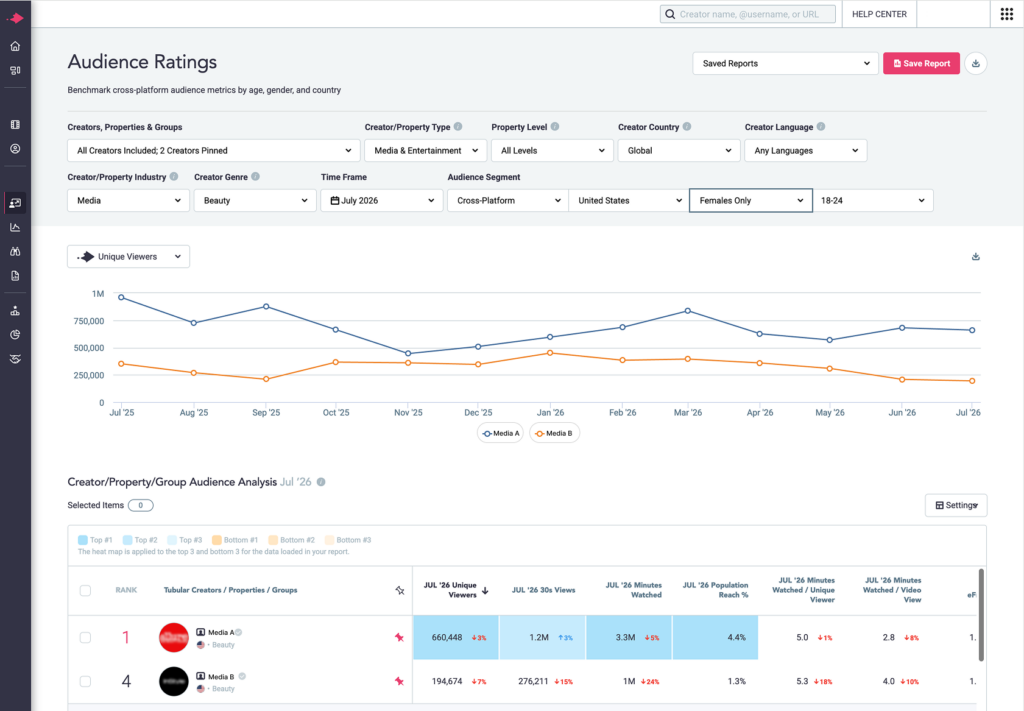
Advertisers rarely want a generic mass audience; they are hunting for specific consumer segments defined by age, gender, and geographic location. Tubular allows sales teams to pull exact demographic breakdowns to demonstrate how their properties perform with a brand’s precise target market.
The Competitive Edge: Consider two competing media companies bidding for a beauty brand campaign targeting women aged 18–24. Without advanced analytics, their content might look identical to the buyer. However, by deploying Tubular’s demographic segmentation, Media Company A can instantly prove a higher concentration and deeper engagement index within that exact age bracket, effectively securing the ad spend.
2. Uncovering Hidden Audience Overlap
Advanced ad sales go beyond direct content alignment. By analyzing cross-category viewing habits, sales teams can uncover unexpected audience affinities, opening up new avenues for non-endemic brand partnerships.
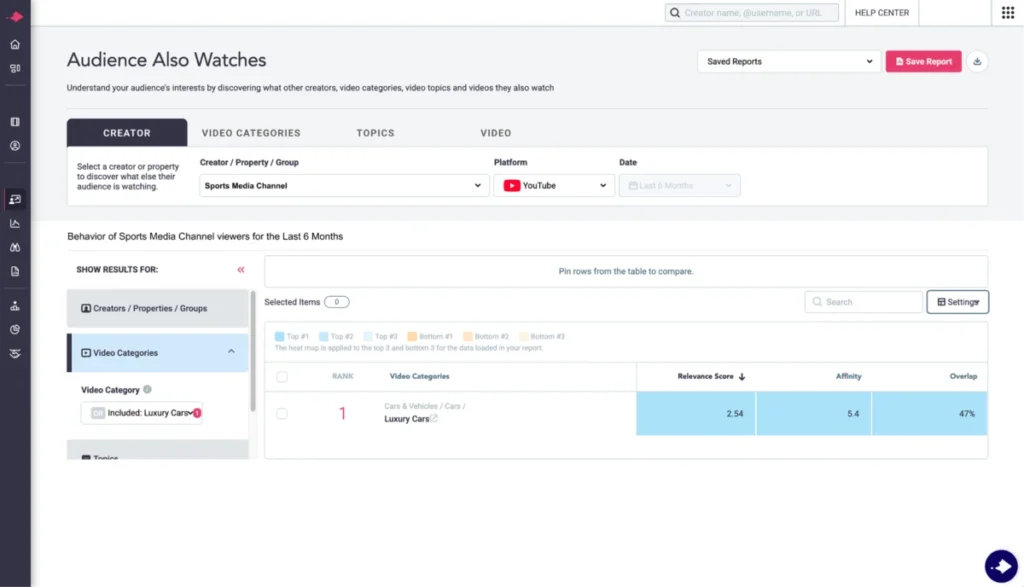
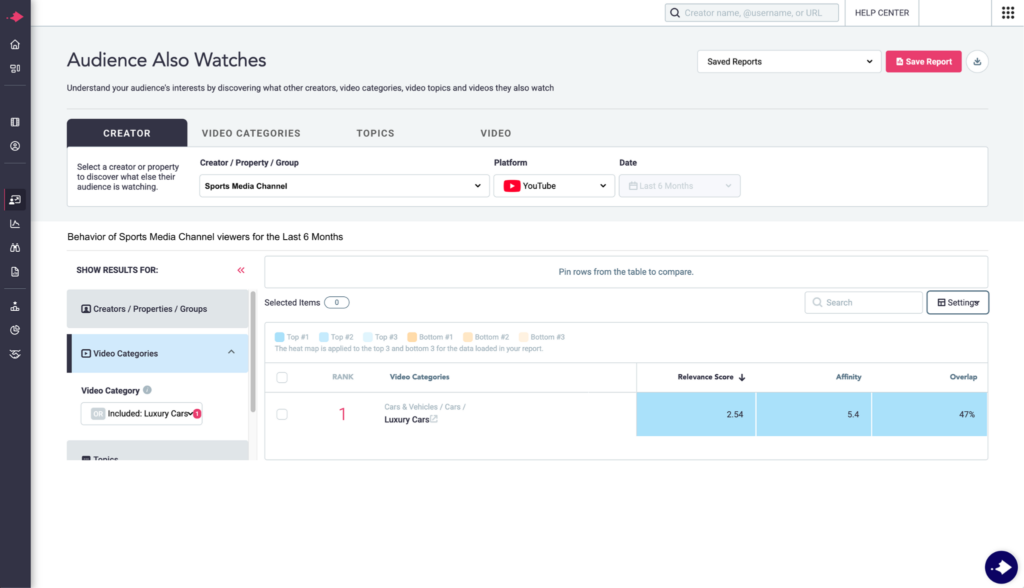
The Competitive Edge: A sports media property pitching a luxury car manufacturer can utilize Tubular’s "Audience Also Watches" feature to reveal that 47% of its sports-focused video audience also actively consumes luxury automotive content on YouTube. This concrete data point proves to the brand that the sports channel’s audience already possesses a pre-existing affinity for high-end vehicles.
3. Content Performance and Momentum Tracking
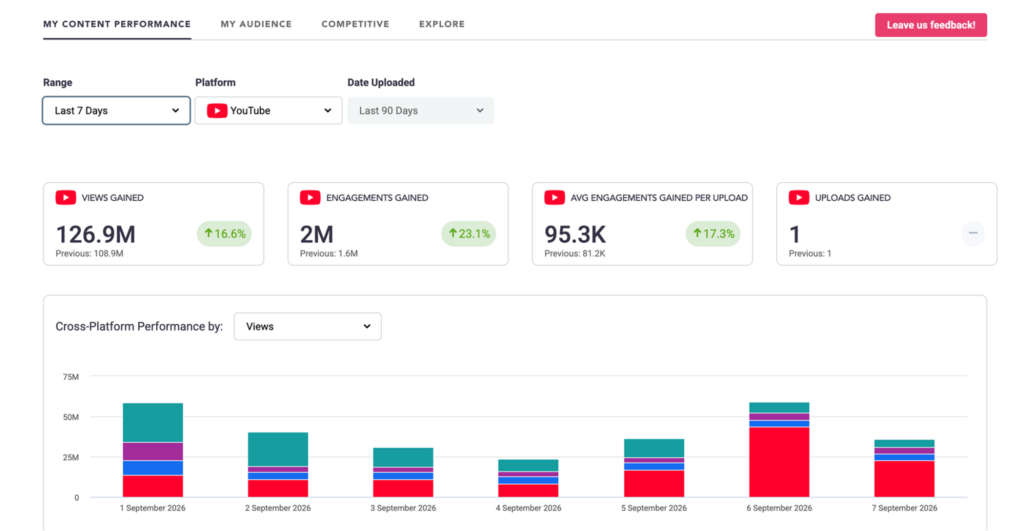
Growth metrics carry more weight when tied to specific demographic momentum. Sellers can track platform gains and year-over-year trends, aligning them with the exact segments advertisers care about most.
The Competitive Edge: Instead of claiming broad channel growth, a media seller can point to concrete metrics such as a 55% year-over-year increase in viewership among 25-to-34-year-olds on YouTube. This shifts the conversation from past history to current momentum.
Official Responses and Industry Perspectives
Media executives and revenue strategists across the publishing ecosystem have increasingly voiced the necessity of transparent, cross-platform data enrichment in closing high-value deals.
"In today’s market, buyers are held to strict performance standards, and they expect us to be held to those same standards," notes a senior vice president of digital revenue at a major publishing house. "We can no longer walk into a pitch meeting armed only with our site’s monthly unique visitor counts. Advertisers want to know the who, the where, and the why behind the view. Integrating third-party social intelligence has fundamentally changed our negotiation posture; it gives us immutable proof that our audience is not just large, but deeply resonant with the brand’s core messaging."
Industry analysts echo this sentiment, pointing out that publishers who fail to embrace data-driven narrative building often find themselves trapped in commoditized, race-to-the-bottom pricing wars. Conversely, publishers utilizing deep cross-platform metrics can command premium CPMs by defending their value proposition with empirical evidence.
Real-World Case Study: Pitching the Travel Sector
To visualize how these data points translate into a closed deal, examine the following anonymized case study involving a global news publisher and a major travel booking platform.
The Objective
A prominent travel booking platform wanted to drive unaided brand awareness among UK millennials aged 25–34, specifically aiming to capture market share during peak booking windows.
The Data Execution
The publisher’s ad sales team utilized Tubular’s analytics engine to pull two critical insights:
Cross-platform content performance proved that the publisher’s travel-related video content outperformed competing news outlets in total views, comments, and shares within the target demographic.
Audience overlap data revealed a strong crossover between the publisher’s core audience and niche lifestyle subcultures—specifically surrounding minimalist packing tutorials and aesthetic café content.
The Pitch Implementation
Armed with these insights, the sales team structured their pitch around actionable strategy rather than generic reach:
"Our content already outperforms competing publications on views, comments, and shares among UK millennials, proving our audience is actively engaged. But our audience overlap data can give your upcoming campaign an asymmetric edge.
We are seeing a notable crossover between travel intent and our ‘foodie’ and lifestyle subcultures—specifically regarding minimalist packing and aesthetic city guides. Rather than running generic, broad travel banner ads, you can build creative tailored to those specific niches to reach an audience that is already primed to pay attention and take action."
This approach transformed a standard media buy into a bespoke, strategic partnership, ultimately securing the sponsorship deal by aligning the publisher’s verified audience behaviors directly with the advertiser’s campaign goals.
Implications for the Future of Media Monetization
The transition toward data-driven ad sales has profound implications for publishers, creators, and advertisers alike. As privacy regulations tighten and third-party cookies continue to phase out, the importance of reliable first-party data combined with transparent, compliant third-party social intelligence will only accelerate.
Erosion of Vanity Metrics: Impressions and raw follower counts are rapidly becoming obsolete. Sales teams that rely solely on these superficial figures will struggle to justify premium pricing.
Elevated Consultative Selling: Ad sales professionals are evolving into strategic consultants. By utilizing tools that uncover cross-audience affinities and behavioral trends, sellers can help brands conceptualize more effective, high-performing campaigns.
Shortened Sales Cycles: When a pitch is built on verifiable, highly specific data points, negotiations shift away from prolonged debates over reach and valuation. Hard proof accelerates deal velocity, helping publishers secure and retain premium sponsors faster than ever before.
Ultimately, the future belongs to media sellers who can master the art of the data-backed narrative—turning cold numbers into warm, compelling stories that prove undeniable audience value.