
Beyond the Sandbox: How Industry Giants Gamify Innovation to Drive Corporate Growth
In the modern corporate landscape, the transition from a standard operational model to a true "growth-driven" organization is the difference between stagnation and market dominance. While the growth methodology—testing, learning, and iterating—is theoretically straightforward, the practical implementation often hits a wall. That wall is culture.
True growth operations incite innovation from the bottom up. In a mature growth culture, an entry-level employee is empowered to propose a hypothesis, a growth team is tasked with operationalizing that test, and leadership acts as the data-informed decision-maker. However, bridging the gap between a company that tries to implement growth and one that has growth in its DNA requires more than just process; it requires structural gamification and cultural incentives.
The Growth Chasm: Why Top-Down Commitment Matters
Most successful growth transformations follow a top-down trajectory. Executives must first be educated on the methodology, middle management must align strategies, and the growth teams must execute the experiments. Yet, the chasm between "adopting growth" and "living growth" is wide.
To cross this divide, industry titans have turned to gamification. By turning innovation into a measurable, rewarded, and even competitive endeavor, these companies have ensured that every employee—from the warehouse floor to the C-suite—is invested in the company’s evolution.

Chronology of Innovation: Case Studies in Cultural Engineering
1. Amazon: The "Just Do It" Award
The origin of Amazon’s obsession with speed and customer-centricity can be traced back to 1998. During a period of intense operational pressure, a customer service associate faced a backlog of 250 inquiries. Lacking the resources for a massive staff expansion, the associate proposed a radical, self-contained experiment: clear the entire queue within 24 hours. The reward? A $200 bonus.
The task was completed. When Jeff Bezos learned of the feat, he didn’t just praise the output; he analyzed the mechanics. He recognized that the success was driven by autonomy, a sense of ownership, and a bias for action. From this incident, the "Just Do It" Award was born.
- The Mechanism: The award recognizes employees who take initiative and deliver results, regardless of their role.
- The Scale: Given to only a handful of individuals twice a year, the award is the most prestigious internal honor within a workforce exceeding 600,000. It serves as a permanent reminder that at Amazon, innovation is not just a management responsibility—it is an individual mandate.
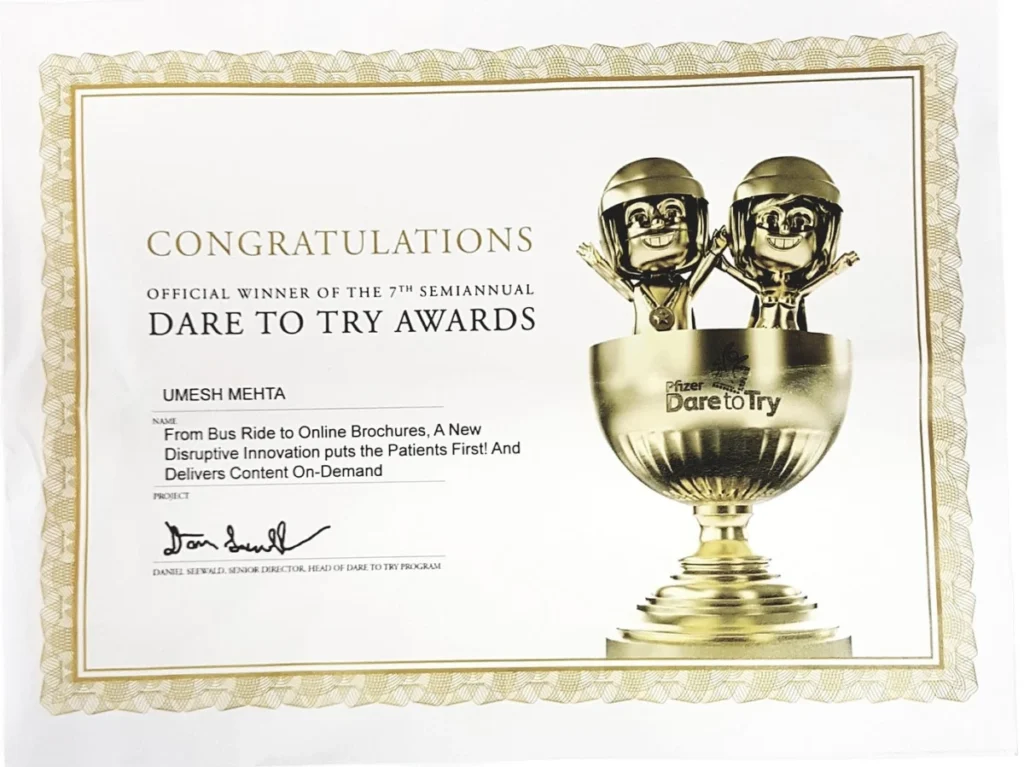
2. Pfizer: The "Dare to Try" Initiative
For a multinational pharmaceutical corporation, the risks of failure are often measured in millions of dollars and regulatory hurdles. Yet, Pfizer recognized that the greatest risk was not failure, but the paralysis of inaction. Ten years ago, they launched "Dare to Try."
- The Philosophy: The program creates a psychological safety net, encouraging employees to fail "freely but inexpensively."
- The Execution: Pfizer established a network of "champions"—self-nominated employees who act as internal evangelists for experimental methodology. By providing tools, training, and a clear framework for testing, the company transformed "Dare to Try" from a pilot program into a core brand pillar. It is now the primary mechanism for solving complex organizational puzzles, moving the needle on internal processes that would otherwise remain stagnant.
3. 3M: The "Innovate or Die" Mandate
3M has consistently ranked among the world’s most innovative companies for decades. Their secret lies in institutionalizing innovation through rigorous metrics.
- The 30% Rule: Mirroring the spirit of "Day 1" thinking, 3M mandates that 30% of each division’s revenue must be generated from products introduced within the last four years. This forces a constant cycle of renewal.
- Support Systems: Beyond the mandate, 3M provides the support systems necessary for success. They reward "Dual Ladder" career progression, ensuring that brilliant scientists and innovators can advance within the company without being forced into management roles. By separating technical excellence from administrative oversight, they keep their best minds focused on the "next big thing."
4. Google: The 20% Project
Perhaps the most famous iteration of experimental culture is Google’s 20% rule. Building upon the legacy of 3M’s 15% rule, Google formalizes the "side project."
- The Concept: Employees are encouraged to spend up to 20% of their paid work time pursuing independent projects.
- The Output: The history of this project is written in the company’s product roadmap. Gmail, Google News, and AdSense—the pillars of Google’s financial empire—all began as "20% projects." This isn’t just a perk; it is a structural hedge against disruption, ensuring that the company’s next breakthrough is always incubating in the minds of its employees.
Supporting Data and Strategic Implications
The common denominator across these organizations is the intentional removal of friction from the creative process. When we look at the data surrounding these programs, the implications for modern businesses are clear:
- Reduced Cost of Failure: By gamifying experimentation, these companies have effectively lowered the "cost of a bad idea." When employees are rewarded for the process of testing, they are less likely to fear the outcome of a failed test.
- Internal Talent Retention: High-performing, creative talent gravitates toward environments where their ideas are treated as assets rather than disruptions.
- Speed to Market: Institutionalized experimentation creates a "bias for action." When a decision-maker is presented with data from a small-scale, internal test, the speed of implementation increases exponentially compared to a proposal based on speculation.
Official Perspectives on Organizational Culture
Industry leaders increasingly argue that strategy is subservient to culture. As one executive noted during a recent industry forum on digital transformation: "You can write the perfect growth strategy on a whiteboard, but if your culture is built on the fear of failure, your strategy will die before the first test is launched."
The consensus among successful growth leaders is that the "bottom-up" approach to innovation is the only sustainable model in a rapidly evolving market. When the hierarchy is tasked with setting the North Star (the goals) and the base of the pyramid is tasked with the navigation (the tests), the company gains an agile, adaptive structure that is difficult for competitors to replicate.

Key Takeaways: How to Build Your Own Growth Engine
For companies looking to emulate the success of Amazon, Pfizer, 3M, and Google, the path forward involves three critical shifts:
- Gamify the Wins: Don’t just reward the result; reward the test. Implement internal awards or recognition programs that celebrate "smart failures"—experiments that didn’t work but provided high-value data.
- Institutionalize Time: If you want innovation, you must carve out the time for it. Whether it is 10%, 15%, or 20%, explicitly allow employees to work on projects outside their core job description.
- Measure the Freshness: Adopt a "3M-style" metric. Challenge your divisions to ensure a specific percentage of their revenue comes from recent innovations. This prevents the "legacy trap" where companies become too reliant on yesterday’s products.
- Clear the Path: The most important role for leadership is to remove the barriers that prevent the bottom from suggesting ideas. If an entry-level employee feels they cannot propose a test, your growth engine is already stalled.
Conclusion
Growth is not an end state; it is a discipline. By moving away from the traditional, siloed approach to innovation and embracing a culture of gamified experimentation, organizations can tap into the collective intelligence of their entire workforce. The chasm between "trying to grow" and "being a growth company" is bridgeable, but only if you are willing to let your people lead the charge. As the history of these four giants proves, the most innovative companies are not just those with the best products, but those with the best systems for encouraging their people to "just do it."
