
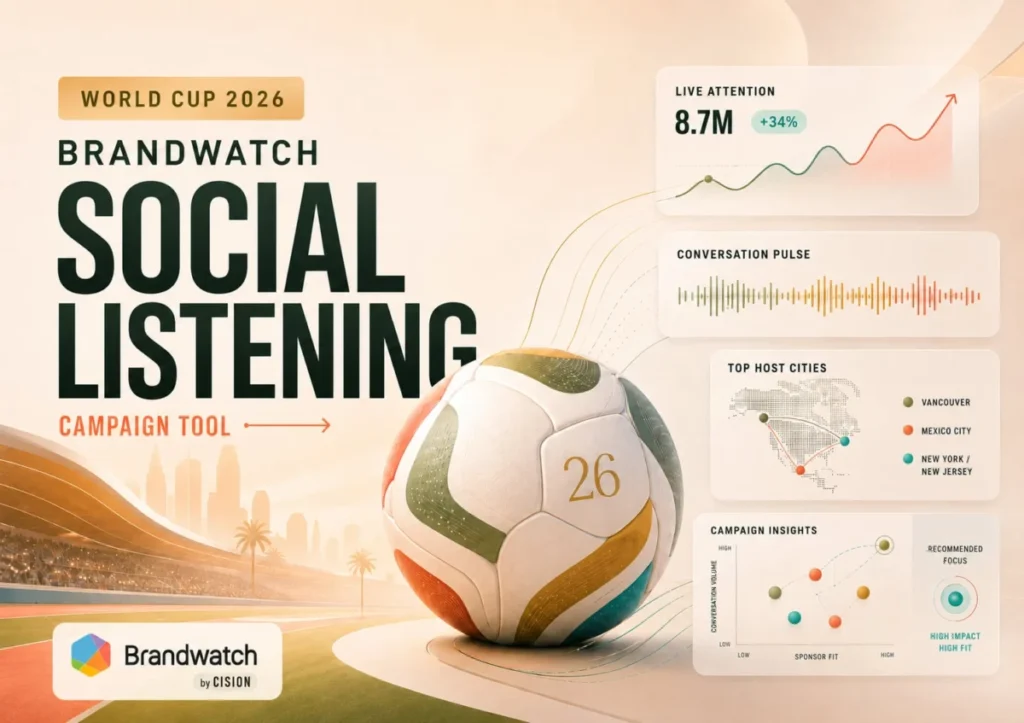
Beyond the Logo: Mastering Real-Time Attention in the Era of World Cup 2026
For decades, the playbook for World Cup sponsorship was rigid and predictable. Global brands would secure multi-million dollar partnerships, finalize high-production campaigns months in advance, and launch them with a "set it and forget it" mentality. Performance was measured in the cold, distant weeks following the final whistle.
However, the 2026 World Cup—the largest men’s tournament in history, spanning 48 teams, 104 matches, and 16 host cities across Canada, Mexico, and the United States—has shattered this legacy model. In an era defined by hyper-fragmented digital discourse, static sponsorship is no longer enough. The sheer scale of the 2026 event means that audience attention will not remain tethered to the pitch; it will migrate at lightning speed between cities, cultural sub-trends, creator-led narratives, and real-time fan reactions.
To thrive, marketers must transition from "exposure" to "attention." This is the core premise of Brandwatch’s Football Attention Index, a tool designed to provide the real-time, actionable intelligence required to navigate the most complex sporting event in history.
The Shift: From Passive Exposure to Active Engagement
The fundamental challenge for sponsors in 2026 is that reach is now a commodity. Because football remains the world’s most popular sport, brand visibility is guaranteed for official partners by default. Yet, visibility is not synonymous with engagement. A logo on a perimeter board provides exposure, but it does not necessarily translate into a meaningful consumer connection.
True marketing success in the 2026 World Cup will be defined by the ability to pivot. Sponsors must ask: Are fans actively discussing the campaign? Is the creative resonating with the broader cultural zeitgeist? Does the brand feel like a participant in the tournament’s live, unfolding story, or merely a background fixture?
This reality transforms social listening from a back-end reporting tool into a front-end strategic necessity. By utilizing the Brandwatch Football Attention Index, marketers can move beyond vanity metrics and begin to treat attention as a dynamic, real-time signal that informs when to amplify, localize, or pull back on marketing efforts.
Chronology of a Modern Campaign: The "Live" Workflow
The old model of "plan, launch, report" is effectively dead. In its place, successful brands are adopting a "listen, interpret, act" cycle that repeats daily throughout the tournament.
- Baseline Monitoring: During the pre-tournament phase, brands establish a baseline of conversation regarding their category and competitors.
- Live Triggering: As matches begin, the "Attention Index" tracks spikes in conversation. If a specific narrative—such as a surprise upset or a viral referee decision—gains traction, the brand identifies whether this is a "safe" or "aligned" space to enter.
- Creator Integration: Once a trend is identified, the brand deploys pre-briefed creators to translate the moment for specific audiences.
- Sentiment Verification: Before a paid campaign is boosted, the brand runs a final sentiment check to ensure the tone is appropriate for the current fan mood.
- Tactical Realignment: Following a 24-hour cycle, the brand assesses which paid assets resonated and which fell flat, adjusting the next day’s budget accordingly.
Supporting Data: Why Host-City Intelligence Matters
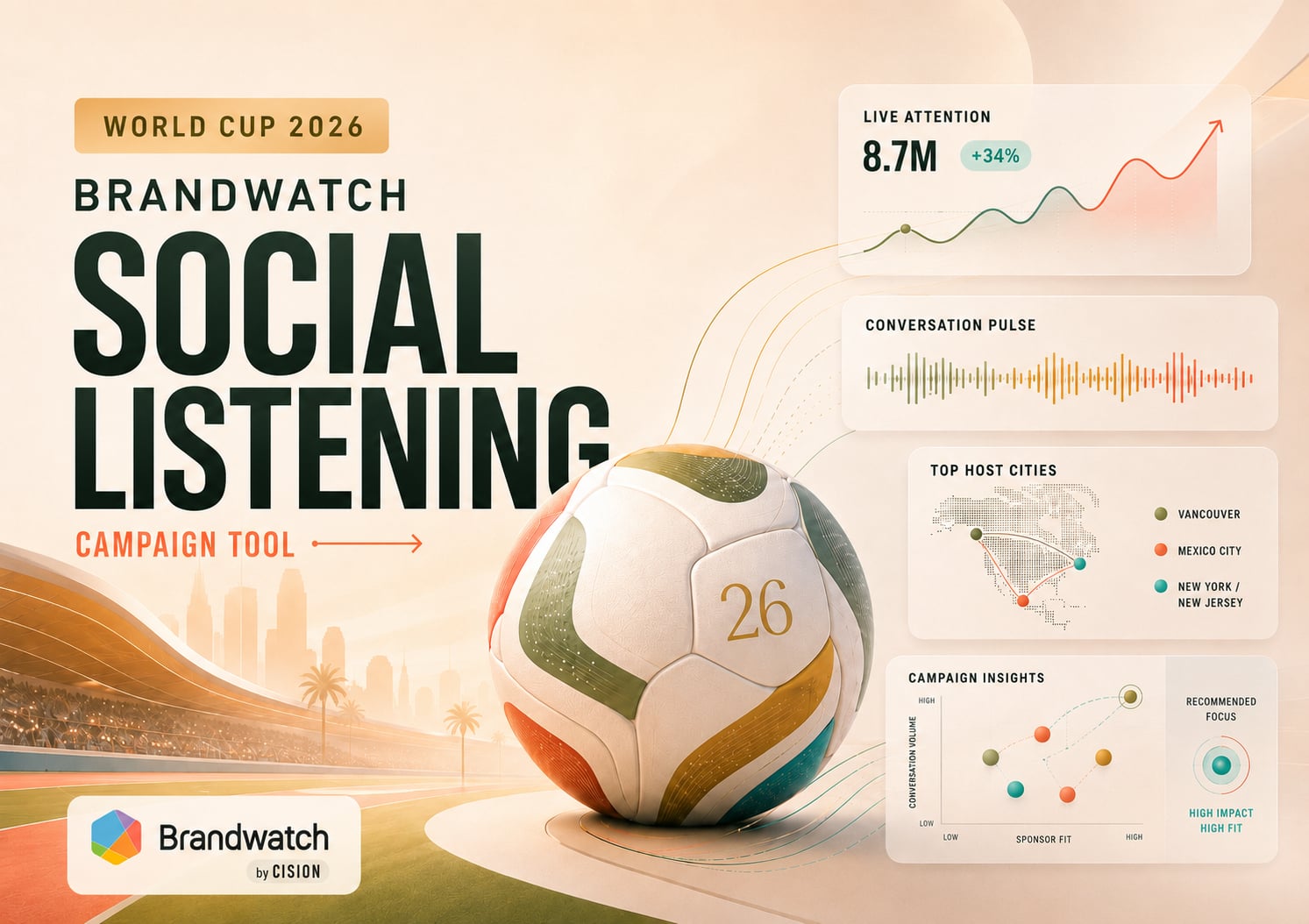
The decision to host the 2026 tournament across 16 cities presents a unique challenge and opportunity. Unlike previous tournaments concentrated in a single nation, the 2026 World Cup will create 16 distinct "attention bubbles."
Data from the Football Attention Index shows that conversation is increasingly localized. A fan in Vancouver is navigating a completely different set of experiences—weather, hospitality, stadium access, and local nightlife—than a fan in Mexico City or Miami. Consequently, marketers must treat host-city attention as a vital campaign input.
When a city gains traction in the social conversation, it is rarely random. It is often driven by specific factors: a high-profile match, a logistics failure, or a unique fan experience. By monitoring these spikes, brands can:
- Allocate Regional Spend: Shift paid social budgets to focus on specific cities that are trending for positive reasons.
- Activate Local Creators: Partner with micro-influencers within that city to build authentic, hyper-local content.
- PR and Social Care: If a negative sentiment spike occurs (e.g., transport issues in a specific host city), brands can proactively pivot their messaging or activate customer service resources to mitigate reputational risk.
Official Perspectives and Industry Implications
Industry analysts and brand strategists agree that the traditional sponsorship "silo" is collapsing. The prevailing view among global marketing leaders is that the 2026 World Cup will be the first "creator-first" tournament.
"The conversation is no longer controlled by broadcasters or official press releases," notes industry observer Nadica Naceva. "It is driven by the organic interplay between athletes, tactical analysts, lifestyle creators, and the fans themselves. If a brand isn’t part of the conversation happening on social media and search, they aren’t actually participating in the World Cup."
The implications are clear: brands that rely solely on their official status will find themselves outmaneuvered by agile competitors who use real-time data to insert themselves into the cultural conversation. The "official" sponsor might own the stadium rights, but the "cultural" winner will be the brand that understands how to use social listening to foster genuine community dialogue.
Integrating Search Intelligence: Predicting the Pulse
While social listening captures the "what" and the "emotion" of a conversation, search intelligence provides the "why" and the "intent." This is a critical distinction for the 2026 tournament.
Fans often engage in "silent" behavior—searching for ticket availability, transport routes, or rule clarifications—that never appears on a social media timeline. By integrating search data, Brandwatch allows marketers to see the questions fans are asking before they become public discourse.
For instance, if search volume spikes for "stadium accessibility" in a particular city, a brand can preemptively release content or support that addresses this pain point, positioning itself as a helpful, proactive entity. By combining social listening (sentiment and momentum) with search intelligence (intent and demand), marketers gain a 360-degree view of the tournament’s pulse.
Strategic Framework: Five Pillars for Success
To effectively manage the noise of the 2026 World Cup, marketers should categorize their tracking into five manageable pillars:
- Sponsor Visibility: Move beyond volume. Focus on the context of the mention—are you being linked to a successful campaign or a negative trend?
- Category Momentum: Watch for shifts in related categories (e.g., travel, food, tech). Even without official sponsorship, your brand can enter the conversation through category-relevant trends.
- Host-City Signals: Treat each of the 16 host cities as a separate market. Localize your assets to meet the unique needs and sentiments of each region.
- Narrative Shifts: Be prepared for the unpredictable. The most powerful marketing moments often come from the stories no one planned—the underdog win, the viral meme, or the unexpected controversy.
- Sentiment and Risk: Never amplify content without a sentiment check. In the high-stakes environment of a global tournament, a "tone-deaf" post can cause immediate and lasting damage.
The Future of Live-Event Marketing
The 2026 World Cup will be a turning point for marketing measurement. It serves as a reminder that the global audience is not a monolith; it is a fluid, rapidly moving network of communities.
The brands that succeed will be those that treat the tournament not as a static event, but as a living, breathing ecosystem. By implementing a robust, data-driven workflow that connects social listening, search intelligence, and creator strategy, brands can ensure they remain relevant, responsive, and resilient.
Ultimately, the goal is to stop treating the World Cup as an expensive billboard and start treating it as a conversation. With the right data architecture, that conversation is one that brands can not only join but actively lead. As we move closer to 2026, the question for every CMO should be simple: are you ready to read the room, or are you just waiting for the match to end?
