
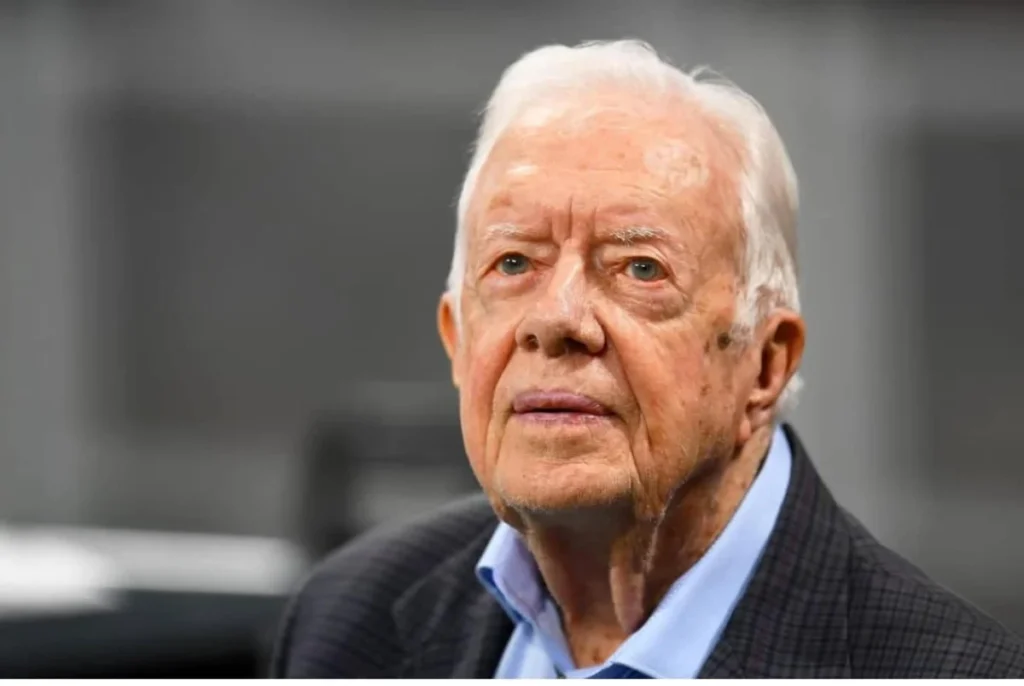
A Legacy of Grace: Remembering the Life and Impact of President Jimmy Carter
The passing of Jimmy Carter, the 39th President of the United States, marks the end of an era defined by unwavering moral conviction, a deep-seated commitment to humanitarianism, and a post-presidency that redefined the potential of the office. As the nation mourns the loss of a leader whose life was anchored in service, his legacy stands as a testament to the power of humility in the highest echelons of power.
Beyond the formal corridors of Washington, D.C., Carter’s impact was felt in the quiet corners of the world, from the housing projects built by Habitat for Humanity to the far-flung regions where he mediated peace and monitored democratic elections. His life was not merely one of political maneuvering, but one of profound, intentional grace—a quality that left an indelible mark on everyone he encountered.
Chronology: A Life of Service
To understand the man, one must look at the arc of his life, which spanned from the rural plains of Georgia to the global stage.
- 1924: Born James Earl Carter Jr. in Plains, Georgia, into a family rooted in agriculture and community service.
- 1943–1953: Served in the United States Navy, attending the Naval Academy and serving on submarines, an experience that would later inform his methodical, engineering-based approach to problem-solving.
- 1962–1966: Served in the Georgia State Senate, marking his entry into the political arena.
- 1971–1975: Served as the 76th Governor of Georgia.
- 1977–1981: Served as the 39th President of the United States. His term was marked by the Camp David Accords, the establishment of the Department of Education, and the complex challenge of the Iran Hostage Crisis.
- 1982: Founded The Carter Center, a non-profit organization dedicated to human rights, conflict resolution, and the eradication of disease.
- 2002: Awarded the Nobel Peace Prize for his decades of untiring effort to find peaceful solutions to international conflicts.
- 2025: Passing of the former President, leaving behind a legacy of service that spanned over seven decades.
The Human Side of History: A Personal Reflection
While history books often focus on the macroeconomic policies and geopolitical strategy of the Carter administration, the true measure of the man was often found in the small, personal moments that did not make the front page.
In early 1988, seven years after leaving the White House, President Carter visited a community where he was scheduled to speak. Among the audience members was an individual who, like many others, had been selected to ask a question during a moderated Q&A session. As the queue moved forward, the individual reached the microphone, only to offer a departure from the typical, often adversarial, political questioning of the day.
"Hello President Carter," the attendee said. "I really do not have a question."
In a moment that perfectly captured his temperament, Carter did not dismiss the comment or become impatient. Instead, he smiled and replied, "I like those kinds of questions."

The attendee used the moment not for critique, but for gratitude: "I want to thank you for all the work you do for Habitat for Humanity. You continue to give back and help our country even after your presidency has ended."
Carter’s response was not a polite acknowledgement followed by a quick pivot; he spent the next ten minutes speaking with genuine passion about the mission of Habitat for Humanity. While the rest of the queue returned to the standard, pointed queries about political failings and policy critiques, the exchange remained a highlight of the event.
As the session concluded, the former President’s grace was on full display. As he exited the stage, he walked past the row where the attendee was seated. He stopped, made eye contact, winked, and mouthed a silent, "Thank you." This small, intentional act of recognition served as a reminder that for all his global influence, Jimmy Carter remained, at his core, a man who valued the dignity of every individual.
Supporting Data: The Impact of The Carter Center
The Carter Center, co-founded with his wife, Rosalynn, serves as the most concrete quantitative measurement of his post-presidency. Since its inception, the organization has achieved remarkable results:
- Conflict Resolution: The Center has observed more than 110 elections in 39 countries, playing a critical role in fostering democratic transitions.
- Public Health: The Carter Center’s Guinea Worm Eradication Program has been one of the most successful public health initiatives in history. In the mid-1980s, there were an estimated 3.5 million cases annually. Today, that number has been reduced by more than 99.9%, bringing the world to the brink of the second-ever human disease eradication.
- Mental Health: Rosalynn Carter’s advocacy, paired with the President’s support, moved mental health from the shadows of public policy to the forefront of national discourse, destigmatizing treatment and expanding access to care.
Official Responses and Global Tributes
Following the announcement of his passing, world leaders and ordinary citizens alike have offered tributes reflecting on his character.
Current political leaders have praised his "moral compass," noting that Carter set a standard for what it means to be a "citizen-president." Former staff members have recalled his habit of carrying his own luggage and his refusal to be treated with the pomp often associated with his former office.
International human rights organizations have highlighted the "Carter Doctrine" not as a military strategy, but as a humanitarian one—the idea that the United States has an obligation to champion the oppressed and uphold international law, regardless of the political cost.
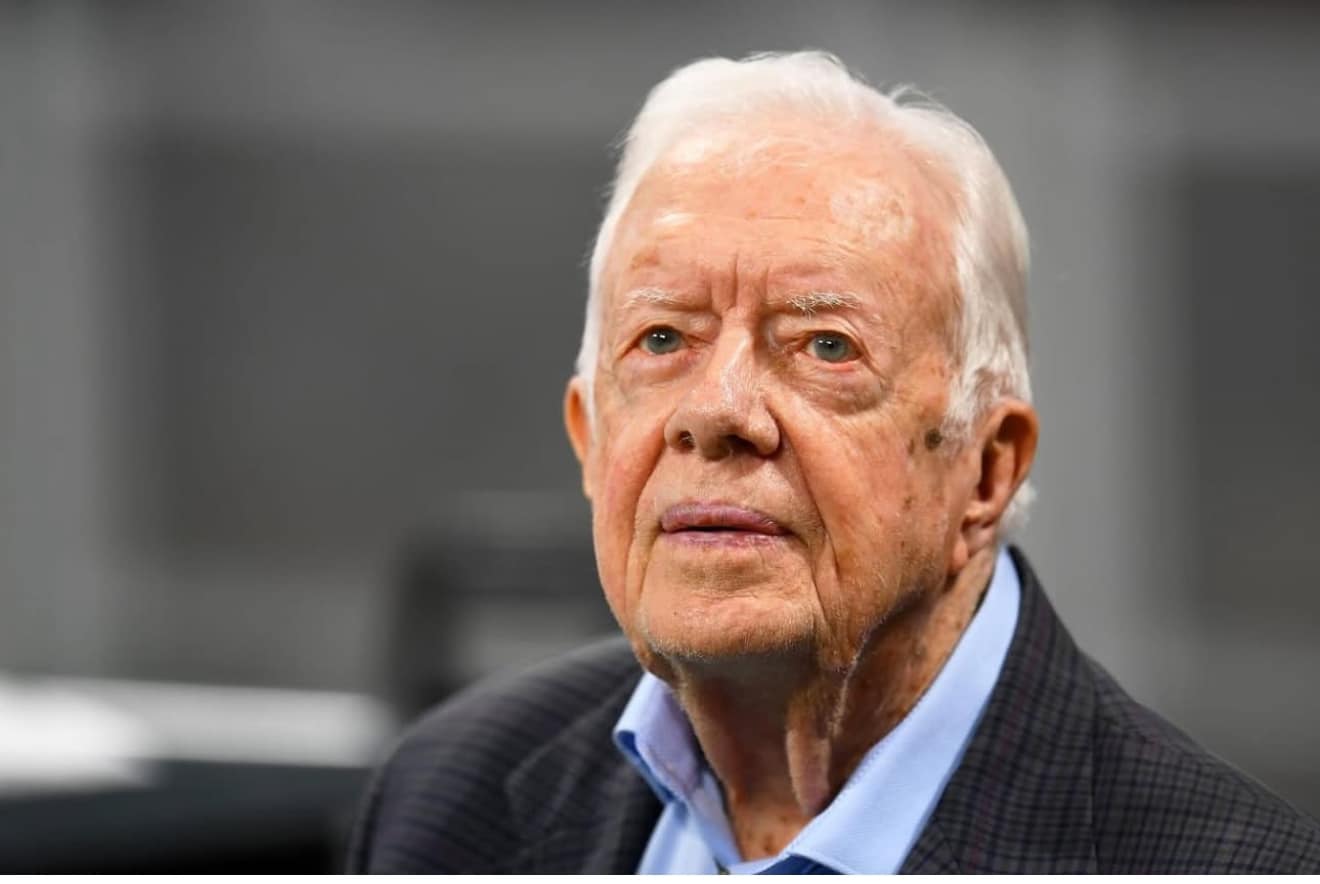
Implications: A Model for Future Leaders
The passing of Jimmy Carter leaves a void in the American political landscape, but it also provides a roadmap for future generations. His post-presidency serves as a profound model for how to transition from power to influence.
In an era of hyper-partisanship and political tribalism, Carter’s life serves as a counter-narrative. He proved that grace is not a sign of weakness, but a hallmark of strength. He demonstrated that one does not need a formal office to lead, and that the most enduring legacy is not found in legislative victories alone, but in the lives touched by personal, selfless service.
As the nation reflects on his life, the implications are clear: the standard for public service has been elevated. Whether through the humble act of hammering a nail for a family in need or negotiating the terms of a fragile peace treaty, Jimmy Carter taught us that service is an ongoing commitment.
His life was a reminder that we are all, regardless of our station, responsible for the well-being of our neighbors. He leaves behind a world that is objectively better, healthier, and more aware of the necessity of peace.
Rest in peace, Mr. President. America will miss your grace, your quiet kindness, and your unwavering love of country. Your work is done, but the standard you set will remain as a beacon for those who follow in your footsteps.
