
The Agency Operations Blueprint: Selecting the Right CRM for Scalable Growth in 2026
The mantra "pick a CRM and the rest will follow" has long been the siren song of agency leadership. It promises a streamlined future where data flows effortlessly, pipelines are always full, and client satisfaction is guaranteed. However, the reality for most agencies is far more fragmented. Onboarding stalls, pipelines become repositories for "dead" leads, and critical client communications remain trapped in siloed inboxes.
The true cost of a poorly aligned CRM isn’t just the monthly subscription fee; it is the "operational tax" paid in context switching, inconsistent data entry, and the slow, manual handoffs that drain your team’s focus. As agencies navigate the complexities of 2026, the need for a CRM that functions as a core business engine—rather than a glorified address book—has never been higher.
The Evolution of Agency CRM Utility
"CRM" is an abstract term until it is mapped onto the daily grind of agency life. Modern agencies require systems that don’t just store contacts but orchestrate the entire client lifecycle.
Standardizing Client Onboarding
The first 30 days of a client relationship determine the long-term success of the engagement. Top-tier agencies use their CRM to trigger automated workflows the moment a contract is signed: generating access requests, scheduling kickoff calls, and initiating asset collection. This ensures a consistent, professional "first impression" every time.
The Sales-to-Delivery Handoff
One of the most common points of failure in an agency is the "information black hole" between the sales team and the delivery team. A robust CRM bridges this gap, housing initial scopes, documented expectations, and project timelines in a single, accessible location. This prevents the classic "we didn’t know the client expected that" friction.
Pipeline, Capacity, and Revenue Tracking
Agencies operate on margins. A CRM must provide a real-time view into which service lines are growing, which clients are at risk, and where team bandwidth is stretched thin. By monitoring capacity alongside revenue, leaders can make proactive hiring or resourcing decisions before a crisis occurs.
QBRs and Recurring Reporting
Quarterly Business Reviews (QBRs) should not require a week of manual spreadsheet preparation. Effective CRMs allow agencies to build reusable report templates that pull in performance data, activity logs, and pipeline health, transforming a tedious chore into a strategic, value-add conversation.
The "4C" Evaluation Model for Agencies
Most CRMs look identical on a feature list. To cut through the marketing fluff, we recommend evaluating potential platforms using the "4C" model. Each category should be scored on a scale of 1 to 5; an agency aiming for scalable growth should look for a cumulative score of 16 or higher.
- Clarity: How intuitive is the interface? Can new hires understand the workflow without a month of training?
- Collaboration: Does the platform support role-based access? Can sales, account managers, and delivery teams interact without stepping on each other’s toes?
- Customization: Can the system adapt to your unique service offerings (e.g., SEO, PPC, Creative) rather than forcing you into a generic "product" pipeline?
- Connectivity: Does it integrate natively with your email marketing, project management, and billing tools to eliminate double-entry?
Top CRM Recommendations for 2026
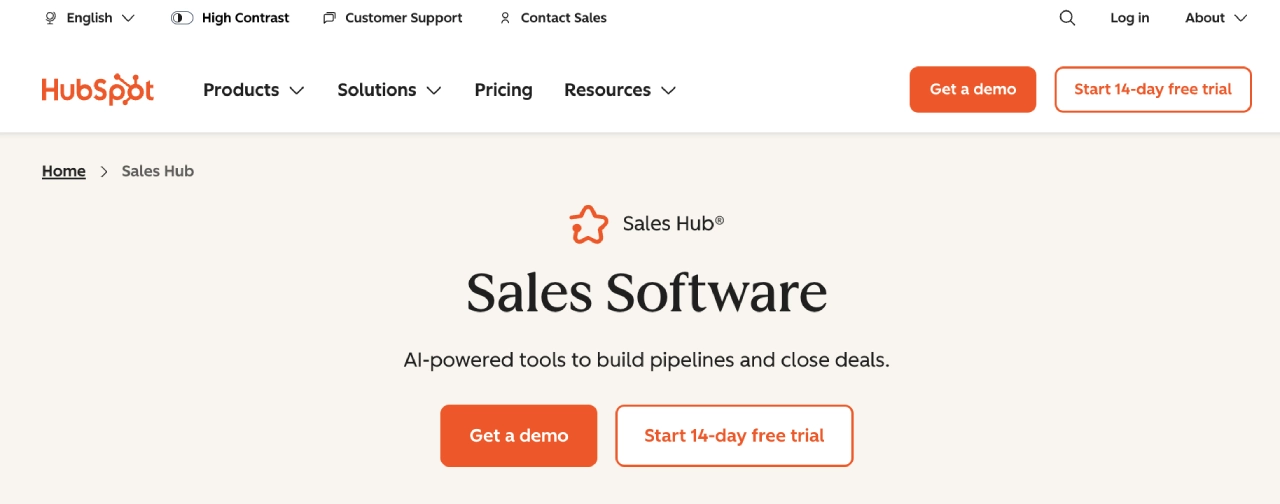
1. HubSpot Sales Hub: The Scaler’s Choice
HubSpot remains the gold standard for multi-service agencies. Its "full-funnel" approach—combining CRM, sequences, Playbooks, and reporting—is built for growth. While it requires a significant investment, its deep integration ecosystem and powerful automation capabilities make it the premier choice for agencies that need to scale complex operations.
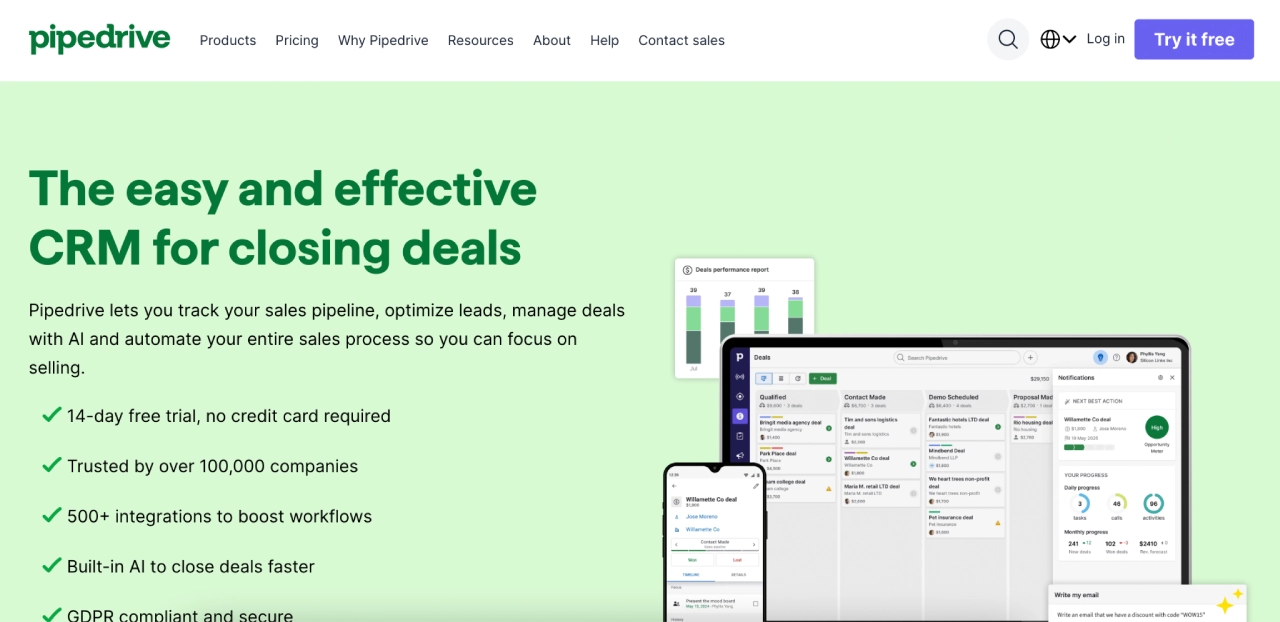
2. Pipedrive: The Sales-Centric Powerhouse
For agencies that prioritize high-volume sales execution, Pipedrive is unmatched. Built around a clean, visual pipeline, it removes the clutter that often plagues enterprise CRMs. It is ideal for teams that need to focus on activity-based selling and pipeline velocity without the burden of heavy configuration.
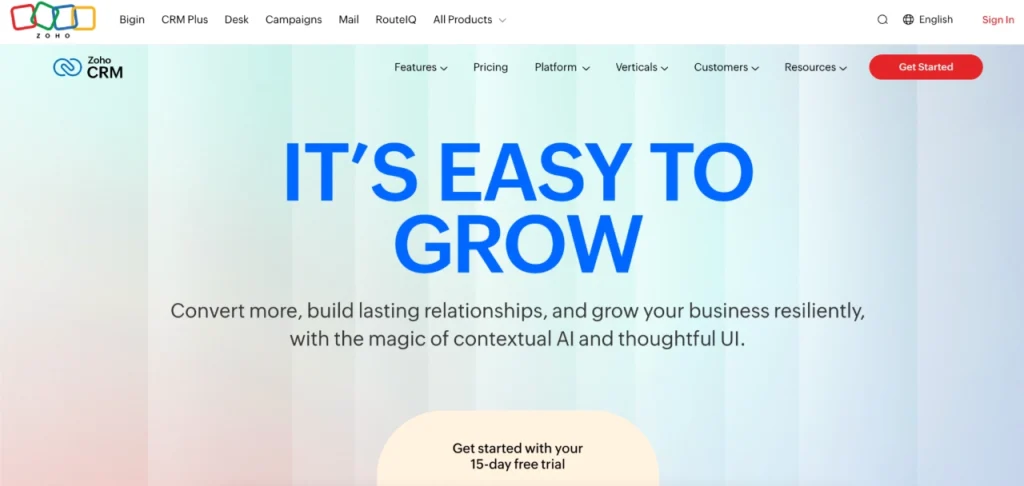
3. Zoho CRM: The Value and Customization Champion
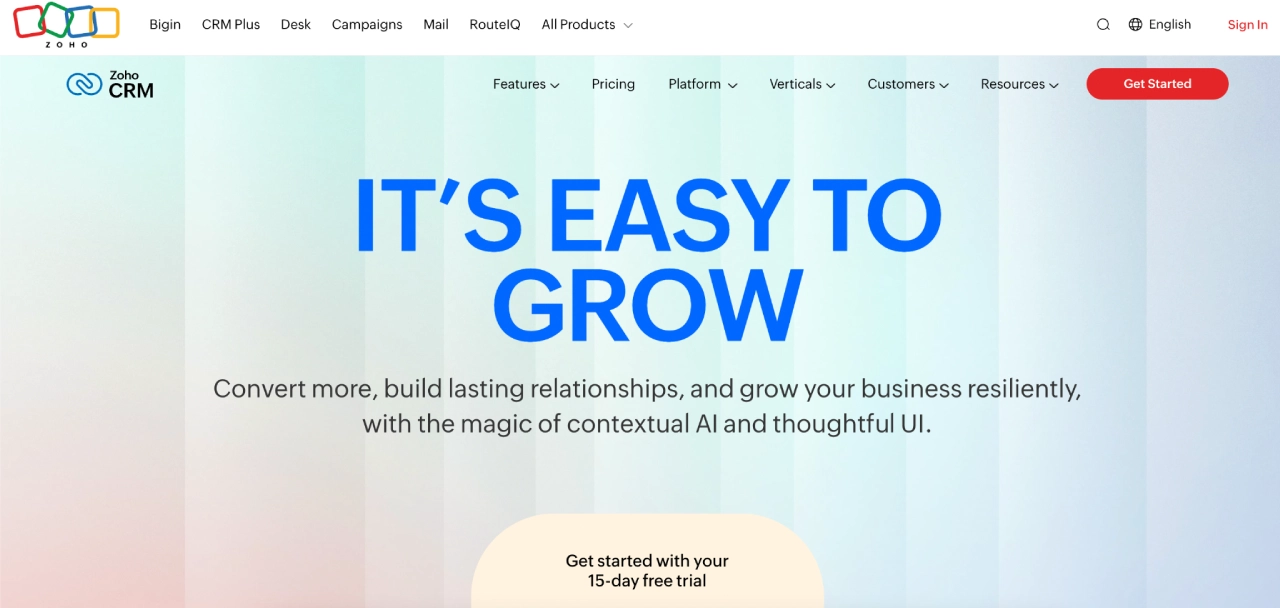
Zoho stands out by offering enterprise-level customization at a fraction of the cost. With its "CommandCenter" for journey orchestration and AI-powered insights from "Zia," it provides a sophisticated, data-driven environment for agencies that are willing to invest time in initial setup.
4. monday sales CRM: The "Work OS" Hybrid
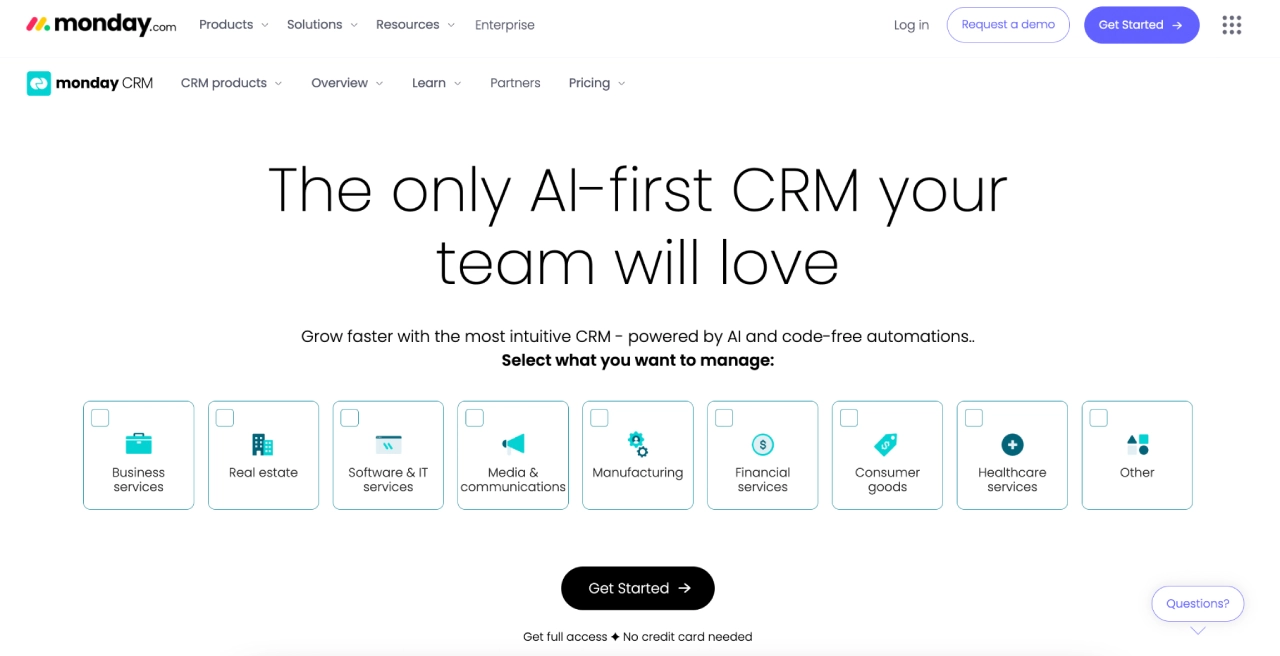
For agencies where the line between "sales" and "project delivery" is thin, monday.com is a revelation. Because it is built on a Work OS, agencies can manage the entire client journey on the same platform where the work is actually being executed, creating a seamless bridge between the deal-won stage and the kickoff.
5. Productive.io: The "Agency OS"
Productive.io is a purpose-built solution for professional services. Unlike general CRMs, it integrates resource planning, time tracking, and budgeting directly into the sales pipeline. It is the best choice for agencies that need to prove profitability at the project level.
Implications: The Role of Campaign Monitor
A CRM is the brain of your agency, but your email marketing platform is the voice. Pairing a CRM with Campaign Monitor allows you to leverage deep customer data for highly personalized communication.

For instance, when a deal moves to the "Onboarding" stage in your CRM, you can trigger a perfectly timed, branded email journey through Campaign Monitor. By keeping your CRM as the "Source of Truth" for data and Campaign Monitor as the engine for engagement, you ensure that every client touchpoint is consistent, professional, and data-backed.
CRM Red Flags: When to Walk Away
Before committing to a contract, be wary of these common warning signs:
- The "All-in-One" Trap: Platforms that promise to solve everything (CRM, billing, support, web design) often suffer from "feature dilution," where no single module is truly excellent.
- Opaque Pricing: If you cannot calculate your total cost of ownership (including seat fees, add-ons, and onboarding costs) within 15 minutes, the platform is likely to become an unpredictable expense.
- Limited Integration: A CRM that cannot talk to your accounting or project management software will eventually create a "data island," leading to the very manual labor you are trying to escape.
Final Takeaways for Modern Agency Leaders
Choosing the right CRM is not a one-time event; it is an architectural decision that defines how your agency will grow. To make the right choice:
- Audit your current workflow: Identify the specific bottlenecks where information is lost.
- Define your "Must-Haves": Prioritize integrations and automation over vanity features.
- Run a Pilot: Never commit to a multi-year deal without testing the platform with a small team on a single service line.
- Focus on the Handoff: Ensure your chosen CRM can effectively pass the baton from sales to the delivery team.
By centralizing your operations and pairing your CRM with a robust communication tool like Campaign Monitor, you move beyond mere "contact management." You create a scalable, predictable engine for growth that allows your team to focus on what they do best: delivering exceptional results for your clients.
