
Beyond Spreadsheets: Why Python is the New Growth Marketing Superpower
In the fast-paced world of digital marketing, the line between intuition and empirical evidence is blurring. For years, the marketing stack has relied heavily on Excel spreadsheets, pivot tables, and manual reporting. However, as the volume of consumer data explodes, these traditional tools are reaching their breaking point. Enter Python: the versatile programming language that is quietly revolutionizing how growth marketers scale operations, optimize budgets, and predict consumer behavior.
The Paradigm Shift: Why Python?
Growth marketing is essentially the intersection of data, analytics, and rapid experimentation. While traditional marketing might focus on brand sentiment, growth marketing focuses on the "how"—how to get to the data, how to manipulate it, and how to use it to drive measurable, scalable results.
Python has emerged as the industry standard for this transition for several critical reasons. Unlike specialized proprietary software, Python is an open-source, highly flexible language. Whether you are building a custom web scraper, automating an email campaign, or running complex predictive models, Python provides the infrastructure to do it all in one ecosystem.
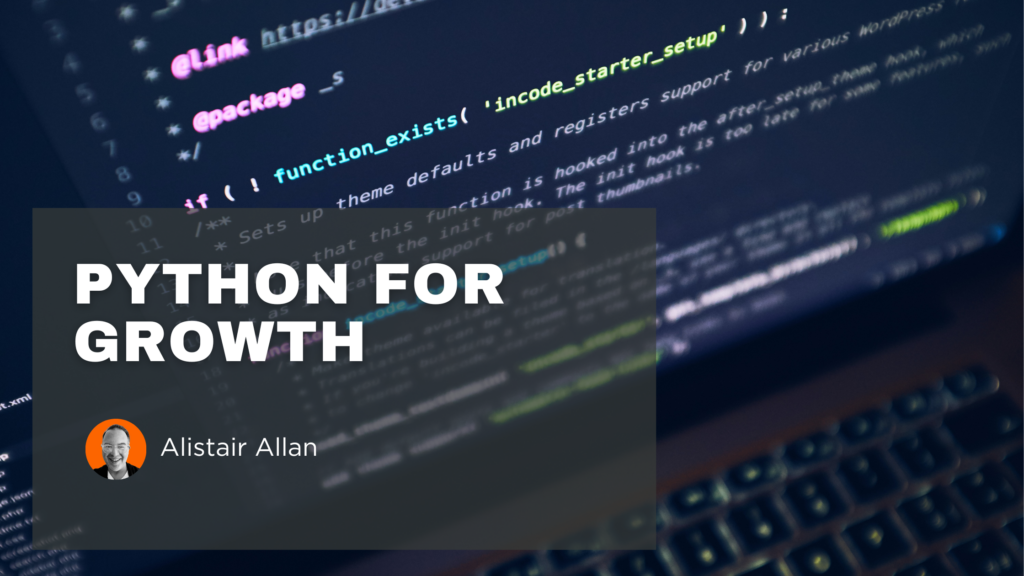
Furthermore, Python is the lingua franca of data science. By adopting it, growth marketers can speak the same language as their engineering and data science teams, breaking down the silos that often hinder effective collaboration. With a massive global community, almost any problem a marketer faces—from connecting to a specific API to cleaning a messy dataset—has likely already been solved by someone else.
The Mechanics of Growth: What Python Actually Does
The true power of Python lies in its ability to remove the "human in the loop." As Alistair Allan, a prominent voice in the growth space, notes, "Python is a way to save time, it’s a way to connect the dots between disparate systems, and it’s a way to get out of Excel spreadsheets and huge formulas."
Automation and API Integration
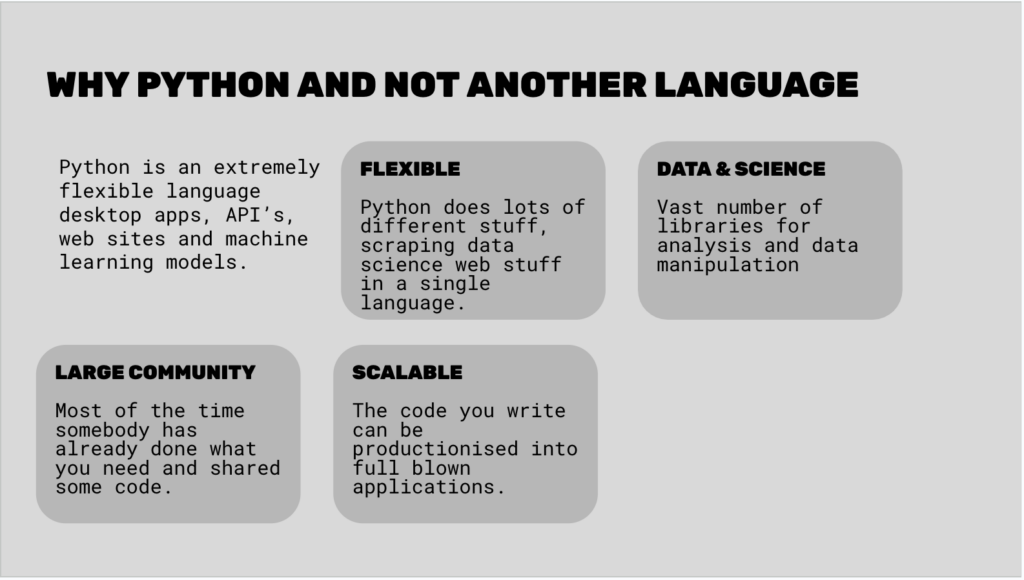
Growth marketers spend an inordinate amount of time moving data between platforms. Python allows for seamless integration with APIs, enabling marketers to pull data from Google Analytics, Facebook Ads, Google Search Trends, and CRM systems into a single dashboard. More importantly, it allows for bidirectional communication. Marketers can build scripts that monitor campaign performance in real-time and automatically adjust bidding strategies or pause underperforming ads without manual oversight.
Data Scraping and Competitive Intelligence
In a competitive landscape, data is the primary moat. Python’s scraping libraries, such as BeautifulSoup or Scrapy, enable marketers to automate the collection of public data from competitor websites, price trackers, or market trend aggregators. This allows teams to shift from static reporting to dynamic, intelligence-led decision-making.
Predictive Modeling and Forecasting
Why guess when you can predict? By utilizing libraries like Prophet or scikit-learn, marketers can move beyond simple historical analysis. They can train models to forecast future performance based on seasonal trends, past ad performance, and behavioral signals, allowing for more accurate budget forecasting and resource allocation.
Clustering and Hyper-Segmentation
Generic audience segments are becoming a thing of the past. Python’s clustering algorithms (such as K-Means) allow marketers to move beyond simple demographic segmentation. By feeding customer behavior data into these models, marketers can identify subtle patterns that define "high-value" versus "churn-risk" segments, allowing for highly tailored, high-converting ad campaigns.
Linear Optimization and Budget Allocation
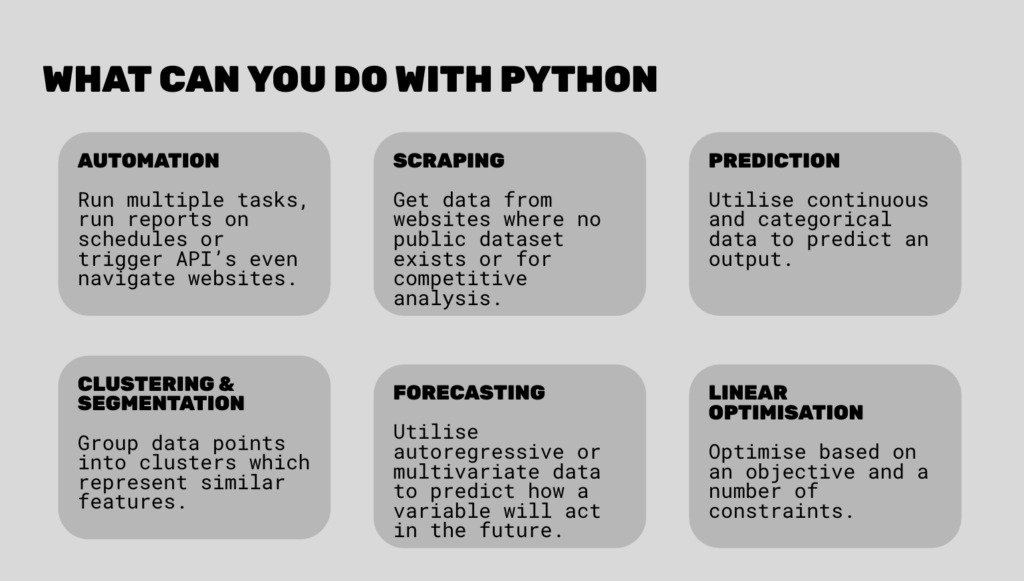
Perhaps the most sophisticated use case is linear optimization. When faced with multiple channels and limited budgets, human intuition often fails to find the mathematical optimum. Python scripts can process constraints (e.g., target CPA, minimum spend per channel, reach goals) to calculate the exact allocation of funds that maximizes the objective function—typically ROI or total conversions.
The Evolution of Tools: Lowering the Barrier to Entry
A common misconception is that one must be a software engineer to use Python. However, the ecosystem has evolved to be remarkably user-friendly for non-technical professionals.
Google Colab: The Zero-Install Solution
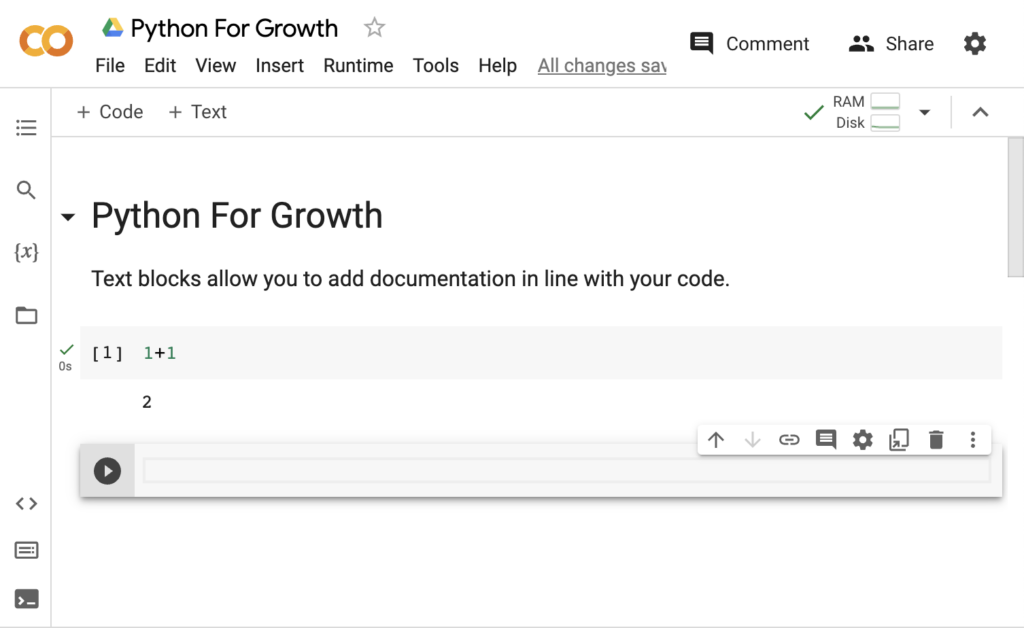
For those daunted by the prospect of setting up a local development environment, Google Colab is the solution. It functions like a Google Doc for code, running entirely in the browser. Users can combine text, documentation, and executable code blocks, making it the perfect sandbox for marketers to experiment without needing deep IT support.
Visual Python and AI-Assisted Coding
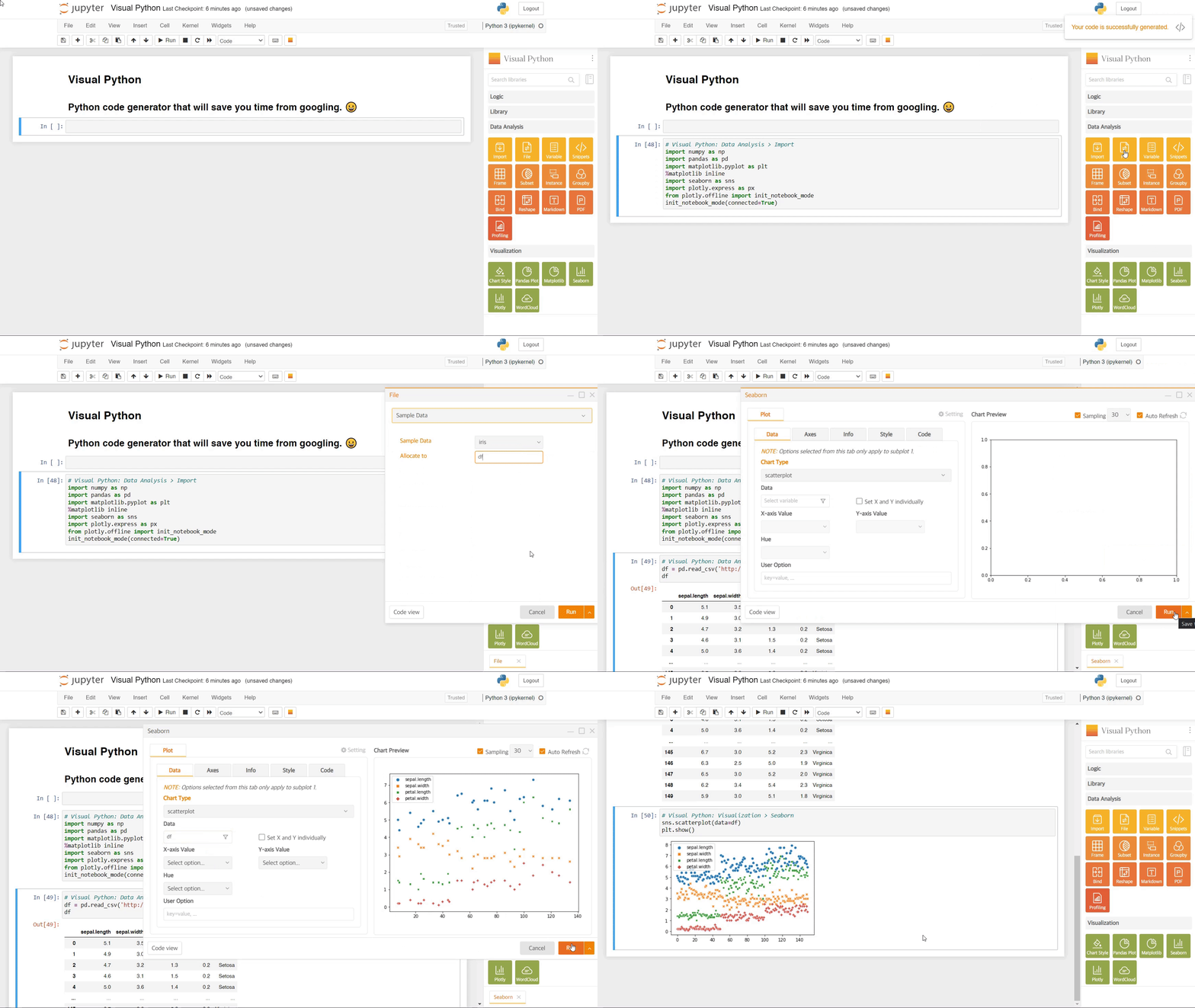
For beginners, the "blank page" problem is real. Tools like Visual Python act as an add-on for environments like Colab, allowing users to insert common code blocks through a drag-and-drop interface. Additionally, the rapid integration of AI-based coding assistants (such as Google’s code models) means that marketers can often describe their goal in plain English, and the model will generate the necessary code, drastically reducing the learning curve.
Data Manipulation with Mito
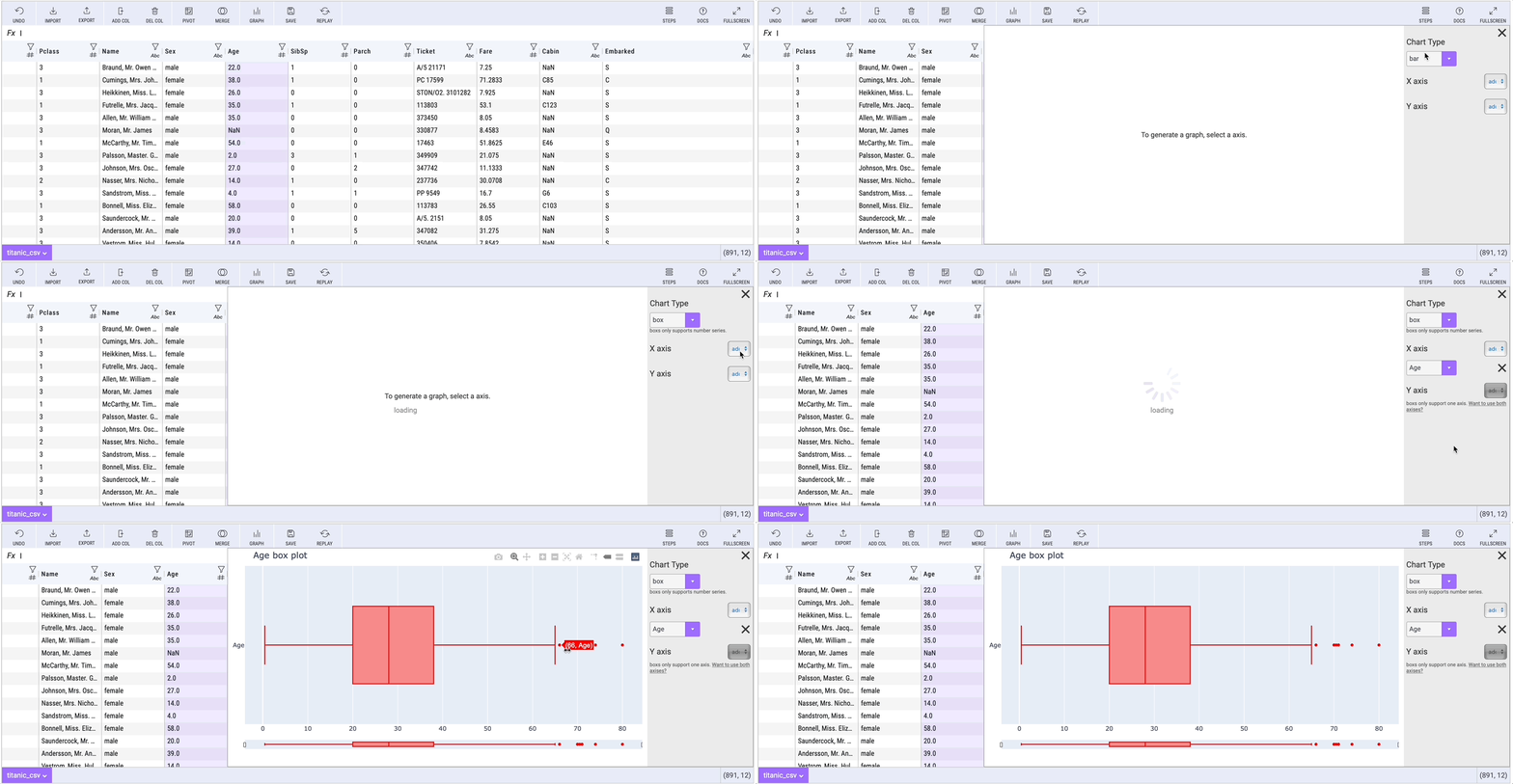
For those who truly miss the interface of a spreadsheet, Mito provides a bridge. It functions like a visual data analysis tool, but every transformation performed in the interface is simultaneously translated into Python code. This allows users to learn the syntax by watching the tool generate it in real-time.
Implications for the Future of Marketing
The move toward "Python-powered" growth is not merely a trend; it is a structural change in the marketing profession. As AI continues to commoditize content creation and basic ad management, the competitive advantage will shift toward those who can manage the data layer.
The Rise of the "Marketing Engineer"
We are witnessing the emergence of a new hybrid role: the Marketing Engineer. These professionals understand the nuances of brand storytelling but possess the technical capability to build the infrastructure that delivers that story to the right person, at the right time, at the lowest possible cost.
Scalability as a Core Competency
In the past, scaling a marketing effort meant scaling the team. With Python, scaling means scaling the automation. A single marketer using Python can now manage the workload that previously required a department of three, as they are no longer bottlenecked by the processing limitations of traditional spreadsheet software.
Data-Driven Ethical Decision Making
As privacy regulations tighten, the ability to process first-party data securely and accurately becomes paramount. Python allows for the creation of robust, internal data pipelines that respect privacy standards while extracting maximum value from customer interactions.
Conclusion: Starting Your Journey
The transition to Python is less about learning to write complex software and more about developing a new way of thinking about marketing problems. It is about moving from "What happened last month?" to "What will happen next month, and how can we influence it?"
For those ready to start, the path is clear:
- Begin with a specific problem: Don’t try to learn the entire language. Pick a manual task you perform weekly (like report compilation) and try to automate it using Python.
- Utilize Google Colab: Avoid the technical headache of local installations.
- Leverage existing libraries: Remember that the strength of Python lies in its community. Before writing a function, search to see if a library like pandas or Prophet already exists to solve your problem.
The era of the "Excel-only" marketer is coming to a close. By embracing Python, growth marketers are not just upgrading their toolkits; they are future-proofing their careers in an increasingly data-centric world. The barrier to entry has never been lower, and the potential for impact has never been higher. Now is the time to start coding.
