
Navigating the Modern Landscape of Team Apparel Platforms: A Comprehensive Buyer’s Guide
Main Facts
The market for custom team apparel, group merchandise, and branded organizational gear has undergone a massive digital transformation. Gone are the days when a team manager or business owner had to manually collect paper order forms, chase down cash or checks, and sort through a mountain of mismatched sizes in a garage. Today, specialized e-commerce and fulfillment platforms have streamlined everything from ongoing year-round merchandise shops to rapid, centralized bulk orders.
Choosing the right platform depends fundamentally on your ordering workflow rather than the fabric catalog alone. Industry experts currently rank top solutions—such as Fourthwall, Custom Ink, SquadLocker, Printful, Bonfire, and RushOrderTees—based on how they handle payment processing, minimum quantity requirements, and fulfillment logistics.
While Fourthwall emerges as the premier choice for ongoing, branded team merch stores with individual checkouts, platforms like Custom Ink dominate coordinated group orders with closing deadlines. Meanwhile, options like SquadLocker cater directly to sports leagues and schools, Printful excels in flexible payer distribution, Bonfire drives fundraising campaigns, and RushOrderTees steps in for urgent delivery deadlines.
Chronology of Team Apparel Evolution
To understand where the industry stands today, it helps to look at how custom apparel procurement evolved over the past few decades:

- The Era of Paper Forms (Late 20th Century): Team managers, coaches, and corporate event organizers relied heavily on local screen-printers. Orders were gathered via paper slips, payments were pooled manually, and distribution required face-to-face handoffs.
- The Rise of Centralized Digital Bulk Ordering (Early 2000s): Web-based design tools emerged, allowing organizers to build a single digital mockup. However, the financial and logistical burden remained strictly on the organizer, who had to front the capital and manage the distribution.
- The Group-Form and Campaign Revolution (2010s): Platforms introduced features like group order forms and fundraising campaigns. This era allowed multiple buyers to pay individually toward a centralized goal, though organizers still faced financial shortfalls if participation targets were missed.
- The Modern Omnichannel Ecosystem (Present Day): Today’s platforms offer fully automated print-on-demand storefronts, year-round continuous shopping, sophisticated roster tools, and hybrid shipping methods that bridge the gap between individual home delivery and centralized bulk drop-offs.
Supporting Data: Platform Comparison Matrix
When evaluating team apparel solutions, stakeholders must weigh several variables, including cost models, payment workflows, and potential logistical limitations.
| Platform | Best Fit For | Payment Workflow | Cost Model | Key Limitation |
|---|---|---|---|---|
| Fourthwall | Ongoing branded store | Members purchase individually | Catalog costs, processing, shipping; optional Pro | Separate purchases should not be treated as pooled bulk |
| Custom Ink | Coordinated group order | Individual payments via Group Order Form | Quote influenced by expected quantity | Organizer may owe a participation shortfall |
| SquadLocker | Sports and school store | Individual checkout | Free store; paid apparel and shipping | Check exact uniform personalization terms |
| Printful | Shared designs with flexible payer | Organizer or recipients pay | Product, shipping, possible digitization | One size/color combination per MerchShare order |
| Bonfire | Fundraising campaign | Supporters buy campaign apparel | Selling price less production base cost | Group delivery still carries buyer shipping charges |
| RushOrderTees | Urgent central purchase | Organizer-led order | Quoted apparel, decoration, rush fees | Fastest delivery depends on eligibility and destination |
Deep-Dive Analysis of Top Solutions
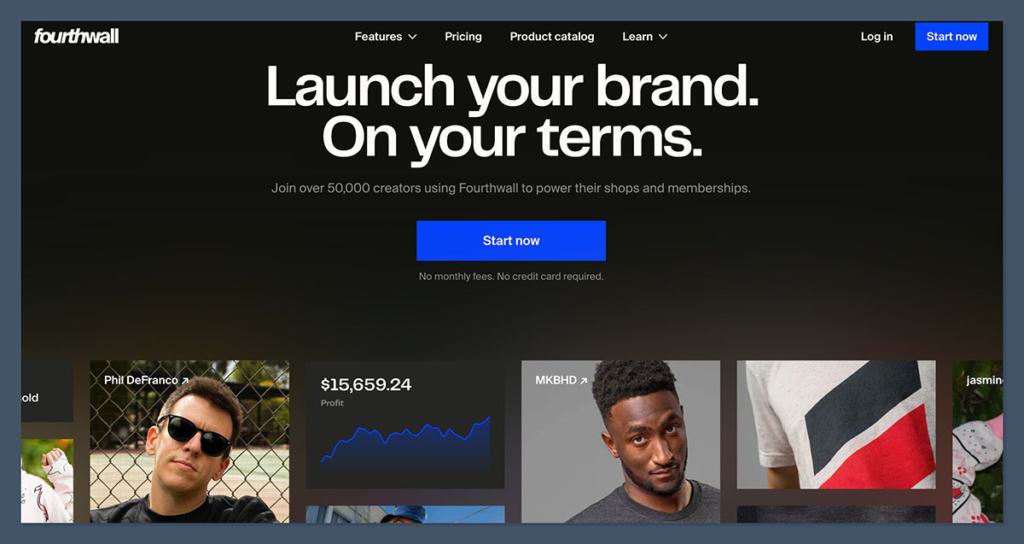
1. Fourthwall: Best for an Ongoing Branded Team Merch Store
For organizations looking for a permanent digital home for their merchandise, Fourthwall stands out as the top recommendation. It seamlessly combines a highly customizable storefront with automated catalog fulfillment.

- How it works: Members visit the branded store at their convenience, select their preferred products and sizes, and purchase directly. Fourthwall acts as the merchant of record, managing sales-tax collection and remittance.
- Financials: The storefront is free on the base tier (with an optional paid Pro upgrade), but buyers pay standard catalog base costs, payment processing fees (e.g., 2.9% + $0.30 per US card transaction), and shipping.
- Best Use Case: Businesses, clubs, and communities where demand trickles in gradually throughout the year—such as new hires needing hoodies or supporters buying club gear mid-season.
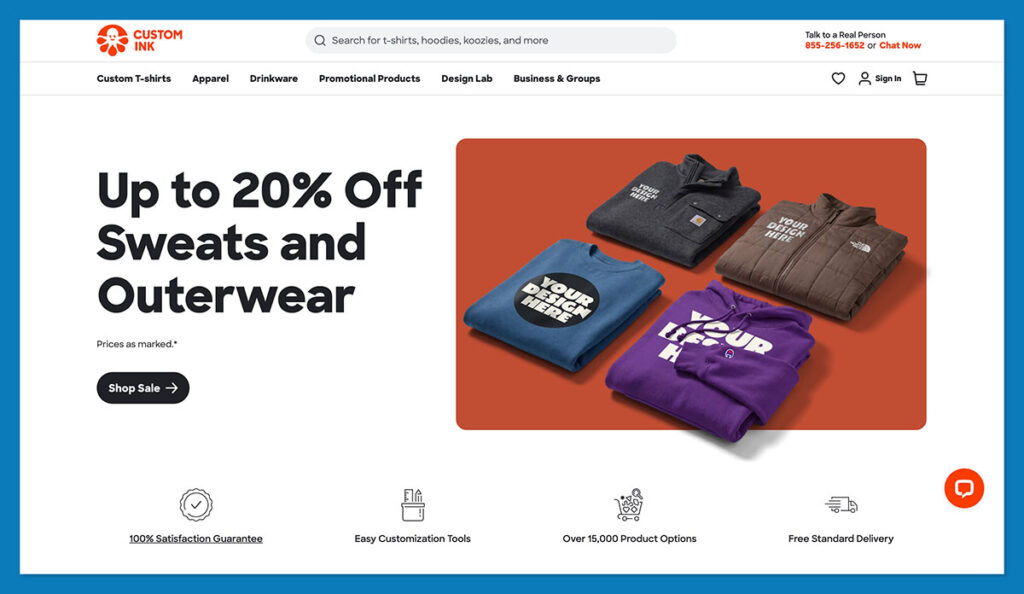
2. Custom Ink: Best for Coordinating Sizes and Group Payments
When an organization requires a single, synchronized batch of apparel with a hard closing date, Custom Ink remains a legacy favorite.
- How it works: Its signature Group Order Form allows participants to submit their individual sizes and make separate payments online. Orders can be shipped directly to homes or bundled for a single group delivery.
- Financials: Pricing is quoted based on expected quantities. If final participation falls short of the initial estimate, the organizer may be held financially responsible for the participation shortfall.
- Best Use Case: Corporate outings, family reunions, or one-off club events where everyone needs to wear the exact same design on a specific day.
3. SquadLocker: Best for Sports Teams and School Stores
Sports leagues and educational institutions face unique logistical challenges, often requiring a mix of mandatory team uniforms and optional fan gear. SquadLocker targets this niche effectively.

- How it works: Offers a free, year-round online store where families can check out individually. It also includes assisted bulk-order features and roster tools for managing player names and numbers.
- Financials: The storefront itself is free; buyers cover the cost of apparel and shipping during individual checkouts.
- Best Use Case: Athletic departments and booster clubs that need continuous availability for seasonal athletes and enthusiastic parents.
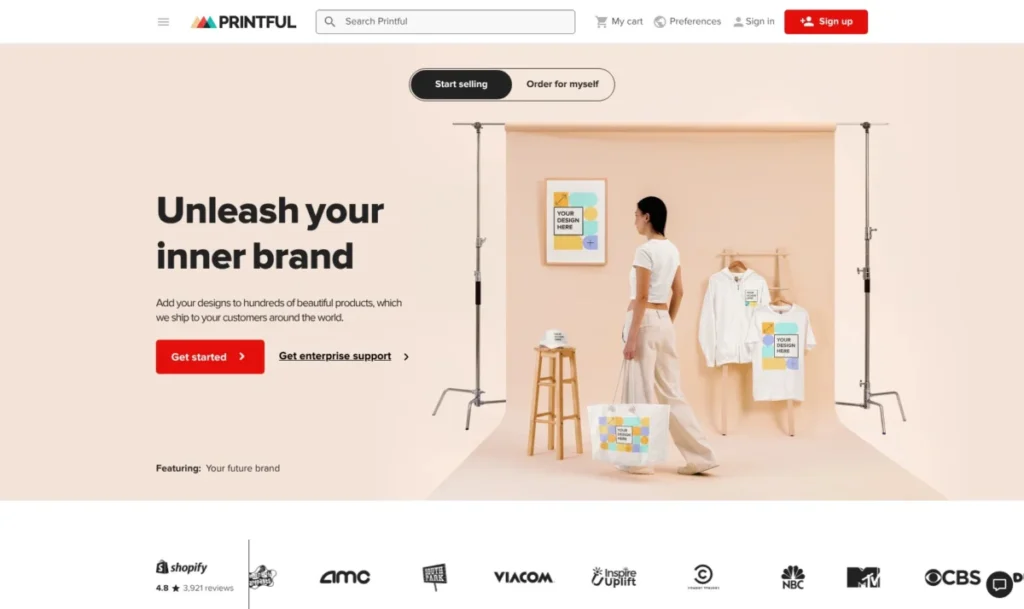
4. Printful: Best for Shared Designs with Flexible Payers
Using its unique MerchShare feature, Printful offers a streamlined way to distribute a single design template across a dispersed group.
- How it works: An organizer creates a product template and generates a shareable link. The organization can either absorb the costs for all incoming orders or allow recipients to pay independently.
- Financials: Standard product and shipping costs apply, alongside potential embroidery digitization fees. Eligible bulk discounts kick in at 25 units of the exact same product.
- Best Use Case: Distributed remote teams or corporate committees where the organization wants to foot the bill without manually aggregating sizing spreadsheets.
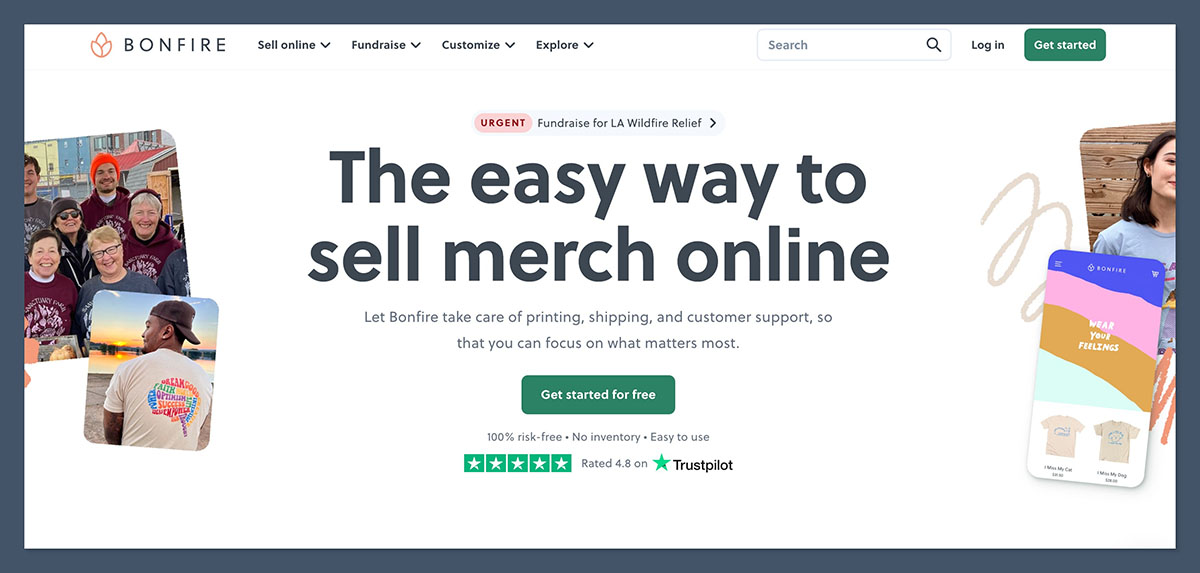
5. Bonfire: Best for Fundraising Apparel Campaigns
When apparel is deployed primarily as a vehicle for raising money, Bonfire offers a specialized campaign model.
- How it works: Organizers set a selling price above the production base cost. Bonfire handles production and offers hybrid shipping options (delivering items to the organizer or directly to buyers).
- Financials: Profits equal the selling price minus the production base cost. Buyers pay shipping at checkout, even on group-shipping tiers.
- Best Use Case: Non-profits, charity runs, and community groups seeking to maximize fundraising margins through merchandise.
6. RushOrderTees: Best for Urgent Team Apparel Orders
When deadlines loom and standard fulfillment windows are too slow, RushOrderTees provides a rapid-turnaround alternative.
- How it works: Geared toward central, organizer-led purchases with mixed sizes and rapid decoration turnaround.
- Financials: Pricing is quoted based on garments, decoration complexity, and any applicable rush or non-continental delivery fees.
- Best Use Case: Last-minute tournament entries, emergency corporate branding needs, or events where arrival timing is non-negotiable.
Official Responses and Industry Perspectives
Industry analysts and platform representatives emphasize that the biggest mistake organizers make is confusing individual retail transactions with pooled bulk orders.
According to platform usage data, allowing 30 different members to buy items independently through an online storefront does not trigger bulk manufacturing discounts. Experts consistently advise organizers to evaluate their primary constraint—whether it is time, budget, payment collection, or delivery logistics—before committing to a platform. Furthermore, consumer advocates stress the importance of ordering physical samples and reviewing detailed size charts rather than relying on standard retail sizing labels, as garment cuts vary significantly across manufacturers.
Implications for Organizers and Future Trends
The maturation of team apparel platforms carries significant implications for event planners, coaches, and business leaders:
- Administrative Offloading: By shifting payment collection and customer support to third-party platforms like Fourthwall or SquadLocker, organizers can reclaim hours of administrative time previously lost to chasing down checks and lost emails.
- Financial Risk Shifts: Platforms that rely on expected quantities (like Custom Ink) place the financial risk squarely on the organizer if group participation dips. Conversely, print-on-demand models mitigate financial risk entirely at the expense of per-unit bulk discounts.
- The Shift Toward Omnichannel Merchandising: Organizations are increasingly rejecting the binary choice between bulk ordering and retail. Modern expectations demand hybrid solutions where team members can buy custom gear on-demand year-round while retaining the option for synchronized team unboxing events.
Ultimately, aligning your group’s purchasing culture with the correct platform architecture remains the single most critical step in ensuring a successful team apparel rollout.
