
Beyond the Algorithm: Why Brand Equity is the New SEO Frontier
This article was originally published on the GrowthRocks blog by our Chief Strategist.
In the digital marketing landscape, not all search terms are created equal. For years, SEO practitioners have obsessively tracked rankings, clicks, and conversions, often treating every keyword as a monolithic metric of success. However, as the digital ecosystem evolves toward AI-driven discovery, the most critical lens for measuring performance is the divide between branded and non-branded keywords. Understanding this distinction is no longer just a reporting nuance; it is a strategic imperative for any brand looking to survive in the era of Large Language Models (LLMs).
The Google Curiosity Index: Measuring the Invisible
Before diving into the mechanics of search segmentation, we must revisit a concept we introduced in our SEO performance framework: the Google Curiosity Index. While not an official Google metric, the Curiosity Index serves as the missing link between traditional SEO performance and genuine brand impact.
The Index tracks the frequency with which users search for your brand name over time. It functions as a thermometer for your brand awareness, capturing the residual effect of offline activities—such as PR campaigns, industry events, strategic partnerships, and word-of-mouth referrals—that traditional digital tracking often misses. If your SEO efforts are the "push" that captures traffic, the Curiosity Index is the "pull" that reveals whether your brand is actually resonating with the public.
Defining the Divide: Branded vs. Non-Branded
To manage a successful growth strategy, teams must categorize search intent with surgical precision.
What Are Branded Keywords?
Branded keywords encompass any query that includes your company name, product names, or key personnel. They represent high-intent users: individuals who are already familiar with your value proposition, have encountered your marketing, or are acting on a recommendation. When a user searches for your brand, they are not discovering you; they are seeking you out.
The Battlefield: Non-Branded Keywords
Conversely, non-branded keywords are generic, category-level terms (e.g., "best project management software" or "how to automate email marketing"). This is where the true SEO battle is fought. These keywords capture demand at the earliest stages of the buyer’s journey. They are highly competitive, require significant content investment, and are the primary engine for acquiring net-new customers.
Attribution: The Case for Accountability
Attribution is the bedrock of organizational accountability. When departments fail to distinguish between these two buckets, they risk distorting the reality of their performance.
- The Brand & PR Team: Responsible for driving branded searches. Their success is measured by the growth of the Curiosity Index and the visibility of the brand in the public consciousness.
- The SEO Team: Responsible for capturing market share through non-branded, intent-based keywords. Their success is measured by organic traffic growth from users who did not previously know the brand.
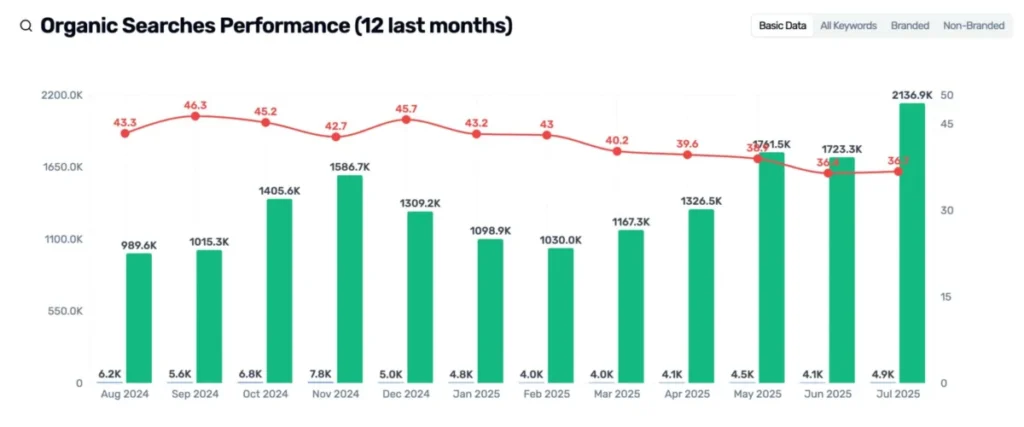
A common pitfall occurs when SEO teams report branded keyword traffic as a "win." This creates a "vanity metric" illusion, where organic growth looks robust, but in reality, the brand is failing to acquire new customers. It obscures the fact that the SEO team may be failing to rank for non-branded terms, while the PR team is the only one actually driving the bottom line.
The AI Shift: A Popularity Contest
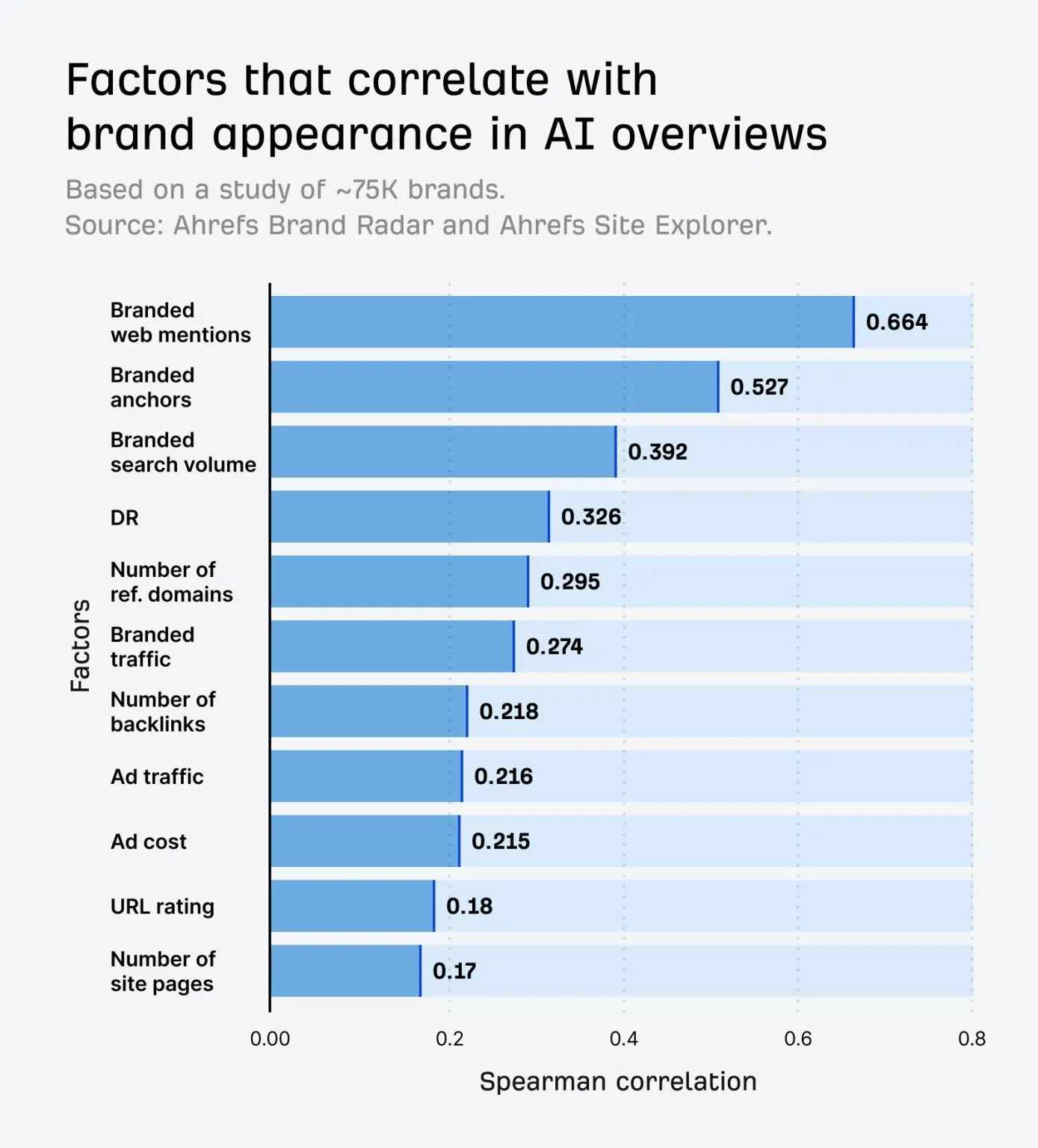
The advent of AI Overviews, Perplexity, and ChatGPT has fundamentally altered the search landscape. Recent studies from Ahrefs indicate a profound shift in how these models prioritize content.
The Top Factors for AI Visibility:
- Brand Strength: How well-known the entity is.
- Domain Authority: The historical credibility of the site.
- Consistent Context: The depth and breadth of information surrounding the brand across the web.
Compare this to traditional SEO metrics like keyword density, meta-tags, or even raw backlink counts. These older metrics are becoming secondary. AI models are trained to prioritize "authoritative" sources—essentially, they perform a popularity contest. They gravitate toward familiar names because they are "safer" and more likely to satisfy the user’s intent based on the vast context available about that brand across the internet.
Implications for the Modern Marketer
- Brand is the New Link Building: To be cited by an LLM, you must be a known entity.
- Entity-First SEO: You must ensure that your brand, products, and key people are recognized as "entities" by Google’s Knowledge Graph.
- Content Breadth: AI models prefer brands that have a consistent, high-quality presence across multiple topics, proving they are an authority in their field.
In this context, branded keywords are a shortcut to becoming an AI-cited authority. You aren’t gaming the system; you are simply providing the LLMs with the data they were trained to trust.
The Domain Name Connection: Bridging the Gap
There is a powerful semantic tie between your brand and your domain. Many users treat the search bar as a browser URL bar. When a user types "GrowthRocks" into Google instead of navigating to growthrocks.com, they are displaying high-level brand interest. This is "brand gravity" in action. By tracking these queries, you can identify how often your brand is the "default" choice in your category.
Operationalizing the Data
Monitoring this data requires more than just a surface-level look at Google Search Console (GSC). Since GSC does not natively segment branded vs. non-branded traffic, organizations must implement a systematic approach:
- Export and Classify: Regularly extract GSC data and categorize keywords using a Regex-based filter.
- Visualize the Split: Create a dashboard that shows the percentage of traffic from branded vs. non-branded sources. A healthy growth brand should see the non-branded bucket expand alongside the branded one.
- Cross-Reference with Revenue: Determine the lifetime value (LTV) of a user who arrives via a branded search vs. a non-branded search.
To streamline this, we have developed a custom data framework within our Monthly SEO Monitoring Handbook. Furthermore, our intelligence platform, os.growthrocks.com, automates this segmentation, providing real-time visualization of how your brand equity is evolving.
Conclusion: The Era of Brand Gravity
Your SEO strategy is no longer just about ranking higher on a list of blue links; it is about establishing a digital presence that the algorithms—and the users—cannot ignore. When someone types your name into a search bar, that is not merely an SEO success—it is the manifestation of brand gravity.
In an AI-dominated future, the brands that win will be those that have successfully built a moat of authority, familiarity, and consistency. While non-branded keywords are the tools of discovery, branded keywords are the hallmark of leadership. By balancing the two, you ensure that you aren’t just appearing in the search results—you are becoming the standard by which your industry is measured.
