

Decoding the Customer Journey: The Strategic Power of Engagement Analytics
In an era where digital noise is constant and consumer attention spans are increasingly fragmented, businesses often struggle with a fundamental ambiguity: Is the audience truly engaged, or are they merely passing through? For many digital-first companies, the difference between a high bounce rate and a loyal customer base lies in the ability to measure, interpret, and act upon customer engagement analytics.
Engagement analytics acts as the connective tissue between a customer’s first impression and their final conversion. By shifting the focus from simple traffic volume to the quality of interactions, businesses can demystify the user journey, identify friction points, and foster long-term growth.
What Is Customer Engagement Analytics?
At its core, customer engagement analytics is the systematic process of collecting, tracking, and interpreting data regarding how users interact with a brand, product, or service. These interactions are not limited to a single platform; they occur across a complex web of touchpoints, including websites, mobile applications, social media platforms, and even offline interactions.
Engagement encompasses any meaningful interaction that occurs prior to a "macro-conversion." Whether a user is scrolling through a blog post, watching a product demonstration video, or clicking an interactive element on a landing page, they are leaving a digital breadcrumb trail. In the context of modern digital marketing, these analytics are typically categorized into four distinct segments: web/app behavior, social media affinity, paid advertising responsiveness, and granular product-level interactions.
The Strategic Importance of Engagement Metrics
Why do businesses prioritize these metrics over simple sales data? The answer lies in the "middle of the funnel." While conversion data tells a company what happened, engagement data tells them why it happened.

Bridging the Gap in the Marketing Funnel
Most consumers do not make a purchase upon their first interaction with a brand. They visit, leave, research competitors, and return multiple times. Engagement analytics provides the necessary visibility into this cycle. It allows marketers to understand the transition from initial awareness to sustained retention.
Identifying Friction Points
When conversion rates stagnate, the culprit is often a hidden friction point—a poorly placed button, an unintuitive navigation menu, or slow-loading content. By analyzing engagement metrics, teams can pinpoint exactly where users lose interest. If a specific page sees high traffic but negligible "engaged time," it serves as a red flag that the content is failing to resonate or the user interface is hindering progress.
Sustainable Growth Through Affinity
Sustainable growth is rarely the result of a single viral moment. It is built on familiarity, trust, and brand affinity. By ensuring that users interact with a brand frequently and meaningfully, businesses create a "sticky" experience that keeps customers coming back. This cumulative effect is what ultimately drives long-term conversion rates and increases Customer Lifetime Value (CLV).
Best Practices for Implementing Engagement Analytics
While modern analytics suites—such as Google Analytics 4 (GA4)—come equipped with pre-built metrics, engagement remains a subjective concept. Decision-makers must define what "success" looks like based on their specific business objectives.
1. Defining "Meaningful" Interaction
A tool might default to tracking "Average Engagement Time," but is 10 seconds of interaction the same as 30 seconds? A media site may define engagement by video completion rates, while a SaaS company might focus on feature adoption. Customizing these definitions is critical. Often, the most valuable insights come from tracking non-standard events, such as the completion of a progress bar or the interaction with a specific "Help" tool.
2. The Implementation Guide
Standard analytics configurations are rarely sufficient for complex, enterprise-grade websites. A professional data strategy requires an Implementation Guide—a living document that serves as the blueprint for web analysts, developers, and marketers. This guide ensures that tracking is consistent, data is categorized correctly, and all stakeholders understand the "source of truth" regarding how engagement is measured.
3. Stakeholder Alignment
Engagement means different things to different departments. The product team may care about feature usage, while the marketing team focuses on campaign performance. Before customizing any tracking, it is vital to consult these departments to ensure that the data being collected actually serves their specific operational needs.
Key Metrics to Track Across Digital Channels
To build a comprehensive picture, marketers must segment their metrics by channel. Note that while conversions are the goal, they are distinct from engagement; engagement metrics capture the "warm-up" phase of the buyer’s journey.
Website and App Engagement
- Page Views: The foundational metric indicating reach. While it shows who arrived, it must be paired with other data to determine if the content was consumed.
- Sessions: A period of active engagement. In modern tools like GA4, a session is usually defined by a 30-minute window of activity.
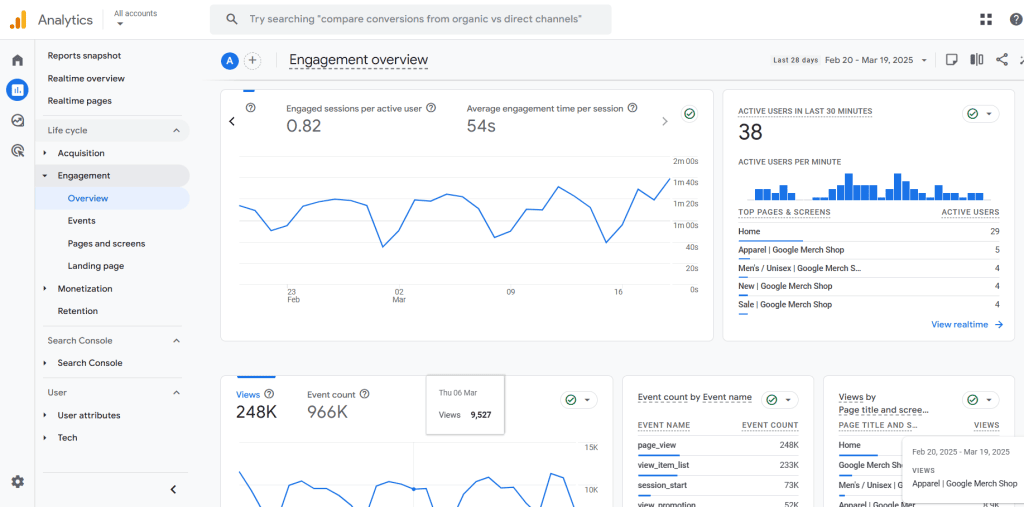
- Engagement Time: A vital metric that measures the actual duration a user interacts with content. This is a far more accurate representation of interest than "time on page," as it accounts for whether the tab is active.
- Pages per Session: A high pages-per-session count indicates an exploratory user. Benchmarks suggest that two to three pages per session is a strong sign of genuine interest.
- Engaged Sessions: A sophisticated metric (specific to GA4) that counts sessions that lasted longer than 10 seconds, had a conversion event, or had two or more page views.
Social Media Engagement
Social media performance is often measured through "vanity metrics," but for professional analytics, the focus should be on:
- Interaction Rate: Comments, shares, and saves. These require more effort from the user than a simple "like" and indicate higher brand affinity.
- Click-Through Rate (CTR): The primary indicator of how well social content drives traffic back to owned assets.
Paid Ads and Email
- CTR (Click-Through Rate): In advertising, this is the barometer for creative effectiveness. A low CTR suggests that the ad creative is not aligning with the target audience’s expectations.
- Open Rate: For email marketing, this remains the gold standard for measuring the effectiveness of subject lines and list segmentation.
Product Engagement
For eCommerce, the focus shifts to the "Path to Purchase":
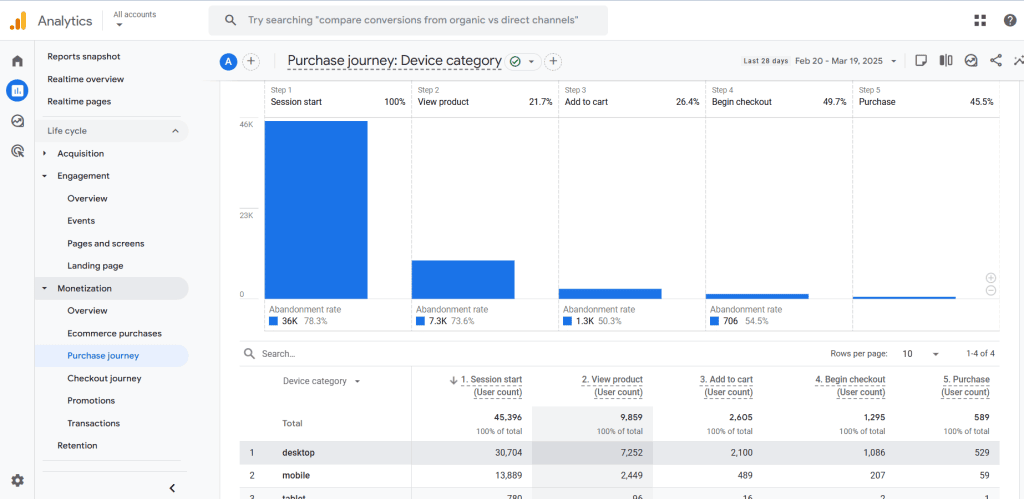
- Add-to-Cart Rate: An essential engagement metric that bridges the gap between browsing and buying.
- Promotional Engagement: Tracking how users interact with specific discount offers or product bundles. By mapping these, companies can see exactly where a purchase journey breaks down.
Implications for Future Strategy
The implications of robust engagement analytics are profound. Businesses that master these metrics are no longer "guessing" why their campaigns succeed or fail. Instead, they are operating from a foundation of behavioral evidence.
When a brand understands the specific sequence of actions that leads to a conversion, they can replicate that success through A/B testing and journey optimization. Furthermore, as data privacy regulations tighten, first-party engagement data becomes the most valuable asset a company possesses. Unlike third-party data, which is increasingly volatile, engagement data is owned, controlled, and directly reflective of a company’s specific customer base.
Conclusion: Turning Data into Dialogue
Customer engagement analytics is more than a dashboard of numbers; it is a way to listen to your customers at scale. By tracking interactions across the digital landscape, businesses can move beyond the surface level and truly understand the motivations and pain points of their audience.
While the technical setup requires diligence and strategic planning, the reward is a more efficient marketing funnel, improved user experiences, and, ultimately, a more resilient business model. As you refine your own analytics strategy, remember that engagement is not an end goal—it is the ongoing process of building a relationship. Start by asking not just "How many people visited?" but "How many people stayed, interacted, and felt understood?" That shift in perspective is the first step toward meaningful, sustainable success.
