
The Agency Evolution: How AI is Forcing a Radical Reimagining of Marketing Services
The agency model, a cornerstone of the global marketing industry for decades, is currently undergoing its most significant transformation since the dawn of the internet. As artificial intelligence moves from the fringes of "experimental tech" to the core of operational strategy, a widening chasm is emerging in the agency landscape. On one side are the traditionalists clinging to legacy billable-hour models; on the other are the "AI-native" disruptors who are fundamentally rewriting what it means to be a partner in growth.
For brands, the message is clear: The most forward-thinking agencies are no longer just "adding AI" to their existing service menus. They are reimagining the agency as an AI-powered system—a hybrid of human creative intuition and machine-speed execution.
The State of the Industry: A New Era of Agency Operations
The current market shift is defined by a transition from "AI as a tool" to "AI as the infrastructure." Historically, agencies were valued for their labor—their ability to deploy teams of writers, analysts, and designers to perform high-volume tasks. In the age of generative AI, labor-intensive tasks are increasingly automated, forcing agencies to pivot toward high-level strategy, complex system integration, and change management.
This transition is not merely about efficiency; it is about outcome. Agencies that can successfully synthesize vast amounts of data into actionable AI-driven strategies are becoming the most sought-after partners in the enterprise space.
Chronology: From Experimentation to Operationalization
To understand the current state of the agency world, we must look at the rapid timeline of this adoption:
- 2022 – The Catalyst: The public release of advanced Large Language Models (LLMs) triggered an immediate, reactive phase. Most agencies began using AI for quick-turn content drafting and basic image generation.
- 2023 – The Professionalization: Agencies began moving past the "novelty" phase. Organizations began establishing "AI Labs" and internal governance boards to manage the risks and opportunities of generative tech.
- 2024 – The Integration: We entered the era of the "AI-native delivery model." Agencies stopped treating AI as a separate line item and began embedding proprietary models into their core workflows—research, media buying, and SEO.
- 2025/2026 – The Transformation: The current moment. The industry is moving toward "AI Orchestration," where entire customer journeys are managed, optimized, and personalized through interconnected, intelligent systems.
The Vanguard: Agencies Redefining the Marketing Paradigm
The following organizations, all sponsors of the upcoming Marketing AI Conference (MAICON), represent the leading edge of this shift. They illustrate that there is no "one-size-fits-all" approach to AI implementation.
1. The Transformation Partners: Algomarketing
Algomarketing is tackling the "human" side of the equation. Recognizing that technology is useless without cultural adoption, they offer two distinct paths: People Transformation and Process Transformation. Their consultants embed within client teams, analyze existing friction points, and co-build AI-native agents designed to automate the heavy lifting. By providing coaching alongside technical implementation, they ensure that the workforce doesn’t just survive the transition to AI—they thrive within it.
2. The Revenue Strategists: Demand Spring
For B2B organizations, the complexity of the buying journey often leads to fragmented efforts. Demand Spring acts as a revenue marketing consultancy, bridging the gap between strategy, tech, and execution. They move clients beyond the "experimental" phase by establishing the governance, MarTech architecture, and AI advisory services necessary to scale revenue growth. Their work spans ABM (Account-Based Marketing), SEO, and AI-powered marketing automation, ensuring every touchpoint is data-backed.
3. The Fractional Experts: EMMIE Collective
EMMIE Collective offers a modern alternative to the massive, slow-moving agency retainer. They provide fractional Marketing and Revenue Operations expertise by embedding seasoned operators directly into a client’s internal team. This on-demand model allows brands to tap into deep technical knowledge—whether it’s Salesforce, Marketo, or complex data operations—without the overhead of a traditional, multi-layered agency structure.
4. The Technical Engine: Fjorge
While many agencies focus on the "what" of marketing, Fjorge focuses on the "how." As a digital development and technology partner, they provide the back-end muscle needed to bring complex digital experiences to life. By partnering with creative agencies that lack in-house dev capacity, Fjorge builds the custom web applications, mobile platforms, and e-commerce ecosystems that AI-driven marketing strategies require to function.
5. The AI-Native Strategists: Intercept
Intercept has effectively pioneered an AI-native delivery model. By using proprietary AI workflows, they accelerate the most time-consuming aspects of enterprise marketing—content production, research, and personalization—while keeping the high-level strategy and creative vision firmly in human hands. Their "Intercept Labs" serves as an incubator for clients to pilot and stress-test new AI-driven approaches before full-scale deployment.
6. The AI Orchestrators: Level Agency
Level Agency is moving toward the "orchestration" model. They view the customer journey not as a series of silos, but as a holistic system. By connecting strategy, execution, and data science through repeatable AI-powered systems, they are particularly adept at managing the complexities of high-consideration purchases where long buying cycles and multiple stakeholders are the norm.
7. The R&D Leaders: Seer Interactive
With over two decades of experience, Seer Interactive represents the gold standard for long-term adaptation. Their internal "AI Lab" serves as a testing ground for experimental technologies, the results of which directly inform their "SeerAdvance" consulting services. They prove that legacy experience, when combined with a culture of constant, iterative research, is a massive competitive advantage.
8. The Search Pioneers: Soarion Digital
The rise of AI search tools (like Perplexity or SearchGPT) has fundamentally changed how users find information. Soarion Digital is at the forefront of this shift, helping brands move away from traditional SEO toward "AI search optimization." They focus on building citation-driven content and earning the third-party validation that AI models rely on, ensuring their clients remain the "source of truth" in an automated search landscape.
Implications: The Death of the "Generalist"
The primary implication of this shift is the erosion of the "generalist agency." In an AI-enabled world, the value proposition of a partner is shifting toward deep, specialized expertise—whether that’s in data engineering, AI governance, or niche industry strategy.
For CMOs and business leaders, the decision of which agency to hire is no longer about which firm has the largest headcount. It is about which firm has the most robust system. The agencies that succeed in the next decade will be those that can successfully manage the "human-in-the-loop" balance: using AI to scale the mundane while elevating the human creative and strategic output to new heights.
Official Perspective: Moving to Real-World Impact
As the industry converges at MAICON 2026, the theme is shifting from "how does this work?" to "what is the real-world impact?"
"The agency model is being rewritten in real time," says Cathy McPhillips, CMO of the Marketing AI Institute. "We are seeing a profound divide between those who are merely using AI as a shortcut and those who are using it to solve foundational business problems. The sponsors featured here are not just service providers; they are architects of the future of marketing."
Conclusion: Preparing for the Next Phase
As businesses navigate this period of disruption, the mandate is clear: Audit your current partnerships. Ask your agency not just what AI tools they are using, but how those tools are changing their business model, your internal workflows, and your long-term ROI.
The agencies of the future are currently being built. Whether you are looking for a digital transformation partner, a revenue growth consultant, or an AI search specialist, the common denominator for all successful firms is a commitment to continuous learning and systemic integration.
The question for your brand is no longer whether you should incorporate AI into your marketing, but how quickly you can align with partners who treat AI as the foundational operating system of the modern, successful enterprise.
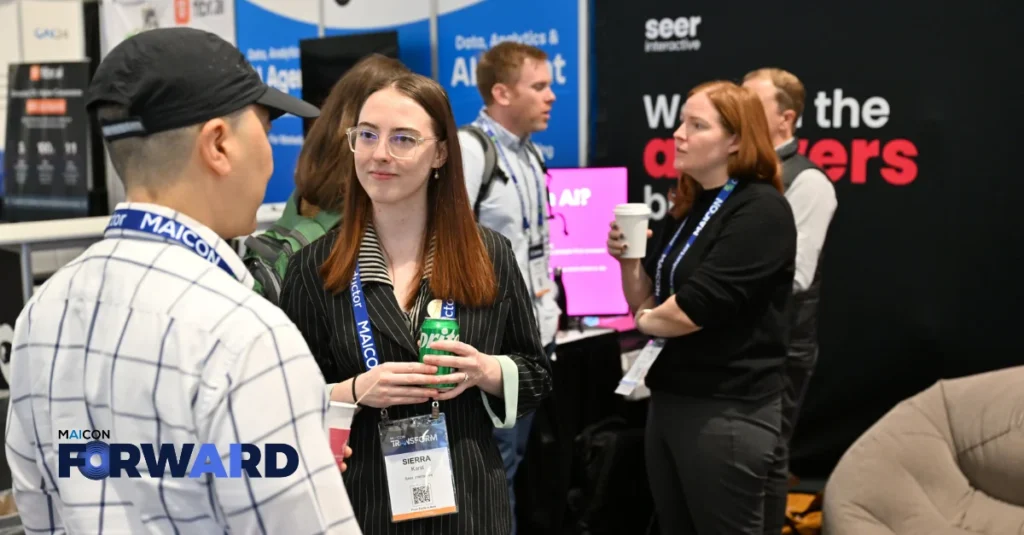
For those looking to deepen their understanding of these shifts, the Marketing AI Conference (MAICON) 2026 will take place October 13–15 in Cleveland, Ohio. Attendees will have the opportunity to engage directly with these agencies and other leaders to discuss the practical application of AI in the real world.
