
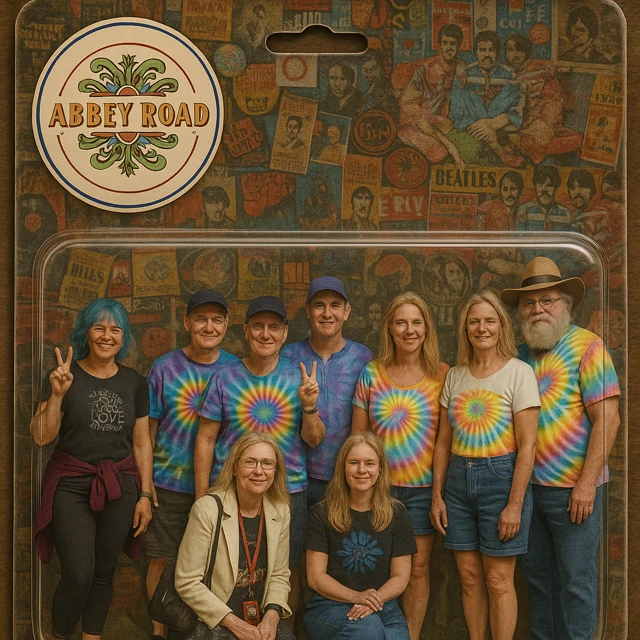
The AI Renaissance in Creative Expression: How Generative Tools are Redefining Personal Branding and Nostalgia
Date: June 22, 2025
By: Editorial Staff
Introduction: The New Frontier of Digital Artistry
In an era where the boundary between human imagination and machine execution continues to blur, a new wave of digital creators is emerging. Using advanced Large Language Models (LLMs) like OpenAI’s ChatGPT and Anthropic’s Claude, individuals are no longer just consumers of media—they are architects of bespoke, highly personalized visual content.
As the adage goes, "With great power comes great responsibility." While this sentiment is often associated with the moral compass of superheroes like Spider-Man, it has taken on a literal meaning for hobbyists and professionals alike. The ability to manifest complex, high-definition action figures, logos, and intricate pop-culture mashups via simple text prompts has revolutionized personal branding. This article explores the latest developments in this space, focusing on how one enthusiast has utilized these tools to bridge the gap between retro nostalgia and modern digital precision.
The Mechanics of Prompt Engineering: From Text to Toy
At the core of this creative explosion is "prompt engineering"—the art of guiding an AI to produce a specific visual output. Unlike traditional graphic design, which requires hours of rendering, text-to-image AI allows for rapid iteration.

For the modern creator, the workflow is simple yet sophisticated:
- Conceptualization: Defining the subject (e.g., a specific celebrity or a vintage-style toy).
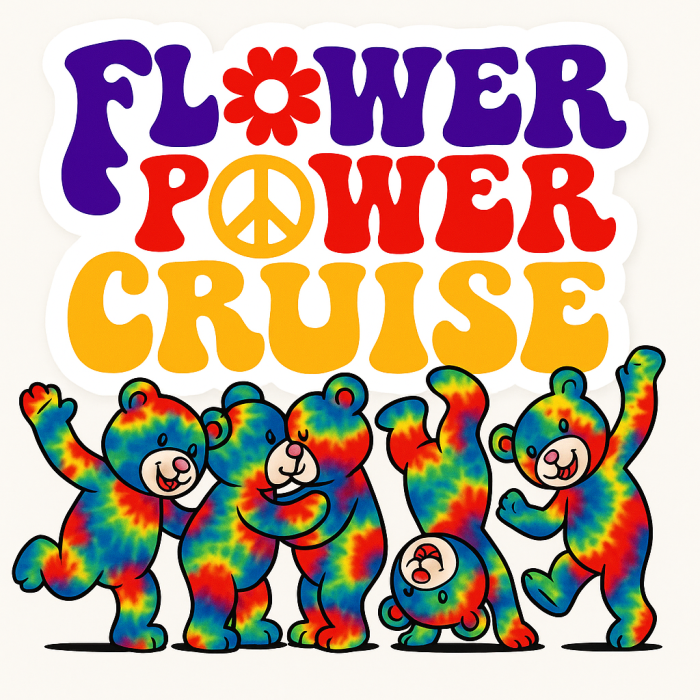
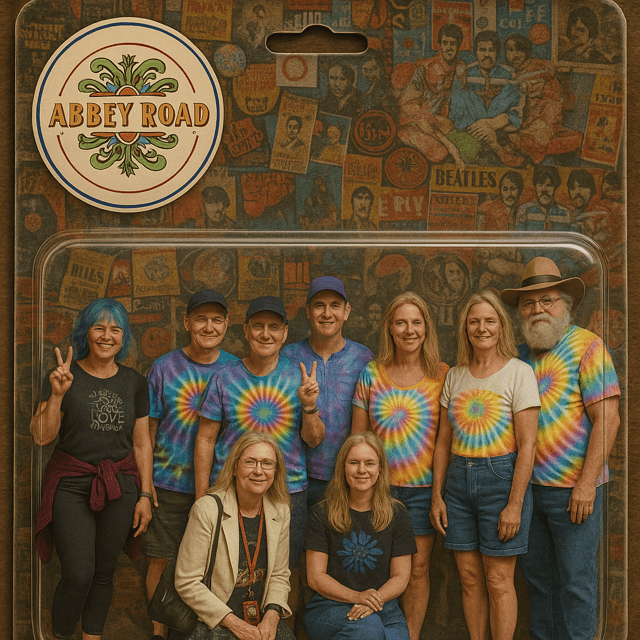
- Contextualization: Providing the AI with background elements (e.g., a "Flower Power Cruise" setting).
- Refinement: Adjusting the style, texture, and framing until the output matches the creator’s mental image.
The results are not merely static images; they are cultural artifacts that blend personal history with the hyper-modern capabilities of generative AI.

Chronology of Creative Evolution
The journey into AI-assisted creation is not linear; it is a cumulative process of learning and adaptation.
- May 2025: Initial experiments with action figure generation begin, focusing on simple character portraits.
- Early June 2025: The scope expands to include branding, specifically creating custom logos for niche communities like "Tony’s Groovy Bears."
- Mid-June 2025: The project matures into complex scenarios, such as placing real-world friends into iconic scenes from Seinfeld or creating elaborate multi-pack action figure sets based on long-running television dramas like Stranger Things.
- Late June 2025: The transition toward using Anthropic’s Claude signifies a move toward more structural and data-heavy design, marking the next phase of this digital evolution.
Supporting Data: Community-Driven Branding
A significant portion of this recent work involves supporting the "eBay Live" community. For many small-scale retailers, brand identity is everything. When an auctioneer requires a "Do Not Bid!" sign for specific private offers, the need for a professional, yet personalized, aesthetic is paramount.

By leveraging AI, creators can now generate bespoke signage that aligns perfectly with the brand’s voice—whether that be the "Bunka Boyz" operating in their metaphorical bunker or specialized cruise-themed collectives. These logos serve a dual purpose: they function as legitimate utility tools during high-stakes auctions and as community-building emblems that foster a sense of belonging among followers.
Cultural Intersections: The "Seinfeld" and "Stranger Things" Effect
One of the most compelling aspects of these AI-generated figures is the juxtaposition of disparate cultural elements.
The Puffy Shirt Protocol
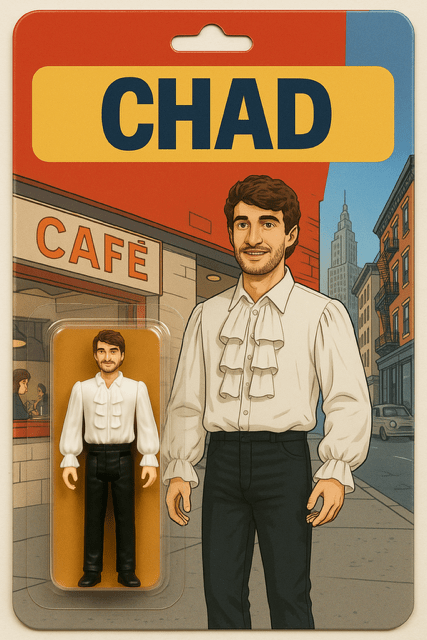
By inserting personalities—such as friends or performers like Peter Noone—into the "Puffy Shirt" episode of Seinfeld, the creator taps into the collective cultural consciousness. These images are not just fan art; they are narrative-driven pieces that require the AI to understand the specific "lore" of 1990s television.
The "Stranger Things" Multi-Pack
The challenge of rendering a multi-character set, such as the cast of Stranger Things, represents a significant technical hurdle. AI must manage consistent character traits while maintaining the "toy packaging" aesthetic. The minor quirks—such as the AI spontaneously adding glasses to certain characters—highlight the collaborative, often unpredictable nature of human-AI synergy.
Emotional Resonance and Memorializing the Past
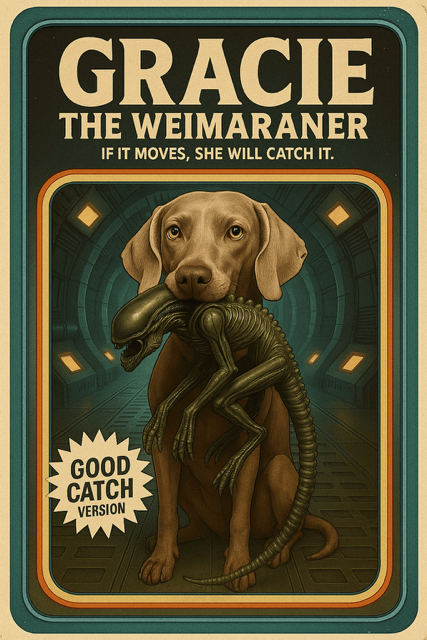
Perhaps the most profound application of this technology is the preservation of personal memory. The memorialization of "Gracie," a beloved dog, through an AI-generated scene involving an Alien (from the film franchise) represents a bridge between mourning and creative expression.
By utilizing song lyrics—such as the poignant lines from Mr. Bojangles—the creator anchors the digital art in deep, human emotion. This confirms that AI is not inherently cold or calculating; rather, it is a mirror reflecting the sentiment and nostalgia of the human operator. It allows for a form of digital taxidermy, keeping memories alive in a format that feels tactile and permanent.
Official Responses and User Feedback
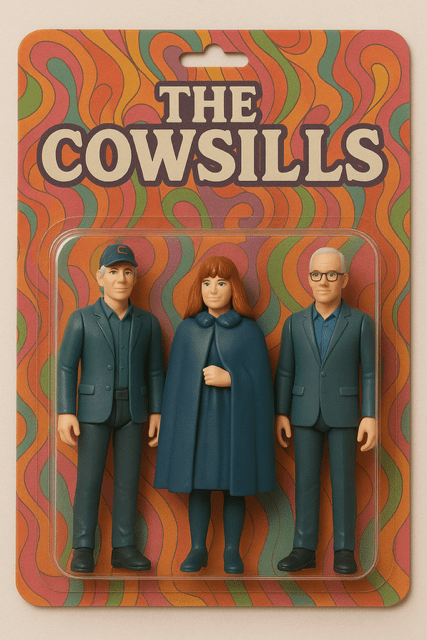
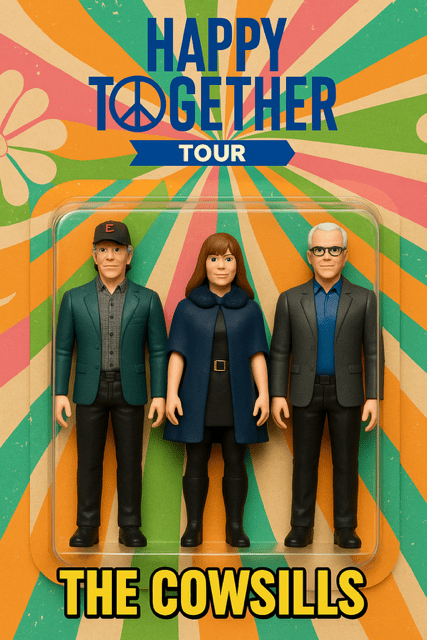
Within the digital communities where these figures are shared, the response has been overwhelmingly positive. Discussions on Facebook and other social forums regarding the "Cowsills Three-Pack"—debating which background better suits their legacy (the Flower Power Cruise vs. the Happy Together Tour)—demonstrate that these AI creations are sparking genuine community discourse.
The feedback loop is essential: the AI produces, the community critiques, and the creator refines. This iterative process is the hallmark of a healthy, growing digital ecosystem.
The Implications of AI in the Creative Economy
What does this mean for the future of creative labor?
- Democratization of Design: Barriers to entry have effectively vanished. A user with no formal training in Photoshop or 3D modeling can now produce high-quality visual content.
- The Shift to Curation: As creation becomes easier, the value shifts toward curation. Knowing what to ask for, how to frame the prompt, and how to select the best output is the new "skill" that defines a designer.
- The Rise of "Hybrid" Tools: With the integration of multiple models—switching between ChatGPT for creative writing and Claude for structural diagrams—the creator’s toolkit is becoming more versatile than ever.
Future Outlook: Beyond the Horizon
As we look toward the latter half of 2025, the trajectory is clear. The focus is shifting from simple, standalone images to more complex, integrated projects. The ongoing experimentation with Anthropic’s Claude indicates a desire for more precision, particularly in technical fields like diagramming and business-related data visualization.
The creator’s promise to return with more content—ranging from refined action figures to complex business diagrams—suggests that the "AI-as-a-partner" model is only in its infancy.
Conclusion
The transition from human-only creation to human-AI collaboration is not a replacement of the artist; it is an amplification of their intent. By leveraging these powerful tools, creators are finding new ways to celebrate their friends, honor their past, and engage with their communities. Whether it is an action figure of a friend in a pirate shirt or a tribute to a long-lost pet, the heart of the project remains human.
The "Great Power" of AI, when used with "Great Responsibility," is proving to be a remarkable instrument for joy, connection, and the endless pursuit of creative expression. Stay tuned; the next batch of figures, logos, and Claude-inspired projects is already in the pipeline.
For those interested in the foundational steps of this journey, please refer to the author’s earlier documentation on the initial foray into AI-prompting.
