
The Agency Operations Crisis: Why Choosing the Right CRM is Your Biggest Competitive Advantage
For many digital agencies, the mantra "pick a CRM and the rest will follow" is a seductive but ultimately dangerous myth. Agencies often select a Customer Relationship Management (CRM) platform based on a flashy sales demo or a friend’s recommendation, only to find themselves months later drowning in fragmented workflows.
The true cost of a poorly chosen CRM isn’t the monthly subscription fee; it is the "operational tax" levied by context switching, inconsistent data silos, and sluggish handoffs between sales and delivery teams. In an era where client retention depends on seamless, high-touch communication, the CRM is no longer just a contact database—it is the backbone of your agency’s scalability.

The Anatomy of an Agency-Specific CRM
To understand why agencies struggle with generic CRMs, one must first look at what an agency actually needs. Unlike a standard retail or SaaS business, agencies operate on complex, service-line-specific models. They require:
- Standardized Onboarding: The ability to capture lead data from forms and instantly trigger a consistent pipeline that encompasses access requests, asset collection, and kickoff scheduling.
- Sales-to-Delivery Handoffs: A system that captures the scope, expectations, and unique constraints of a project so that the delivery team doesn’t have to "re-learn" the client from scratch.
- Capacity and Revenue Forecasting: Agencies need to visualize which services are hitting their stride and which clients are at risk of churning before the warning signs become catastrophic.
- Automated Reporting: The ability to pull performance data into reusable, client-ready dashboards for Quarterly Business Reviews (QBRs), eliminating the need for manual data scraping.
The "4C" Evaluation Model: A New Standard for 2026
To identify the best tools for the current landscape, we utilized the "4C" evaluation model. This framework scores platforms based on factors that actually impact agency output:
- Clarity: Does the system provide an intuitive interface that keeps the entire team aligned on a single source of truth?
- Collaboration: Does the tool facilitate communication between disparate teams (Sales, Accounts, Delivery) without requiring constant Slack or email updates?
- Customization: Can the platform be molded to fit the agency’s specific workflows, or is the agency forced to adapt its processes to fit the software’s limitations?
- Connectivity: How deep is the integration with the existing tech stack—specifically email marketing, project management, and billing tools?
Top CRM Recommendations for Modern Agencies
1. HubSpot Sales Hub: The Scaling Powerhouse
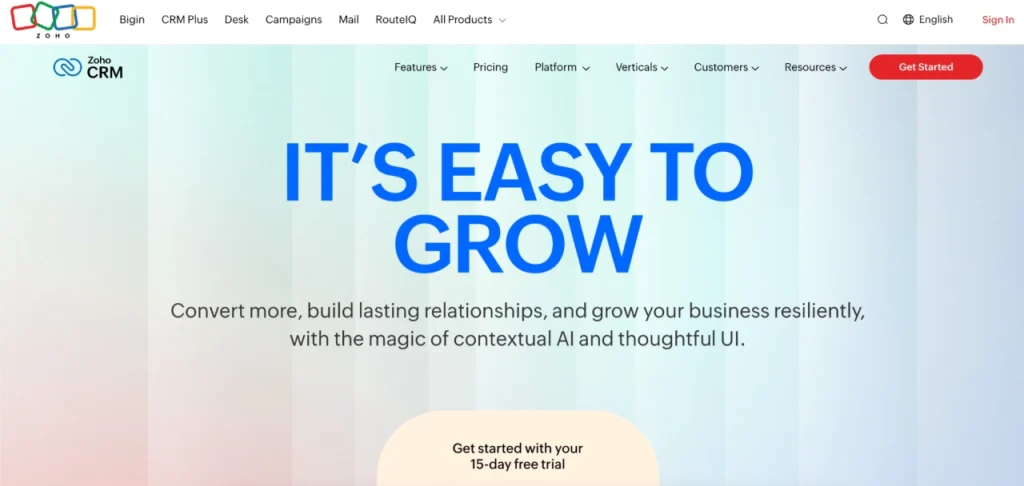
HubSpot remains the gold standard for agencies managing multi-service lines. With its native email tools, sequences, and advanced reporting, it balances ease of use with enterprise-level depth. It is ideal for agencies that have moved past the "startup" phase and need reliable forecasting and robust automation.
2. Pipedrive: The Sales-Centric Choice
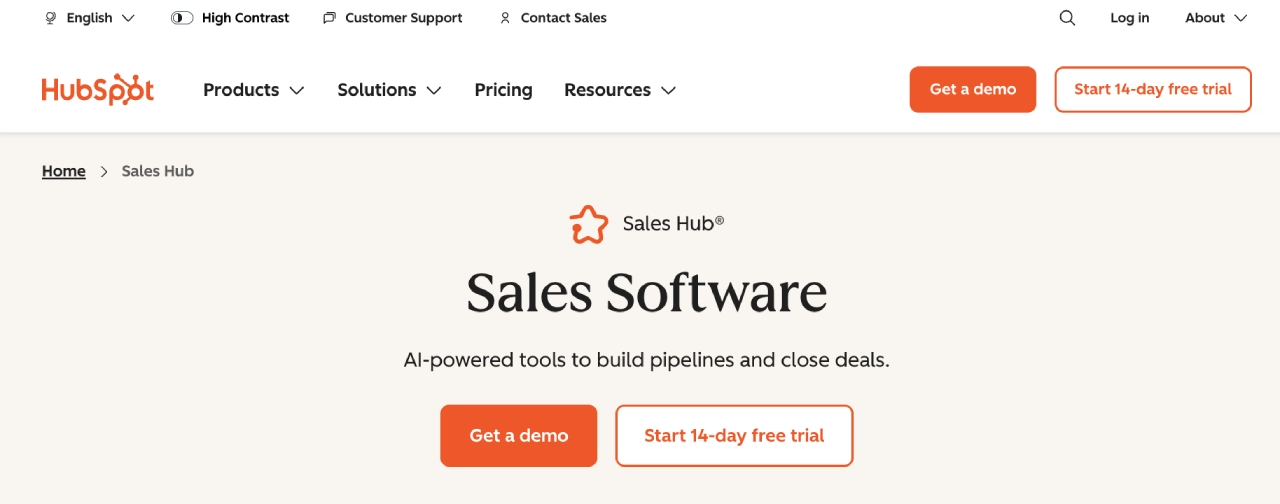
If your agency is driven by aggressive business development, Pipedrive’s visual, kanban-style pipeline is unmatched. It minimizes friction for sales reps, allowing them to focus on moving deals through the funnel rather than navigating complex administrative menus.
3. Zoho CRM: Value and Customization
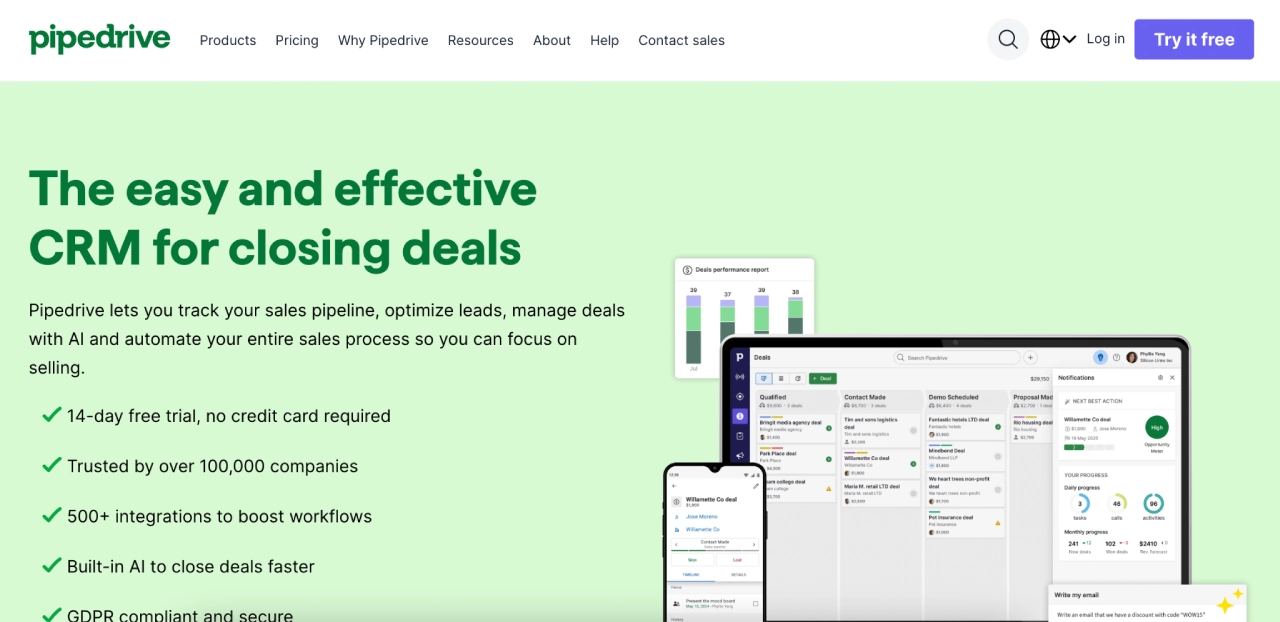
For agencies that require deep customization without the enterprise price tag, Zoho is the clear winner. Its "CommandCenter" journey orchestration and AI-driven insights (Zia) allow agencies to build highly complex, automated workflows that feel bespoke to their business.
4. monday sales CRM: The "Work OS" Hybrid
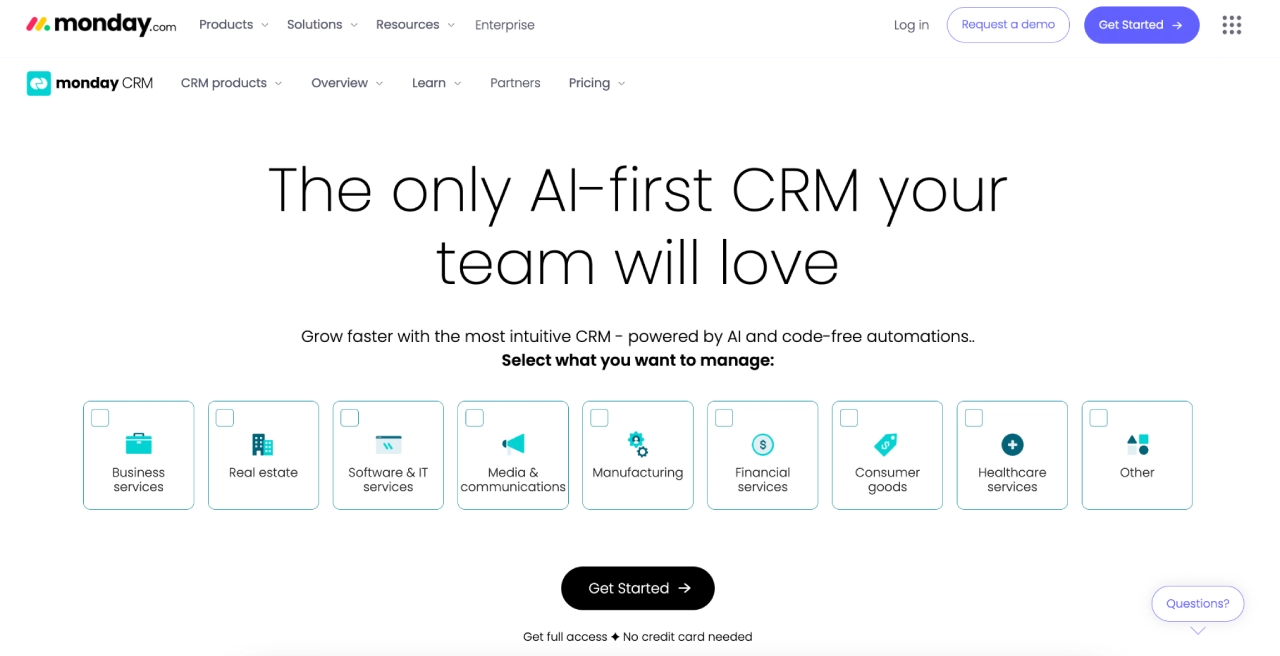
For agencies that struggle to separate sales from delivery, monday.com offers a unique solution. Because it is built on a "Work OS" architecture, agencies can manage the entire client lifecycle—from initial lead to final project delivery—on a single, highly visual board.
5. Productive.io: The Dedicated "Agency OS"
Productive.io is a specialized tool built specifically for professional services. It goes beyond simple CRM features to include budgeting, time tracking, and resource planning. It is the best choice for agencies that want to connect the dots between a sale and actual project profitability.
The Role of Email: Campaign Monitor as the Communication Layer
Regardless of the CRM you choose, the "last mile" of client communication—email—requires a specialized touch. A CRM is designed for data, but a platform like Campaign Monitor is designed for engagement.
By using the CRM as your "Source of Truth" (storing stages, renewal dates, and contact info) and Campaign Monitor as your "Engagement Engine," you unlock a powerful synergy. For instance, when a deal reaches the "Onboarding" stage in your CRM, it can automatically trigger a personalized welcome journey in Campaign Monitor. This ensures that every client receives the same high-touch, brand-consistent experience, regardless of which account manager is handling the account.
Strategic Playbook: Integrating CRM and Communication
| Use Case | CRM Responsibility | Campaign Monitor Responsibility |
|---|---|---|
| Onboarding | Triggering tasks and milestones | Automated welcome journeys |
| Weekly Status | Centralizing health/risk data | Sending consistent status summaries |
| QBR Prep | Storing KPIs and renewal dates | Sending data-backed preview emails |
| Renewal Nudges | Flagging at-risk accounts | Nurture sequences for retention |
The Dangers of "CRM Bloat": Red Flags to Watch
Not every CRM is a good fit, even if it has a great feature list. Agencies should be wary of:
- Lack of Role-Based Permissions: If you cannot restrict a freelancer’s access to sensitive client billing data, you are inviting security risks.
- One-Way Integrations: A CRM that only exports CSVs will inevitably lead to manual data entry errors. Always prioritize two-way API syncs.
- Volume Caps: Many CRMs have "hidden" limits on contact records or email sends. These caps often trigger at the worst possible time—usually when you are in the middle of a massive client campaign.
- The "All-in-One" Trap: Be careful with suites that promise to do everything (CRM, billing, support, web design). Often, these tools do many things at a "C-grade" level, leaving your team frustrated by lack of depth.
Implications for Agency Leadership
The decision to switch or upgrade a CRM should never be taken lightly. Before moving, agency leaders must conduct a thorough audit. If your current tool is failing, ask yourself: Is it a software problem, or a process problem?
If your team is not using your current CRM, adding a more complex one will only exacerbate the issue. However, if your team is hitting a "visibility ceiling"—where you no longer know the status of your pipelines, the health of your client relationships, or the accuracy of your revenue forecasts—then it is time to move.

Final Takeaway: The Path to Predictability
The goal of a modern agency CRM is to provide the "clarity of scale." As you move into 2026, the agencies that win will be those that have successfully removed the "operational drag" from their daily lives. By selecting a CRM that aligns with your specific agency model and pairing it with a robust communication tool like Campaign Monitor, you are not just buying software—you are building a foundation for sustainable, predictable growth.
Recommended Steps for Agency Owners:
- Audit your current stack: Identify where the "data leaks" are occurring.
- Define your "Must-Haves": Are you prioritizing sales speed (Pipedrive), operational visibility (Productive.io), or automation depth (HubSpot)?
- Pilot the integration: Before a full-scale migration, test the data sync between your potential CRM and your email marketing platform.
- Standardize the "Gold Standard": Once you have chosen your tool, create a "master template" for your pipelines and automations so that every new client account starts from a position of strength.
By moving away from ad-hoc solutions and toward a structured, integrated ecosystem, your agency can stop spending its time "managing the tools" and return its focus to what matters most: delivering exceptional work for your clients.
