
The Rise of Conscious Commerce: A Comprehensive Guide to Curating a Genuine Sustainable Print-on-Demand Catalog
Introduction: The Shift Toward Eco-Friendly Retail
The modern consumer landscape is undergoing a profound structural shift. For decades, the retail sector operated on a linear model of fast production, rapid consumption, and swift disposal. Today, that model faces mounting pressure from a customer base that increasingly demands environmental accountability.
According to PwC’s widely cited Voice of the Consumer survey, modern shoppers are not just passively concerned about the planet—they are actively willing to vote with their wallets. Studies show that customers are willing to pay nearly ten percent more for eco-friendly goods. This willingness presents a massive commercial opportunity for independent creators, entrepreneurs, and established brands looking to build or expand their merchandise catalogs.
However, capitalizing on this green transition is far from straightforward. The print-on-demand (POD) industry has experienced exponential growth, but it is also plagued by corporate greenwashing. Many suppliers market their items as "eco-friendly" or "sustainable" without providing transparent documentation regarding material composition, manufacturing ethics, or supply chain traceability.
For brand owners striving to maintain consumer trust, building a sustainable catalog requires rigorous vetting. This report explores the core mechanics of genuine sustainability, outlines the most reliable certifications, and details the 20 best eco-friendly print-on-demand products worth selling in the current market.
Main Facts: Navigating the Complexities of Sustainable POD
The fundamental challenge of curating a sustainable print-on-demand store lies in the definition of terms. In the textile and manufacturing industries, words like "organic," "recycled," and "sustainable" are frequently used interchangeably, often masking unsustainable practices beneath the surface.
When building a catalog from scratch, merchants must look past marketing buzzwords and examine technical specifications. For instance, the color of a garment can drastically alter its material mix. A heather-grey t-shirt may boast an organic cotton label on the outside, but its manufacturing process often requires blending synthetic polyester fibers to achieve its distinct coloration.
Furthermore, true sustainability is not merely about raw materials; it encompasses durability and product lifecycle management. A garment manufactured from organic fibers fails the sustainability test if the seams unravel after three washes or if the Direct-to-Garment (DTG) print fades prematurely, forcing an early disposal.
Chronology: How the Market Evolved Toward Eco-Consciousness
- Pre-2018: The print-on-demand industry was dominated by conventional cotton and heavy polyester blends. Sustainability was largely viewed as an expensive niche market with limited consumer demand and high production costs.
- 2019–2021: Consumer awareness regarding microplastics and textile waste surged. Major fulfillment networks began introducing entry-level organic cotton lines, responding to early regulatory pressures and shifting public sentiment.
- 2022: A pivotal year for eco-conscious apparel. Fulfillment giants like Gelato launched dedicated sustainable collections utilizing recycled PET yarn derived from post-consumer plastic bottles.
- 2024–Present: PwC and other market researchers confirmed that premium pricing for green goods is viable, as consumers demonstrate a willingness to pay a ~10% markup. Platforms like Fourthwall and Printify expanded their catalogs to include fully circular fashion initiatives, QR-code recycling labels, and advanced material certifications.
Supporting Data: Understanding Eco-Certifications
To maintain the sustainability promises made to consumers, merchants must rely on third-party verifications rather than supplier claims alone. Understanding what each certification stands for is crucial for legal compliance and brand credibility:
- GOTS (Global Organic Textile Standard): This is the gold standard for organic textiles. It covers not only the harvesting of raw materials—such as ensuring cotton is grown without synthetic pesticides or fertilizers—but also mandates strict ecological and social criteria throughout the processing and manufacturing supply chain.
- OEKO-TEX Standard 100: This testing and certification system focuses on consumer safety. It screens finished product components for a wide range of potentially harmful substances, ensuring that the textiles are chemically safe for human skin.
- GRS (Global Recycled Standard): GRS tracks and verifies the presence of recycled raw materials in a final product. It sets requirements for third-party certification of recycled content, chain of custody, social and environmental practices, and chemical restrictions.
- OCS (Organic Content Standard): Similar to GOTS, the OCS verifies the presence and amount of organically grown material in a final product, tracking the raw material from source to final store shelf.
- FSC (Forest Stewardship Council): Primarily relevant for paper and wood-based products (such as packaging or custom journals), FSC certification guarantees that materials come from responsibly managed forests that provide environmental, social, and economic benefits.
Official Responses: Supplier Commitments and Material Realities
Major print-on-demand platforms have responded to consumer demand by integrating certified blanks into their fulfillment networks. However, regional variations and platform-specific limitations require careful navigation.
Suppliers such as Fourthwall have embraced premium sustainable blanks—most notably through partnerships with brands like Stanley/Stella and Bella+Canvas—offering robust customization options including multi-position printing and embroidery. Meanwhile, Gelato has positioned itself as a leader in localized fulfillment, emphasizing that approximately 90% of its orders are produced locally to drastically reduce the carbon footprint associated with long-distance shipping.
Niche platforms like Teemill have pioneered circular fashion models, embedding QR codes directly into garment labels to facilitate end-of-life recycling programs where customers can return worn-out apparel.
The 20 Best Sustainable Products Worth Selling
To help merchants curate a high-converting, ethically sound store, the following catalog options have been vetted for material integrity, profitability, and consumer appeal.
Sustainable T-Shirts
T-shirts are the cornerstone of any apparel catalog. They offer universal appeal, manageable base costs, and high profit margins when paired with compelling designs.
1. Stanley/Stella Organic Cotton T-Shirt
- Platform: Fourthwall
- Price: Starting at $14.50
- Overview: Crafted from 100% organic ring-spun cotton with broad unisex sizing. Selling at a retail price of $30 yields a strong profit margin of approximately $15.50. With zero minimum order quantities, it eliminates inventory risk. Ideal for premium embroidery.
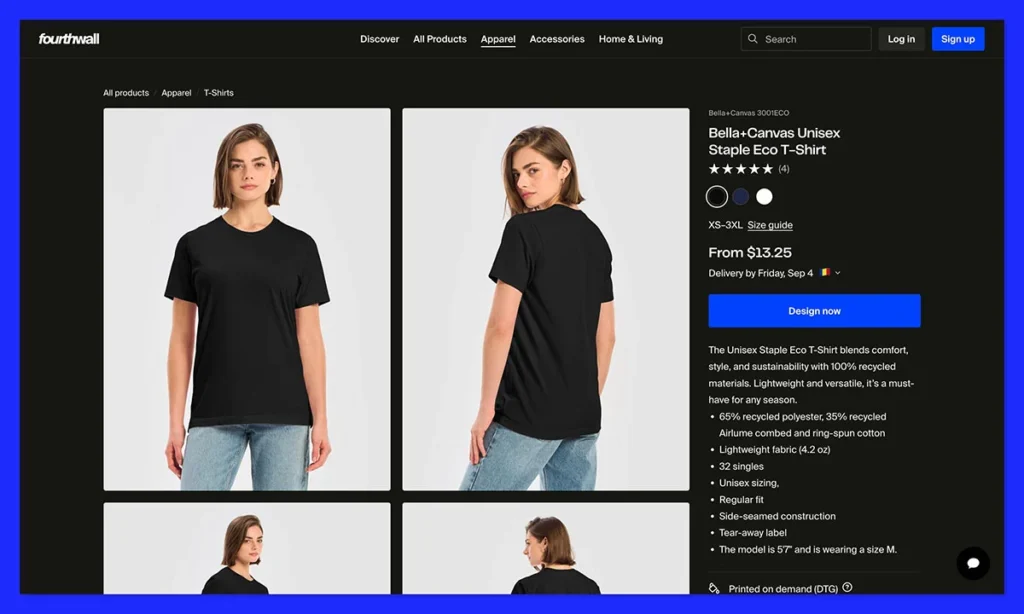
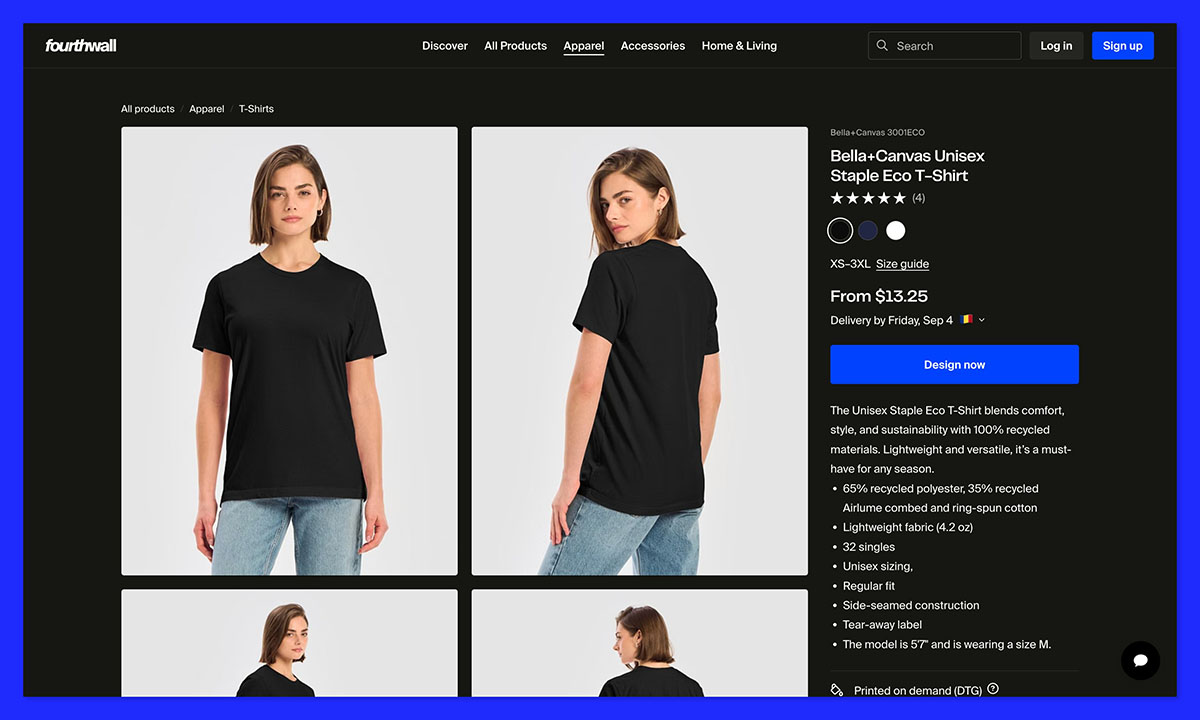
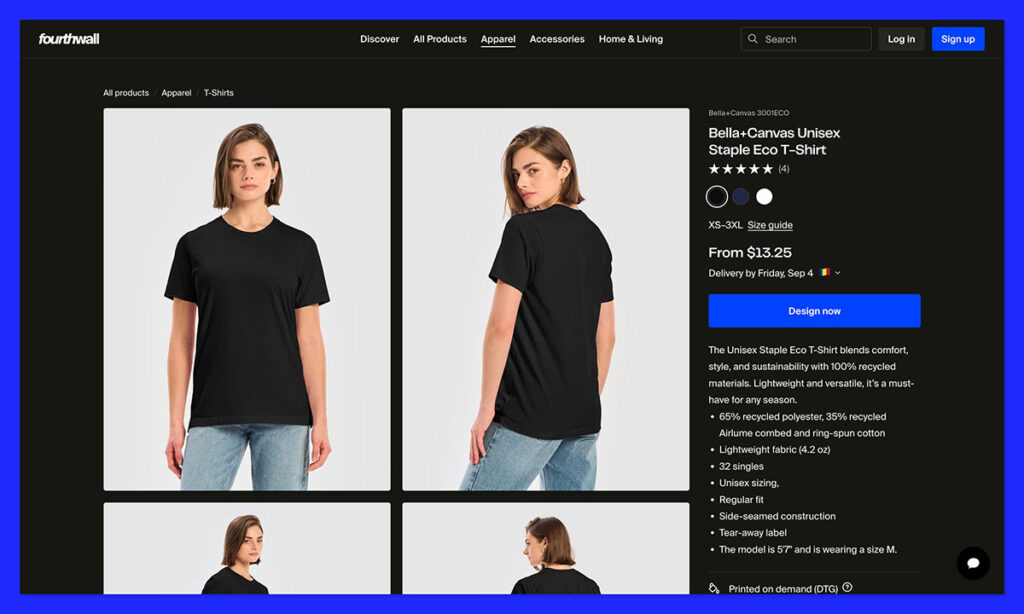
2. Bella+Canvas Unisex Staple Eco T-Shirt
- Platform: Fourthwall
- Price: Starting at $13.25
- Overview: A more budget-friendly alternative featuring a tear-away label. The fabric is a sustainable blend of 65% recycled polyester and 35% recycled Airlume cotton. Merchants should order samples beforehand to test DTG printing vibrancy on darker fabric shades.
3. Organic Unisex Crewneck T-Shirt
- Platform: Gelato
- Price: Localized pricing
- Overview: Made from 100% certified organic ring-spun cotton. Gelato’s localized production network ensures rapid 5-day delivery windows for roughly 90% of orders, cutting transit emissions.
4. Circular Organic T-Shirt
- Platform: Teemill
- Price: Custom quote
- Overview: Features 100% organic cotton and water-based vegan inks. Each garment includes a QR-enabled return label for closed-loop recycling, though merchants must clearly communicate return logistics to buyers.
Hoodies and Sweatshirts
As an upgrade from standard tees, hoodies and sweatshirts command higher price points, demanding an exceptional balance of plush softness and structural durability.
5. Stanley/Stella Essential Eco Hoodie
- Platform: Fourthwall
- Price: Starting at $33.20
- Overview: Composed of 85% organic cotton and 15% recycled polyester. Fourthwall allows multi-position printing (front, back, sleeves, and inner labels), making it a prime candidate for high-end streetwear brands.
6. SOL’s Eco Raglan Hoodie
- Platform: Fourthwall
- Price: Starting at $35.70
- Overview: Offers extensive color palettes. Note that material blends vary by colorway: Charcoal variants feature a 60/40 cotton-recycled polyester split, while other shades utilize an organic cotton outer layer with a blended interior.
7. Gelato Organic Hoodies
- Platform: Gelato
- Price: Localized pricing
- Overview: Available in pullover and zip-up configurations, utilizing pre-shrunk cotton-polyester blends and eco-friendly water-based inks.
8. Organic Stanley/Stella Oversized Sweatshirt
- Platform: Fourthwall
- Price: Starting at $40.02
- Overview: A streetwear essential featuring a brushed interior, drop-shoulder volume, and heavy ribbing. Backed by GOTS and OEKO-TEX certifications alongside PETA-approved vegan inks.
9. Recycled Polyester Sweatshirt
- Platform: Gelato
- Price: Localized pricing
- Overview: One of Gelato’s flagship eco-apparel items, utilizing yarn spun from post-consumer PET bottles. Exact color availability varies by regional fulfillment center.
Totes, Hats, and Practical Accessories
Accessories require no sizing charts, making them low-risk inventory additions with high impulse-purchase potential.
10. Econscious Organic Cotton Tote
- Platform: Fourthwall
- Price: Starting at $18.31
- Overview: A heavy-duty bag capable of holding 30 pounds and six gallons of volume. Best positioned as a premium collection piece or event-themed merchandise item.
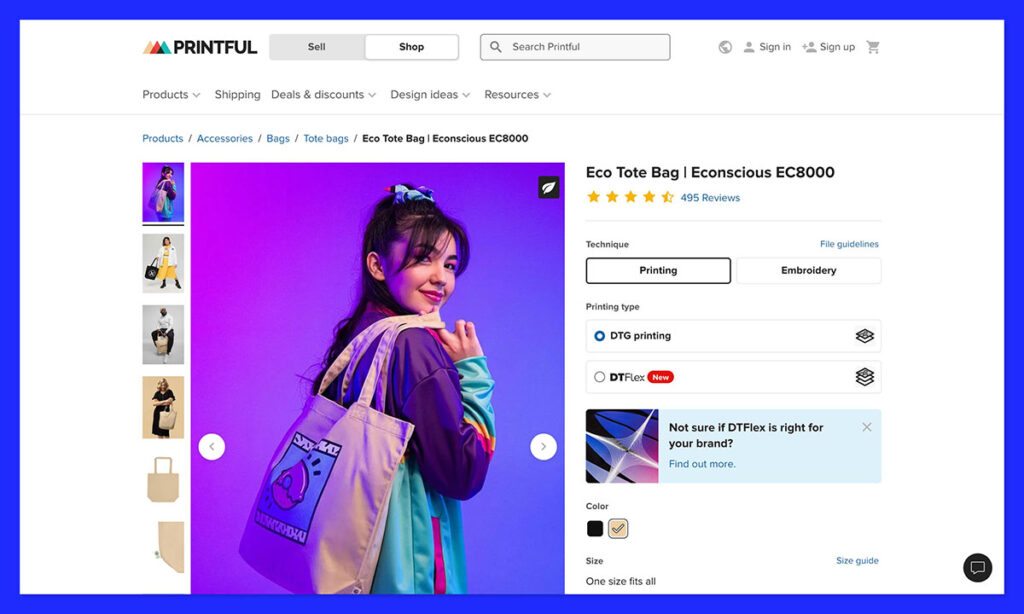
11. Printful Eco Tote Bag
- Platform: Printful
- Price: Localized pricing
- Overview: Utilizes an 8-ounce certified organic cotton twill. Supported by GOTS, OCS, and OEKO-TEX STANDARD 100 credentials.
12. Econscious Organic Dad Hat
- Platform: Fourthwall
- Price: Starting at $15.85
- Overview: Constructed from 8-ounce organic cotton twill. At a $30 retail price point, it leaves healthy profit margins without sizing complications.
13. Atlantis B50 Organic Ribbed Beanie
- Platform: Fourthwall
- Price: Starting at $18.59
- Overview: A 100% organic knit tailored for colder climates. Highly rated for warmth and embroidery clarity.
14. SOL’S Organic Cotton Apron
- Platform: Fourthwall
- Price: Starting at $24.75
- Overview: A niche product tailored for culinary, baking, or artisan craft brands. Features adjustable straps and a split front pocket. Note: Currently restricted to EU fulfillment.
Kids, Activewear, and Lifestyle Products
For brands seeking differentiation beyond standard apparel, these specialized items target specific enthusiast communities.
15. Stanley/Stella Kids T-Shirt
- Platform: Fourthwall
- Price: Starting at $15.50
- Overview: Perfect for family-focused creators, schools, and youth clubs, covering ages 3 to 14 with 100% organic ring-spun cotton.
16. Babybugz Organic Short-Sleeve Bodysuit
- Platform: Printify
- Price: Starting at $15.64
- Overview: Excellent gifting potential for new parents. Solid colors feature 100% GOTS-certified organic cotton.
17. Sublicolor All-Over Print Sports Jersey
- Platform: Fourthwall
- Price: Starting at $30.55
- Overview: Moisture-wicking activewear tailored for esports teams and fitness communities, available in sizes up to 6XL.
18. Sublicolor Recycled String Bikini
- Platform: Fourthwall
- Price: Starting at $27.49
- Overview: Composed of 81%–88% recycled polyester, featuring UPF 50+ sun protection and OEKO-TEX/GRS certifications.
19. Biodegradable Phone Case
- Platform: Printful
- Price: Starting at £13.25
- Overview: A low-cost add-on that completely decomposes within a year under warm, moist conditions without degrading during normal daily use.
20. Scented Soy Candle in Glass Jar
- Platform: Printify
- Price: Starting at $9.80
- Overview: Features 7.5 ounces of US-grown soy wax with a cotton wick and a 50–60 hour burn time. The glass vessel is fully reusable.
Implications: Strategic Recommendations for Store Owners
Launching a sustainable print-on-demand brand requires discipline. Entrepreneurs should avoid populating their storefronts with all twenty options simultaneously.
Instead, the recommended strategy involves starting lean:
- Curate a Core Collection: Launch with a foundational mix of one t-shirt, one hoodie, and a signature accessory (such as a tote or hat).
- Order Physical Samples: Never sell an eco-friendly product without testing it firsthand. Wash the garments to check shrinkage, inspect seam integrity, and verify print clarity.
- Analyze and Expand: Utilize the lack of minimum order quantities in modern POD infrastructure to test new items based on real-time customer data. If a specific organic tee outperforms expectations, expand that design line into secondary apparel categories.
By grounding merchandising decisions in rigorous material research and genuine certifications, store owners can successfully capture the lucrative eco-conscious consumer segment while maintaining long-term brand integrity.
