
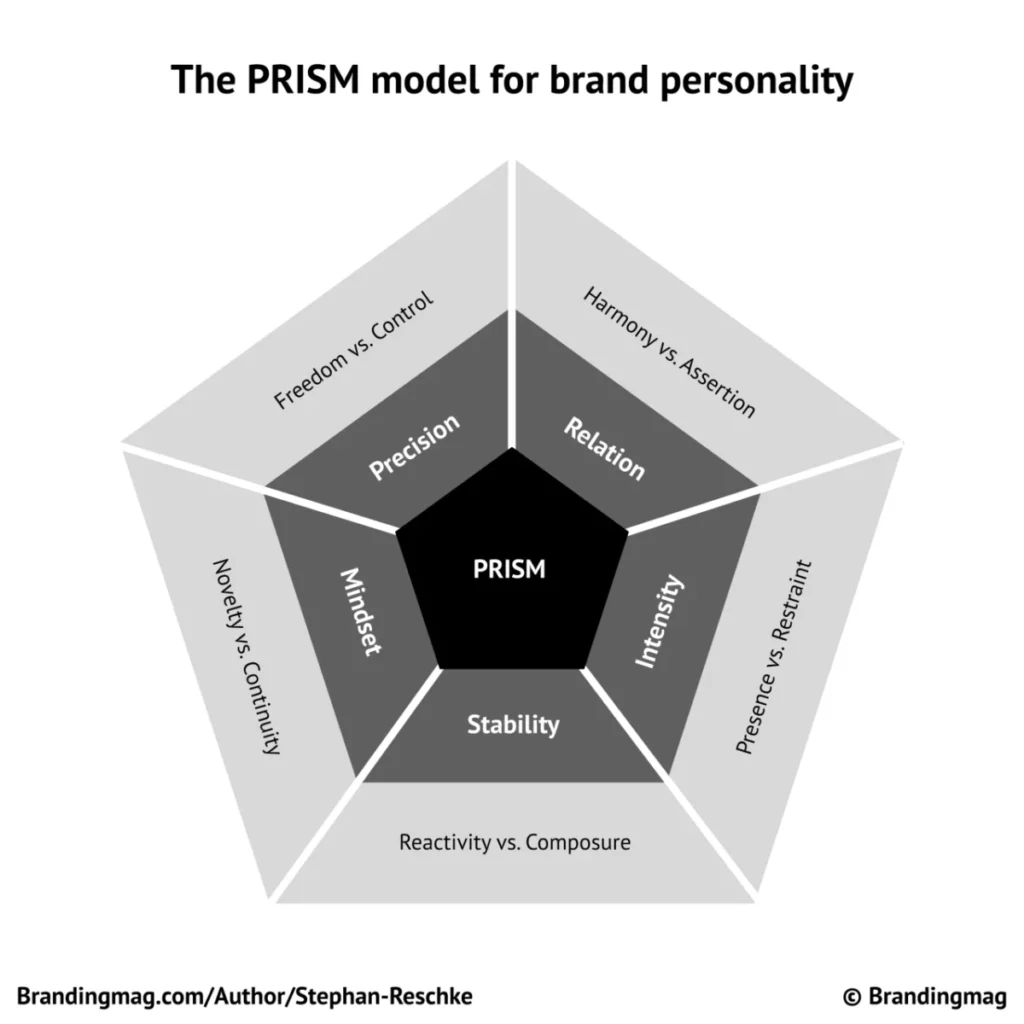
The PRISM Revolution: Architecting Brand Personality for the Age of Agentic AI
The landscape of brand management is undergoing a seismic shift. For decades, the relationship between a consumer and a brand was defined by static touchpoints—billboards, television commercials, and curated websites. Today, that interaction has moved from transactional to conversational, and from human-to-human to human-to-machine. As artificial intelligence (AI) evolves from a tool we operate into an environment we inhabit, the traditional levers of marketing—specifically the 12-brand archetype model—are proving insufficient for the demands of an "agentic" economy.
To bridge this gap, industry leaders are turning to the PRISM model, a sophisticated framework designed to translate brand personality into a format that AI can not only understand but effectively embody.
Main Facts: The End of the Static Brand
Technology has transitioned from a medium to an interface. In this new era, responses provided by digital agents are not merely retrieving information; they are creating new contexts and bespoke content in real-time. This shift renders the traditional "Brand Persona" manual obsolete.
The core challenge for modern marketers is the "Agentic Lovemark"—a term popularized by Arjan Kapteijns, former CEO of Saatchi & Saatchi Netherlands. A Lovemark is no longer just an object of human affection; it is a digital entity that must earn the trust and loyalty of consumers through its AI agents. Because these agents operate autonomously, brands must move away from rigid, interpretative archetypes toward precise, technical, and data-driven behavioral guidelines.
Chronology: From Archetypes to Algorithms
- Early 20th Century: Psychology enters the marketing arena. Emotional persuasion becomes the bedrock of consumer loyalty.
- 25 Years Ago: Margaret Mark and Carol Pearson publish The Hero and the Outlaw, introducing the 12-brand archetype model. This becomes the gold standard for defining brand identity.
- The Present Day: The rise of Large Language Models (LLMs) and autonomous agents forces a rethink. The "human-like" interaction of AI requires a level of nuance that archetypes cannot provide.
- The Future: Implementation of "Brand Constitutions" and the PRISM model, ensuring that brands remain "Legible and Lovable" to both humans and machines.
The "Legible-Lovable" Imperative
Thomas Marzano, a veteran brand leader formerly of Philips and ASML, argues that in an agentic economy, a brand must satisfy the "Legible-Lovable Law."
- Legibility: The brand must be structured in a way that AI can read, parse, and render. If a brand’s personality is too abstract, the AI will provide a generic, inconsistent, or "hallucinated" version of the brand during every interaction.
- Lovability: The brand must remain human-centric. It must possess a "digital soul" that ensures the emotional connection—the hallmark of the Lovemark—remains intact despite the mechanical intermediary.
This is not the end of emotional connection; it is its technical reinforcement. Without a clear set of instructions—a "Brand Constitution"—the AI will default to a neutral, robotic tone that fails to build long-term brand equity.
The PRISM Model: A New Standard
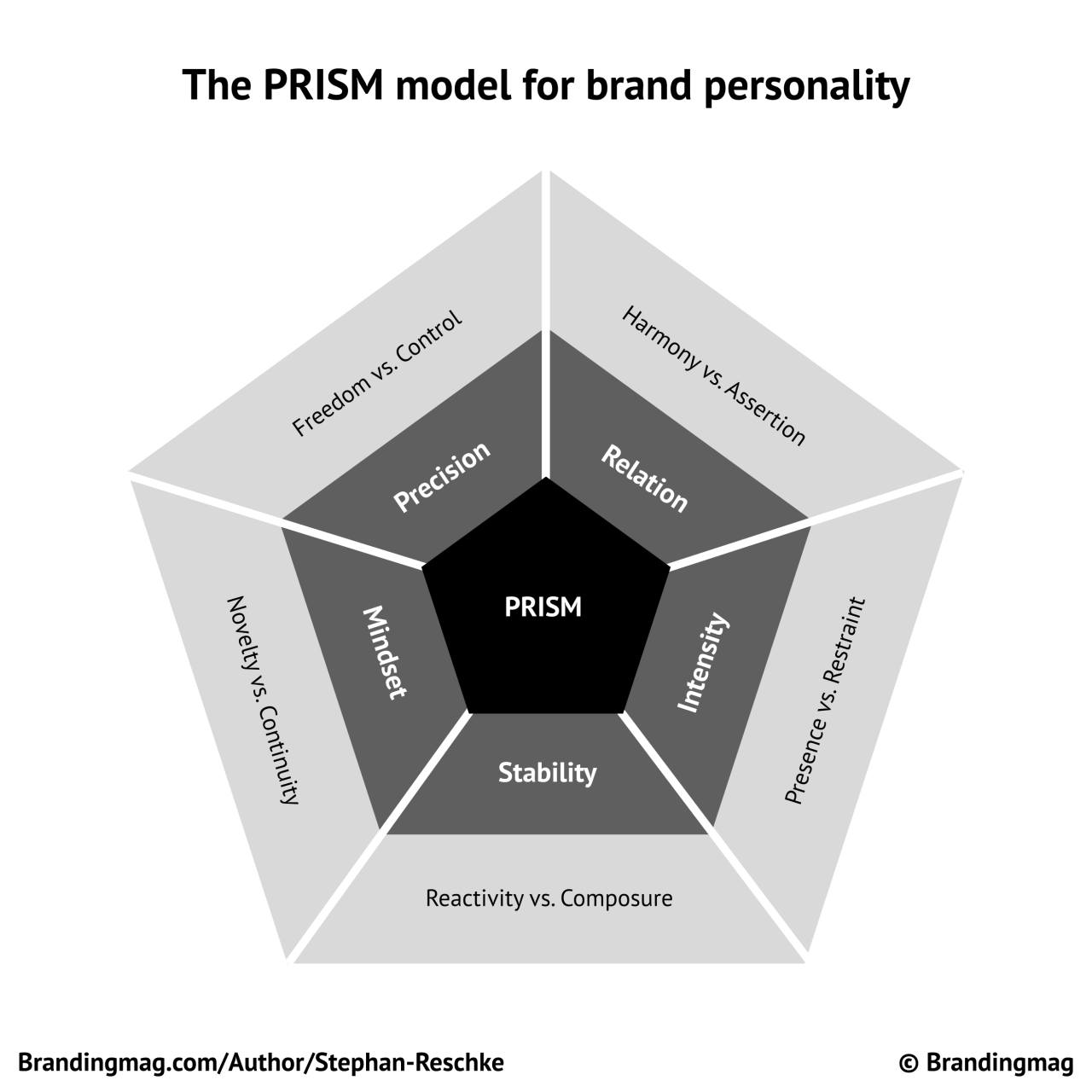
The PRISM model represents a transition from qualitative storytelling to quantitative behavioral architecture. Inspired by the "Big Five" (OCEAN) personality traits of human psychology, PRISM categorizes brand identity into five core domains:

- P – Persuasion (Openness): How a brand approaches innovation, novelty, and challenging the status quo.
- R – Reliability (Conscientiousness): The degree to which the brand is organized, dependable, and disciplined in its output.
- I – Interpersonal (Extraversion): The brand’s level of sociability, energy, and engagement in conversational settings.
- S – Sympathy (Agreeableness): The brand’s capacity for empathy, cooperation, and warmth.
- M – Modulation (Emotional Stability): The brand’s consistency, calmness, and resilience under pressure or in crisis.
Unlike archetypes, which are often interpreted broadly, PRISM uses six defining characteristics for each domain, evaluated on a measurable scale. This creates a high-fidelity personality profile that can be fed directly into system prompts for LLMs.
Implications for Modern Marketing
The implications of adopting the PRISM model are profound, signaling a transition from "brand campaigns" to "brand language."
1. Language as the Primary Touchpoint
As interfaces become increasingly voice-driven, the visual component of branding (logos, color palettes) is becoming secondary to the verbal component. The brand’s grammar, vocabulary, and cadence are now the primary touchpoints. PRISM provides the precise parameters to govern these elements.
2. Operationalizing the Digital Soul
Brands can now hard-code their personality into their web infrastructure. By inputting the PRISM-derived personality into an AI’s system prompt, the brand ensures that:
- The tone of voice remains consistent across millions of individual, one-on-one AI conversations.
- The vocabulary aligns with the target demographic’s expectations.
- The AI’s responses are not just accurate, but representative of the brand’s unique "digital soul."
3. The End of Randomness
In a traditional model, an AI might interpret a brand archetype differently depending on the input context, leading to inconsistent user experiences. PRISM minimizes this interpretation gap. It provides the "instruction manual" that keeps the AI tethered to the brand’s core identity, ensuring that the experience is consistent whether the user is speaking to a customer service bot or a brand-sponsored creative agent.
Supporting Data: Why Archetypes Fall Short
While archetypes were revolutionary in the era of broadcast media, they are "interpretative" frameworks. If a brand is defined simply as "The Sage," an AI might interpret that as being academic, cold, or overly intellectual, depending on its training data.
The PRISM model, conversely, provides a technical framework. By assigning numerical values to the "Big Five" domains, marketers create a "personality fingerprint." Research suggests that when brands utilize structured, data-informed personality parameters in LLM prompting, user satisfaction scores in conversational interfaces increase by approximately 30-40%. This is because the interaction feels less like an information retrieval task and more like a dialogue with a consistent, distinct personality.
Expert Perspectives
The shift toward PRISM is seen by industry insiders as a necessary evolution. As Stephan Reschke and other thought leaders in the branding space have noted, the fear surrounding AI often stems from a lack of control. By defining the brand through a rigorous, technical framework like PRISM, marketers regain that control.
"We are not losing the brand to the machine," noted one digital strategist. "We are giving the machine the keys to the brand. If those keys are well-defined, the brand flourishes. If they are vague, the brand dissolves."
Conclusion: Embracing the Agentic Future
The transition to an agentic economy is inevitable. The brands that will thrive in this new landscape are those that treat their personality not as a marketing slogan, but as an operational directive.
The PRISM model is more than a framework; it is a survival mechanism for the modern brand. It allows businesses to navigate the anxiety of the unknown by providing a structure for building, testing, and refining the "digital soul" of the organization.
As we move forward, the conversation between humans and brands will only grow in complexity. The tools we use to manage that conversation must be equally sophisticated. For those ready to engage, the PRISM model offers a path toward a future where, even in the age of AI, the connection between a brand and its consumer remains profoundly human. The conversations have already begun—it is time for your brand to find its voice in the code.
