

The Reality of the Digital Ledger: Can You Actually Make a Living Blogging?
The dream of the "laptop lifestyle"—working from a sun-drenched beach, sipping coffee while passive income trickles into a bank account—has become a cornerstone of modern digital mythology. For over two decades, the internet has been saturated with conflicting narratives regarding the financial viability of blogging. On one side, aggressive marketers promise seven-figure returns with minimal effort; on the other, skeptics dismiss the entire profession as a saturated scam or a relic of the early 2000s.
The truth, however, sits firmly in the middle: blogging is a legitimate, scalable business model, but it is one defined by rigorous labor, strategic patience, and professional evolution rather than overnight fortune.
The Main Facts: Defining the Professional Blogger
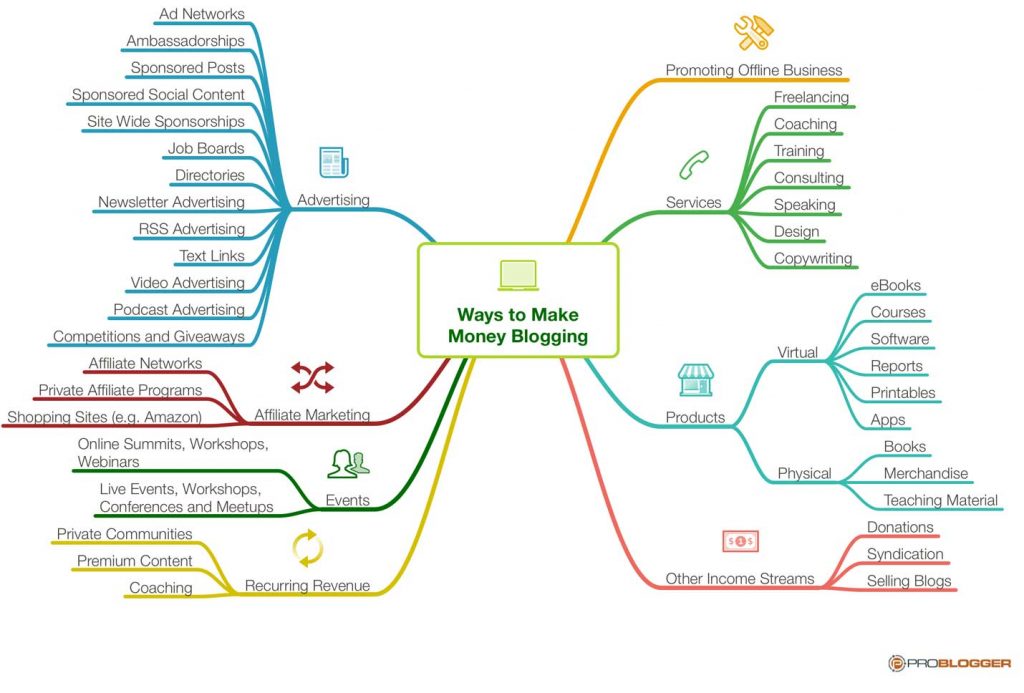
To understand the economics of blogging, one must first discard the misconception that it is a "get-rich-quick" scheme. At its core, a professional blog is a media business. Just like a newspaper or a magazine, it relies on content production to attract an audience, which is then monetized through advertising, affiliate partnerships, digital products, membership tiers, or professional services.
The fundamental reality is that while the barrier to entry is virtually non-existent, the barrier to profitability is significant. The digital landscape is cluttered, and capturing human attention in the age of short-form video and social media dominance requires a level of sophistication that goes far beyond simply "tapping away at a keyboard."
A Chronology of the Blogging Evolution
The trajectory of blogging as a career path can be viewed in three distinct eras:
- The Pioneer Era (2000–2008): In the early 2000s, blogging was primarily an act of digital journaling. Monetization was rudimentary, relying mostly on early ad networks. Those who treated it as a business early on were able to dominate search rankings by virtue of being "first to market."
- The Professionalization Era (2009–2018): As platforms like WordPress matured, blogging became a viable marketing channel for businesses. This era saw the rise of the "influencer" and the diversification of income streams, including eBooks, online courses, and high-end affiliate marketing.
- The Creator Economy Era (2019–Present): Today, blogging is no longer a siloed activity. It is the anchor for a multi-channel brand presence. Successful bloggers now integrate newsletters, social media, and community platforms, creating a "hub-and-spoke" model where the blog serves as the central authority.
Supporting Data: What the Numbers Say
The skepticism surrounding blogging often stems from the reality that the majority of participants do not achieve financial independence. Data from industry surveys consistently highlight a stark reality:

- The Entry-Level Plateau: Approximately 63% of bloggers who are actively attempting to monetize their sites earn less than $3.50 per day. For these individuals, blogging remains a hobby rather than a career.
- The Longevity Correlation: There is a direct, linear correlation between time in the market and income level. Data suggests that 85% of bloggers earning six figures or more annually have been operating their platforms for at least four years.
- The "Top 10%" Reality: While the majority of participants earn very little, a significant minority—roughly 13% of those surveyed—earn over $1,000 per month, with 4% crossing the $10,000-per-month threshold. These figures indicate that while professional success is rare, it is statistically significant and replicable for those who treat the venture as a long-term business.
The Myth of the "Make Money Online" Niche
A persistent critique of the blogging industry is the "circular economy" of experts teaching others how to blog. Critics argue that the only way to make money is to sell courses on how to make money.
However, empirical evidence suggests the opposite. The most profitable blogs are often those embedded in "tangible" niches. A photography blog, a health and wellness site, or a specialized woodworking platform often vastly outperforms a site dedicated to the mechanics of blogging. When a blogger solves a real-world problem for a specific audience, the path to monetization—through specialized affiliate products, consulting, or niche-specific digital goods—is far more stable than the volatile market of "how-to" tutorials.
Official Perspectives: The Role of Professional Strategy
Industry leaders emphasize that there is no "secret formula" for success. The "formulas" sold in online courses often ignore the nuance of individual audience needs. Instead, sustainable growth is built on four pillars:
- Content Excellence: Providing original, helpful, and high-quality information that is not easily found elsewhere.
- Audience Development: Moving beyond simple traffic metrics to foster genuine engagement and loyalty.
- Diversification: Never relying on a single income stream. A robust blog uses a combination of ad revenue, product sales, and services to weather fluctuations in search engine algorithms.
- Action-Oriented Leadership: Professional bloggers are, above all, entrepreneurs. They monitor business metrics, iterate on products, and adapt to market changes.
Implications for Aspiring Creators
For those looking to turn a blog into a source of income, the implications are clear:
1. The Death of "Passive Income"
The term "passive income" is a misnomer in the context of professional blogging. While a blog can generate revenue while the author sleeps, the underlying infrastructure requires constant maintenance. SEO updates, content audits, and community management are active, high-effort tasks. Anyone entering the field expecting a "set-it-and-forget-it" system will likely fail.
2. The Power of Niche Specialization
The internet rewards specificity. Blogs that attempt to cover "everything" rarely rank well or command high trust. The most successful modern blogs are those that focus on a deep, specific problem. Whether it is sustainable fashion, urban gardening, or high-end technical writing, the deeper the expertise, the higher the monetization potential.
3. The Need for Business Savvy
The most successful bloggers of the current era possess skills beyond writing. They understand conversion rate optimization (CRO), email marketing, digital product design, and basic data analytics. The "writer" is only one facet of the successful blogger; the "CEO" is the other.
4. The Long Game
The most sobering, yet liberating, realization is that there is no shortcut. The barrier to entry—a domain name and a hosting account—takes minutes, but the barrier to authority takes years. Aspiring bloggers must be prepared to write, iterate, and refine their craft for 24 to 48 months before they can reasonably expect a full-time income.
Conclusion: A Viable Path, Not a Guarantee
Can you make money blogging? Yes. But the answer comes with a caveat: you must be prepared to build a business, not just a diary. The era of accidental success is largely over. Today, a professional blog requires a synthesis of creativity, technical aptitude, and business discipline.
For those who are willing to embrace the grit, the creative challenge, and the long, slow climb, the rewards are tangible. The digital economy continues to favor those who can curate knowledge and build communities. Your blogging breakthrough will not come from a magic formula or a purchased course; it will come from the cumulative effect of consistent, value-driven work.
The tools are available. The market is waiting. The only thing left is to begin.
