
Decoding the Growth DNA: Lessons from the World’s Most Disruptive Tech Giants
In the current era of hyper-competition, rapid digital transformation, and shifting consumer expectations, a select group of companies has managed to transcend the status of mere startups to become foundational pillars of the global economy. Uber, Spotify, and Airbnb did not just enter their respective markets; they dismantled the existing paradigms and rebuilt them in their own image.
These companies are the quintessential "growth hackers." By dissecting their early-stage strategies and their evolution into scale-ups, we can extract a roadmap for modern businesses looking to replicate that explosive growth. Their success is not a byproduct of luck, but the result of a rigorous, repeatable methodology centered on experimentation, data fluency, and a relentless focus on the user journey.
The Anatomy of Disruption: Main Facts
At the core of the success for Uber, Airbnb, and Spotify lies a fundamental shift in business philosophy. They moved away from traditional, top-down product development toward a bottom-up, user-centric model.
- Uber redefined mobility by turning the concept of car ownership and traditional taxi hailing into a fluid, on-demand utility.
- Airbnb commoditized trust, transforming the spare bedroom into a global hospitality asset.
- Spotify revolutionized the music industry, shifting the consumer mindset from "ownership" (buying albums) to "access" (streaming).
These companies share a common denominator: they identified a massive, underserved friction point in a legacy industry and applied technology to reduce that friction to near zero.
Chronology of Evolution: From Lean Startups to Global Titans
The growth trajectory of these firms can be mapped through three distinct phases:

Phase 1: Validating the Core Hypothesis (The "Lean" Phase)
Each of these companies began with a focused, limited scope. Uber started exclusively as a premium black-car service in San Francisco. Airbnb began by renting out air mattresses on a living room floor to attendees of a design conference. Spotify launched as a closed beta in Europe, focusing on making streaming feel as fast as playing a file locally. During this phase, they did not seek scale; they sought "product-market fit."
Phase 2: Iterative Expansion (The "Growth" Phase)
Once the core product worked, they began the experimental phase. Uber moved from black cars to the mass-market UberX and the collaborative UberPOOL. Airbnb expanded from shared rooms to entire homes and eventually into "Experiences." Spotify transitioned from a basic streaming player to a data-driven recommendation engine, later incorporating podcasts to diversify its content moat.
Phase 3: Institutional Scaling (The "Optimization" Phase)
Today, these companies are masters of optimization. They run hundreds of simultaneous A/B tests, utilize machine learning to predict user behavior, and manage complex cross-functional teams that treat every pixel and every feature as a growth variable.
Supporting Data: Why Experimentation Wins
The "Growth Hacking" mindset is defined by a commitment to data-driven decision-making.
The Power of A/B Testing
Spotify’s dominance in the music streaming market is largely attributed to its algorithmic personalization. By continuously running tests on its recommendation engine, Spotify successfully shifted user behavior from "browsing" to "algorithmic discovery." This has a direct impact on retention; the more the algorithm learns, the higher the switching cost for the user.
Strategic Pricing Experiments
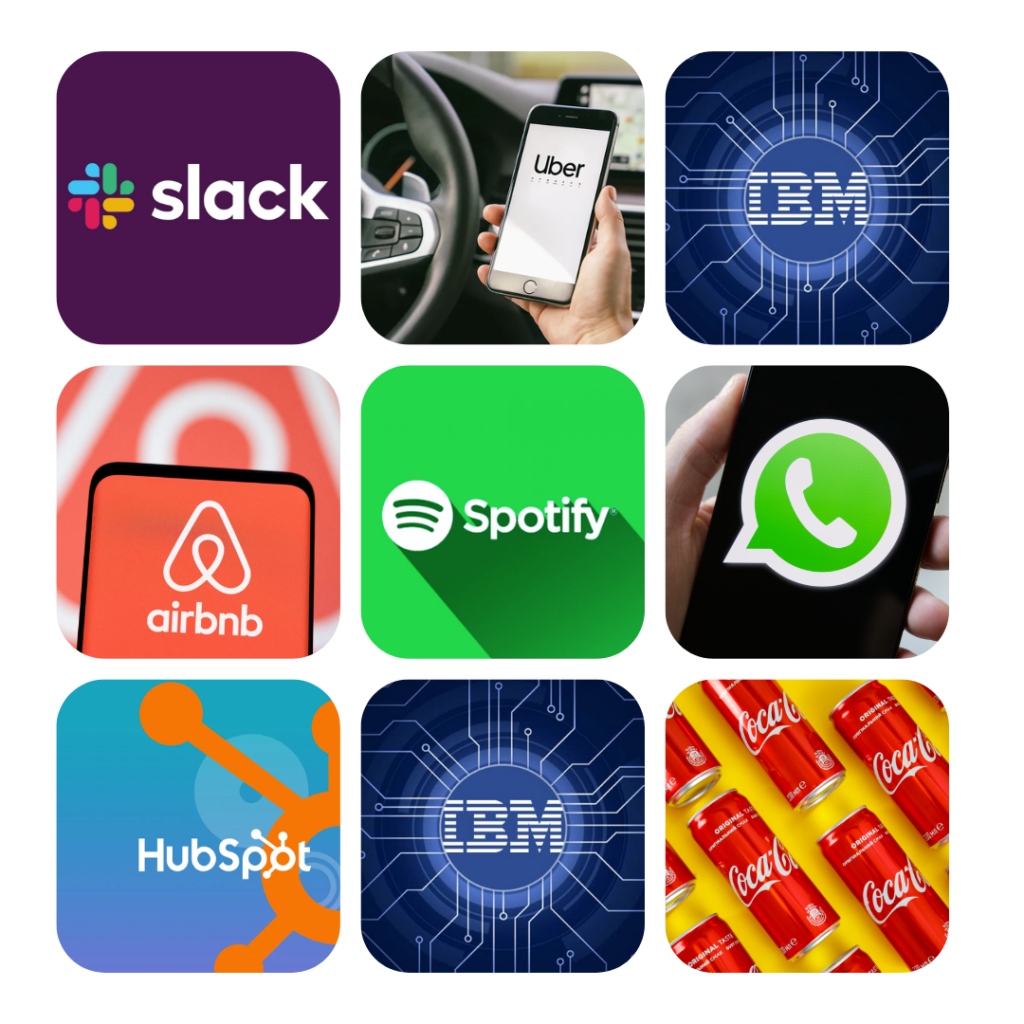
Uber’s "Surge Pricing" is the ultimate example of using data to balance supply and demand. While often controversial, it is a masterclass in market dynamics. By adjusting prices in real-time based on demand signals, Uber ensures that supply (drivers) meets demand (riders), preventing the service from becoming unavailable during peak hours.
Visual Validation
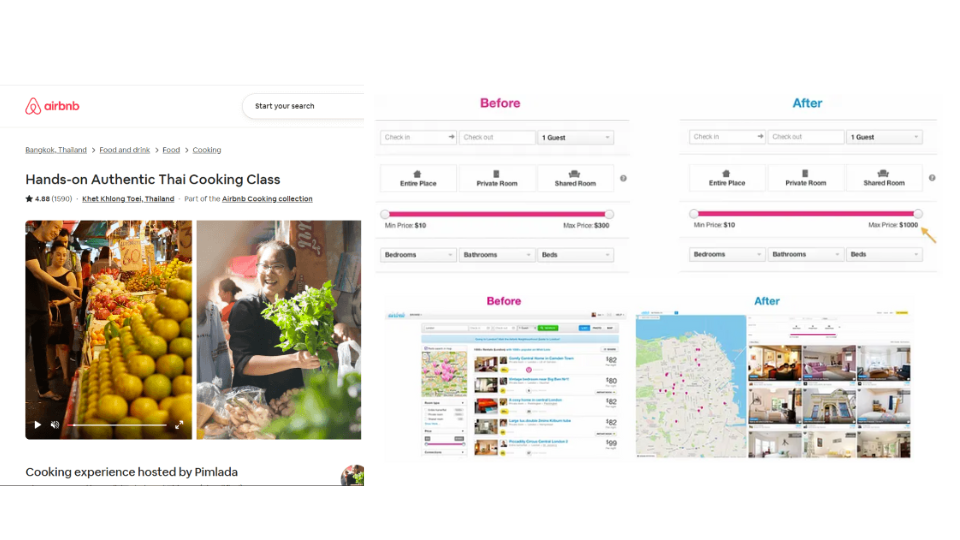
Airbnb’s early experiment with professional photography is a classic case study in the impact of high-quality visuals on conversion rates. By investing in professional photographers to visit host properties, Airbnb significantly lowered the "trust barrier," leading to higher booking rates that validated the platform’s value proposition for both parties.
Institutionalizing the Culture: Risk, Failure, and Collaboration
Embracing the "Fail Fast" Mantra
In traditional corporate structures, failure is a career-ending event. In the cultures of Uber, Spotify, and Airbnb, failure is viewed as a "data point." When an experiment fails—whether it’s a failed new feature or a marketing campaign that didn’t land—these companies perform a post-mortem to extract insights. This lowers the psychological barrier to innovation, allowing teams to take bolder risks.
Breaking Down Silos
Growth is not the responsibility of a single "growth team"; it is an organization-wide mandate.
- Airbnb integrates engineering, design, and marketing into unified project squads. When a new feature is launched, the team is responsible for the entire lifecycle, ensuring that the technical implementation matches the user experience design.
- Spotify’s "Squad" model is legendary in tech circles. By organizing employees into small, autonomous, cross-functional teams, they minimize bureaucracy and maximize speed.
- Uber utilizes data-sharing platforms that allow its operations team to provide immediate feedback to the product team, ensuring that "on-the-ground" realities inform digital updates.
Implications for Modern Businesses
What can the average startup or legacy business learn from these giants?
1. The Death of the "Big Launch"
The era of working in secret for two years to reveal a "perfect" product is over. The lesson from these disruptors is that you should launch early, gather data, and iterate. Your initial product is simply a hypothesis that needs testing.
2. User Experience is the Ultimate Moat
In a crowded market, features can be copied. However, a superior user experience—one that feels frictionless, intuitive, and personalized—is hard to replicate. Whether it’s Uber’s one-tap ride request or Spotify’s "Discover Weekly" playlist, the focus must be on making the user’s life easier.
3. Data Over Intuition
Stop making decisions based on what you think your customers want. Start making decisions based on what your data tells you they are doing. If you are not testing your pricing, your UI, and your messaging, you are essentially flying blind.
4. Foster a Culture of Psychological Safety
If your employees are afraid to propose a radical new idea because it might fail, your company will stagnate. You must create an environment where the fastest way to learn is to test, fail, and optimize.
Conclusion: The Path Forward
The growth journeys of Uber, Airbnb, and Spotify are not outliers; they are the new standard for business success in the 21st century. By embracing a culture of constant experimentation, leveraging data to drive strategy, and prioritizing a seamless user experience, these companies have proven that growth is not an accidental success—it is a deliberate, scientific, and highly collaborative process.
As you look to scale your own business, ask yourself: Are we iterating, or are we just maintaining? The companies that will dominate the next decade are those that treat every day as a test, every failure as a lesson, and every user interaction as an opportunity to grow.
Learn by Example: The strategies used by these giants—from their early start to their current scale—are documented in comprehensive growth studies. As you embark on your own journey of transformation, remember that the most successful companies are those that never stop learning.
