
Breaking the Mold: How Social Video Intelligence and Cross-Category Data Are Rewriting the Rules of Brand Partnerships
In the modern marketing landscape, the age-old question of how to identify the ideal brand partnership is undergoing a radical paradigm shift. For decades, marketing executives relied on surface-level metrics—follower counts, basic demographic overlaps, and standard engagement rates—to justify multi-million-dollar collaborations.
However, recent research from video measurement and analytics leader Tubular Labs suggests that traditional targeting methods are no longer sufficient. By leveraging social video intelligence, brands are discovering that consumers are far more multidimensional than rigid demographic buckets suggest. The result? A new wave of cross-category partnerships—unlikely alliances between seemingly unrelated industries like beauty, motorsports, gaming, and entertainment—that are redefining consumer engagement and driving unprecedented viral success.
Main Facts: The Death of Siloed Marketing and the Rise of Video Intelligence
At its core, the latest research report from Tubular Labs—focusing on cross-category partnerships—demonstrates that analyzing deep social media data can unlock high-impact collaboration opportunities that human intuition alone might miss.
Traditional audience targeting operates on historical assumptions: beauty enthusiasts only care about cosmetics, gamers are solely focused on consoles and hardware, and foodies are locked into recipe tutorials. Yet, social video analytics paint a completely different picture by tracking actual consumption habits across platforms like YouTube, TikTok, and Instagram.
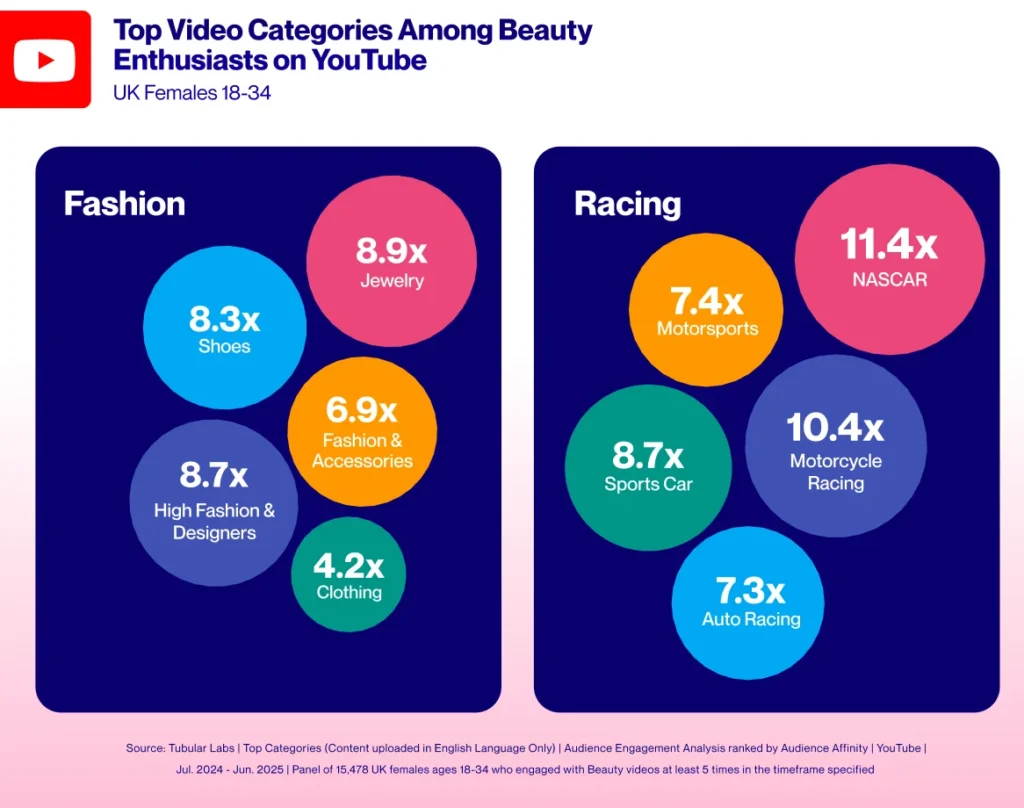
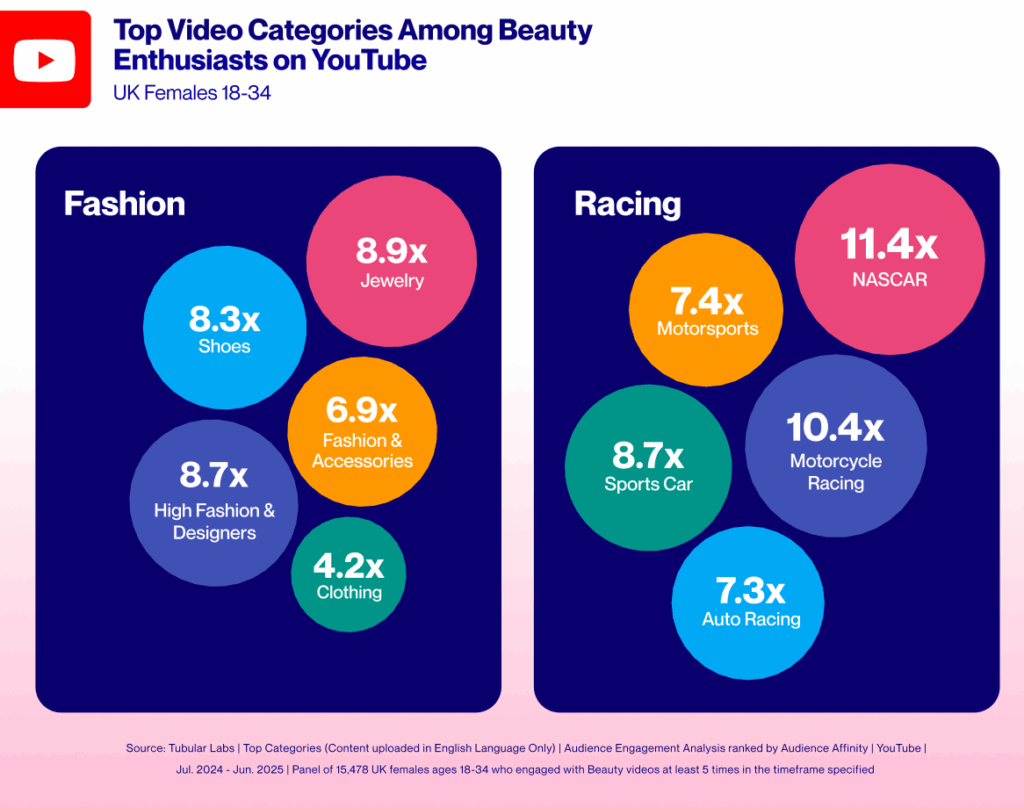
When marketers look beyond vanity metrics and examine cross-platform viewing behaviors, they uncover surprising adjacencies. For example, data reveals that female beauty viewers in the UK—traditionally marketed to through fashion and lifestyle channels—exhibit high affinity for entirely different verticals, such as racing and motorsports. Armed with these insights, forward-thinking brands are abandoning siloed strategies in favor of data-backed, cross-industry collaborations that capture entirely new, highly receptive consumer segments.

Chronology: From Surface-Level Metrics to Cross-Industry Strategy
Phase 1: The Era of Superficial Alignment (Pre-2020s)
Historically, brand partnerships followed a predictable playbook. A makeup brand partnered with a fashion influencer; a sportswear giant teamed up with a professional athlete. While these campaigns occasionally succeeded, they frequently suffered from audience fatigue. Because the pairings were obvious, they generated little cultural surprise or organic conversational buzz. Marketers relied on basic media kits and gut feelings, often overlooking massive segments of their audience who held diverse, cross-category interests.
Phase 2: The Rise of Social Video Intelligence (Early 2020s)
As digital video consumption fragmented across social platforms, the volume of behavioral data exploded. Brands realized that likes and shares were not enough to measure true brand affinity. Platforms providing deep video intelligence began tracking what specific audiences watched consecutively, how long they engaged, and which crossover topics sparked the highest retention rates. This laid the technological foundation for discovering hidden audience overlaps.
Phase 3: The Breakthrough of Cross-Category Collaborations (Present Day)
Today, data-driven insights are turning abstract audience crossover into concrete marketing execution. Major enterprises are no longer asking whether two brands share a demographic; they are asking how deeply their audiences’ content consumption habits intertwine. Groundbreaking campaigns from global brands like Charlotte Tilbury and Riot Games have proven that calculated, unexpected partnerships can break the internet, setting a new benchmark for modern advertising strategy.
Supporting Data & Case Studies: When Worlds Collide
To understand the tangible power of social video intelligence, one only needs to examine how specific brands translated hidden data points into historic cultural moments.
1. Beauty Meets Motorsports: Charlotte Tilbury x Formula 1 Academy
At first glance, high-glamour cosmetics and high-octane motorsport racing appear to exist in entirely different universes. However, Tubular Labs’ data analysis uncovered a startling statistical anomaly: UK female beauty viewers are a staggering 11.4 times more likely to watch motorsports content than the average social video viewer.
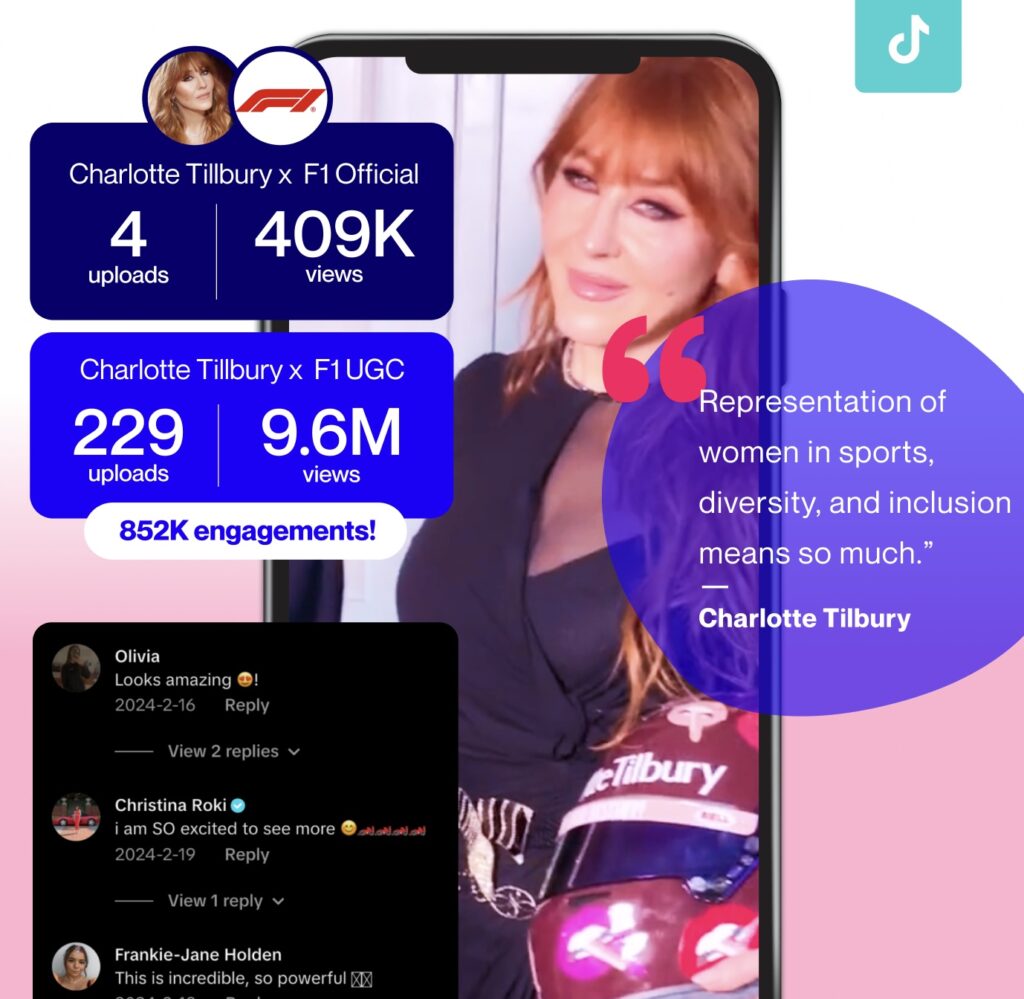
Recognizing this hidden appetite, luxury makeup powerhouse Charlotte Tilbury seized the opportunity to become the first-ever beauty brand to partner with the Formula 1 Academy. This was not merely a symbolic sponsorship; it was a carefully calculated alignment rooted in hard video intelligence data. The campaign dismantled the outdated stereotype that women interested in beauty cannot simultaneously be passionate about automotive racing, resulting in massive global media coverage, surging brand affinity, and a runaway success that shattered industry expectations.
- Key Takeaway: Bold, data-backed partnerships expand total addressable reach and unlock entirely fresh, previously ignored audience segments.
2. Gaming Meets Glamour: Riot Games x Fenty Beauty
The intersection of gaming and lifestyle has historically been male-dominated, leaving female gamers as an underserved yet rapidly expanding demographic. Deep-dive analytics from Tubular Labs revealed robust, undeniable consumption affinities between women who consume gaming content and major prestige beauty brands like YSL, NYX, and L’Oréal.
Capitalizing on these insights, gaming giant Riot Games collaborated with Rihanna’s Fenty Beauty to launch a limited-edition makeup collection inspired by Arcane, the critically acclaimed animated series based on League of Legends. The collection went viral almost instantly across social video platforms. By combining the immersive world of gaming entertainment with high-end luxury beauty, the collaboration invited consumers to actively participate in the lore of the franchise rather than remaining passive viewers.
- Key Takeaway: Cross-category partnerships thrive when they invite audiences to actively participate and express their multi-faceted identities, rather than just consume a standard advertisement.
3. Food Meets Nostalgic Entertainment: The Power of Pop Culture Crossovers
Beyond beauty and gaming, recent industry research highlights the explosive potential of merging everyday consumer goods—such as premium cookware—with beloved pop-culture entertainment franchises. By analyzing nostalgic viewing patterns, cookware brands have successfully leveraged historical pop-culture properties to bridge the gap between practical household items and emotional entertainment, driving millions of unexpected video views, intense social engagement, and soaring product sales.
Implications for Modern Marketers
The shift toward data-driven cross-category partnerships carries profound implications for the future of advertising agencies, brand managers, and digital strategists.
- The End of Demographic Stereotyping: Marketers must realize that modern consumers cannot be neatly categorized into singular interest boxes. A gamer is also a beauty enthusiast; a motorsports fan is a luxury cosmetics buyer. Embracing this multidimensionality is essential for survival.
- Shift From Guesswork to Intelligence: Relying on intuition is no longer a viable business strategy in an era of tightening marketing budgets. Brands must adopt social video intelligence tools to ground every partnership decision in empirical viewing behavior.
- Elevating Creative Risk: Data does not stifle creativity; rather, it provides the safety net required to take bold creative risks. When a brand has quantitative proof that an audience segment actively consumes content from an entirely different vertical, management can sign off on unconventional collaborations with absolute confidence.
How to Identify the Best Influencer and Brand Partnerships Using Data
For marketing teams looking to replicate these success stories, Tubular Labs outlines a actionable, step-by-step framework for identifying high-performing partnerships:
- Audit True Audience Behavior: Look past standard demographic reports. Use social video analytics to examine what else your target audience is watching, which creators they follow outside your niche, and where their cumulative attention drifts.
- Identify Statistical Outliers: Look for unexpected high-affinity scores—such as the 11.4x viewership multiplier seen in the beauty-meets-motorsports demographic. These outliers represent untapped white space in the market.
- Evaluate Cultural Synergy: Once an unexpected data overlap is identified, determine how the two brand ethos can authentically merge without feeling transactional or forced to the consumer.
- Co-Create Interactive Campaigns: Design activations that encourage user participation, blending storytelling, product integration, and community engagement across social video channels.
- Measure and Optimize: Track multi-platform video metrics, sentiment analysis, and earned media value to gauge how effectively the cross-category collaboration expanded your brand footprint.
Conclusion
In a crowded digital ecosystem where traditional ads are routinely skipped, blocked, or ignored, unexpected brand partnerships cut through the noise by offering consumers something genuinely fresh and exciting. By replacing guesswork with social video intelligence, modern marketers can uncover hidden affinities, bridge disparate industries, and build collaborations that deliver measurable, record-breaking results.
Are you ready to discover unexpected partnership opportunities for your brand? Request a demo today and see what your audience is watching when you aren’t looking.
