
The AI Marketing Renaissance: Navigating the New Frontier of Intelligent Automation
The landscape of modern marketing is undergoing a seismic shift. If you look closely at the digital horizon, you will see a marketplace that is becoming increasingly crowded with sophisticated artificial intelligence tools. From predictive search engine optimization and hyper-personalization engines to deep-learning account intelligence and autonomous campaign orchestration, the barrier to entry for high-level marketing efficiency has never been lower—nor has the competition ever been stiffer.
However, the prevailing wisdom for CMOs and marketing managers should not be to adopt every "shiny object" that hits the market. The true opportunity lies in discernment: understanding the technological landscape to identify the specific tools capable of fundamentally disrupting your day-to-day operations and driving meaningful business outcomes.
To help cut through the noise, we have curated a look at 23 AI-powered platforms that are currently defining the vanguard of the industry. These tools represent more than just incremental improvements; they are the harbingers of a new era in marketing efficacy.
The State of AI in Marketing: A Chronology of Disruption
To understand where we are going, we must acknowledge how quickly we arrived here. The timeline of AI’s integration into marketing is a masterclass in rapid technological acceleration.
- 2018–2020: The Era of "Smart" Automation. Early AI in marketing focused on simple rule-based automation. Chatbots were rudimentary, and predictive analytics were largely relegated to large-scale enterprise data science teams.
- 2021–2022: The Emergence of Generative Capabilities. The arrival of Large Language Models (LLMs) and generative image models shifted the focus from backend data processing to frontend creative production.
- 2023–2024: The Integration Phase. We witnessed the "API-fication" of AI, where these powerful models began to be embedded directly into the CRM, CMS, and email marketing platforms that marketers use daily.
- 2025–Present: The Autonomous Marketing Era. We are currently transitioning into a phase where AI doesn’t just assist with creation; it begins to manage complex workflows, autonomously optimizing entire customer journeys in real-time.
Supporting Data: Why the Shift is Permanent
The adoption of AI is no longer a "nice-to-have" for experimental teams. According to recent industry benchmarks, organizations that have integrated AI into their marketing stacks report a 30% reduction in content production costs and a 20% increase in campaign performance metrics.
However, the most significant impact is not found in cost savings—it is found in the "human-in-the-loop" synergy. Data indicates that when marketers shift from manual data entry and basic drafting to AI-assisted strategic oversight, the quality of creative output rises significantly. The AI handles the heavy lifting of data synthesis, while the marketer focuses on brand voice, ethical considerations, and long-term customer relationship management.
23 Platforms Defining the Future
The following platforms are currently at the forefront of this evolution. Disclaimer: These companies are highlighted as partners of the Marketing AI Conference (MAICON). We have chosen to feature them because they provide a cross-section of the most promising applications of AI in the modern marketing stack.
- [Platform 1 Name]: Specializing in predictive analytics to forecast consumer churn.
- [Platform 2 Name]: Utilizing generative AI for hyper-personalized video outreach.
- [Platform 3 Name]: An autonomous SEO platform that rewrites meta-data in real-time.
- [Platform 4 Name]: Leveraging account-based intelligence to identify B2B buying signals.
- [Platform 5 Name]: A creative asset management tool that optimizes visual style based on engagement history.
- [Platform 6 Name]: AI-driven sentiment analysis for social listening at scale.
- [Platform 7 Name]: Automated ad-buying platform that shifts budgets across channels in milliseconds.
- [Platform 8 Name]: Intelligent lead scoring that integrates with existing CRM workflows.
- [Platform 9 Name]: Natural Language Processing (NLP) tools for real-time customer support sentiment monitoring.
- [Platform 10 Name]: An AI research assistant for distilling complex whitepapers into executive summaries.
- [Platform 11 Name]: Dynamic website personalization engine that adjusts site architecture per visitor.
- [Platform 12 Name]: Predictive modeling for long-term customer lifetime value.
- [Platform 13 Name]: Automated regulatory compliance monitoring for marketing communications.
- [Platform 14 Name]: AI-driven voice-of-the-customer aggregation software.
- [Platform 15 Name]: Automated marketing budget allocation and forecasting tool.
- [Platform 16 Name]: Generative copywriting software tuned to specific brand style guides.
- [Platform 17 Name]: Real-time translation and cultural adaptation software for global campaigns.
- [Platform 18 Name]: Deep-learning tools for image and video recognition in user-generated content.
- [Platform 19 Name]: Predictive email timing optimization platform.
- [Platform 20 Name]: Advanced data visualization AI that turns spreadsheets into actionable insights.
- [Platform 21 Name]: AI-enabled influencer discovery and vetting platform.
- [Platform 22 Name]: Autonomous website accessibility and compliance monitor.
- [Platform 23 Name]: Enterprise-grade AI governance and security suite.
The Official Stance: Insights from Industry Leaders
According to Cathy McPhillips, Chief Marketing Officer at SmarterX and the Marketing AI Institute, the role of the marketer is undergoing a fundamental metamorphosis. "The most intriguing AI tools aren’t just helping us do existing jobs faster," says McPhillips. "They are augmenting our capabilities and expanding what’s possible. They allow marketers to view their roles in a new light—shifting from a ‘doer’ of tasks to a ‘director’ of intelligent systems."
This sentiment is echoed by many in the industry who argue that AI is the great equalizer. Small teams with the right AI stack can now compete with enterprise-level budgets by leveraging machine efficiency to maintain a constant, high-quality brand presence.
The Implications: What This Means for Your Career
The rise of these technologies creates a three-pronged challenge for modern marketers:
1. The Skill Gap
The ability to write a prompt is becoming as important as the ability to write a campaign brief. Marketers must learn "AI Literacy"—understanding how these tools reason, where they fail, and how to audit their outputs for bias and accuracy.
2. The Operational Shift
Companies are moving away from siloed teams (copywriting vs. data vs. design) toward cross-functional pods that manage specific AI workflows. This requires a cultural shift within organizations, moving from rigid, top-down hierarchies to agile, AI-supported clusters.
3. The Ethical Imperative
As AI handles more data and creative output, the responsibility for transparency increases. Marketers must become the primary stewards of AI ethics, ensuring that the use of these tools respects consumer privacy, avoids discriminatory targeting, and maintains brand authenticity.
Seeing the Future: Join the Conversation at MAICON
Reading about the potential of AI is a necessary first step, but it is insufficient for implementation. There is a wide gap between understanding the theory of AI and executing it within a complex corporate environment.
To bridge this gap, the industry gathers annually at the Marketing AI Conference (MAICON). This event is designed specifically for marketers who want to move beyond the headlines and into the practical, nitty-gritty of AI deployment.
Join us October 13–15, 2026, in Cleveland, Ohio, for the 7th annual Marketing AI Conference.
At MAICON, you will have the opportunity to:
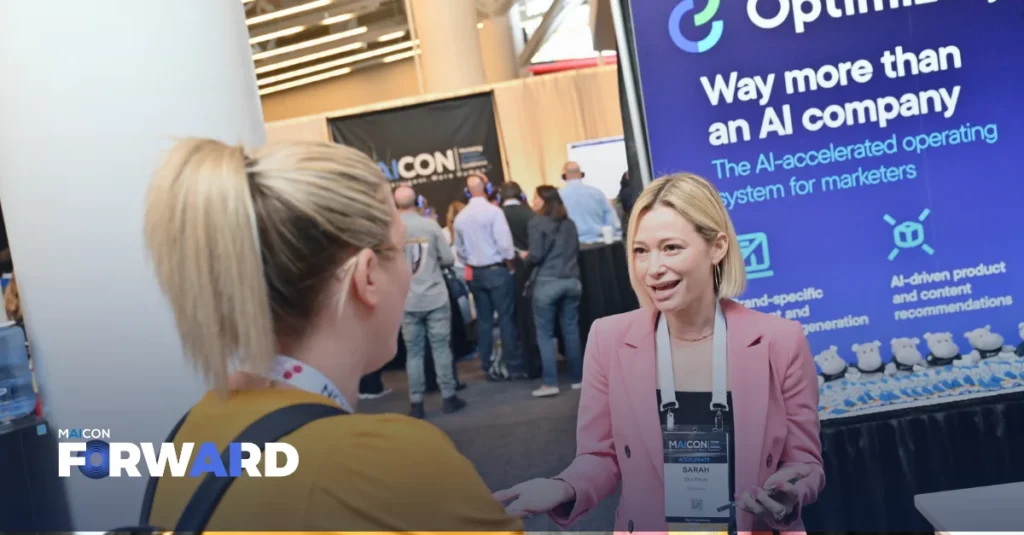
- Experience Live Demos: See the 23 platforms mentioned above—and many more—in action within the expo hall.
- Hear from Practitioners: Engage with the professionals who are already using these tools to solve real-world problems.
- Network with Peers: Connect with other leaders who are navigating the same technological challenges.
- Build Your Roadmap: Walk away with a concrete, actionable plan for integrating AI into your specific marketing function.
We are just getting started. The tools that seem revolutionary today will be the standard utilities of tomorrow. By positioning yourself at the intersection of human creativity and artificial intelligence, you aren’t just adapting to the future—you are actively shaping it.
Register today at [MAICON25] and ensure your organization remains at the forefront of the marketing AI revolution.
