
Global News & Politics Video Strategy: Q2 2026 Insights
Main Facts
The digital news and politics landscape is undergoing a structural evolution defined less by what is covered and more by how, when, and where content is delivered. Comprehensive data analytics from Tubular Intelligence covering the period between April 22 and July 21, 2026, reveal that media publishers across APAC, LATAM, EMEA, and North America are frequently misjudging audience behavior.
Key findings across major global regions indicate stark inefficiencies in digital distribution:
- APAC YouTube Strategy Mismatch: News and politics publishers heavily favor mid-length videos (2 to 5 minutes), accounting for more than a quarter of their uploads. However, audience engagement on YouTube strongly favors the extremes—bipolar clusters at 0–30 seconds and 15–20 minutes.
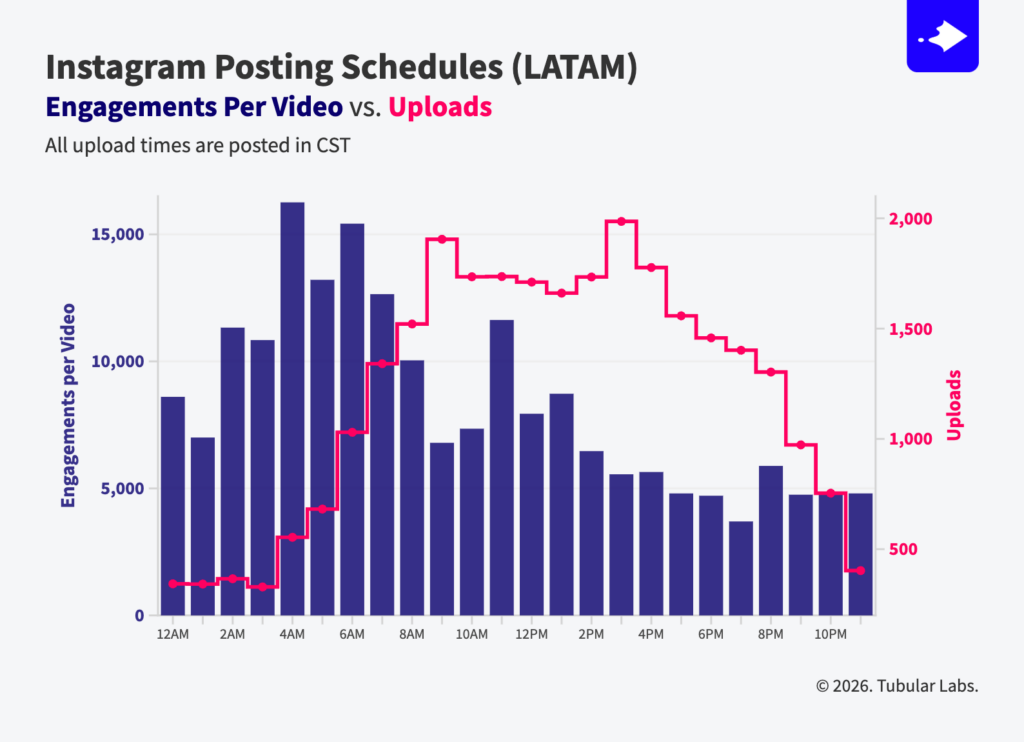
- LATAM Publishing Timing Deficit: In Latin America, Instagram publishers cluster their news uploads during mid-afternoon windows. Conversely, user engagement peaks significantly during the early morning—creating a vast, underutilized window with low competition and high per-video engagement.
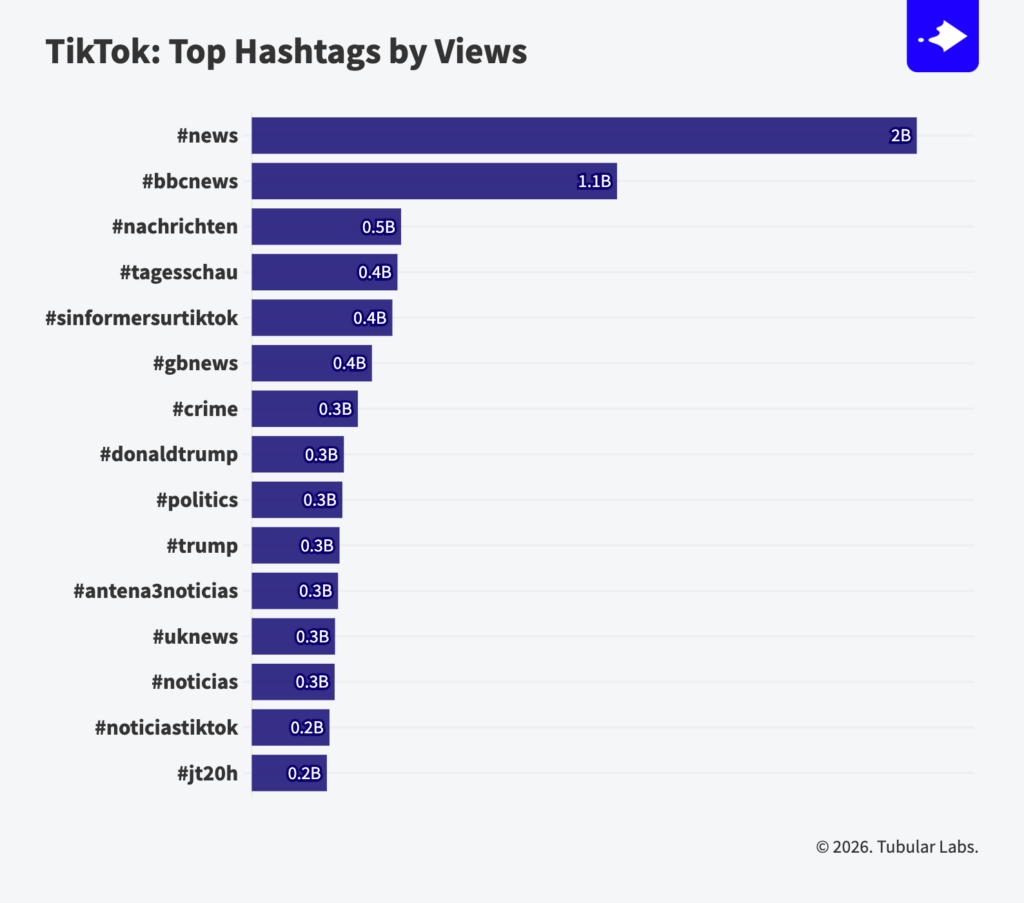
- EMEA TikTok Hashtag Fragmentation: European, Middle Eastern, and African markets rely on a blend of global political touchstones (such as U.S. presidential tags), proprietary broadcaster branding (#bbcnews, #tagesschau), and multilingual tags to drive cross-border search visibility.
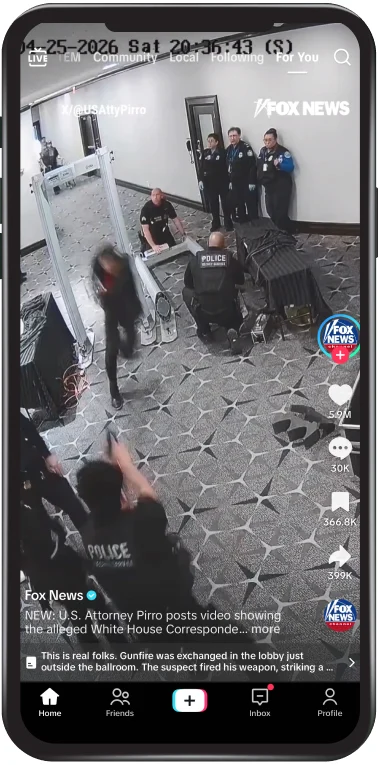
- U.S. Reach Versus Resonance: In North America, raw view counts and active engagement metrics pull in opposite directions. Fox News commanded massive view counts (247 million views) via breaking visual spectacles, while ABC News captured elite audience engagement and interaction rates (9.8+ million engagements) through uplifting, resolution-focused narratives.
Ultimately, the data underscores a critical industry-wide lesson: digital success requires publishers to transition from optimizing strictly for output volume to aligning their distribution strategies with real-time platform mechanics and regional audience habits.

Chronology of the 2026 Q2 Analysis
To understand how global video strategies shifted during the spring and early summer of 2026, analysts tracked cross-platform behavioral data across four distinct operational phases:
- April 22, 2026 — Data Window Opens: Tubular Intelligence initiates its multi-region tracking framework to isolate publishing habits, duration trends, upload timing efficiencies, and algorithmic hashtag responses for the News & Politics genre.
- May 15, 2026 — Mid-Quarter Regional Divergence Identified: Early analytics reveal that APAC publishers continue to pour resources into traditional mid-length YouTube uploads, completely ignoring the dual-peak engagement preference of the platform’s algorithm for rapid shorts or deep-dive long-form content.
- June 1, 2026 — LATAM Timing Discrepancy Flagged: Cross-referencing Instagram posting schedules in Latin America exposes a pronounced misalignment. Publishers consistently push content live during crowded mid-afternoon slots, missing the quiet, high-retention morning window.
- June 20, 2026 — EMEA Hashtag Mapping Complete: Researchers analyze top-performing TikTok content across Europe, the Middle East, and Africa, identifying the dominance of American political figures in European feeds alongside localized linguistic tags.
- July 10, 2026 — U.S. Viral Content Benchmark Reached: Viral tracking isolates the stark performance divide between Fox News’ high-view crime/violence coverage and ABC News’ high-engagement human interest programming.
- July 21, 2026 — Data Window Closes: The comprehensive three-month dataset is finalized, providing media organizations with clear, actionable insights regarding global video strategy adjustments.
Supporting Data and Regional Breakdown
1. APAC: The Mid-Length Trap on YouTube
On YouTube, APAC newsrooms have fallen into the trap of prioritizing a standardized production cadence over platform-specific optimization. More than 25% of all news and politics uploads from media publishers in the region sit squarely within the 2-to-5-minute duration band.
Data from Tubular Intelligence proves this is the least effective duration for maximizing engagement per video. Instead, audiences gravitate toward two distinct viewing formats:
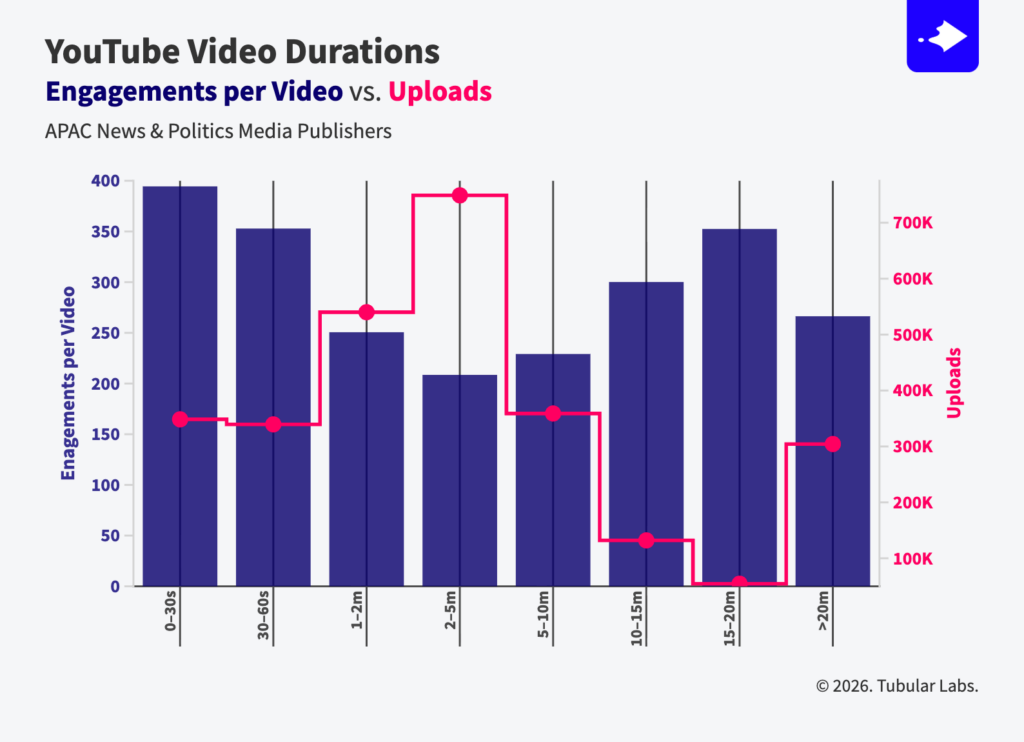
- The Quick-Hit Clip (0–30 seconds): Catches immediate attention in feeds, ideal for breaking news alerts and punchy soundbites.
- The Long-Form Explainer (15–20 minutes): Generates deeper watch time, loyalty, and algorithmic favor, satisfying audiences looking for contextual analysis.
Publishers relying on mid-length content are effectively optimizing for internal quotas at the expense of audience impact.
APAC YouTube Uploads vs. Engagements:
[ 0-30s ]    ======== High Engagement ========
[ 2-5m  ]    ---- Heavy Uploads, Low Engagement ----
[ 15-20m]    ======== High Engagement ========
2. LATAM: The Untapped Morning Window on Instagram
In Latin America, Instagram news publishers lean heavily on mid-afternoon publishing schedules. However, audience engagement data shows an undeniable morning peak.
Because most publishers crowd the mid-afternoon slot, competition is fierce, and organic reach is diluted. Meanwhile, the early morning engagement window remains largely uncrowded. Publishers who adjust their workflows to push breaking news and morning roundups into this early window capture significantly higher per-video engagement while competing against a fraction of the post volume.
3. EMEA: Multilingual Discovery and Brand Authority on TikTok
In the EMEA region, TikTok hashtags driving the highest view counts for news and politics fall into three distinct categories:
- Global Political Flashpoints: U.S. politics commands international attention. Hashtags such as
#donaldtrumpand#trumpconsistently rank within the top 12 most-viewed tags in EMEA, demonstrating that American domestic politics functions as a premier international news topic. - Proprietary Broadcaster Branding: Tags like
#bbcnewsand#tagesschaupunch well above their weight. Often utilized by only a single creator or primary brand, these tags leverage pre-established trust to boost discovery and reinforce brand authority. - Linguistic Fragmentation for Search: European discovery is heavily segmented by language. English tags like
#newssit alongside German (#nachrichten), Spanish (#noticias), and French (#sinformersurtiktok). Publishers are utilizing these tags not merely to categorize content, but to maximize search visibility, cross-border reach, and performance tracking.
Official Responses and Industry Perspectives
Digital media strategists, platform analysts, and publishing executives have responded to the Q2 2026 data with a renewed focus on audience-first distribution models.
- On Output Versus Impact: Industry analysts note that legacy publishers are struggling to break free from traditional broadcast mindsets. "For decades, news organizations measured success by how many stories they could push out the door," notes a senior digital media strategist. "The Tubular data proves that in the algorithmic era, volume without alignment is a waste of capital. A single 20-minute deep dive or an expertly timed morning post will outperform a dozen misaligned mid-length uploads every time."
- On Platform Mechanics: Executives managing cross-platform operations have pointed out the necessity of tailoring stories to specific network ecosystems. "You cannot treat TikTok, YouTube, and Instagram as digital dumping grounds for the exact same asset," says an audience development lead for an international news network. "Fox News won the view count by leaning into high-impact, visual breaking news on TikTok, while ABC News captured active emotional investment. Understanding that psychological trigger is the difference between fleeting views and lasting brand equity."
Implications for Publishers and Brands
The overarching takeaway from the April–July 2026 data is that news and politics performance is governed by deliberate choices regarding formatting, timing, and search architecture.
Strategic Recommendations:
- Ditch the Middle Ground: YouTube publishers must audit their video duration strategies. If data shows viewers prefer concise 30-second hits or immersive 15-minute breakdowns, newsrooms must restructure their editing workflows to eliminate dead zones in the 2-to-5-minute range.
- Shift Publishing Timelines: In regions like Latin America, breaking free from traditional 9-to-5 newsroom routines is essential. Early morning publishing windows represent low-competition, high-reward opportunities for digital editors.
- Master Cross-Border and Branded Tagging: European and global publishers must treat hashtags as search engines rather than filing cabinets. Combining localized language tags with strong proprietary brand identifiers ensures content is discoverable across linguistic and geographic barriers.
- Define the Goal (Reach vs. Resonance): Before producing a story, publishers must decide whether their primary objective is raw top-of-funnel reach (driven by visual, high-conflict breaking news) or active community engagement (driven by human interest, positive resolutions, and emotional resonance).
Ultimately, the path forward for media publishers and brands does not lie in simply producing more content. It relies on publishing smarter—using granular platform intelligence to align content strategy with actual human behavior and algorithmic reality.
