

The Blueprint for Modern Social Media Excellence: Building Your Dream Team in 2026
In the digital-first economy of 2026, a brand’s social media presence is no longer just a marketing channel—it is the digital storefront, the customer service desk, and the primary engine for brand advocacy. As the landscape evolves, the question facing CMOs and marketing directors is no longer if they should invest in social, but how to structure a team that can navigate the intersection of human creativity and AI-driven efficiency.
Building a high-performing social media team today requires a departure from the "generalist" model of the past. It demands a strategic alignment of specialized talent, robust governance, and a clear understanding of how social media contributes to the bottom line.
The Core Mandate: What Defines a Modern Social Team?
At its most fundamental level, a social media team is the custodian of a brand’s reputation. Their responsibilities span the entire customer lifecycle, from top-of-funnel awareness to post-purchase support.

However, in mature organizations, the remit is far more expansive. A high-performing team acts as a cross-functional hub, gathering "social intelligence"—real-time insights into consumer sentiment, competitive moves, and emerging market trends—and distributing that intelligence to product, sales, and executive teams. They are not merely content publishers; they are the bridge between the brand and the pulse of the market.
Structural Frameworks: Finding Your Organizational Fit
Before you hire a single person, you must define the architecture of your team. The structure you choose will dictate your agility, your consistency, and your brand’s voice.
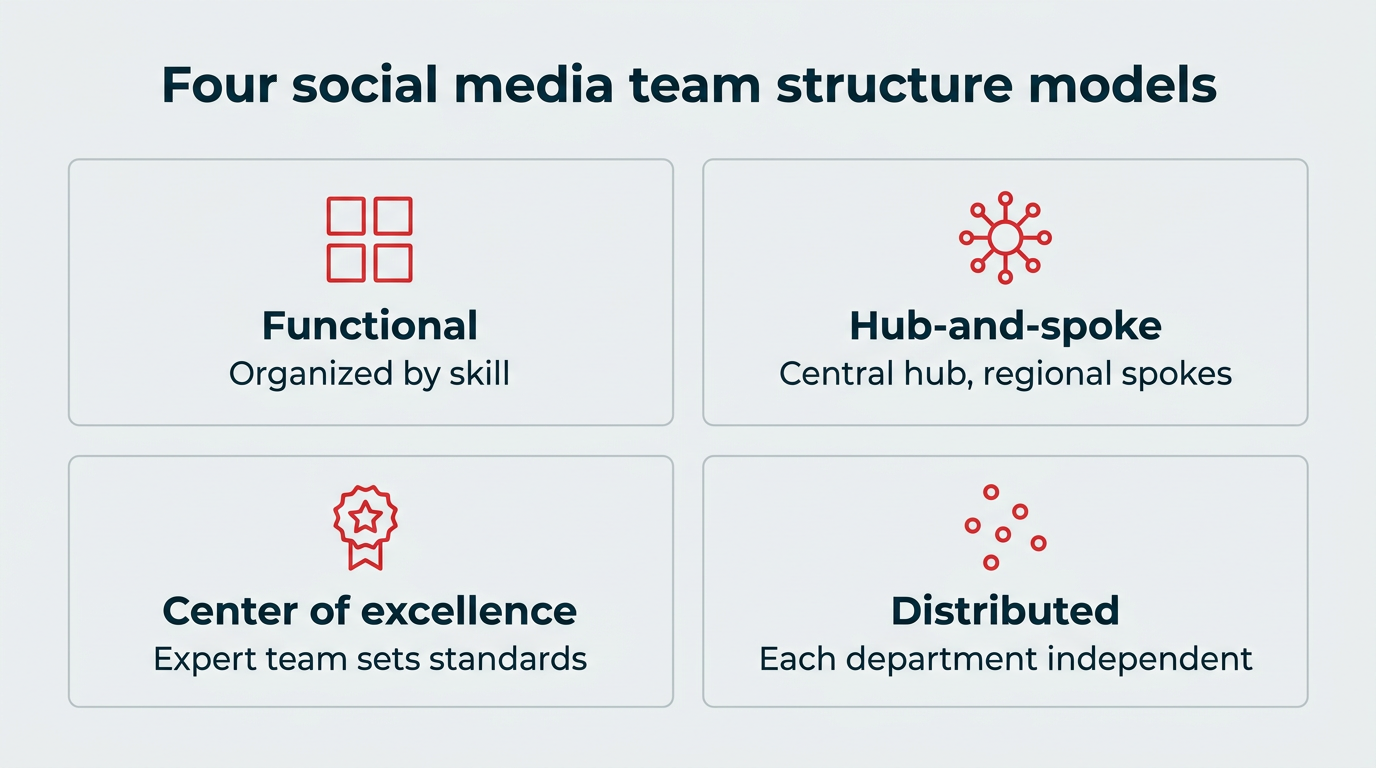
1. The Functional Structure
Ideal for mid-sized organizations with a single brand identity, this model organizes talent by core competencies: Content, Community, Analytics, and Paid Media. Each area has a clear owner. While this fosters deep expertise, it carries the risk of "siloing." A strong leader is essential to ensure these functions move in lockstep toward a unified strategy.

2. The Hub-and-Spoke Model
For enterprises operating across multiple regions or business units, the hub-and-spoke model is the industry standard. A central "hub" team sets the global brand guidelines, governance, and overarching strategy, while "spoke" teams—localized or product-specific—handle the day-to-day execution. This balance ensures global consistency while maintaining local relevance.
3. The Center of Excellence (CoE)
In highly decentralized companies, social is everyone’s job. Here, the CoE functions as a governance body. They build the playbooks, provide the tools, and train employees in other departments (like HR or Customer Care) on how to represent the brand on social. It scales well but requires rigorous oversight to prevent brand fragmentation.
4. The Distributed Model
This is the "wild west" approach, where departments manage their own social presence without central control. While it offers maximum speed, it is fraught with risks regarding brand voice and compliance. Most organizations eventually migrate away from this model as they reach maturity.
Anatomy of the Team: Roles, Responsibilities, and Compensation
A world-class team requires a specific blend of creative and analytical talent. Based on 2026 benchmarks, here are the essential roles that drive impact.
The Strategist: The Architect
The Strategist owns the "Why." They align social goals with business objectives, determine channel mix, and manage high-level KPIs.
- Average Salary: Varies by scale, often aligning with senior marketing leadership.
- Key Skills: Data interpretation, business acumen, and long-term planning.
The Social Media Manager: The Generalist
The backbone of the department, the Manager ensures the strategy actually ships. They oversee the content calendar, manage daily posting, and ensure that the "voice" of the brand remains consistent.
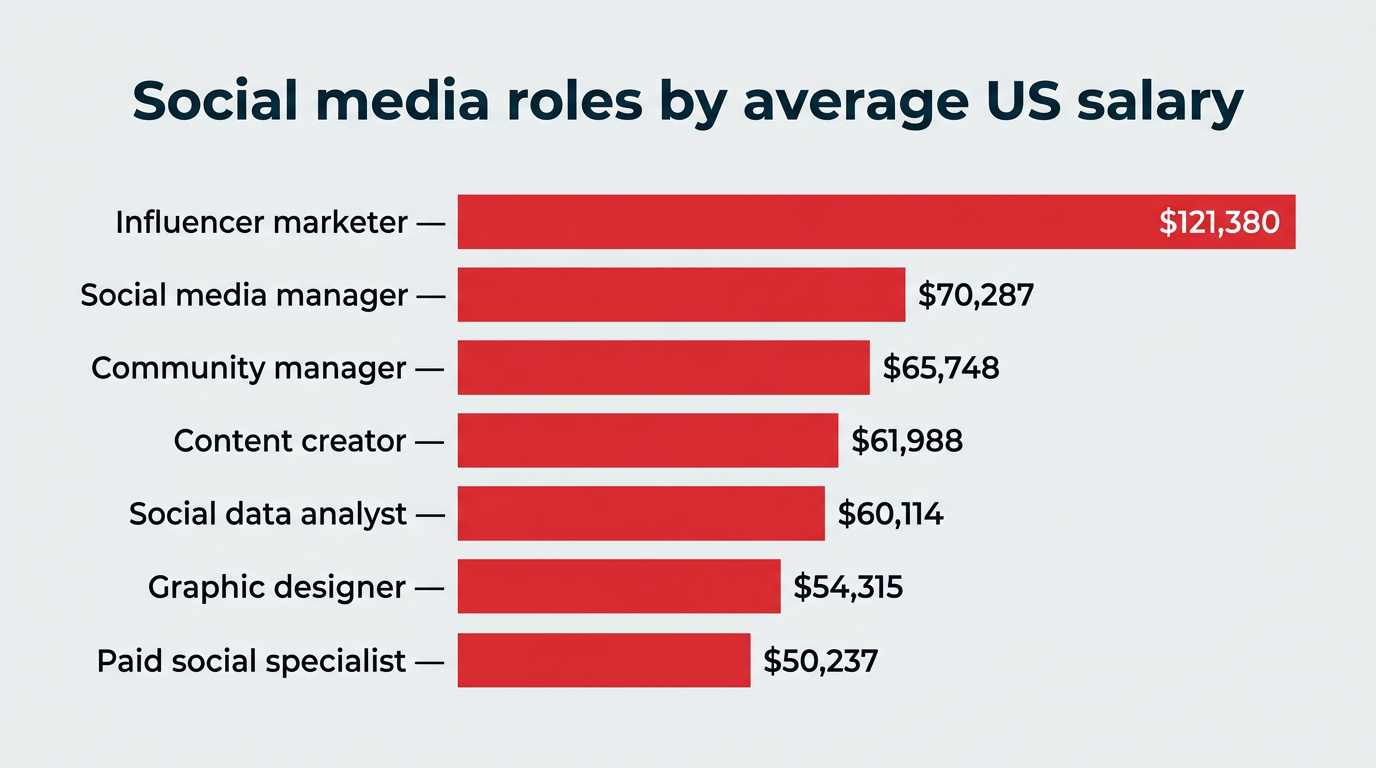
- Average Salary: ~$70,287
- Key Skills: Project management, agility, and cross-functional communication.
The Content Creator: The Engine
This role produces the assets—video, graphics, and copy—that stop the scroll. In the age of short-form video (TikTok, Reels, Shorts), the creator must understand both the aesthetic requirements of the platform and the psychological triggers of the audience.
- Average Salary: ~$61,988
The Community Manager: The Voice
This role is the most human side of the brand. They manage the social inbox, engage in comment sections, and build genuine relationships within social communities. They turn one-way broadcasts into two-way conversations.
- Average Salary: ~$65,748
The Paid Social Specialist: The Optimizer
As organic reach becomes increasingly competitive, the Paid Specialist ensures the brand’s message reaches the right audience at scale. They manage budgets, ad-tech platforms, and performance testing.
- Average Salary: ~$50,237
The Social Data Analyst: The Insight-Driver
By turning raw metrics into actionable business intelligence, the Analyst justifies the budget and identifies new growth opportunities.
- Average Salary: ~$60,114
The Strategic Expansion: A Five-Step Implementation Plan
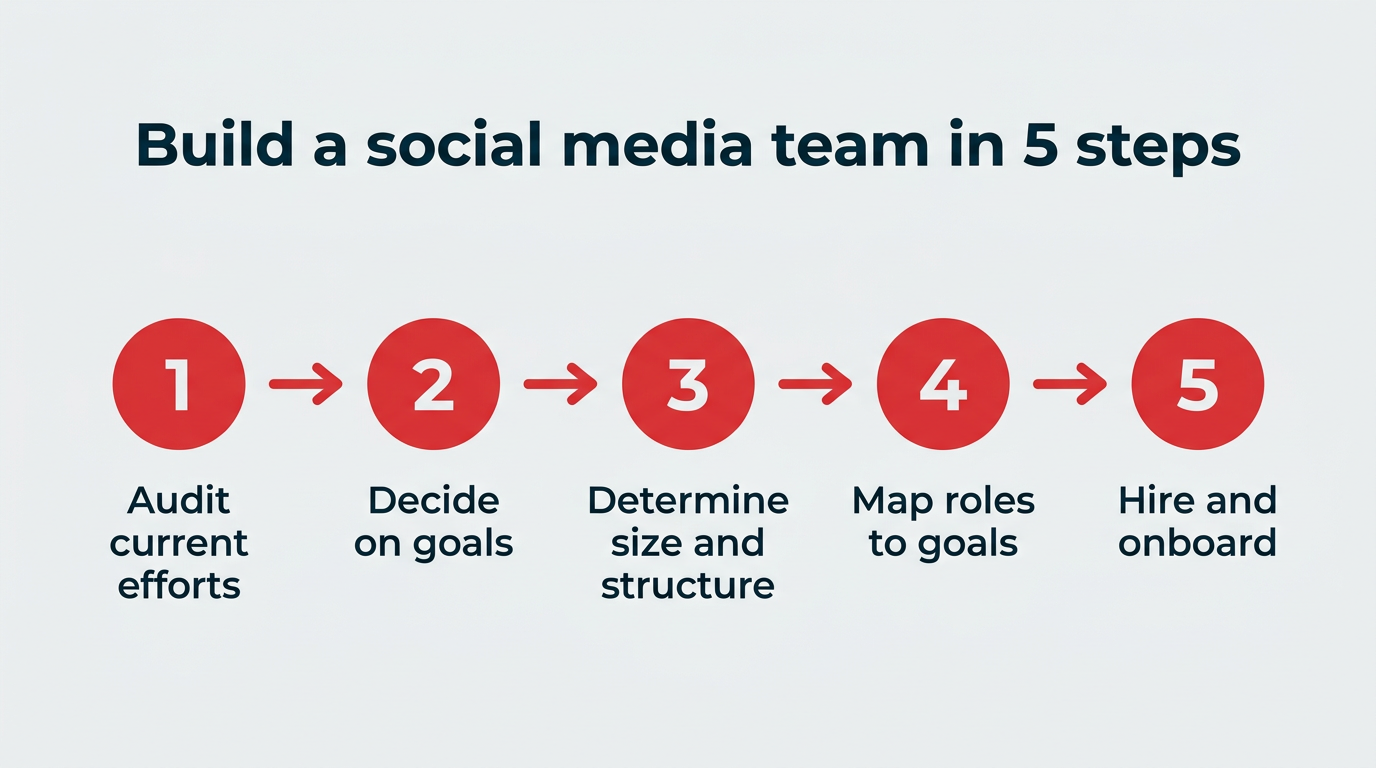
Scaling a team is a process of identifying gaps. Follow this sequence to build a sustainable organization:
- Audit Existing Performance: Before hiring, map your current output against your business goals. Identify which channels are failing and which require more resources.
- Define Clear Objectives: If your goal is conversion, prioritize the Paid Specialist. If it is brand loyalty, prioritize the Community Manager.
- Structure for Scale: Determine if you need a functional or hub-and-spoke model based on your geographical and brand complexity.
- Map Roles to Goals: Ensure every hire has a direct line of sight to a business metric (e.g., Lead Gen, Sentiment Score, or Engagement Rate).
- Onboard with Rigor: Documentation is everything. A new hire should have immediate access to the Brand Style Guide, Social Media Policy, and Crisis Management Protocol.
The AI Shift: Redefining Value in 2026
Artificial Intelligence has fundamentally altered the headcount math. In 2026, AI is no longer a "new tool"—it is a core team member.

How roles are evolving:
- Efficiency: AI-assisted drafting and scheduling allow for a 30-40% increase in output without increasing headcount.
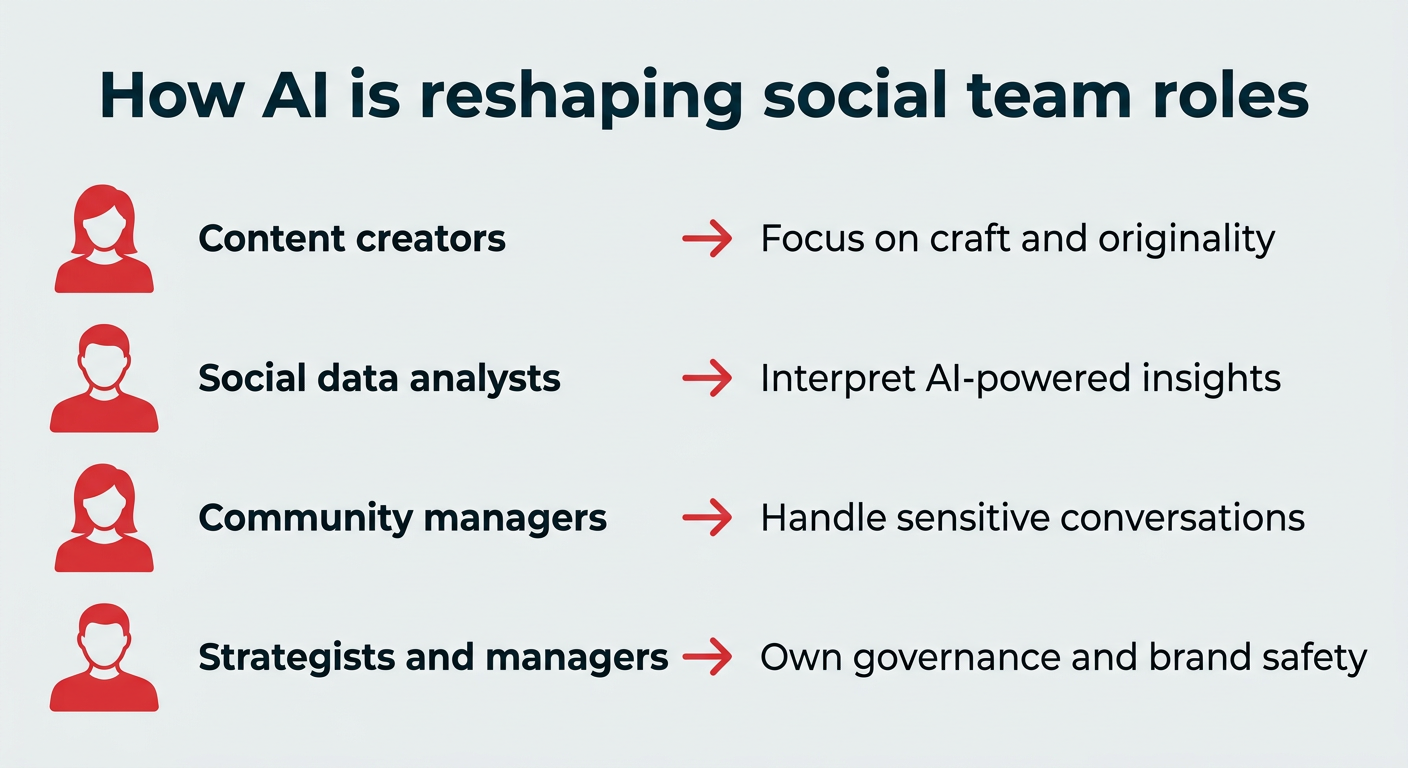
- Strategic Focus: Because AI handles the "work about work" (tagging, basic reporting, scheduling), humans are now free to focus on high-level creativity and complex community strategy.
- New Skills: The "Modern Social Practitioner" must now be adept at prompt engineering and AI-driven data analysis, ensuring that the content generated by AI remains human-centric and compliant with brand values.
Implications for Enterprise Leadership
The transition to a sophisticated social team carries profound implications for the enterprise.
Risk Mitigation: As social channels become primary touchpoints for customers, the risk of a PR crisis grows. A structured, well-governed team is the first line of defense. By establishing clear approval workflows and a "single source of truth" for brand guidelines, organizations can move fast without breaking their reputation.
Revenue Attribution: The most successful teams are those that can effectively communicate their value to the C-suite. By mapping social activity to CRM data, the team can demonstrate how a community manager’s engagement led to a sale, or how an influencer campaign reduced customer acquisition costs.
The Agency vs. In-House Debate: The consensus for 2026 is clear: keep the "brain" in-house and the "muscle" flexible. Strategic ownership, community engagement, and brand voice must be managed internally. Production-heavy tasks—such as high-end video production, large-scale paid media buying, or massive influencer outreach—can be effectively outsourced to agencies or freelancers to maintain cost-efficiency.
Conclusion: The Path Forward
Building a dream social media team is not about chasing the largest headcount; it is about precision, process, and performance. By aligning specialized roles with clear business objectives and integrating AI into the workflow, organizations can transform their social media department from a cost center into a strategic engine of growth.

The tools and salaries mentioned in this guide provide a baseline, but the true measure of success is the team’s ability to remain human, authentic, and agile in an increasingly automated world. Start with your goals, choose your structure, and build a team that doesn’t just post content—but builds the future of your brand.
