
The Digital Paper Trail: Why Social Media Archiving is No Longer Optional
In an era where a single tweet or comment can trigger a regulatory investigation, a Freedom of Information Act (FOIA) request, or a landmark First Amendment lawsuit, the "wild west" era of corporate and government social media is effectively over. For organizations in highly regulated sectors—government, finance, healthcare, and education—social media is no longer just a marketing channel; it is a critical repository of public records and business communications.
As digital interactions become the primary way institutions engage with the public, the mandate to capture, preserve, and store this content in a legally defensible format has become a pillar of modern risk management. Relying on the platform’s own systems or manual screenshots is no longer a sufficient defense against audits or litigation.
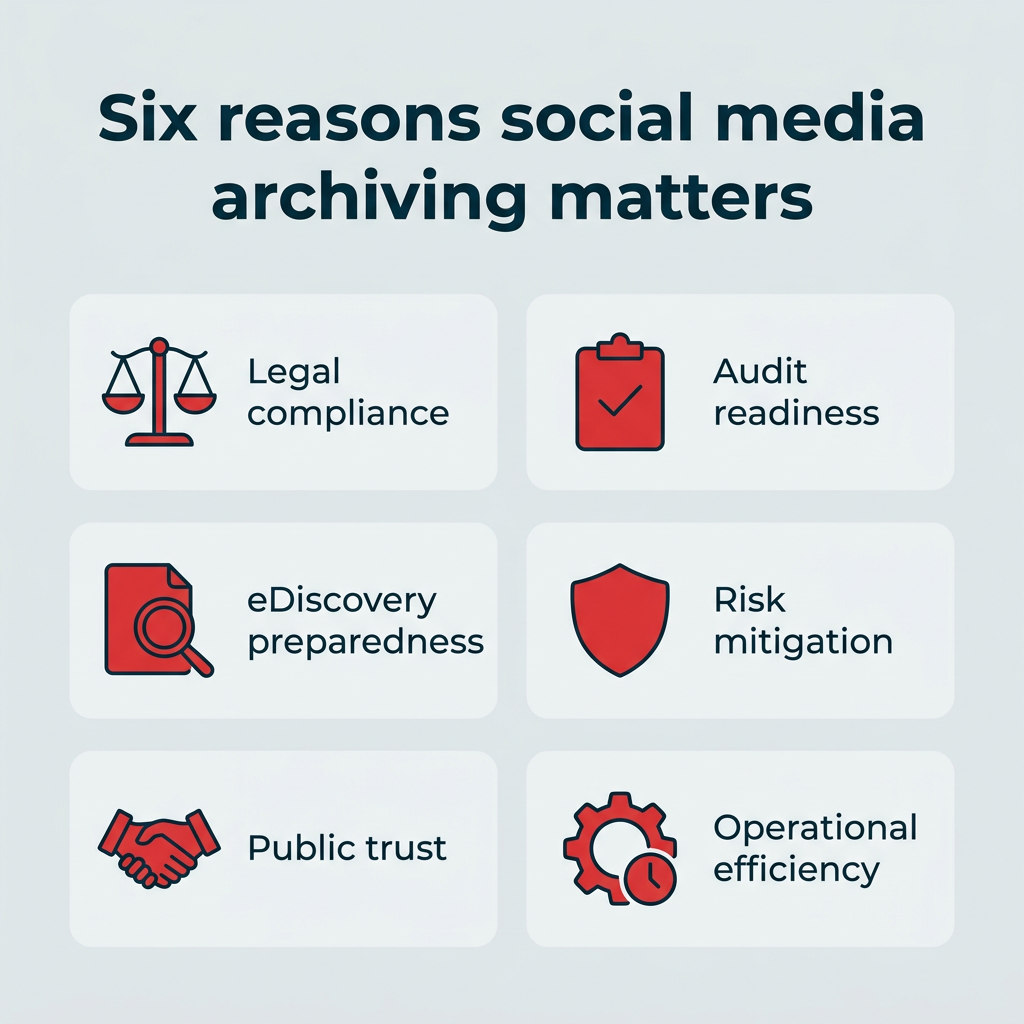
The Core Mandate: Why Archiving Matters
Social media archiving is the process of capturing and storing all social media content—posts, comments, direct messages, multimedia, edits, and deletions—along with the crucial metadata that validates the record.
For government agencies, this is a matter of transparency and legal duty. Under FOIA and state open records laws, social media is treated as a public forum. For the financial sector, social media is classified as a business communication under SEC and FINRA rules. In healthcare, it falls under the stringent privacy protections of HIPAA, and in education, under the student-record protections of FERPA.
The Myth of Platform Reliability
A common misconception is that because content is "public" on a platform like X (formerly Twitter) or Facebook, it is effectively archived. This is a dangerous fallacy. Platforms are private-sector companies. They are not legally obligated to maintain your content, and they frequently change their APIs, which can result in historical data becoming inaccessible overnight. Furthermore, if a user deletes a comment, it vanishes from the public view—but your legal obligation to maintain that record remains.
A Chronology of Compliance
The evolution of social media regulation has shifted from passive observation to proactive enforcement.
- The Early Phase: Organizations treated social media as a casual "broadcast" channel. Compliance was largely ignored, and record-keeping was non-existent.
- The Regulatory Awakening: As social media became a primary communication tool for governments during crises, regulators began to classify these interactions as public records.
- The Enforcement Era: With the rise of "off-channel" communication scrutiny—specifically by the SEC and FINRA—regulatory bodies began issuing massive fines to firms that failed to preserve communications, including those on WhatsApp and private social DMs.
- The Current Standard: Organizations are now expected to maintain "tamper-proof" records that prove authenticity, ensuring that even hidden or deleted content is preserved for eDiscovery.
Supporting Data: The High Cost of Non-Compliance
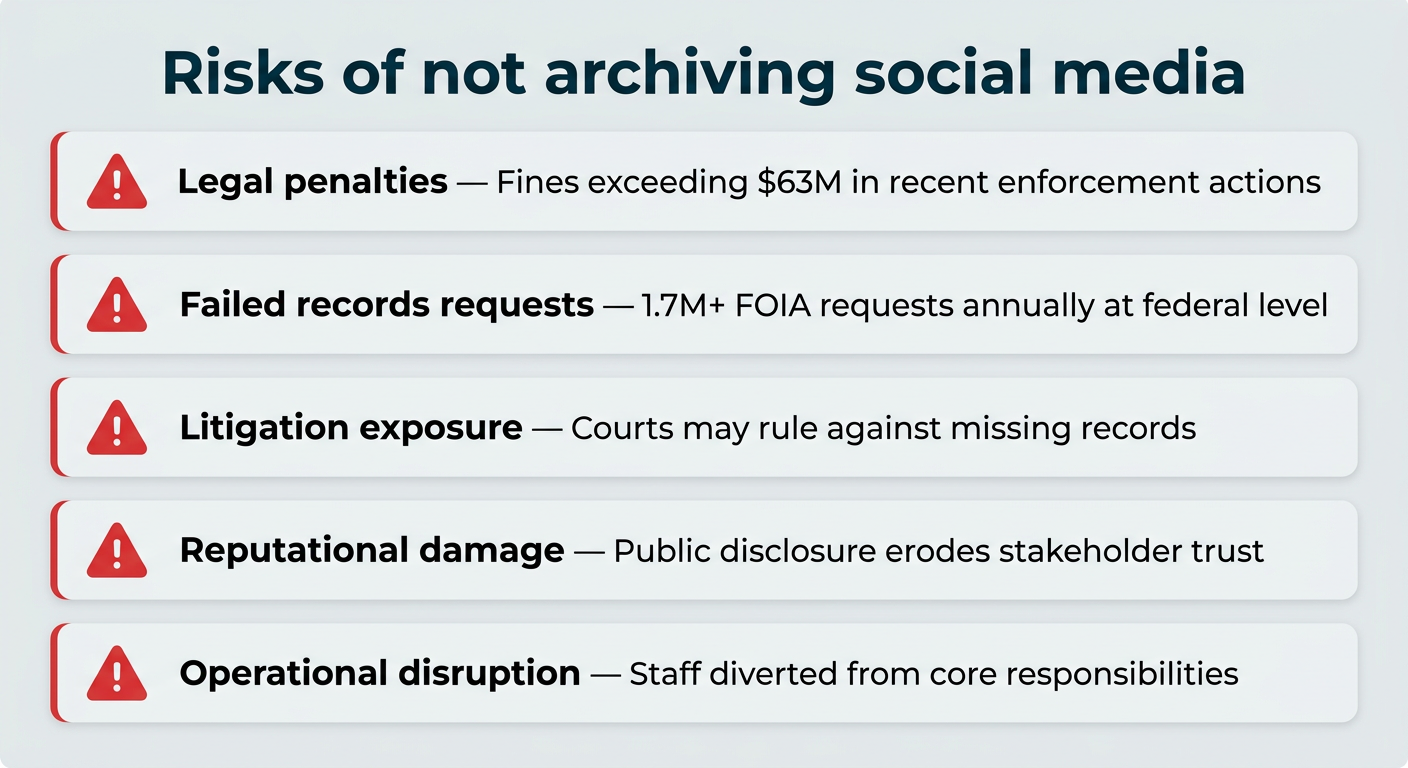
The financial and reputational risks of failing to maintain a proper archive are severe. For healthcare providers, HIPAA violations regarding the exposure of protected health information (PHI) can result in fines reaching up to $2,190,294 per year.
In the financial sector, the SEC’s crackdown on "off-channel" communications has led to multi-million dollar settlements for firms that failed to archive employee communications. Meanwhile, FOIA appeals in the U.S. government surged by 59% in fiscal year 2025, signaling that the public and legal entities are increasingly aggressive in requesting access to government digital records.
Industry-Specific Retention Requirements
| Industry | Key Regulation | Retention Period |
|---|---|---|
| Government | FOIA / Open Records | Varies (often permanent) |
| Finance | SEC Rule 17a-4 / FINRA | 3–6 years |
| Healthcare | HIPAA | 6 years post-creation |
| Education | FERPA | Enrollment + defined period |
Official Perspectives and Regulatory Guidance
Regulators have been explicit: if you conduct business or public service on a channel, you must own the record of that interaction.
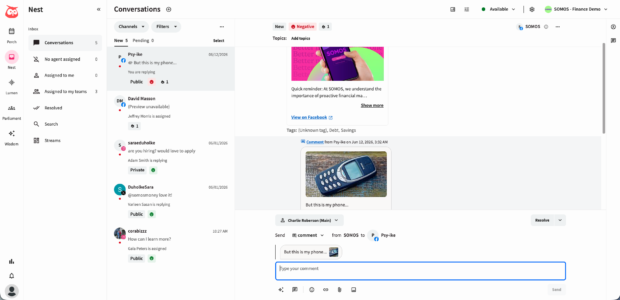
The SEC and FINRA have made it clear that "interactive communications"—dialogue with third parties—require the same level of supervision as email. For government agencies, the First Amendment poses a unique challenge. Because government accounts are public forums, agencies cannot arbitrarily delete comments. If a comment must be removed due to a policy violation (e.g., hate speech or spam), the agency must have a preserved, timestamped record of the original post to prove the removal was legally justified.
The Five-Step Archiving Workflow
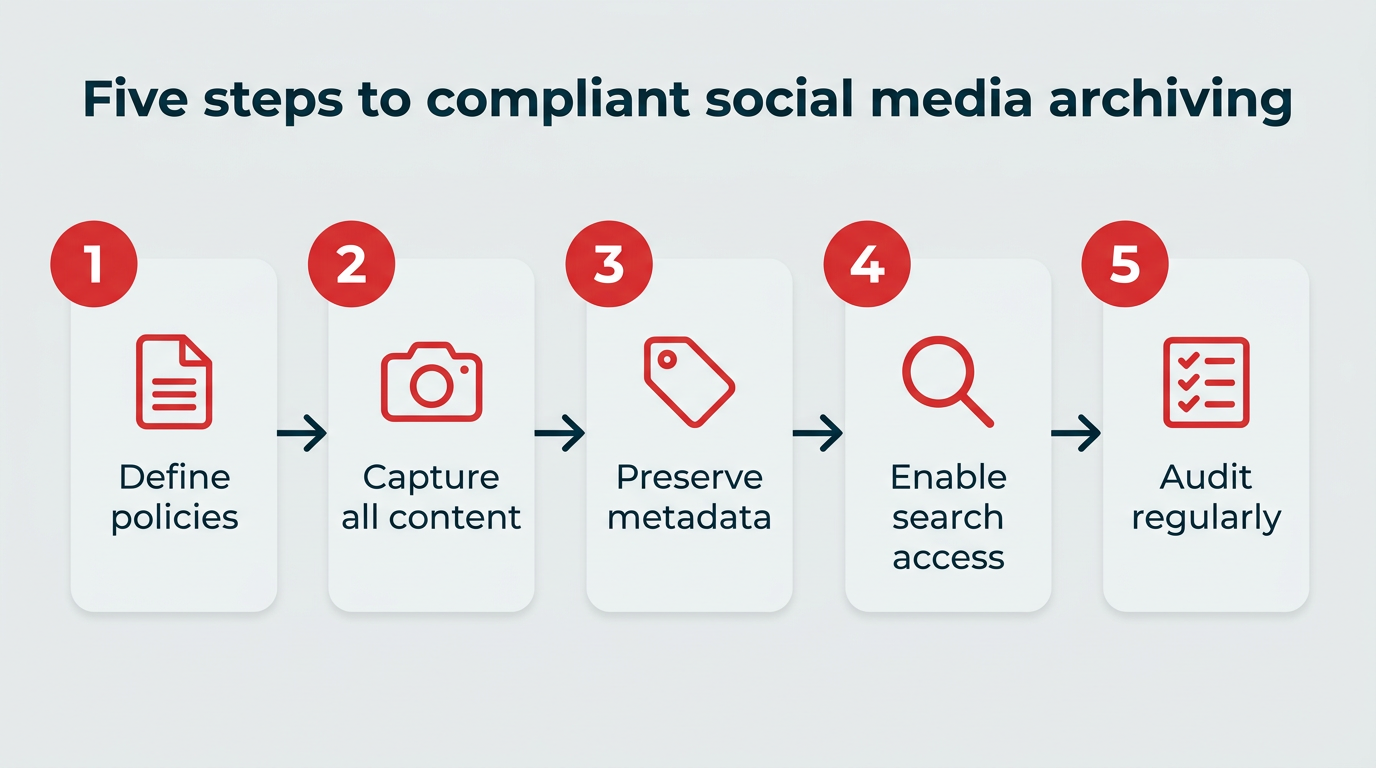
To maintain compliance, organizations should implement a systematic, automated workflow.
1. Define Policies and Governance
Before archiving, you need a policy. Your social media governance plan should clearly outline what constitutes a business record, who is authorized to manage accounts, and how to handle data residency (ensuring, for instance, that Australian data stays on Australian servers).
2. Automated Real-Time Capture
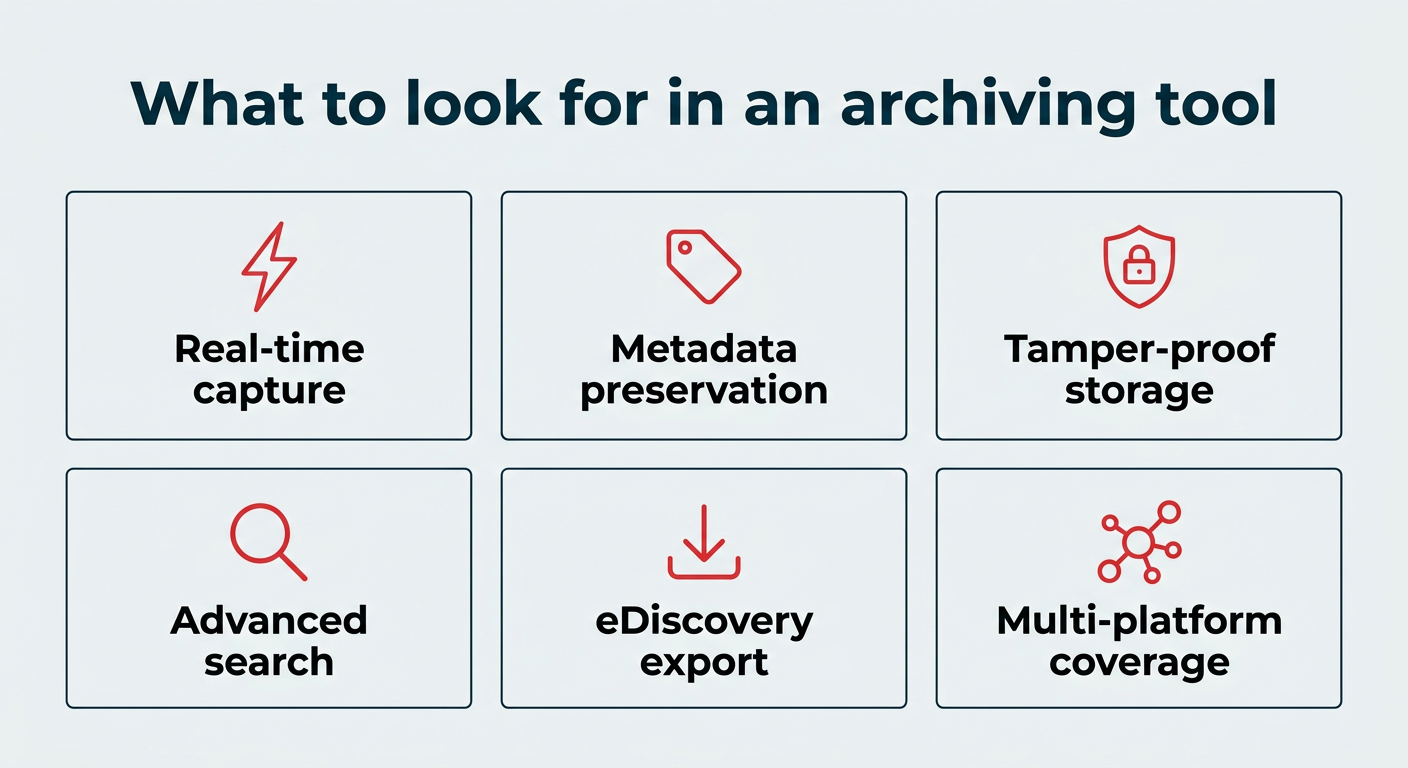
Manual screenshots are legally indefensible. They lack metadata and cannot capture content that is deleted within seconds of being posted. Automated, API-based archiving is the only way to ensure that every version of a post—including edits and deletions—is captured as it happens.
3. Metadata Preservation
Metadata is the "DNA" of a digital record. It includes timestamps, author identity, device information, and geolocation. In a court of law, this metadata is what proves that a record is authentic and has not been altered by the agency to hide unfavorable information.

4. Accessibility and Searchability
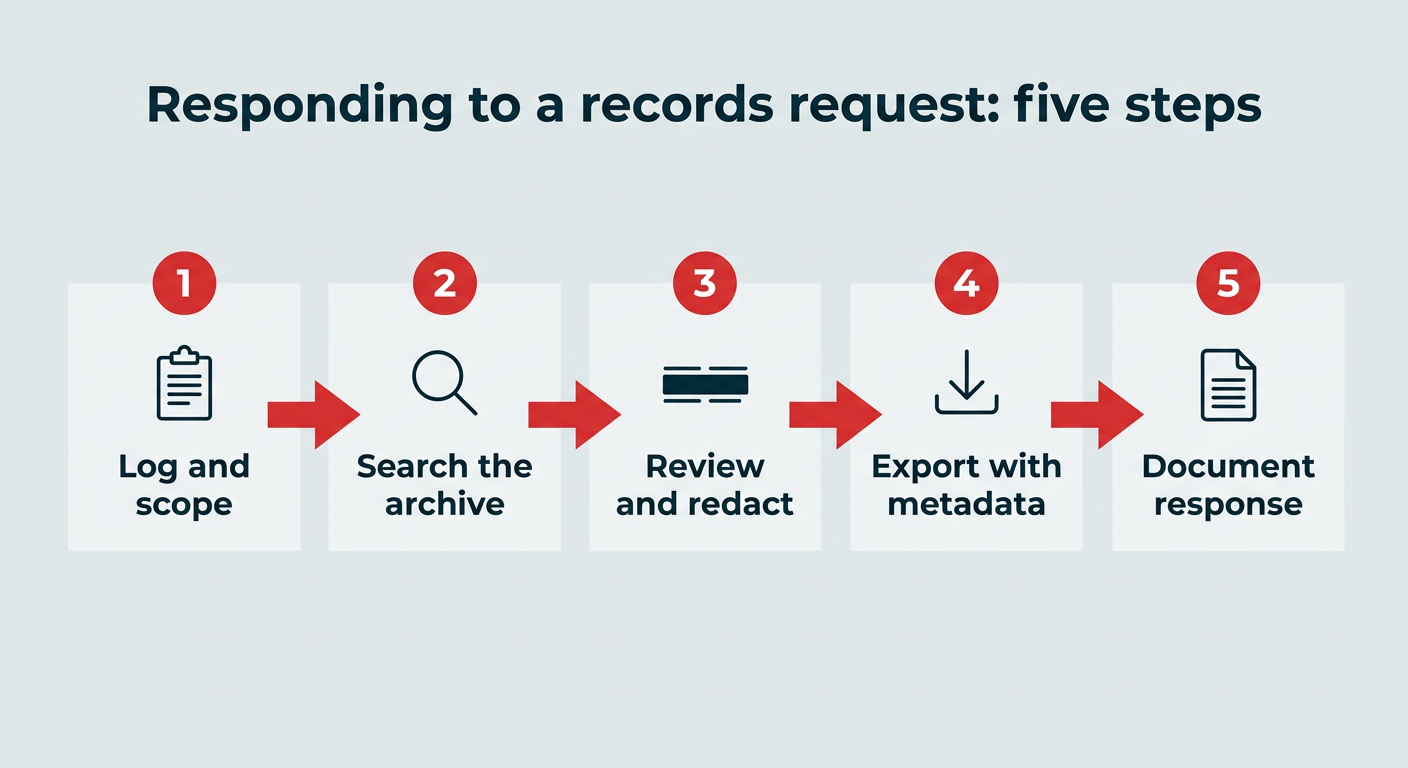
An archive is only as good as its retrieval system. You must be able to search by keyword, user, date, or topic to respond to FOIA or legal requests within strict deadlines. Your system should allow for seamless exporting to an Electronic Records Management System (eRDMS).
5. Regular Auditing
Technology and legislation move at different speeds. Conduct a quarterly social media audit to ensure that new accounts are added to your archive, staff training is up-to-date, and your archiving tools remain compatible with platform API updates.
Implications for Future Operations
The trajectory of digital law suggests that "digital hygiene" will become a standard operational requirement for all organizations. As AI begins to moderate social interactions, the need for human oversight and archival documentation will grow. Organizations that fail to invest in professional-grade, FedRAMP-authorized archiving solutions today are essentially operating without an insurance policy.
Strategic Recommendations
- Centralize Governance: Use platforms like Hootsuite, which offer integrated compliance layers (such as Vigil and Brolly), to centralize your archiving across dozens of regional or departmental accounts.
- Adopt "Privacy-First" Archiving: Ensure your archiving vendor understands the nuances of GDPR, FERPA, and HIPAA. Not all tools are designed to handle sensitive health or student data with the required level of encryption.
- Prioritize Tamper-Proofing: Ensure your records are stored in a format that prevents modification. A record that can be changed is not a record; it is a liability.
Conclusion
Social media archiving is no longer a "nice-to-have" administrative task—it is a foundational component of modern institutional integrity. By moving away from manual, reactive methods and embracing automated, audit-ready solutions, organizations can protect themselves from the rising tide of litigation and public scrutiny.
In a world where digital presence is synonymous with public trust, the ability to produce a complete, transparent, and accurate record of your digital footprint is the ultimate safeguard. Whether you are a small municipality or a global financial institution, the message is clear: If you post it, you must preserve it.
