

The New Frontier of Digital Visibility: Why LLM Rankings are the Next SEO
The digital landscape is undergoing its most significant structural shift since the inception of the search engine. For two decades, the "blue link" paradigm defined how businesses reached customers. Today, that map is being replaced by the AI tour guide. Large Language Models (LLMs) are no longer futuristic experiments; they are the primary interface for information discovery, decision-making, and product research.
As consumers increasingly turn to ChatGPT, Claude, Gemini, and Perplexity for answers, traditional search engine optimization (SEO) is evolving into something far more complex: LLM Optimization (AIO). If your brand is not appearing within the synthesized responses of these AI tools, you aren’t just losing clicks—you are effectively invisible to a growing segment of high-intent consumers.
The Paradigm Shift: From Search Results to Synthesized Answers
In the traditional SEO era, brands competed for the top position on a Search Engine Results Page (SERP). Success was measured by click-through rates (CTR) and rankings on Google. The new reality, however, is binary: either your brand is mentioned in the AI’s curated, conversational answer, or it isn’t.
LLM rankings represent your brand’s visibility inside the black box of generative AI. Unlike the static rankings of a search engine, which are largely based on keywords and backlinks, LLM responses are dynamic, context-aware, and proprietary. When a user asks an AI, "What is the best CRM for a small boutique agency?" they are no longer scrolling through ten results; they are reading a definitive, synthesized recommendation. If your brand is not included in that response, you have lost a qualified lead before the conversation even began.
Chronology: The Evolution of the AI Search Ecosystem
The journey toward the current state of "AI-first" discovery can be traced through several critical milestones:
- Pre-2022 (The Google Monopoly): The era of "Search." Users relied on Google to navigate the web, and businesses optimized for keyword density and domain authority.
- Late 2022 (The ChatGPT Breakthrough): The launch of OpenAI’s ChatGPT introduced the world to conversational search. For the first time, users bypassed search engines, preferring to ask a model directly for product advice.
- 2023 (The Proliferation of Models): Google responded with Gemini, Microsoft integrated GPT-4 into Bing, and Anthropic released Claude. The market fragmented, forcing brands to account for multiple "AI personalities."
- 2024-2025 (The Age of AIO): We have entered the era of AI Optimization. Specialized tools and methodologies have emerged to track, measure, and influence the way models discuss specific brands.
Ignoring this transition today is the equivalent of ignoring search engine optimization in 2005. While you can continue to rely on traditional traffic, the growth trajectory is shifting toward platforms that prioritize conversational, AI-driven recommendations.
The "Big Four": Where Brands Must Compete
The AI ecosystem is dominated by four primary platforms, each with distinct user bases and retrieval mechanisms:
- OpenAI (ChatGPT): The market leader in terms of brand recognition. Its ability to aggregate information and provide nuance makes it the go-to for professional and creative tasks.
- Google (Gemini): Holds a unique advantage through deep integration with the existing Google Search ecosystem. It represents the bridge between traditional search and generative AI.
- Anthropic (Claude): Favored for its long-context window and sophisticated, human-like reasoning. It is increasingly becoming the preferred tool for enterprise-level research.
- Perplexity: The "answer engine." Perplexity is explicitly designed to act as an alternative to search, providing real-time citations and links, making it a critical focus for brands looking to maintain traffic flow.
Because consumers have varied preferences, a brand cannot rely on optimizing for just one model. Just as a restaurant owner would never ignore a segment of their clientele, a brand cannot ignore the unique biases and data-sourcing methods of each AI model.
The Mechanics of LLM Visibility: Why API Access Matters
Tracking LLM rankings is not as simple as checking a keyword position. Because models are constantly updated (e.g., GPT-4o, Gemini 1.5 Pro), your performance can shift overnight based on a model update.
Why API access is essential:
- Real-time snapshots: API-based testing allows for programmatic, consistent queries that mimic user behavior.
- Actionable Data: Without API access, you are relying on manual testing, which is prone to human error and lacks the statistical significance required for long-term strategy.
- Consistency: API queries allow you to control variables like the "system prompt" or the "temperature" of the model, ensuring that your data is representative of how a standard user interacts with the tool.
Strategic Implementation: The Process of AIO
Without a dedicated "LLM Search Console," businesses must build their own infrastructure. A professional AIO strategy follows a rigorous, four-step process:
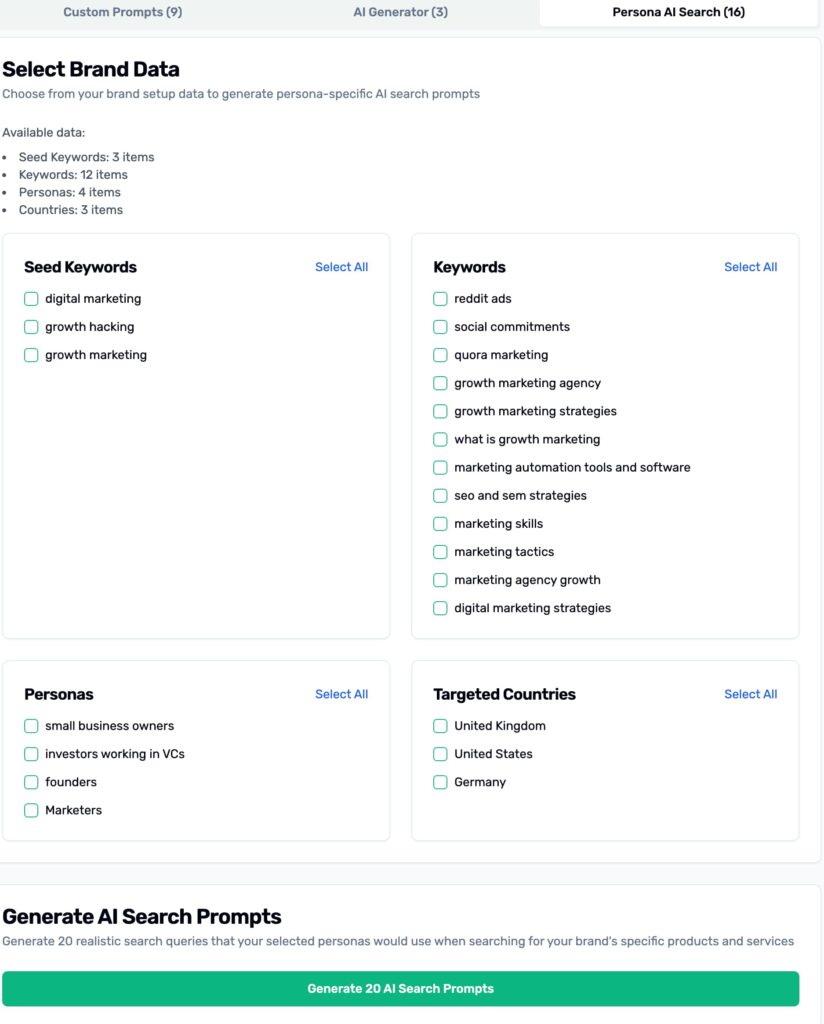
- Prompt Engineering: Build a library of prompts that represent your brand’s categories, competitors, and pain points. These should range from broad ("Best project management software") to specific ("How does [Brand] compare to [Competitor] for remote teams?").
- Automated Execution: Run these prompts across all major models (ChatGPT, Gemini, Claude, Perplexity) to create a baseline.
- Sentiment and Context Analysis: It is not enough to be mentioned. You must analyze how you are mentioned. Is your brand associated with "expensive," "innovative," "hard-to-use," or "reliable"?
- Influence and Optimization: Use the data to refine your public-facing content. This might involve updating your website’s technical documentation, adjusting your brand messaging, or ensuring that your value propositions are clearly articulated in high-authority third-party citations.
The Economic Implications: Is the Cost Justified?
The cost of implementing an AIO strategy is non-trivial, involving expenses for API credits, data storage, and the human capital required for analysis.
The Mathematical Reality:
If you monitor 100 queries across four models daily, the cost of API calls alone can reach significant figures per month. When you add the overhead of data normalization, sentiment analysis, and manual review, the investment is comparable to a mid-sized SEO department.
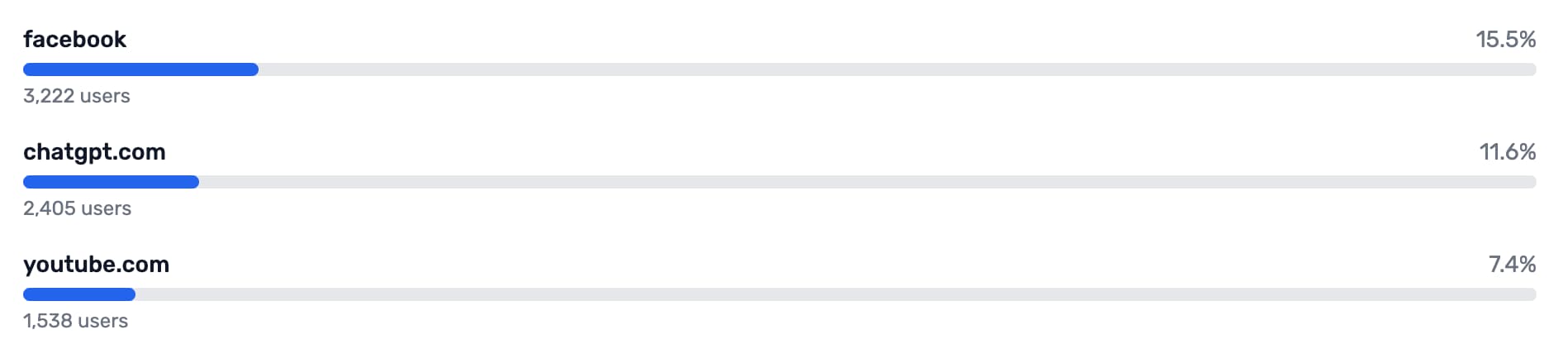
However, the cost must be weighed against the intent quality. Research suggests that LLM-driven traffic is significantly more likely to convert than traditional search traffic. Users who arrive at your site via an AI recommendation have already received a "pre-qualified" summary of your services. They are not browsing; they are arriving with a specific, articulated need. In some sectors, LLM-driven traffic now accounts for 10% to 13% of total inbound visits, and this number is expected to climb as AI integration becomes standard in operating systems like iOS and Android.
The Future: From SEO to AI Optimization
We are witnessing the end of the "keyword" era and the beginning of the "conversational" era. In the near future, the most successful brands will be those that treat AIO with the same rigor as they treated SEO for the past two decades.
What comes next?
- Specialized Tools: The next 12 months will see an explosion of SaaS tools designed specifically for LLM rank tracking and brand sentiment management.
- New Metrics: We will move away from "Rank #1" toward "Share of Voice in AI Responses."
- Proactive Brand Management: Brands will need to actively feed their latest data into the web ecosystem to ensure AI models have the most accurate, updated information about their offerings.
The Bottom Line
The battleground for digital visibility has shifted. The brands that start monitoring their LLM rankings today will own the "AI conversation" of tomorrow. Those who wait for a centralized "LLM Search Console" will find themselves effectively erased from the digital map.
The transition from SEO to AIO is not a fad; it is the natural evolution of how humans interact with technology. Whether your brand is a household name or a growing startup, the mandate is clear: start tracking, start optimizing, and start shaping the way AI describes your business. The future of your digital presence depends on the answers the machines give when they are asked about you.
