
From Spectator to Stage: How Creator Match is Redefining B2B Marketing
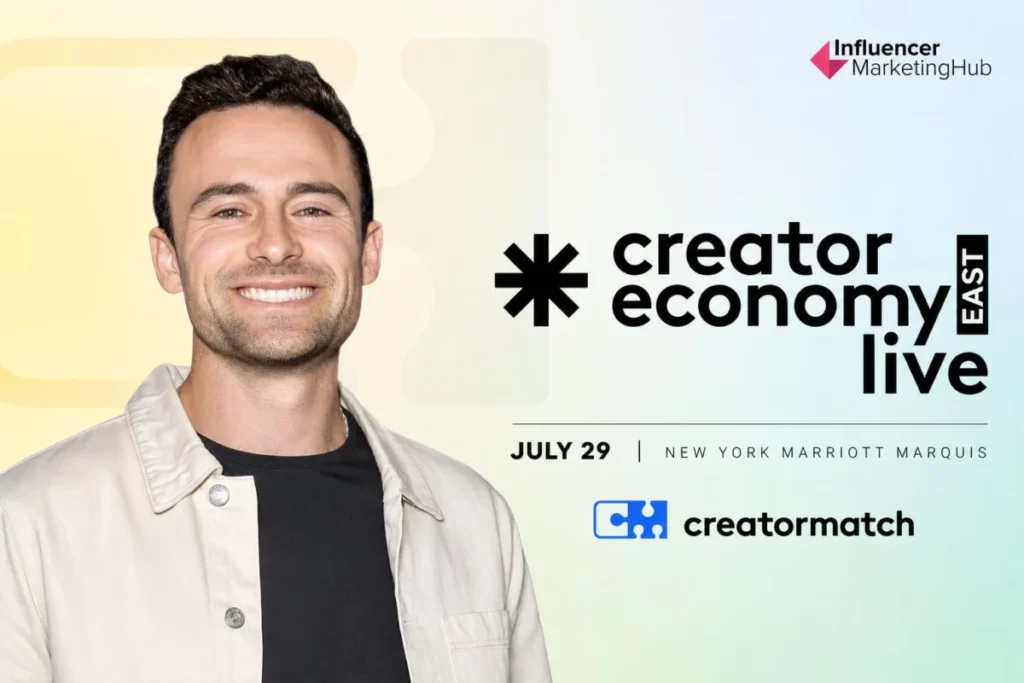
Just one year ago, AJ Eckstein sat in the audience at Creator Economy Live West in Las Vegas. As he looked toward the stage, he found himself wondering if he might one day lead the room. On July 29, that hypothetical question becomes reality: Eckstein, the founder and CEO of Creator Match, will take the stage as the official emcee for Creator Economy Live East at the New York Marriott Marquis.
His transition from attendee to anchor is more than a personal milestone—it serves as a powerful metaphor for the maturation of the B2B creator economy. With over 50 speakers and 500 brands slated to attend, the event highlights a seismic shift in how professional services and technology companies approach digital marketing. As the industry gathers to discuss creator partnerships, employee-generated content, and measurable ROI, Eckstein’s rapid ascent provides a blueprint for an emerging sector that has moved from experimental pilot programs to multi-million-dollar investment strategies.
The Rapid Scaling of Creator Match
The announcement of Eckstein’s emcee duties comes on the heels of a massive operational milestone for his company. Creator Match recently surpassed $1 million in approved creator offers within a single week. This figure is not merely a vanity metric; it represents a significant volume of campaign activity and a fundamental change in how brands allocate their marketing budgets.
Eckstein shared the company’s trajectory on LinkedIn, mapping its growth through a series of milestones that emphasize the accelerating pace of the sector: "$1M in one year. $1M in one month. $1M in one week."
These figures reflect the various stages of Creator Match’s evolution. The first milestone tracked total payouts to B2B creators over the company’s inaugural year. The second milestone marked a leap in efficiency, with $1 million in payments processed within a single month. The most recent milestone—$1 million in approved offers in one week—measures the velocity of deal-making on the platform. By focusing on approved offers, the data provides a clear window into the surge of demand from brands eager to leverage professional influencers.
Today, Creator Match operates with a team of nearly 40 professionals, with active hiring efforts underway to support further expansion. Despite his prominent role as the face of the organization, Eckstein is quick to deflect the focus toward his team. "I get too much credit as the founder," he wrote. "There is an entire team of close to 40 people behind the scenes that’s making this new world a reality."
A Journey of Evolution: From $2,000 Tests to Industry Standards
The current scale of Creator Match is particularly striking when juxtaposed with its humble origins. When Eckstein first began the company, the primary hurdle was not operational capacity, but education.
Two years ago, pitching LinkedIn-based influencer marketing to startups was an uphill battle. Brands were accustomed to the visual, high-engagement landscapes of Instagram and TikTok, often viewing LinkedIn as a rigid, text-heavy environment strictly for recruitment or corporate announcements. Meanwhile, many LinkedIn power users—experts in software, venture capital, and enterprise sales—did not view themselves as "creators" and were often unaware that their professional insights could be monetized through brand partnerships.
Early campaigns were modest, often involving fully managed programs priced at approximately $2,000. These initial projects were essentially "proof-of-concept" tests designed to show skeptical stakeholders that professional audiences would engage with sponsored content if it provided genuine value.
Eckstein frequently highlighted this disconnect in podcast interviews and industry panels. Brands would ask if "influencers" even existed on LinkedIn, while creators were shocked that their reach could be a viable revenue stream. Creator Match built its infrastructure to bridge this gap, handling the entire lifecycle of a campaign: creator discovery, relationship management, contracting, secure payments, content review, and analytical reporting. By turning the chaotic process of influencer management into a structured, reliable workflow, Creator Match transformed a niche experiment into a core component of the B2B marketing stack.
Humanizing the Enterprise: The New B2B Playbook
As the market has matured, Eckstein’s strategy has moved far beyond the traditional "sponsored post." He has championed a more holistic, multi-dimensional framework for how brands should interact with creators. His philosophy posits that B2B technology companies, which often struggle with brand perception, can be "humanized" through a calculated ecosystem of influence.
Eckstein identifies five core pillars that, when executed in tandem, create a powerful brand narrative:
- Live Events: These serve as the foundation for deep, authentic relationships, generating content that bridges the gap between the digital and physical worlds.
- Physical Gifting: By providing a tangible, high-quality experience, brands create "unboxing" moments that foster brand loyalty and organic storytelling.
- Internal Company Voices: Leveraging employees, founders, and executives as creators provides a human face to the organization, building trust through personal expertise.
- Creator "Surround Sound": By deploying a cluster of creators simultaneously, a brand can dominate a specific professional niche, ensuring that their message is heard from multiple trusted perspectives.
- Paid Media Amplification: Finally, the most effective organic content is boosted with paid distribution to ensure maximum reach and conversion.
"The event builds the relationship. The gift keeps it alive. The founder voice gives permission. The surround sound makes it inevitable. Paid media makes sure nobody misses it," Eckstein summarized.
This strategic framework signals the death of the "one-off" post. Today’s sophisticated B2B marketers are looking for integrated campaigns that combine relationship management, content distribution, and internal advocacy to hit specific, measurable business objectives.
Implications for the Future of Creator Economy Live
The transformation of Creator Economy Live East into a major industry summit reflects the larger transition of the sector from a cottage industry to a professional enterprise. When the event kicks off on July 29, the agenda will move past the elementary questions of "what is an influencer?" and instead focus on the complexities of program design, cross-platform amplification, and advanced attribution modeling.
With over 15 sessions and 100 scheduled meetings between brands, agencies, and technology providers, the event is positioned as a crucible for new ideas. For Eckstein, guiding these conversations from the stage represents a homecoming of sorts. His personal arc—from a curious audience member seeking to understand the landscape to a leader defining its future—mirrors the broader trend of the B2B creator economy.
The success of Creator Match proves that when the friction of discovery and payment is removed, brands are more than willing to invest heavily in the human element of business. As the industry prepares for the next phase of growth, the focus is shifting toward scalability and sophistication. The era of testing $2,000 campaigns has passed; the era of multi-million-dollar creator ecosystems is here, and AJ Eckstein is ensuring he is at the center of the dialogue.
For the hundreds of brands and creators attending the New York Marriott Marquis, the takeaway is clear: the creator economy is no longer a peripheral marketing tactic. It is a fundamental shift in how professional value is created, distributed, and measured in the digital age. As the event unfolds, the industry will look to leaders like Eckstein to navigate the complexities of this new, human-centric reality.
