
The Trade Desk Advances CTV Strategy: Direct Integration for Pause Ads Goes Live
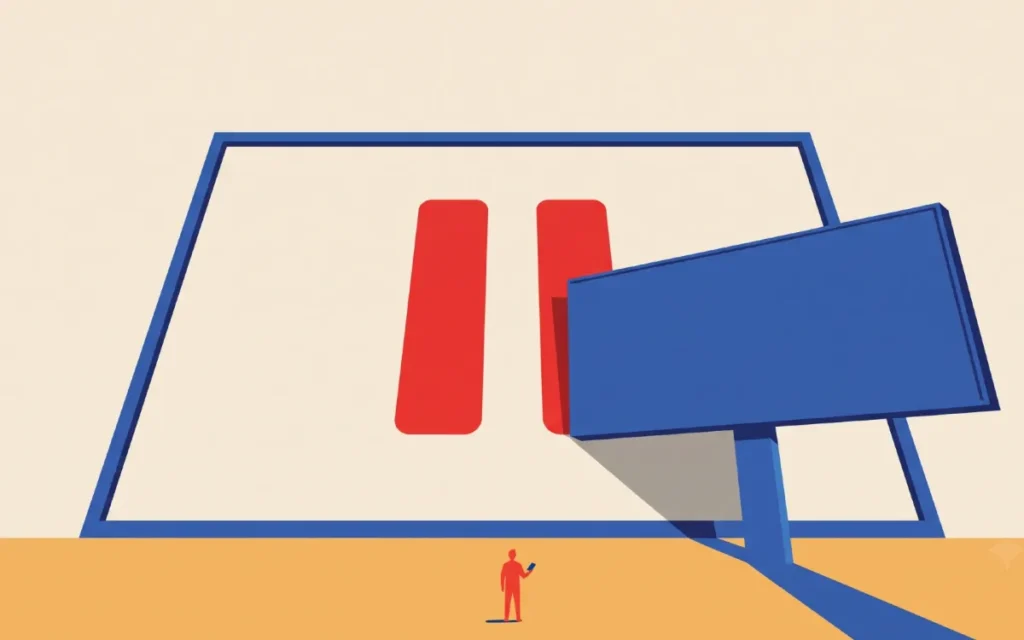
In a significant move toward streamlining the programmatic supply chain, The Trade Desk has officially integrated Connected TV (CTV) "pause ads" into OpenPath, its proprietary direct publisher integration framework. By publishing comprehensive technical specifications—including creative requirements, bid request/response examples, and VAST XML samples—The Trade Desk is effectively moving this high-attention format from a fragmented, manually negotiated environment into a standardized, scalable programmatic product.
This development follows the IAB Tech Lab’s finalization of "CTV Ad Format Signaling" guidance on July 22, 2026. By aligning its infrastructure with these global standards, The Trade Desk is attempting to resolve a long-standing industry pain point: the lack of a shared, consistent vocabulary for describing non-linear CTV inventory.
Chronology of a Format: From Beta to Standardized Supply
The journey of the pause ad within The Trade Desk’s ecosystem has been methodical. Recognizing the format as a "high-attention, user-initiated moment," the company launched pause ads into open beta on May 12, 2026, as part of its Q2 Kokai platform updates.
However, the beta phase was constrained by the mechanics of the market. During this period, transactions were limited to private marketplace (PMP) deals or programmatic guaranteed (PG) arrangements. While this provided a controlled environment for testing, it failed to unlock the efficiency of the open auction. Every activation required a bespoke negotiation between the buyer and the publisher.
The release of the OpenPath documentation this week marks the shift from "managed service" logic to a "direct supply" model. By removing the supply-side platform (SSP) intermediaries, The Trade Desk is enabling publishers to expose pause inventory directly to its demand-side platform (DSP). This shift is not merely cosmetic; it is a structural change to the supply chain that aims to reduce the "hop" count, mitigate hidden fee leakage, and provide greater transparency in the bidstream.
The Technical Specification: Defining the Pause Experience
The documentation provided by The Trade Desk is granular, leaving little room for ambiguity in implementation. Under the OpenPath developer portal, the new specifications outline three behavioral pillars that define the pause ad:
- Latency: The advertisement triggers only after a viewer initiates a pause, with a hard-coded delay of one to three seconds to ensure the experience is intentional rather than accidental.
- Persistence: The creative remains visible on the screen until the viewer resumes content playback.
- Refresh Logic: In instances where a user remains paused for an extended duration, the creative is permitted to refresh after a set interval to maintain engagement and mitigate "ad fatigue."
Perhaps most notably, the creative constraints are deliberately conservative. The Trade Desk has limited the format to static files (PNG or JPG) within fixed dimensions. This stands in contrast to the broader IAB Tech Lab guidance, which technically allows for cinemagraphs and full-motion video. By choosing a narrower path, The Trade Desk is prioritizing reliability and render-success across a diverse range of smart TV hardware, where complex animations might lead to latency or performance degradation.
This discrepancy highlights the reality of modern ad-tech: standards bodies like the IAB Tech Lab provide the "ceiling" of what is possible, but individual platforms determine the "floor" of what they are willing to support. Engineers tasked with building these integrations must now reconcile the expansive capabilities of the IAB standards with the specific, rigid requirements of The Trade Desk’s buying interface.
The Standard Underneath: IAB Tech Lab’s Signaling Breakthrough
To understand why this launch is significant, one must look at the technical metadata finalized by the IAB Tech Lab on July 22, 2026. Prior to this, CTV formats—including pause, overlays, screensavers, and in-scene placements—were effectively "dark" inventory. They were traded in silos, meaning a bid request for a "pause ad" on one platform looked completely different from one on another.
The new IAB signaling guidance introduces or amends metadata fields within the OpenRTB (Real-Time Bidding) protocol. Specifically:
- AdCOM Enumerations: The
plcmt(placement) field now explicitly identifies the format, whilepos(position) andplaybackmethodprovide context for how the ad interacts with the screen. - VAST NonLinearAds: The inclusion of
<MediaFiles>within NonLinear VAST responses allows these formats to utilize delivery models previously reserved for linear video.
This shared language allows DSPs and SSPs to trade on a common foundation. Without these definitions, post-campaign reporting often collapses disparate formats into a single, generic "video" bucket, making it impossible for agencies to compare the efficacy of a 60-second linear spot against a 30-second static pause ad.
Implications for the Supply Chain and Transparency
The timing of this announcement is particularly poignant given the tumultuous eighteen months OpenPath has faced. In early 2026, the platform became a lightning rod for criticism regarding transparency and fee structures. Holding companies like WPP and Dentsu famously exited the platform, and Publicis Groupe engaged in a high-profile audit of the tool before eventually reconciling with The Trade Desk in June 2026.
By integrating new formats into OpenPath, The Trade Desk is doubling down on its "direct-is-better" philosophy. The commercial argument is clear: by cutting out the middleman, the company claims it can offer a more transparent and cost-efficient path for advertisers. However, the efficacy of this route is still an empirical question. For media buyers, the primary benefit is the reduction of "fee compounding"—the phenomenon where multiple intermediaries take a cut of the budget at every hop in the supply chain.
For publishers, the incentive is twofold: control and countability. By using the standard OpenPath integration, publishers can ensure their pause inventory is properly tagged, reducing the risk of "failure modes" where a sophisticated creative fails to render on a legacy CTV device.
Official Responses and Industry Collaboration
The Trade Desk has been careful to frame this not as a solo achievement, but as the result of a massive industry-wide effort. Daniel Spring, Senior Staff Product Manager for RTB and Inventory, took to LinkedIn to credit the IAB Tech Lab and several key partners.
The inclusion of the Seven.One Entertainment Group (the German media powerhouse under the ProSiebenSat.1 umbrella) in the credits is a signal that this rollout is not merely a U.S.-centric project. It suggests that European broadcasters are eager to bring their own inventory into the fold of standardized programmatic CTV, leveraging The Trade Desk’s reach to access global demand.
Contributors mentioned in the rollout—including Will Doherty, the executive lead on the high-profile Samsung Ads partnership—represent a cross-section of the company’s inventory partnerships team. This indicates that the company is treating pause ads as a "tier-one" product, akin to the home-screen inventory deals that have defined its CTV strategy throughout 2026.
Future Outlook: Beyond the Hype
While the industry often celebrates the "announcement" of a new format, the "shipment" of the technical documentation is where the actual work begins. As IAB Tech Lab is a consortium rather than a regulator, it possesses no enforcement mechanism to force adoption. The success of this standard relies entirely on the voluntary participation of SSPs, DSPs, and measurement vendors.
The data, however, supports the optimism. Recent benchmarks from vendors like WunderKIND suggest that pause ads generate nearly double the attention time of traditional 60-second video spots. In an era where "attention" has become the industry’s most coveted, yet elusive, metric, the ability to turn a user’s "stop" into a measurable advertising moment is a massive value proposition.
Ultimately, the integration of pause ads into OpenPath is a microcosm of the current state of ad-tech: a transition from experimental, siloed custom integrations toward a more mature, standardized, and transparent ecosystem. The Trade Desk is betting that by providing the documentation, the code, and the path, it can move the industry toward a future where a "pause" is as valuable as a "play." Whether this will satisfy the transparency demands of the major holding companies remains to be seen, but the technical groundwork has finally been laid.
