
The Digital Gold Rush: Predicting the Breakout Stars of the Milano-Cortina 2026 Winter Olympics
As the global sporting community sets its sights on the jagged peaks of the Italian Alps for the 2026 Olympic Winter Games in Milano-Cortina, a parallel race is unfolding in the digital sphere. The surge in public interest surrounding the Olympics is no longer confined to the two-week broadcast window; it is a year-round phenomenon driven by social video, creator-led storytelling, and the democratization of sports media.
By analyzing viewership data from 2025, we can begin to map the landscape of what will likely become the most-watched and most-engaged disciplines in the upcoming Games. For publishers, brands, and digital strategists, these metrics are not just numbers—they are a roadmap for navigating the "ice-cold" fervor of 2026.
The Dominance of the Ice: Why Figure Skating Remains the Unrivaled Giant
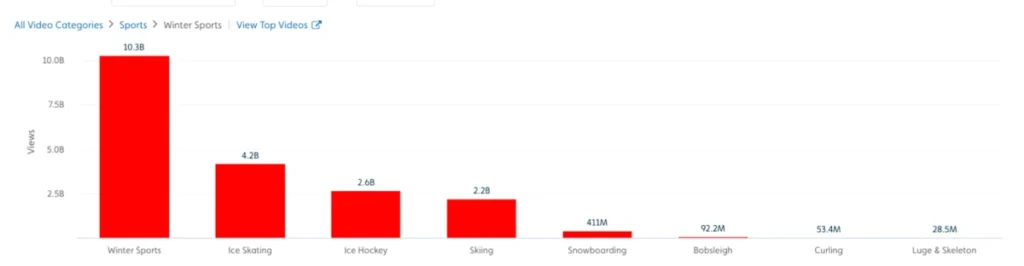
In the world of winter sports content, ice skating occupies a tier of its own. Even in a non-Olympic year, 2025 data from Tubular Labs reveals that ice skating videos generated a staggering 4.2 billion views across major social platforms. This figure dwarfs virtually every other winter category, cementing the sport’s position as the primary gateway for casual viewers into the Olympic ecosystem.
The Figure Skating Phenomenon
Within the broader umbrella of ice skating, figure skating serves as the engine of engagement. In 2025 alone, it accounted for 2.2 billion views and 36.8 million total engagements. The sport’s unique blend of athleticism, artistry, and high-stakes drama makes it a perennial favorite for social algorithms.
However, the appeal of figure skating has evolved. It is no longer just about the triple axel or the technical score. Modern audiences are drawn to the aesthetic elements—the ornate costumes, the hair and makeup transformations, and the intimate "behind-the-curtain" moments. This has opened a massive window for creators outside the sports vertical. Beauty, fashion, and lifestyle influencers are increasingly integrating skating-adjacent content into their feeds, effectively expanding the sport’s reach to demographics that might never watch a traditional sports broadcast.
Accessibility as a Growth Lever
The data also highlights a growing trend in "how-to" content. Tutorials covering the basics of ice skating have seen a significant uptick in viewership. This represents a crucial bridge for audiences who lack physical access to rinks, allowing them to engage with the sport intellectually and culturally even if they cannot participate physically. By simplifying the learning curve, creators are turning a niche technical skill into accessible, viral entertainment.
Skiing’s High-Altitude Reach: From Alpine Thrills to Niche Storytelling
With more than 20 distinct disciplines represented in the 2026 Games, skiing stands as the most versatile category for content producers. In 2025, skiing videos on YouTube amassed 2.2 billion views, proving that the sport’s visual intensity translates perfectly to the small screen.
Dissecting the Disciplines
The viewership data highlights a fascinating breakdown of interest:
- Freestyle and Alpine Skiing: These two disciplines combined to capture roughly one-third of the total 2.2 billion views. With over 6,000 uploads throughout 2025, they represent the "volume" leaders of the winter sports world, averaging 128,000 views per video.
- The Power of Ski Jumping: While the volume of content is lower compared to alpine disciplines, ski jumping punches well above its weight class. Averaging 426,000 views per video, the sport benefits from its "high-risk, high-reward" visual profile, which is tailor-made for short-form social video.
The Rise of the Niche Creator
A standout case study from 2025 is the French creator Anthony Robert. His ability to maintain high engagement throughout the summer months—a time when skiing is far from the public consciousness—demonstrates the power of a "content lens." By framing skiing through unique narrative angles rather than just competition highlights, he successfully cultivated a dedicated community. This strategy offers a clear template for sporting goods brands: rather than waiting for the Olympic Games to start, brands should lean into year-round content that highlights the lifestyle, training, and equipment-focused elements of the sport.
The "Cool Runnings" Effect: Storytelling in Niche Sports
One of the most persistent trends in social sports media is the elevation of niche sports through compelling, human-centric storytelling. Bobsledding, a sport historically bolstered by the cultural legacy of the 1993 film Cool Runnings, continues to find success by leaning into the "underdog" and "sprinter-turned-pilot" tropes.
Behind the Scenes with the Great Britain Bobsled Team
In 2025, the Great Britain bobsled team utilized social video to pull back the curtain on the grueling, often invisible, process of Olympic preparation. By documenting the training, the camaraderie, and the technical mechanics of the sled, they earned an impressive 317,000 views per video.
This highlights a shift in audience preference: fans no longer just want to see the race; they want to see the journey. The "behind-the-scenes" access provided by athletes and national teams humanizes the sport, turning spectators into stakeholders who feel invested in the team’s success come February 2026.
Chronology of Engagement: Preparing for Milano-Cortina
To understand how these trends will manifest in 2026, we must view the timeline of Olympic interest as a cycle rather than a spike.
- The Foundation Phase (2025): Establishing the content ecosystem. During this time, creators and brands experiment with long-tail content, building audiences through tutorials, lifestyle vlogs, and behind-the-scenes access.
- The Build-Up Phase (Late 2025 – Early 2026): The shift toward competitive narratives. Viewership begins to focus on rankings, qualification updates, and the "road to Italy."
- The Peak Phase (February 2026): The Olympic Games. This is the period of maximum saturation where real-time engagement and broadcast-aligned content dominate.
- The Legacy Phase (Post-Games): The conversion of new fans into long-term followers. Successful brands use this time to retain the audience captured during the Games through recurring content series.
Official Perspectives and Implications for Advertisers
As the digital landscape shifts, the relationship between official rights holders and independent content creators is evolving. While NBC maintains exclusive broadcast rights in the United States, the digital ecosystem is increasingly porous.
Implications for Brands
- The Athlete-Brand Partnership: Brands looking to maximize their impact should prioritize partnerships with athletes in niche sports like snowboarding and curling. These athletes often have more intimate, direct lines of communication with their fanbases than generic sports accounts.
- Contextual Advertising: Advertisers should align with the "aesthetic" of the sport. For instance, fashion and beauty brands have a clear opportunity to sponsor content related to the costume and performance elements of figure skating.
- Data-Driven Content: The 2025 data clearly shows that "how-to" and "behind-the-scenes" content drive consistent traffic. Brands should pivot away from static, promotional ads and toward collaborative, value-add content that teaches or informs the audience.
Conclusion: The Path Forward
The 2026 Milano-Cortina Games will likely be the most socially connected Winter Olympics in history. The 2025 data proves that audiences are hungry for more than just the final podium finish; they are looking for the stories, the aesthetics, and the educational nuances that define these winter disciplines.
For those looking to capture the attention of this massive, global audience, the strategy is clear: start early, lean into niche storytelling, and prioritize authentic, behind-the-scenes engagement. Whether it is the artistic precision of figure skating, the high-speed thrill of alpine skiing, or the gritty determination of a bobsled team, the opportunity for growth is limited only by the creativity of the content itself.
As we look toward Italy, the question for brands and publishers is not whether to participate in the conversation, but how to lead it. By leveraging the metrics provided by tools like Tubular Labs, stakeholders can ensure that when the torch is lit, their content is already at the finish line.
