
Visibility as a Weapon: Evaluating the Impact of the "Can You See Me?" Anti-Trafficking Campaign
On July 22, 2026, a coalition of public and private entities gathered at The Pearl in San Antonio, Texas, to unveil a milestone in the use of out-of-home (OOH) advertising for public safety. Clear Channel Outdoor (CCO), in partnership with the anti-trafficking organization A21, the newly established National Human Trafficking Hotline operator Compass Connections, and Union Pacific Railroad, reported that its nationwide "Can You See Me?" billboard campaign had coincided with over 600 signals to the National Human Trafficking Hotline originating from participating markets.
The campaign, which spanned 25 U.S. metropolitan areas, represents a strategic intersection of high-traffic transit corridors and public service, designed to leverage the physical presence of billboard media to reach vulnerable populations and alert the public during the high-stakes environment of the 2026 World Cup.
The Strategic Architecture of the Campaign
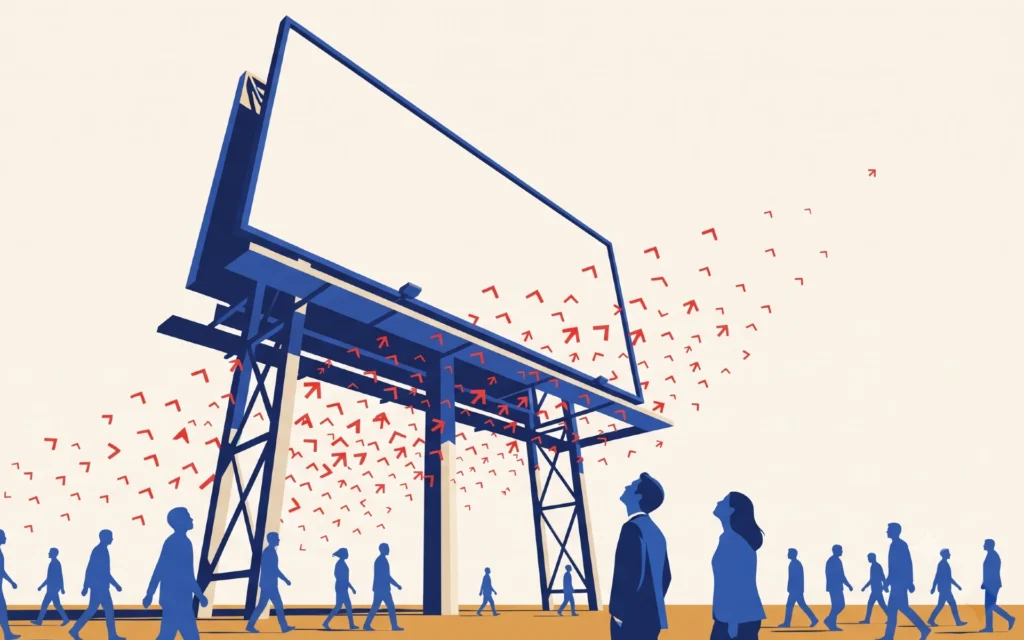
The "Can You See Me?" initiative is built on a deceptively simple premise: utilizing the ubiquity of digital out-of-home (DOOH) screens to disrupt the silence surrounding human trafficking. Unlike digital media, which requires a device, an active internet connection, or a specific search intent, billboards are ambient. They are impossible to "scroll past" or ignore in a physical space.
By placing the hotline number in high-visibility locations across 25 U.S. cities, the campaign targeted two distinct audiences. The first is the general public—bystanders, commuters, and travelers who may notice signs of exploitation in public spaces. The second, and more elusive, target is the victim themselves. For a survivor, a billboard offers a rare, private, and non-digital way to access help, requiring no smartphone tracking or browser history that a trafficker might monitor.
The campaign’s timing was calculated to coincide with the 2026 World Cup, an event that drew massive, transient crowds to U.S. cities. Historically, large-scale global sporting events are associated with a surge in human trafficking risk, as traffickers exploit the influx of visitors and the increased demand for illicit services. By running the campaign through July 31—cleverly bookending the July 30 World Day Against Trafficking in Persons—the organizers sought to maximize awareness during a period of peak population movement.
Chronology of the 2026 Initiative
The operational timeline of the "Can You See Me?" project reflects a highly coordinated effort to synchronize media placement with global cultural events:
- December 2025: Compass Connections officially assumes operations of the National Human Trafficking Hotline, setting the stage for new partnerships in the sector.
- June 2026: The "Can You See Me?" creative goes live across 25 U.S. markets, timed to the start of the 2026 World Cup. The tournament, featuring 104 matches, creates a unique environment of concentrated transient populations.
- Late June 2026: The campaign’s visibility is noted as FIFA and other entities grapple with the influx of visitors and the commercialization of the tournament.
- July 22, 2026: Clear Channel Outdoor and its partners convene at The Pearl in San Antonio. They announce that, since the campaign’s launch in June, over 600 signals have been directed to the National Human Trafficking Hotline from the affected markets.
- July 30, 2026: World Day Against Trafficking in Persons.
- July 31, 2026: The conclusion of the nationwide digital display flight.
Analyzing the Data: The 600-Signal Metric
The announcement of 600 signals provides a rare, tangible data point in an industry often criticized for its reliance on vanity metrics like "estimated impressions." However, media analysts are cautioned to view this figure through a nuanced lens.
The Composition of "Signals"
The term "signals" is deliberately broad. It encompasses a spectrum of interactions, including:
- Reports of potential trafficking situations.
- Reports of suspicious activity noticed by the public.
- Requests for linkage to social services or resources.
The Attribution Challenge
The data originates from Compass Connections, the hotline operator. While this provides a direct connection to the campaign, it is not an independent measurement. Furthermore, there is no technical mechanism that ties an individual hotline call directly to a specific billboard interaction. The figure represents signals originating from the 25 cities where the campaign was live, but it does not account for baseline call volume in those cities outside of the campaign window.
In the language of media measurement, this is "geographic co-occurrence" rather than proven incrementality. Without a comparative baseline—what the call volume would have been without the billboards—it is impossible to isolate the campaign’s direct contribution from other variables, such as the inherent rise in awareness during the World Cup or the standard annual coverage surrounding the World Day Against Trafficking in Persons.
Official Perspectives and Strategic Partnerships
The success of the campaign rests on the collaboration of diverse stakeholders, each contributing a specific component of the infrastructure necessary to combat such a complex crime.
Clear Channel Outdoor (CCO)
Scott Wells, CEO of CCO, emphasized the company’s long-standing commitment to the cause. Since 2012, CCO has utilized its inventory to drive awareness. For Wells, the expansion of this campaign is not merely a philanthropic gesture but a testament to the power of OOH to influence societal behavior. "Human trafficking requires increased public awareness to inspire meaningful action," Wells stated during the press event.
Compass Connections
Tiffany Taylor, Executive Director of Call Center Operations at Compass, highlighted the operational challenge of managing this volume. The integration of a new hotline operator with a nationwide media blitz is a significant logistical undertaking. Taylor noted that major events provide "valuable opportunities to amplify public awareness," and that the goal is to empower individuals to recognize the warning signs of exploitation.
A21 and Union Pacific Railroad
A21, an international organization dedicated to abolition, provided the subject-matter expertise. Their CEO, Nick Caine, emphasized that trafficking thrives on silence, and that the "Can You See Me?" creative is designed to break that silence. Meanwhile, Union Pacific Railroad’s involvement underscores the importance of transportation corridors. Liisa Lawson Stark, vice president of Public Affairs at Union Pacific, framed the company’s participation as a community responsibility, noting that their geographic footprint overlaps significantly with major transit routes often used by traffickers.
Governmental Support
Texas First Lady Cecilia Abbott’s presence at the San Antonio event signaled strong state-level backing. She lauded the campaign as a "heroic effort" that aligns with the broader goal of protecting the vulnerable, suggesting that such public-private partnerships are the future of effective law enforcement support.
The Broader Implications for Out-of-Home Media
The "Can You See Me?" campaign is more than an awareness project; it is a case study for the evolution of the OOH sector.
The Shift to Digital Flexibility
The OOH industry is undergoing a structural transformation. With digital formats expected to grow 14.5% in 2026, the ability to reallocate inventory in real-time has made public service more feasible. A digital board can be scheduled, updated, and targeted without the lead times or costs associated with traditional static print.
The Measurement Dilemma
For media professionals, this campaign highlights a familiar problem: how to prove value in a non-digital, ambient channel. While the 600-signal count is a "directional signal," it is not proof of efficacy in the traditional advertising sense. Yet, for public-safety campaigns, this is the most sophisticated measurement available. Because the National Human Trafficking Hotline must staff its call centers based on demand, they are essentially forced into a level of tracking that most commercial advertisers lack.
This creates an "accidental instrumentation" that makes anti-trafficking campaigns, cooling-center alerts, and helpline promotions the most informative test cases for the medium.
Future Outlook
As programmatic digital out-of-home (PDOOH) becomes the standard—with investment expected to surge 44% in the coming year—the ability to target specific demographics and locations with precision will only increase. The infrastructure that allows a luxury brand to target commuters in a specific zip code is the same infrastructure that allows a campaign like "Can You See Me?" to place messaging precisely where it is most needed.
Ultimately, the campaign succeeds by treating a public-safety issue with the same tactical rigor as a commercial product launch. While the exact methodology of attributing every signal to a specific billboard remains a challenge, the initiative has undoubtedly fostered a safer environment, turning the vast, silent network of U.S. highways and transit centers into a proactive, visible, and vocal opposition to human trafficking.
