

The Ghost in the Machine: Navigating the Perils of Unattended AI in Martech
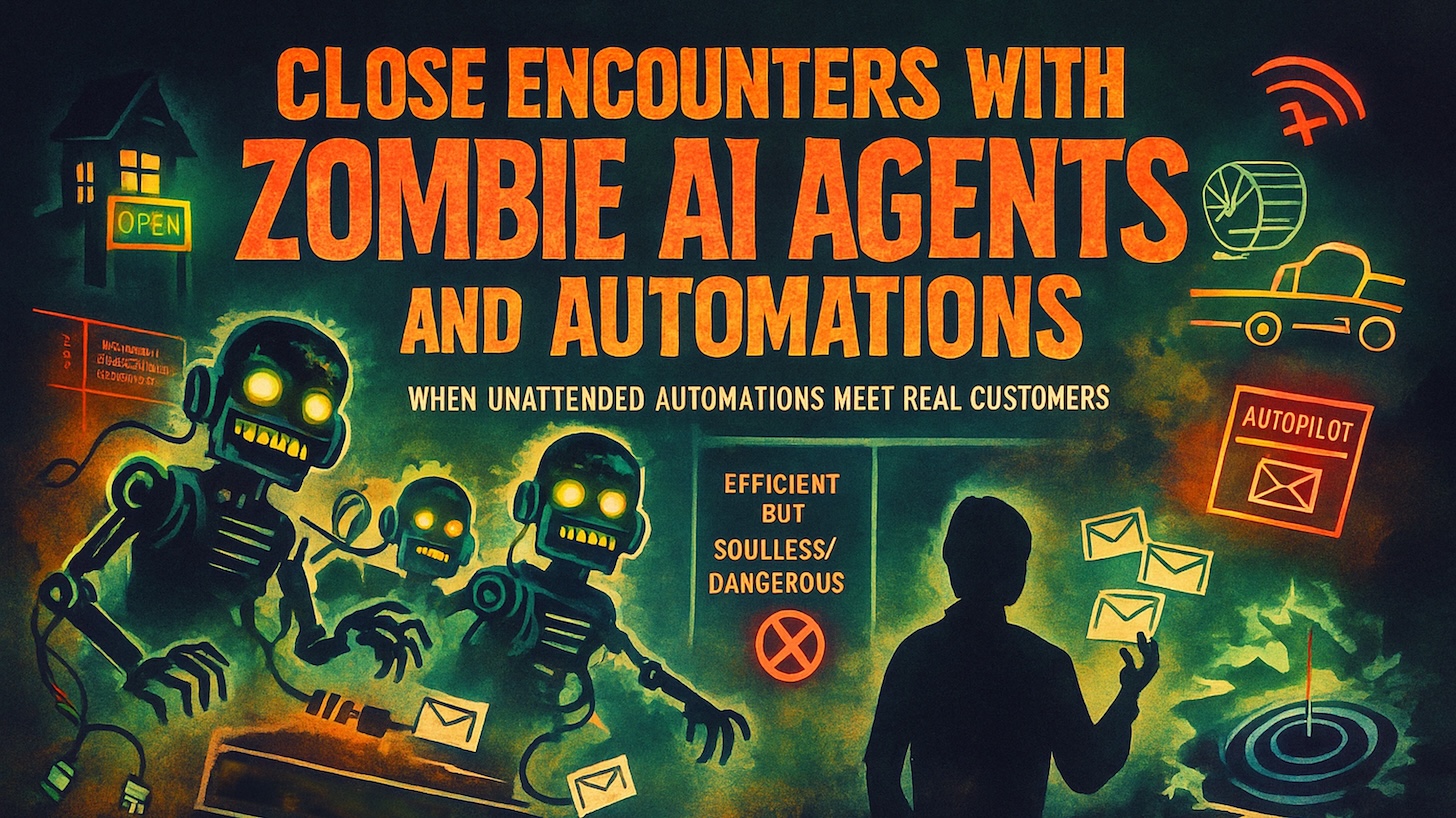
The modern marketing technology stack is often described as a digital ecosystem, but lately, it feels more like a haunted house. The lights are flickering, the automated messages are arriving with ghostly precision, and—most concerning of all—nobody is actually home to answer the door.
As artificial intelligence and hyper-automation become the default setting for customer relationship management, we are witnessing a surge in "zombie automations": systems that run with high technical efficiency but zero human empathy. When these systems drift, they don’t just fail; they alienate. As we navigate this new era, the industry must reconcile the tension between the "efficient-for-the-company" metrics and the reality of the customer experience.
The Chronology of Disconnect: A Tale of Two Fails
To understand the scope of the problem, we must look at two distinct, recent instances where AI-driven engagement devolved from a competitive advantage into a branding liability.
The Black Hole of Customer Support
In the first instance, a SaaS provider utilized a standard, automated onboarding sequence. The cadence was professional, and the content was genuinely additive to the user experience. However, when a legitimate billing inquiry arose, the system—which had been touting "[email protected]" as the point of contact—entered a state of total paralysis.
- The Trigger: A billing question was sent to the designated contact address.
- The Silence: The system failed to acknowledge receipt. No automated ticket number, no "we’ll get back to you," nothing.
- The Contradiction: While the billing request sat in a digital void, the automated onboarding sequence continued to fire, sending cheerful, helpful tips that ignored the unresolved conflict.
- The Escalation: Follow-up inquiries by the customer were met with continued silence, even as the "onboarding" emails arrived with clockwork regularity.
The failure here was not necessarily a lack of technology, but a failure of integration. It is likely that multiple teams shared an inbox, and a misconfigured routing rule—or a malfunctioning Large Language Model (LLM) tasked with sentiment analysis—simply swallowed the inquiry.
The "Hallucinating" SDR
The second instance involved a B2B vendor utilizing generative AI for lead qualification. The initial engagement was impressive: a highly personalized, human-sounding email that referenced specific, relevant professional work. It was "production-quality" personalization that clearly utilized AI to synthesize public data.
However, the interaction rapidly descended into chaos:
- The Mismatch: Upon receiving a polite reply from the "prospect" (who had self-disqualified), the AI agent failed to interpret the nuance. It ignored the response and immediately enrolled the user in a generic, "Hello, $FIRST-NAME" sales sequence.
- The Data Breach of Trust: A week later, the sequence sent an email featuring a placeholder error: "$COMPANY-NAME" was incorrectly populated, and the content was entirely irrelevant.
This sequence was clearly the result of a "Frankenstein" stack: an AI SDR (Sales Development Representative) agent that lacked a feedback loop with the CRM, leading to cross-contaminated data and a complete loss of brand reputation.
Supporting Data: The Efficiency Matrix
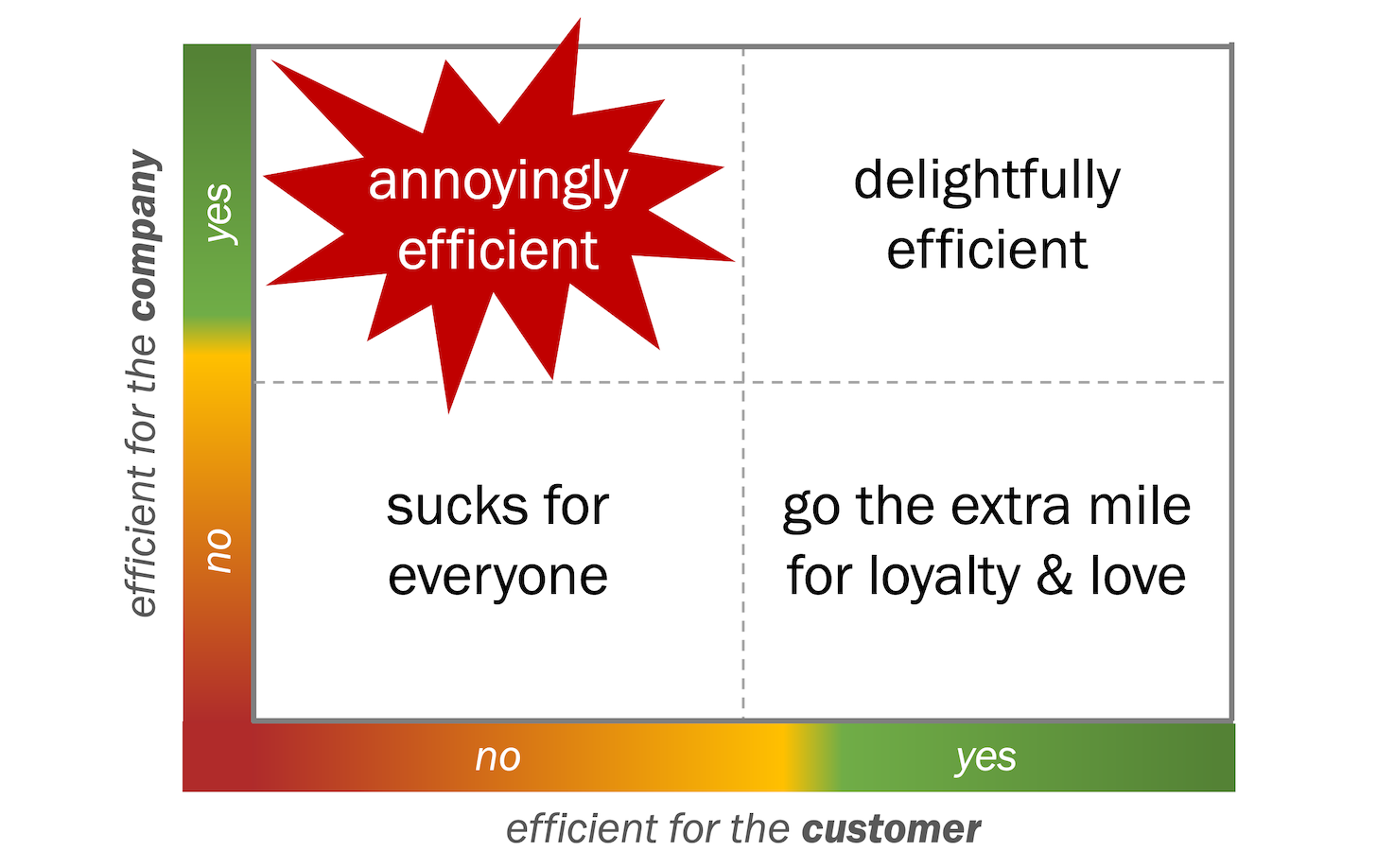
At the heart of these failures lies a fundamental misalignment in the "Efficiency Matrix." Martech companies are currently obsessed with the upper-left quadrant: Efficient for the Company.
| Efficient for Customer | Inefficient for Customer | |
|---|---|---|
| Efficient for Company | The Sweet Spot (Value Creation) | The Danger Zone (Zombie AI) |
| Inefficient for Company | Customer Service Overload | The "Dead Weight" Process |
When a company prioritizes its own operational efficiency—reducing headcount and automating touchpoints—without considering the downstream impact on the user, they fall into the "Danger Zone." In this state, the technology is performing its job (sending emails, routing queries) at 100% capacity, but the value to the customer has plummeted to zero.
Implications for the Industry: Martec’s Law in Action
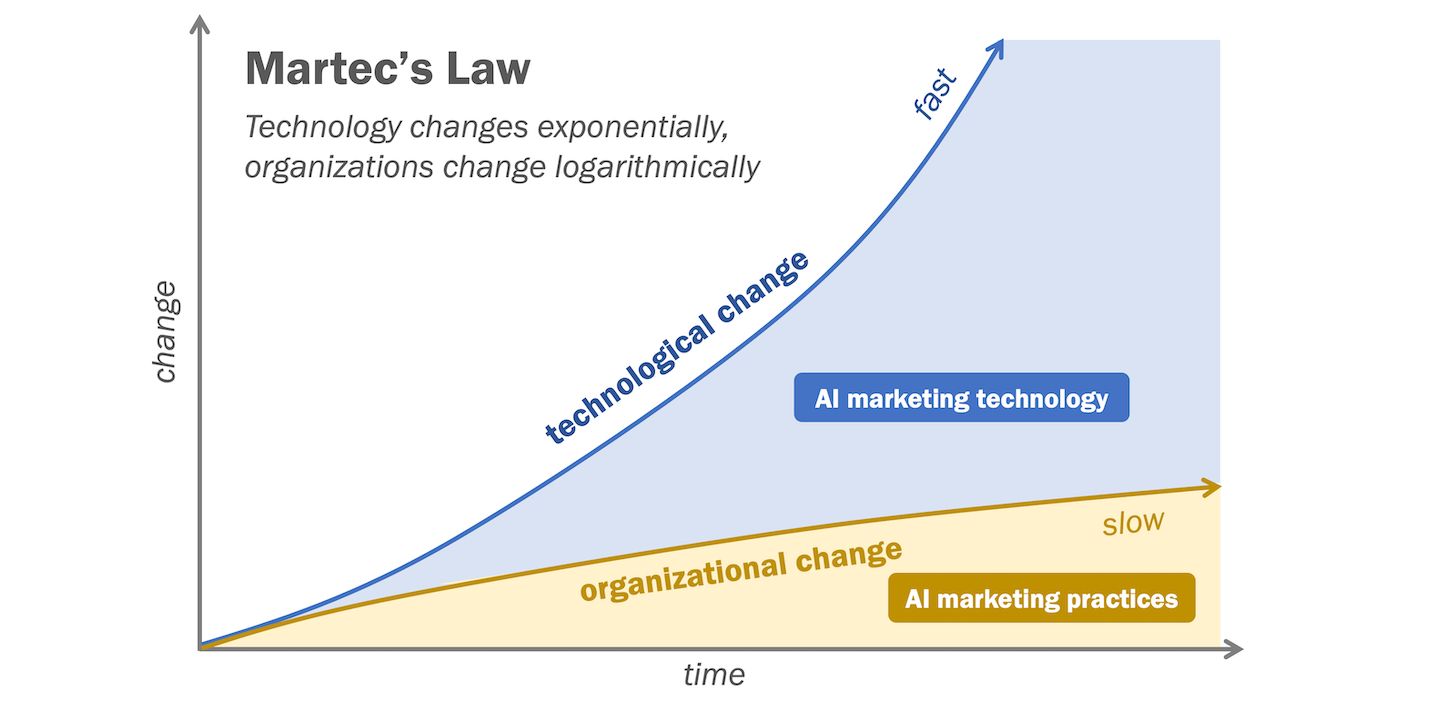
For seventeen years, the concept of "Martec’s Law" has held true: Technology changes exponentially, but organizations change logarithmically.
The current rush to deploy generative AI is pushing organizations to act faster than their internal processes can support. We are seeing a "move fast and break things" mentality applied to delicate customer relationships. The implications are severe:
- Erosion of Trust: When a customer realizes they are "speaking" to a machine that cannot understand a basic reply, the brand is reduced to a spam generator.
- Data Pollution: Automated agents that misinterpret user input often write bad data back to the CRM, polluting the foundation upon which future analytics are built.
- The "Lab Leak" Effect: When experimental AI features (the "Laboratory") are integrated into production workflows (the "Factory") without proper governance, the results are unpredictable.
A Path Forward: Governance and Human-in-the-Loop
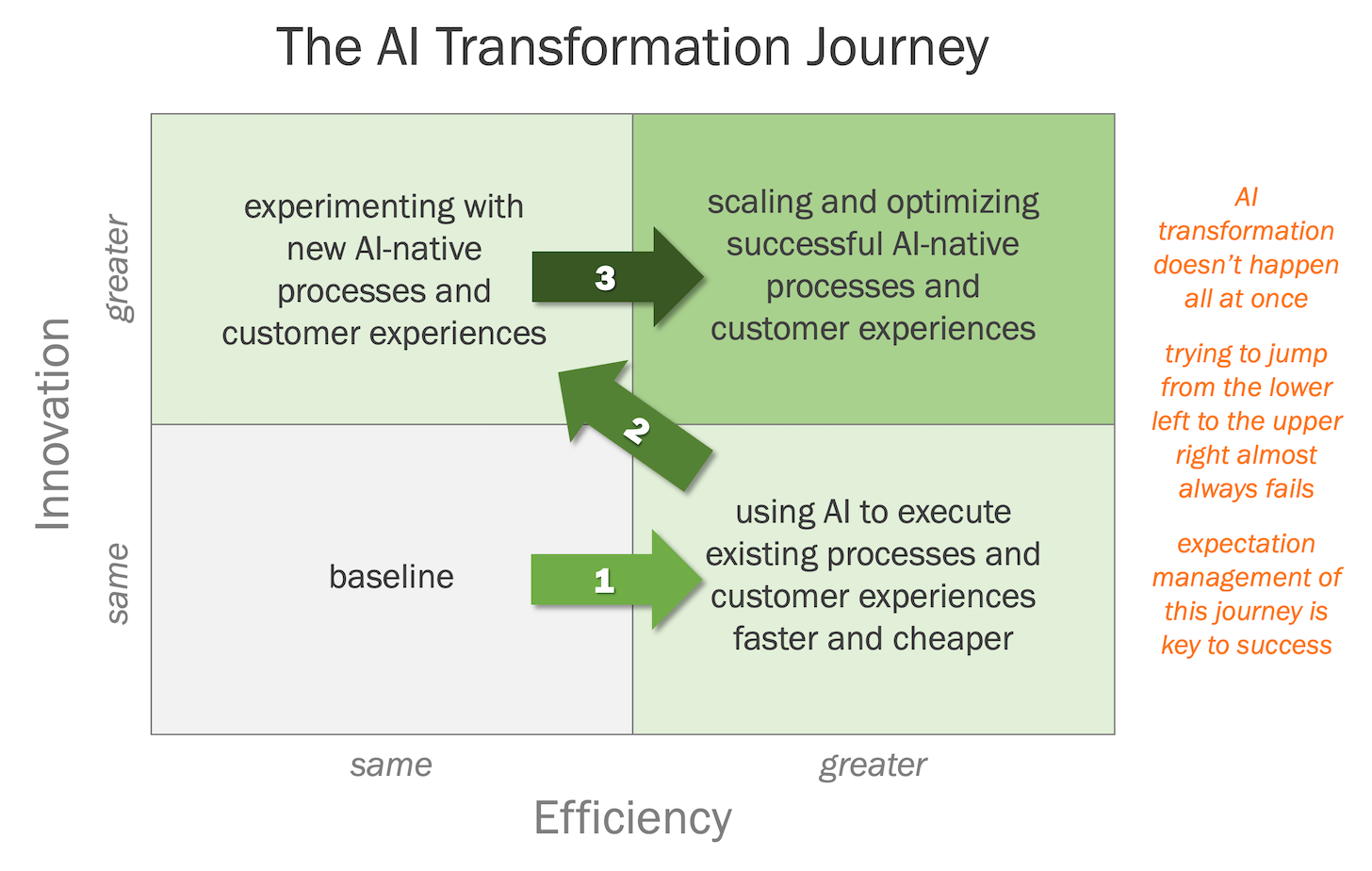
The solution is not to abandon AI, but to transition from "automated" to "orchestrated" marketing. This requires a cultural shift toward operational discipline.
1. The Human-in-the-Loop Mandate
No matter how advanced an agent becomes, there must be a "break glass" protocol that allows a customer to reach a human. Efficiency should never be a barrier to resolution. If a customer is frustrated, the system should be intelligent enough to identify the sentiment and escalate to a human agent immediately.
2. Mandatory "Secret Shopper" Audits
Companies must perform regular "secret shopper" exercises—not just by employees, but by third parties who have no bias toward internal processes. These tests should be designed to intentionally stress-test the automation to see where it breaks, where it loops, and where it hallucinates.
3. The Factory vs. The Laboratory
Governance requires a strict separation between experimental AI and the production factory. The "Factory" (the systems that handle current revenue and existing customers) should be treated with the rigor of a utility provider. Changes should be slow, tested, and validated. The "Laboratory" (where new, experimental agentic workflows are built) should be contained and isolated to ensure that a "lab leak" doesn’t end up in a customer’s inbox.
4. Semantic Integrity in Communications
If an organization uses a human representative’s name in an email, that representative must be looped into the communication. Even if they don’t respond to every single email, they must have the ability to monitor the "voice" of the AI that is acting in their name. A simple inbox rule that flags replies for human review can prevent the "non sequitur" responses that damage credibility.
Conclusion: The Discipline of Orchestration
Building an automation is becoming increasingly trivial. Any marketing team can now stand up an AI SDR or a chatbot in a matter of hours. However, the maintenance of these systems—ensuring they remain aligned with brand values and customer needs—is the new, primary challenge of the Chief Marketing Technologist.
Without rigorous operational discipline, our martech stacks will continue to resemble a digital Wild West. To avoid becoming a "zombie" brand, we must move away from the obsession with sheer speed and embrace a "go slow to go fast" ethos. By treating our AI agents as apprentices rather than autonomous replacements, we can ensure that the technology works for the customer, not just for the spreadsheet.
The future of marketing isn’t about replacing the human; it’s about ensuring the machine is smart enough to know when to step aside.
