

The Digital Evolution: A Comprehensive History of Social Media
From the early days of text-only bulletin boards to the sophisticated, AI-driven algorithmic feeds of the modern era, social media has fundamentally rewired the human experience. What began as a niche academic and technical curiosity has transformed into the primary nervous system of global communication, commerce, and culture. With over five billion active users today—representing more than 60% of the world’s population—understanding the history of social media is essential to grasping how we arrived at our current digital landscape.
Defining the Social Fabric
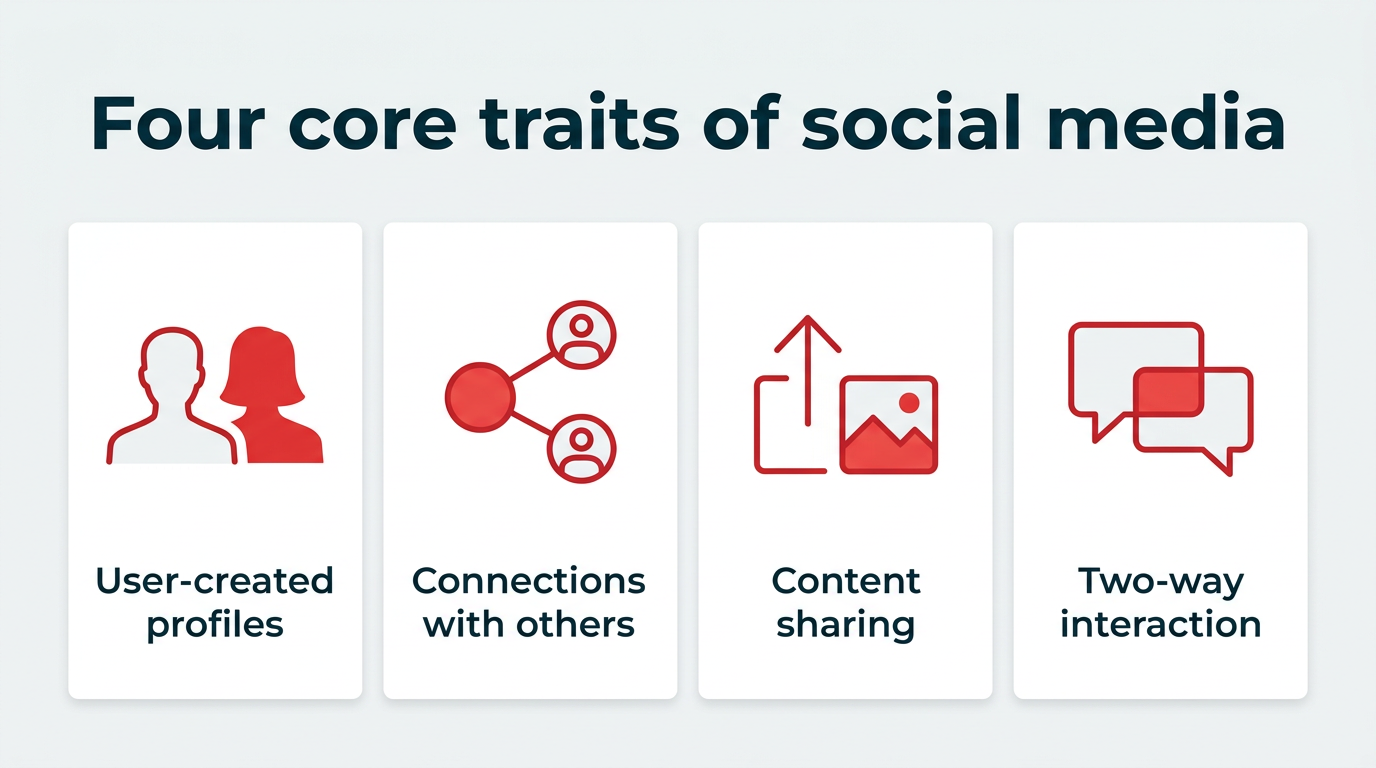
Social media is defined by a set of core traits: the ability to create a persistent profile, the capacity to build a network of connections, and the opportunity to share user-generated content in real-time. Unlike static websites or private chat tools, social platforms are built on the "social graph"—the digital mapping of relationships that allows content to flow dynamically between individuals and groups.

This distinction is crucial when identifying the "first" platform. While historians often debate the exact starting point, the consensus points to a steady evolution. The transition from the 1970s bulletin board to the 2020s AI-driven feed is not a story of a single invention, but a relentless pursuit of connectivity.
A Chronology of Connection
The trajectory of social media can be categorized into distinct eras, each defined by shifts in technology, user behavior, and monetization.

The Proto-Social Era (1970s–1990s)
Before the modern internet, early visionaries saw the potential for networked communication.
- 1973: Community Memory. One of the first public computerized bulletin board systems, allowing users to leave public messages on shared terminals.
- 1979–1980: Usenet. Often cited as the first true open social application, this distributed discussion system allowed for massive, organized topic-based conversations.
- 1988: Internet Relay Chat (IRC). Popularized real-time, group-based text communication, creating the template for modern chat rooms.
- 1994: GeoCities. A pivotal moment that allowed everyday users to build and host their own personal web pages, fostering the concept of "digital real estate."
The Birth of the Profile (1997–2004)
The late 90s and early 2000s introduced the "profile-based" model that we recognize today.
- 1997: SixDegrees.com. Widely considered the first true social network, it allowed users to create profiles and list their friends.
- 2002: Friendster. A mainstream breakthrough that introduced the concept of the "social circle," though it eventually struggled with server capacity as user growth exploded.
- 2003: Myspace and LinkedIn. Myspace became the cultural epicenter for music and youth culture, while LinkedIn pioneered the professional networking space, proving that social media could be a viable business tool.
- 2004: The Facebook. Mark Zuckerberg’s launch of "The Facebook" at Harvard marked the beginning of a shift toward identity-based networking, eventually scaling to become the largest social network in human history.
The Web 2.0 and Mobile Revolution (2005–2016)
This era brought the democratization of media, where content creation moved from the hands of the few to the masses.
- The Rise of Real-Time: Twitter (2006) introduced microblogging, while YouTube (2005) democratized video distribution. The introduction of the #hashtag on Twitter in 2007 turned the platform into a global pulse for news, politics, and social movements.
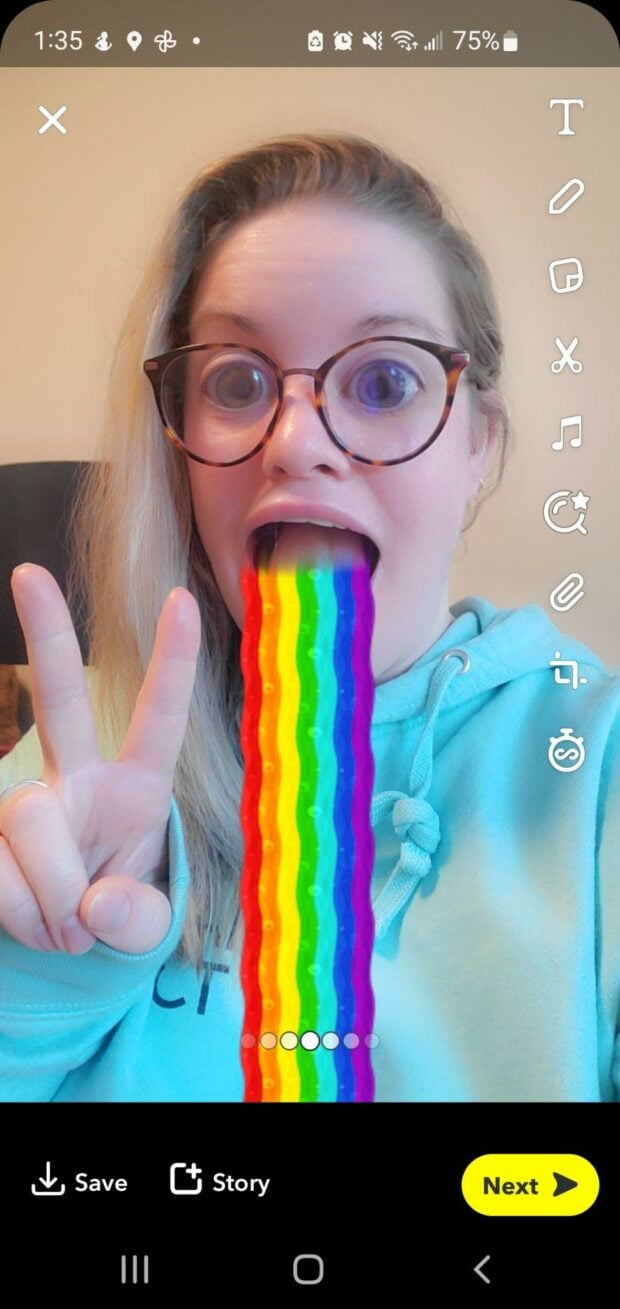
- The Mobile Shift: With the advent of the smartphone, apps like Instagram (2010) and Snapchat (2011) prioritized visual storytelling. The "Stories" format, later adopted by almost every platform, introduced a sense of urgency and ephemerality to digital social interactions.
The Algorithm and Creator Economy (2017–2022)
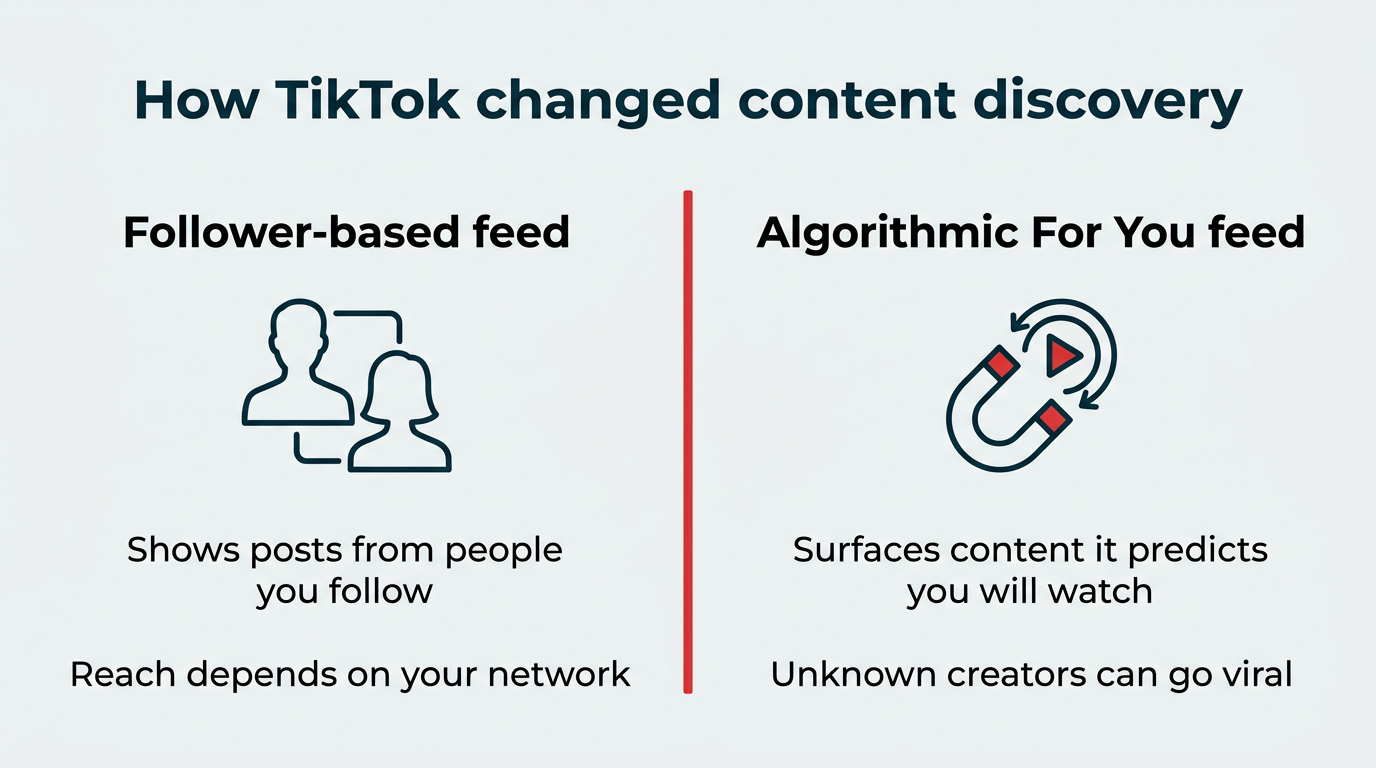
The arrival of TikTok in global markets fundamentally changed how content is discovered. Moving away from a purely follower-based "social graph," TikTok’s "For You" feed utilizes sophisticated AI to deliver content based on predictive interest. This shift forced legacy platforms like Instagram and YouTube to pivot toward algorithmic video discovery, effectively turning social media into an "attention economy."
Supporting Data and Scaling
By 2026, the scale of these platforms is staggering.
- Global Reach: Over 5 billion people are active users.
- Platform Fragmentation: The acquisition of Twitter by Elon Musk in 2022 and the subsequent rebranding to X signaled a shift in the platform’s role. This, combined with the launch of Meta’s Threads and the growth of decentralized options like Bluesky, has created a more fragmented, competitive environment than the monolithic era of the mid-2010s.
- Economic Impact: The rise of "Social Commerce"—where Facebook, Instagram, and TikTok Shops allow users to purchase goods without leaving the app—has turned social platforms into critical retail infrastructure.
Implications for Modern Society
The evolution of social media has brought both profound benefits and systemic challenges.
Privacy and Regulation
The 2018 Cambridge Analytica scandal was a watershed moment, forcing a global reckoning regarding data privacy. Governments worldwide are now actively debating the regulation of social media, focusing on antitrust, algorithmic transparency, and the protection of minor users. The scrutiny surrounding TikTok’s data practices in the U.S. and Europe highlights the intersection of national security and digital consumption.
The Creator Economy
Social media has birthed a new class of professional: the content creator. With platforms offering monetization tools, subscriptions (like Patreon), and affiliate marketing integration, individuals can now command audiences that rival traditional media conglomerates. This shift has forced businesses to abandon "broadcast" advertising in favor of community-led, influencer-driven engagement strategies.

The Shift in Human Interaction
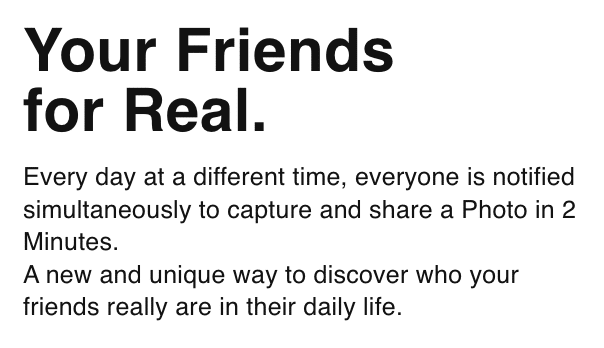
Perhaps the most significant implication is the change in how we form communities. While Gen Z and younger generations show a trend toward "digital fatigue"—moving away from public, performative feeds toward smaller, private group chats and messaging apps—the hunger for connection remains constant. We have moved from a one-to-many broadcast model to a many-to-many, always-on conversation.
Future Outlook: The Era of AI and Decentralization
As we look toward the remainder of the decade, three trends are clear:
- AI-Driven Content: Generative AI will allow for hyper-personalized content creation, potentially leading to a "synthetic" social media experience where feeds are dynamically generated for the individual.
- Decentralization: Users are increasingly wary of centralized, billionaire-owned platforms. This creates a market opportunity for decentralized protocols that offer users more control over their data and social graphs.
- Strategic Agility: For businesses, the "platform-agnostic" approach is now a necessity. Given how quickly platforms rise and fall, companies must prioritize a flexible strategy that allows them to pivot content formats—from long-form video to ephemeral text—to meet their audience wherever they currently congregate.
The history of social media is, ultimately, the history of our modern world. It is an ongoing experiment in how we talk, how we sell, and how we define ourselves in an increasingly interconnected, digital-first society. The tools may change, but the fundamental human desire to be heard and to belong remains the engine driving this continuous evolution.
