
Fine Art America: The Definitive 2026 Review for Modern Creators
Fine Art America (FAA) has long held a unique position in the crowded print-on-demand (POD) landscape. While platforms like Redbubble and Society6 prioritize casual, impulse-driven merchandise, Fine Art America is built for the "serious" creative: the fine art photographer, the gallery-minded illustrator, and the professional artist. Its core value proposition—the ability for creators to set their own markups on every product—remains a standout feature that separates it from the "flat royalty" model used by its competitors.
After spending dozens of hours testing the platform’s interface, fulfillment cycle, and artist tools, and cross-referencing these findings with community sentiment and market data, it is clear that while FAA remains a titan in the industry, it is a platform of trade-offs. This review provides an exhaustive breakdown of whether Fine Art America is the right engine for your creative business in 2026.
The Core Facts: Understanding the Fine Art America Model
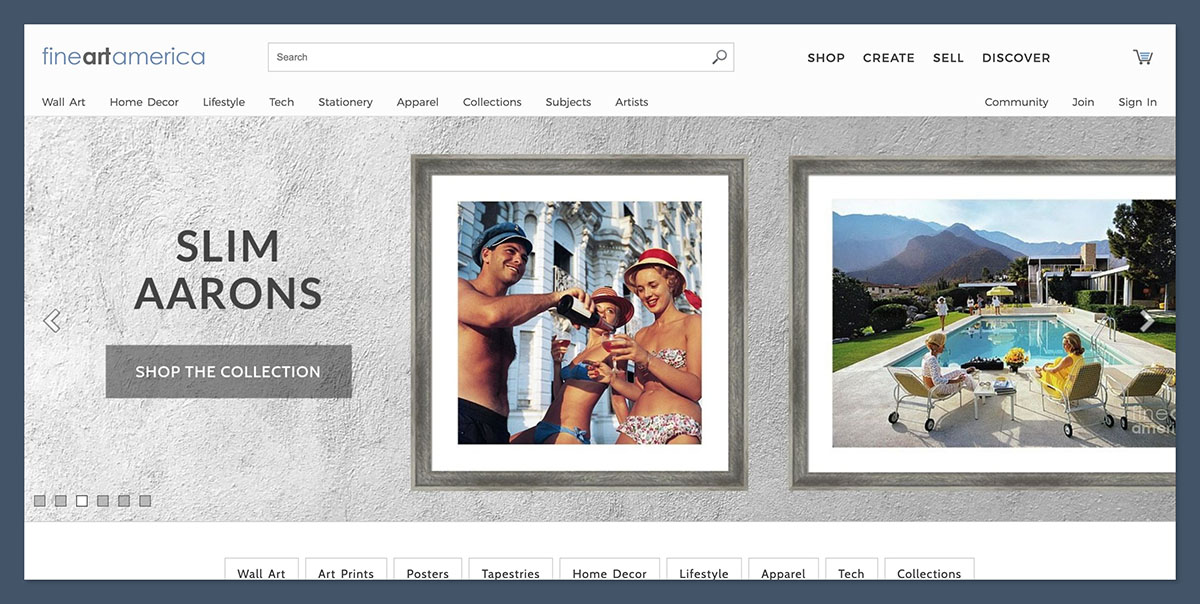
At its simplest, Fine Art America is a print-on-demand marketplace and fulfillment powerhouse. Unlike a standard storefront builder (like Shopify), which provides the software for you to sell, FAA provides the entire ecosystem: the marketplace traffic, the printing facilities, the logistics, and the customer service.
How It Works
The platform operates on a transparent, albeit rigid, business model. When you upload an image, you choose from a wide range of products—from archival-quality canvas prints and metal wall art to lifestyle goods like throw pillows and apparel. You set a "markup" on each item. Fine Art America charges a fixed base price for the production, and every cent of the markup you add is yours to keep.
Key Features
- Total Pricing Control: You decide the final retail price, allowing for high-end margins on luxury prints.
- In-House Manufacturing: FAA owns its production facilities, controlling the quality from file ingestion to shipping.
- Hybrid Marketplace: It functions as both a public-facing gallery where buyers search for art and a backend fulfillment engine for your own website.
- Originals Support: Unlike most POD sites, FAA allows artists to list one-of-a-kind physical originals for sale alongside prints.
Chronology: The Evolution of a Giant
Fine Art America’s journey mirrors the maturation of the creator economy. Founded to bridge the gap between digital files and high-end wall decor, it quickly became the go-to for professional photographers.
- Early Days: The platform built its reputation on strict quality control and a catalog focused on professional print types (giclée, canvas, metal).
- The Mid-2010s: The site expanded into "lifestyle" merchandise (totes, mugs, phone cases) to compete with the rising popularity of POD sites like Society6.
- 2020-2024: The platform pivoted toward integration, offering the "embedded shopping cart" feature, allowing artists to keep their brand presence while using FAA for the heavy lifting of production.
- 2025-2026: Recent data indicates a shift. While the platform remains a destination for millions of buyers, it faces increased pressure from specialized, niche-focused print providers and the rise of AI-generated art, which has flooded the marketplace, complicating discoverability for traditional artists.
Supporting Data: Market Performance and Trends
To understand the platform’s current standing, we must look at the cold, hard data. As of early 2026, Fine Art America remains a multi-million dollar operation, but it is navigating a period of market contraction.
Performance Snapshot (March 2026)
- Estimated Monthly Revenue: $10.5M
- Average Session Duration: >9 minutes (suggests high intent to purchase)
- Conversion Rate: 2.5% – 3%
- US Site Rank: #5,884
While the platform is still generating significant revenue, annual growth has slowed, with a projected 5-10% decline in total revenue for 2026. This data suggests that while the platform’s infrastructure is robust, the "marketplace" aspect—relying on organic discovery—is becoming increasingly difficult due to the sheer volume of content uploaded by the site’s 700,000+ registered artists.
The Artist Experience: Pros, Cons, and Navigating the Dashboard
Frictionless Onboarding
Signing up for Fine Art America is a breeze. There is no credit card required for the "Standard" tier. Once registered, you are given a yourname.fineartamerica.com URL. The dashboard, while aesthetically dated, is highly functional. It avoids the "AI-wizard" fluff of modern website builders, focusing instead on the metadata-heavy process required to make art searchable.
The "Premium" Decision
The most critical choice for any artist is whether to stay on the free tier or upgrade to the $30/year Premium account.
- Standard (Free): Limited to 25 images. Best for validating your niche.
- Premium ($30/year): Unlimited uploads, white-label website options, email marketing integration, and access to the "Licensing Program" for retail placement.
Expert Verdict: Do not pay for Premium until your first 25 images have generated sales. The platform’s value is not in the tools it gives you, but in whether your specific art style finds a buyer in the marketplace.
Fulfillment and Print Quality: Why It Matters
Fine Art America differentiates itself through its manufacturing stack. Unlike competitors that act as a middleman for third-party printers, FAA operates 14-16 manufacturing facilities globally.
Why This Matters
- Consistency: By owning the printers and the training, FAA minimizes the "lottery" effect where one order looks perfect and the next looks washed out.
- Photography Focus: Photographers, known for their obsession with color accuracy and paper stock, consistently rate FAA higher than generalist POD sites.
- The "High-End" Trade-off: Because the quality is higher, the base manufacturing cost is also higher. This means your margins are slightly compressed on cheaper products, but you have more room to charge a premium for "Museum Grade" pieces.
Official Responses and Known Issues
No platform is perfect. A recurring theme in artist forums (Reddit, Facebook Creator Groups) involves frustrations with the platform’s "black box" nature.
- Communication: Many artists report that customer service is geared toward the buyer, not the creator. If a technical issue occurs with an account or a payout, the support ticket system can feel unresponsive.
- Account Stability: There have been reports of artists having their portfolios hidden or restricted without clear communication, often related to copyright disputes or violations of the site’s strict content policies.
- Platform Response: Fine Art America maintains that its policies are in place to protect the integrity of the marketplace and intellectual property. They prioritize buyer satisfaction, which occasionally leads to artist-side frustrations regarding returns and order cancellations.
Implications: Is This Your Business Model?
Choosing to build your business on Fine Art America carries specific long-term implications.
1. You Do Not Own the Customer
This is the biggest drawback. When someone buys your art, they are an "FAA customer." You do not get their email address (unless they sign up for your newsletter via the platform’s tools), and you cannot easily remarket to them. You are renting access to their audience.
2. The Marketing Burden
The myth of the "marketplace" is that your art will be found naturally. In 2026, this is rarely true. Success on FAA requires you to treat the site as a fulfillment engine. You must drive your own traffic from social media, your personal website, and email lists.
3. The "Portfolio" Strategy
Because the platform is so crowded, the artists who succeed are those with "deep" portfolios—thousands of images across consistent themes. This allows them to capture long-tail search traffic. If you are an artist who produces one piece every three months, FAA will not be your primary income stream.
Final Verdict: Who Should Use Fine Art America?
Fine Art America is the ideal platform for serious photographers and fine artists who want to outsource the headache of printing, framing, and shipping without sacrificing quality.
You should choose FAA if:
- Your primary goal is high-quality physical reproductions of your work.
- You want a "set it and forget it" fulfillment partner for your own website.
- You are an artist who values control over pricing markups.
You should look elsewhere if:
- You want a fully branded, custom-coded storefront experience (Use Shopify).
- You are selling trendy, low-cost apparel or "meme" art (Use Redbubble).
- You want direct access to your customer data and a community-led support system.
Summary Checklist for 2026
- Start Free: Limit your initial experiment to 25 pieces.
- Focus on SEO: Spend more time on your titles and descriptions than your bio.
- Drive Traffic: Use the FAA store as the checkout counter for your own marketing.
- Monitor Revenue: If you hit consistent sales, upgrade to Premium to unlock the white-label site, effectively turning FAA into your own brand’s backend.
Fine Art America is no longer the "only" game in town, but for the artist who values quality over quantity, it remains a pillar of the print-on-demand world. Whether it survives the coming years of market consolidation depends on its ability to support its artists as effectively as it serves its customers. For now, it remains a low-risk, high-reward testing ground for any serious creator.
