
The Architecture of Persuasion: Mastering the Art of the Value Proposition
In an increasingly crowded digital marketplace, the difference between a thriving business and one lost in the noise often boils down to a single, concise statement. This is the value proposition—a strategic anchor that tells your target customer exactly who you are, what you offer, and why you are the superior choice among a sea of alternatives.
Far from being a mere marketing tagline or a corporate mission statement, a well-crafted value proposition serves as the foundational logic of your business model. It is the bridge between a customer’s pain point and your unique solution.
Defining the Value Proposition: The Core Facts
At its simplest, a value proposition is a promise of value to be delivered. It is the primary reason a prospect should buy from you. To be effective, it must articulate three fundamental pillars:
![Value Proposition: What It Is and How to Write One [+ Examples]](https://ceblog.s3.amazonaws.com/wp-content/uploads/2026/07/15113335/The-Value-Proposition-Canvas.png)
- The Deliverable: What specific product or service are you offering?
- The Audience: Who is this solution designed to help?
- The Differentiator: Why is your solution better than the competitors the customer is currently evaluating?
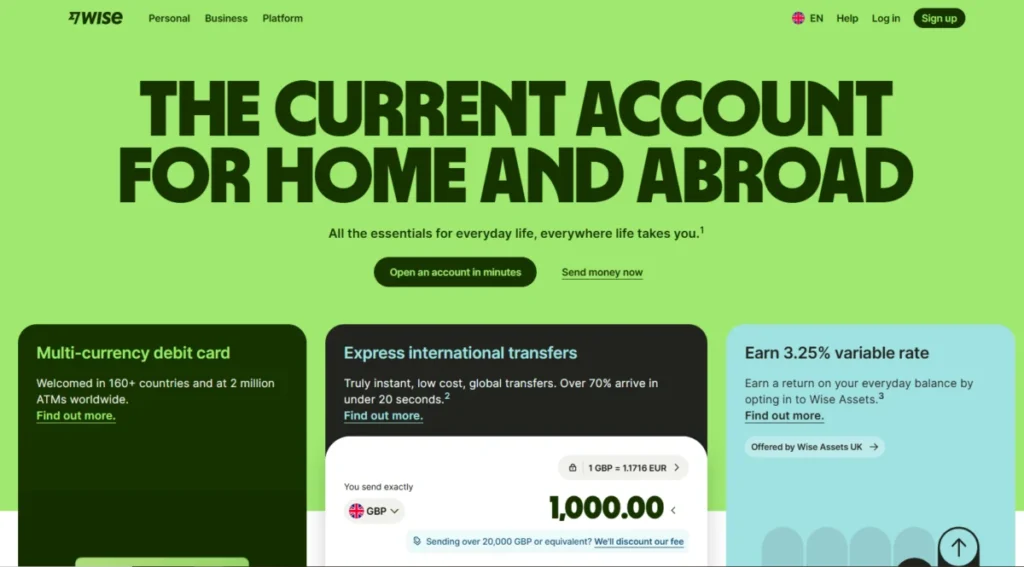
Consider the financial technology company Wise. Their value proposition is not just about moving money; it is about efficiency and cost-effectiveness. By positioning their service as a bank account for international citizens that offers near-instant transfers at a fraction of the cost of traditional banking, they address a specific, painful problem—high fees and slow transaction times—for a specific audience.
The Taxonomy of Branding: Distinguishing Your Assets
Confusion often arises between a value proposition and other branding elements. To master your messaging, you must distinguish between them:
1. Value Proposition vs. Unique Selling Proposition (USP)
While they are often used interchangeably, a USP focuses narrowly on a single competitive advantage—the "one thing" that makes you different. A value proposition is broader; it encompasses the entire benefit package. When you combine the two, you create a Unique Value Proposition (UVP), which highlights both the specific benefits and the distinct competitive edge.
![Value Proposition: What It Is and How to Write One [+ Examples]](https://ceblog.s3.amazonaws.com/wp-content/uploads/2026/07/15113247/Value-Proposition-Wise.png)
2. Value Proposition vs. Mission Statement
A mission statement is internal and aspirational. It answers the question, "Why does this company exist?" A value proposition is external and functional. It answers, "What can this company do for me right now?" Successful companies ensure these two are aligned, using their mission to inform the promises made in their value proposition.
3. Taglines and Slogans
These are memory devices. Nike’s "Just Do It" is a timeless tagline that captures the spirit of empowerment, but it does not detail the product features. A slogan, by contrast, is often campaign-specific. While taglines and slogans help build brand equity, they rely on the underlying value proposition to drive actual conversions.
The Mechanics of Creation: A Six-Step Framework
Crafting a high-performing value proposition is an iterative process that requires deep research and analytical rigor.
![Value Proposition: What It Is and How to Write One [+ Examples]](https://ceblog.s3.amazonaws.com/wp-content/uploads/2026/07/15113317/Value-Proposition-Shoes.png)
Step 1: Define Your Target and Competitors
Generalization is the enemy of conversion. You must define your customer by role, company size, and specific circumstances. Are you selling to a harried freelance writer managing manual spreadsheets, or a high-level Enterprise RevOps manager obsessed with forecasting accuracy? Once the target is clear, audit the competitors they are currently considering—including the "status quo" of doing nothing.
Step 2: Mapping Pains, Gains, and Jobs
Utilize the Value Proposition Canvas. This tool forces you to map the customer’s "jobs-to-be-done" (what they are trying to achieve) against your product’s "pain relievers" and "gain creators." Listen to your customers—their verbatim complaints are the raw material for your most compelling copy.
Step 3: The "So What?" Test
Take every feature of your product and subject it to the "so what?" test.
![Value Proposition: What It Is and How to Write One [+ Examples]](https://ceblog.s3.amazonaws.com/wp-content/uploads/2026/07/15113441/Value-Proposition-QuickFile.png)
- Feature: "Our software syncs with your bank feed."
- So what? "You don’t have to manually enter data."
- So what? "You save four hours of admin time, eliminate human error, and gain peace of mind for tax season."
The final outcome is the value you sell; the feature is merely the vehicle.
Step 4: Finding the Differentiation Angle
If your features are similar to your competitors, pivot to other levers:
- Speed/Convenience: Can you do it faster?
- Specialization: Do you focus on a niche they ignore?
- Risk Mitigation: Do you offer a guarantee they can’t match?
- Process: Is your onboarding or user experience significantly more intuitive?
Step 5: Drafting and Iteration
Use proven formulas to generate multiple drafts. Whether you use the [Company Name] helps [Customer] achieve [Benefit] by [Feature] structure or a more conversational approach, aim for 1-3 sentences. Never settle for the first draft; the best value propositions are the result of intense editing.
Step 6: Empirical Validation
A value proposition is only as good as its performance in the wild. Use A/B testing on your landing pages, conduct customer interviews, and analyze session recordings. If the messaging doesn’t resonate, the "why" is missing.
![Value Proposition: What It Is and How to Write One [+ Examples]](https://ceblog.s3.amazonaws.com/wp-content/uploads/2026/07/15113512/Value-Proposition-Gusto.png)
Real-World Case Studies
The power of these principles is best illustrated by industry leaders who have successfully distilled their value into a few words:
- Gusto: By stating "Payroll, HR, Benefits. Simplified," they immediately address the complexity of small business management. They aren’t just selling software; they are selling the reduction of administrative stress.
- DuckDuckGo: "Switch to DuckDuckGo. It’s private and free!" This is a masterclass in clarity. It identifies the target (users concerned with privacy) and the primary gain (security without the trade-off of cost).
- Zapier: "Your tools. Your rules. Any AI." By emphasizing agency and customization, Zapier appeals to the professional who feels constrained by rigid, disconnected software ecosystems.
Strategic Implications: Website Deployment
A value proposition is rarely a single static sentence on a homepage. It is a narrative that unfolds across your digital real estate.
- Above the Fold: Your primary headline should communicate the "who" and the "what" immediately.
- Below the Fold: Use supporting sub-headlines and feature blocks to explain the "how" and "why."
- The Bottom Line: Ensure your call-to-action (CTA) reinforces the value promised at the top of the page.
Conclusion: Constant Evolution
A value proposition is not a "set it and forget it" asset. As markets shift, competitors innovate, and customer expectations evolve, your messaging must adapt. A value proposition that worked five years ago may feel stale today.
![Value Proposition: What It Is and How to Write One [+ Examples]](https://ceblog.s3.amazonaws.com/wp-content/uploads/2026/07/15113533/Value-Proposition-Personal-Information.png)
By treating your value proposition as a living document—constantly refined through data, customer feedback, and rigorous testing—you ensure that your brand remains not just visible, but indispensable. In the final analysis, your value proposition is the promise you make to your customers. Your ability to keep that promise, and communicate it with unwavering clarity, is the ultimate engine of your long-term growth.
For those looking to validate their messaging, tools like heatmaps and session recording software provide the behavioral data necessary to see if your value proposition is actually landing with your audience. Remember: if they don’t understand it, they won’t buy it.
