

The New Frontier of Growth: Mastering Social Media Advertising in 2026
In the modern digital economy, the divide between brand visibility and actual market penetration is defined by one mechanism: social media advertising. As global ad spend in the sector hurtles toward an estimated $338.75 billion by 2026, the landscape has transitioned from a "nice-to-have" experiment to the backbone of modern customer acquisition.
Social media advertising is no longer just about buying digital space; it is about precision-engineered storytelling. By paying to bypass the unpredictable whims of organic algorithms, brands can place their value proposition directly in front of highly specific, high-intent audiences. Yet, as the digital ecosystem grows more crowded, the barrier to success has shifted from budget size to strategic sophistication.

The Evolution of the Digital Ad Landscape
For years, Meta (formerly Facebook) held a near-monopoly on the social advertising consciousness. However, the 2026 landscape is defined by fragmentation and diversity. Brands are now forced to navigate an ecosystem where TikTok’s short-form engagement, LinkedIn’s professional B2B targeting, and the rapid evolution of Reddit and Snapchat advertising offer distinct, competing advantages.
"Standard Meta ads are no longer the only way to reach users," explains Cedric Bruce-Kotey, Senior Manager of Paid Social at Hootsuite. "Advertisers can now take advantage of the rise of new platforms that are constantly updating their advertising capabilities to stay competitive. The challenge is no longer finding a platform, but choosing the right one for your specific objective."

Marketing vs. Advertising: Understanding the Dichotomy
A common point of confusion for emerging businesses is the distinction between "social media marketing" and "social media advertising." While often conflated, they serve different functions:
- Social Media Marketing: The holistic practice of building a brand presence. It encompasses organic content, community management, and long-term brand narrative.
- Social Media Advertising: The tactical, paid component of the broader strategy. If organic marketing is the conversation you have with your community, advertising is the megaphone you use to reach people who haven’t heard you yet.
The most successful brands operate in a symbiotic cycle: organic performance data informs what resonates with the audience, and the paid social budget is used to scale those "winning" pieces of content to a wider, colder audience.

The Four Building Blocks of a Modern Campaign
Regardless of the platform, the architecture of a successful ad campaign remains consistent. Modern advertising systems operate on four foundational pillars:
1. The Strategic Objective
Every campaign must begin with a clear goal. Are you seeking brand awareness (top-of-funnel reach), lead generation (middle-of-funnel interest), or conversion (bottom-of-funnel sales)? Platforms are highly sensitive to this input. If you select "conversion" as your objective, the algorithm will aggressively hunt for users with a history of purchasing. If you select "awareness," the system will prioritize cost-efficient impressions. Choosing the wrong objective is the single most common reason for failed campaigns.
2. Surgical Audience Targeting
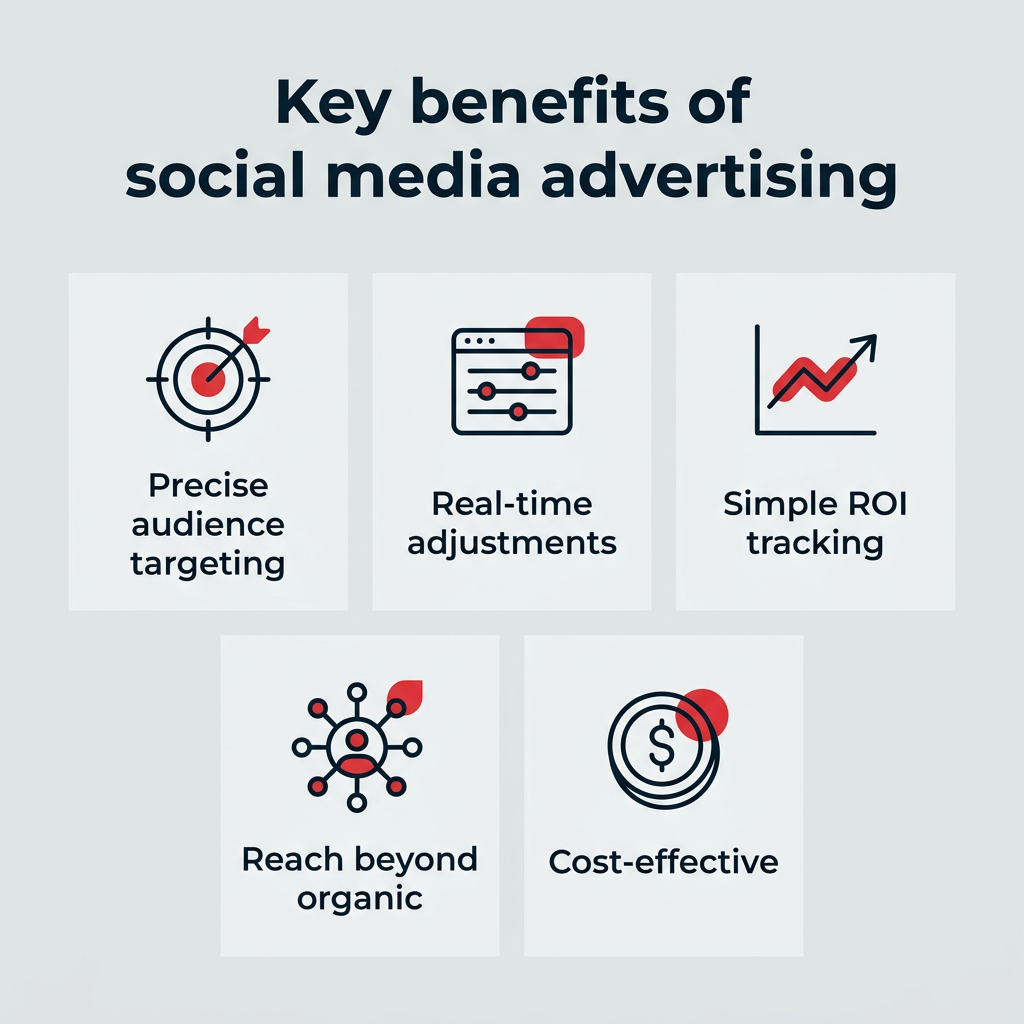
Modern social platforms offer a level of granularity that traditional media could never touch. Advertisers can segment by demographics, psychographic interests, and behavioral patterns. Beyond basic targeting, "Custom Audiences" allow brands to upload customer lists to find existing clients, while "Lookalike Audiences" use AI to find new prospects who share the DNA of your best current customers.
3. Creative Optimization
In an era of "ad blindness," the creative—the visual and textual substance of the ad—is the primary variable that determines success. As audiences become more savvy, the demand for authentic, lo-fi, and creator-led content has surged. Ads that look like native social content often outperform highly polished, "salesy" studio productions.
4. Dynamic Bidding
Social ad space is essentially a real-time, high-speed auction. You are bidding against competitors for the attention of specific users. However, it is not always the highest bidder who wins. Platforms weigh your bid against "ad relevance." If your ad is engaging and relevant, the system may reward you with lower costs, effectively subsidizing your reach because your content improves the user experience.
Supporting Data: Why Costs Are Climbing
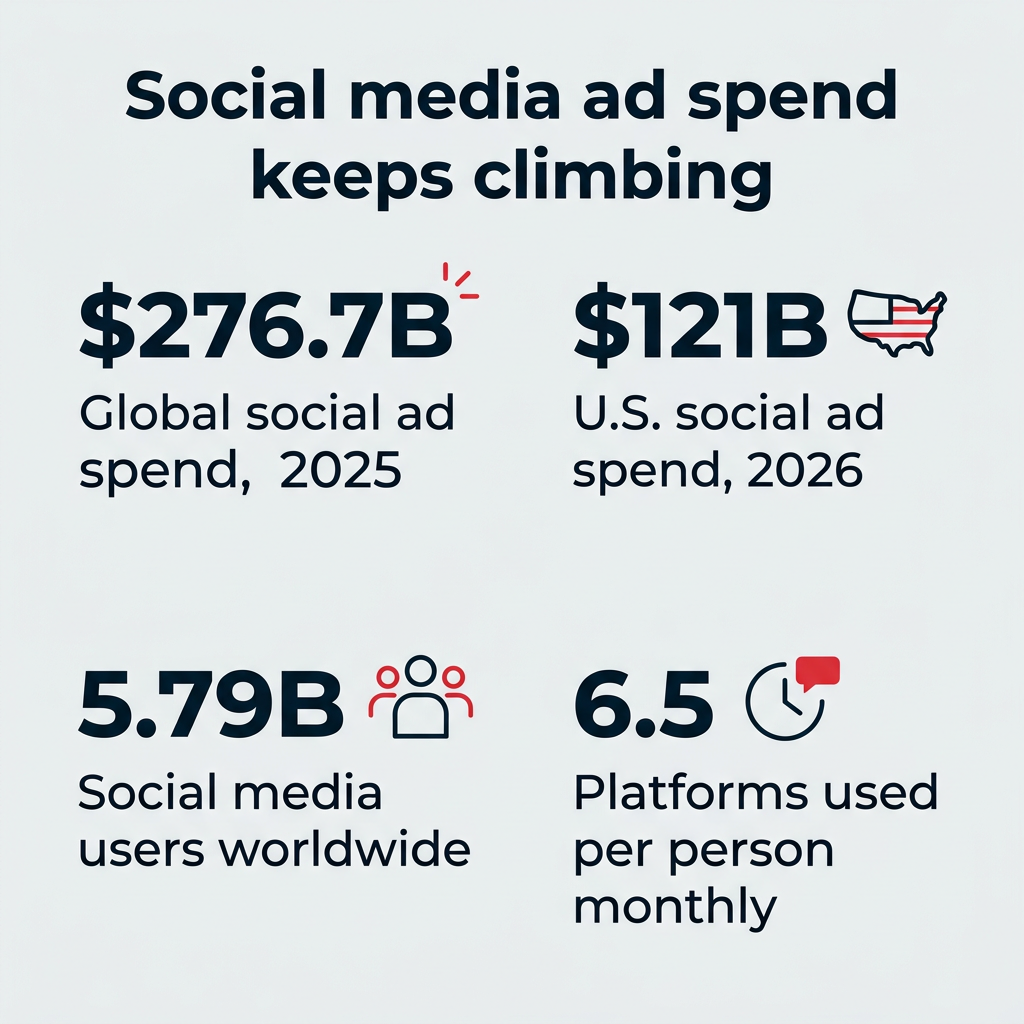
As of mid-2026, the cost of advertising is trending upward. With U.S. social ad spending projected to exceed $121 billion by the end of the year, competition for prime digital real estate has reached a fever pitch.
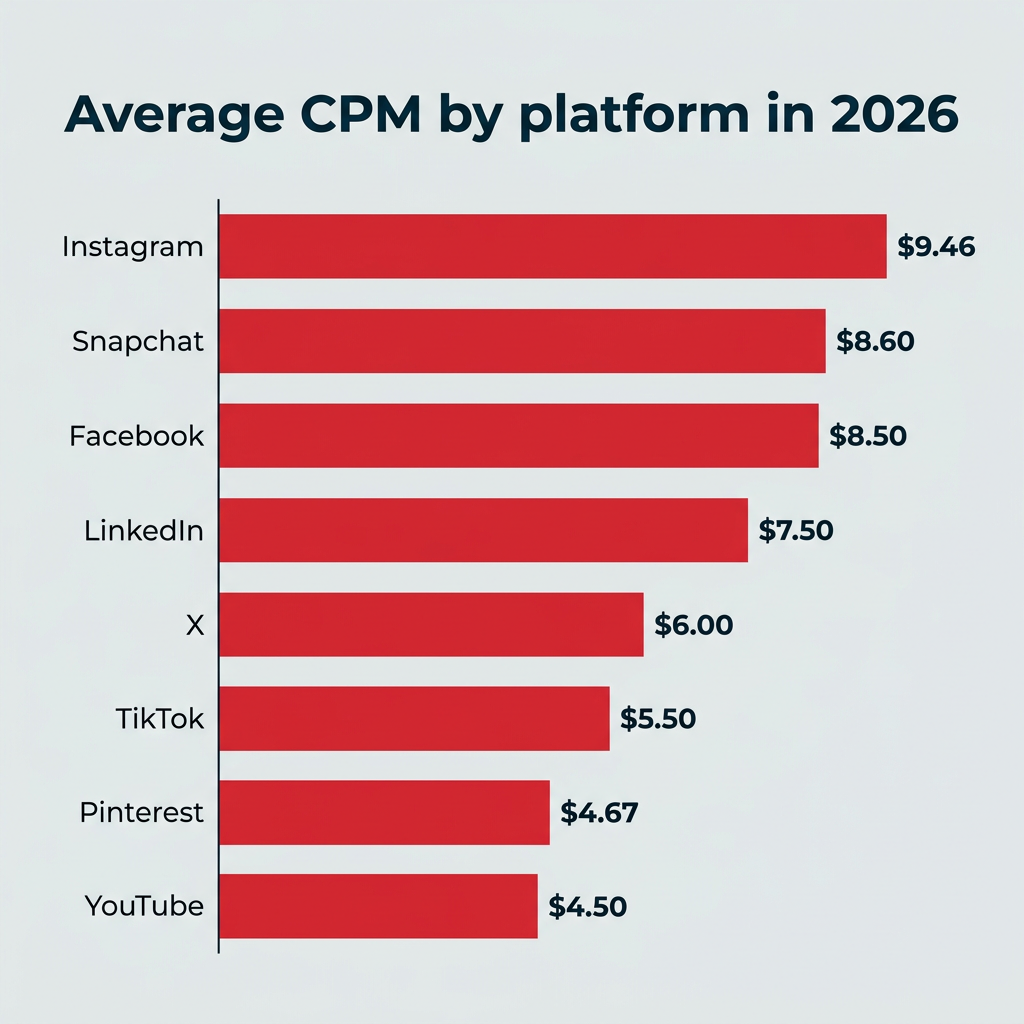
Average Costs by Platform (2026 Estimates)
| Platform | Avg. CPM (Per 1k Impressions) | Avg. CPC (Per Click) |
|---|---|---|
| $8 – $9 | $0.40 – $0.70 | |
| $9.46 | $0.50 – $0.75 | |
| TikTok | $4 – $7 | $0.50 – $1.00 |
| $6 – $9 | $5.00 – $12.00 | |
| YouTube | $4 – $5 | $0.10 – $0.30 |
The data confirms a clear trend: the professional, high-intent audience on LinkedIn commands a premium price, while YouTube remains a cost-effective powerhouse for video-based engagement.
Real-World Success: Lessons from the Frontlines
The shift toward "native-looking" advertising is best illustrated by recent industry case studies:

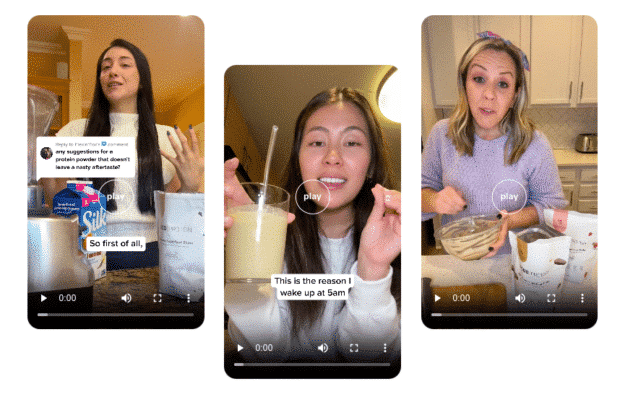
- Good Protein (TikTok): By integrating "Spark Ads"—which promote organic creator content rather than brand-produced assets—the company saw a 25% increase in average watch time. Users trust peers more than brands, and this strategy leveraged that psychology.
- PureGym (Reels): By adopting lo-fi, handheld video aesthetics, the gym chain increased their "Thruplays" by 5.6x. The lesson here is that slick, corporate-style video often feels like an interruption, whereas casual content feels like part of the feed.
- NARS Cosmetics (Instagram): By testing in-app checkout versus website redirection, NARS discovered that removing friction increased ROI by 6%. Testing isn’t just about what to say; it’s about how to structure the transaction.
- Cetaphil (Pinterest): By aligning their product strategy with search trends (e.g., "simple skincare routine"), they demonstrated that social ads perform best when they solve a problem the user is already searching for.
Implications for Future Strategy
As we look toward the remainder of 2026 and beyond, the implications for businesses are clear:
- Stop Guessing, Start Testing: The era of "set it and forget it" is over. A/B testing is the only way to mitigate the rising costs of digital advertising. Test your creative, test your audience segments, and test your landing pages.
- Prioritize Authenticity: The "polished" aesthetic is losing its edge. Consumers are increasingly wary of traditional advertising, favoring content that feels organic, helpful, and human-centric.
- Data-Driven Attribution: You cannot manage what you do not measure. By tracking metrics like Return on Ad Spend (ROAS) and Customer Acquisition Cost (CAC), businesses can pivot away from failing campaigns in real-time, protecting their bottom line.
Conclusion: The Professional Path Forward
Social media advertising has matured into a sophisticated, essential pillar of business growth. For the small business owner, the entry cost remains manageable—starting with as little as $5 to $20 per day can provide enough data to understand an audience. For the enterprise, the focus shifts to scaling high-performing creative and optimizing complex sales funnels.
Ultimately, the goal of social advertising remains constant: to cut through the noise. By combining rigorous data analysis, a commitment to testing, and an understanding of human behavior, brands can turn social platforms into predictable engines for long-term growth. The winners of 2026 will not be those with the biggest budgets, but those who best understand the nuance of their audience and the speed of the algorithm.
