
Scaling Innovation: How Industry Giants Gamify Growth to Drive Corporate Evolution
In the modern corporate landscape, the transition from a traditional enterprise to a high-growth, innovation-led organization is rarely a linear path. While the mechanics of a growth operation—data-driven experimentation, hypothesis testing, and rapid iteration—are well-documented, the true challenge lies in the human element. Bridging the "innovation chasm" requires more than just a growth team; it demands a cultural shift that permeates every level of the hierarchy.
When successfully implemented, a growth operation democratizes innovation. It transforms the base of the organizational pyramid into a fountain of hypotheses, where frontline employees are empowered to suggest improvements. The growth team acts as the engine, operationalizing these ideas through rigorous testing, while the executive suite provides the strategic oversight, now informed by clear data rather than intuition alone.
However, achieving this state is a complex, often top-down endeavor. Executives must be educated on the methodology, middle management must build agile strategies, and the growth team must execute. To bridge the gap between "doing growth" and "living growth," many of the world’s most successful companies have turned to an unlikely tool: gamification.
The Psychology of Innovation: Why Gamification Works
The implementation of a growth culture often fails because it clashes with the inherent risk-aversion of large corporations. Employees fear that failed experiments will result in reprimands or stalled careers. To combat this, industry leaders have developed incentive programs—essentially "gamifying" the act of failing forward. By rewarding the behavior of testing, rather than just the outcome of a win, these companies encourage a "bias for action."
Chronology of Institutionalized Innovation
1998: Amazon’s "Just Do It" Award
The story of the "Just Do It" award began in a moment of operational crisis. In 1998, Amazon’s customer service team was buried under a massive backlog of 250 open inquiries. Recognizing the urgency, an associate proposed a localized challenge: whoever could resolve the entire queue in 24 hours would receive a $200 prize.

The team cleared the queue with time to spare. When Jeff Bezos learned of this, he didn’t just see a resolved ticket pile; he saw a blueprint for company culture. He identified the core drivers of this success: extreme ownership, a sense of urgency, and the autonomy to solve problems without waiting for top-down approval. The "Just Do It" award was born. Today, it remains one of the most coveted honors at the company, bestowed by Bezos himself only twice a year. It stands as a permanent reminder that at Amazon, innovation is not just permitted; it is a required behavior.
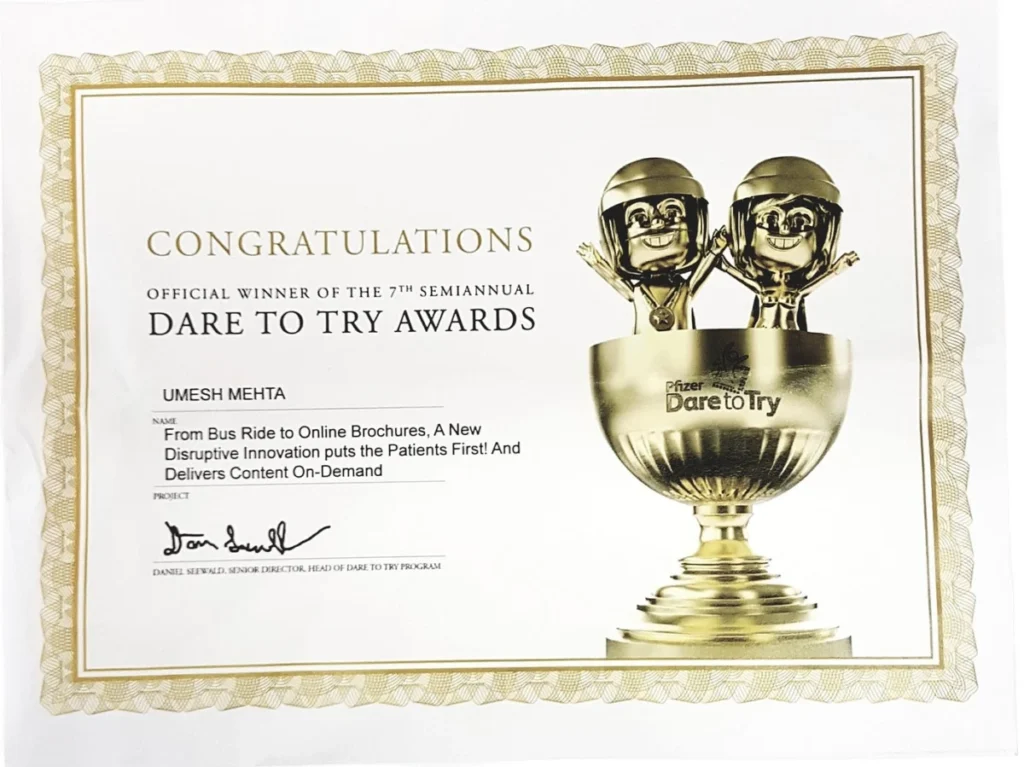
2013: Pfizer’s "Dare to Try"
Innovation in the pharmaceutical sector is notoriously difficult, constrained by regulation, safety concerns, and long R&D cycles. Yet, a decade ago, Pfizer recognized that its size—while a strength—was also a potential anchor for agility. They launched "Dare to Try," a program designed to institutionalize the ability to "fail freely but inexpensively."
Rather than a temporary campaign, "Dare to Try" became a brand. It utilized a network of self-nominated "Champions"—employees from various departments trained to act as innovation evangelists. These champions facilitate training and provide the psychological safety necessary for teams to test hypotheses in a high-stakes environment. By framing failure as a data point rather than a professional mistake, Pfizer successfully accelerated their speed-to-market for creative solutions.
The 3M Legacy: "Innovate or Die"
3M has long set the gold standard for long-term corporate innovation. Their philosophy is simple but brutal: "Innovate or Die." Operating in a commoditized space of adhesives and materials, 3M prevents stagnation through a mandatory performance metric: 30% of each division’s annual revenue must come from products introduced within the last four years.
This creates a self-sustaining cycle of innovation. It forces managers to constantly push their teams to explore new markets and product applications. 3M’s reward systems are specifically designed to tolerate the messiness of the innovation process, providing the necessary support structure for employees to thrive in a landscape where today’s blockbuster product is tomorrow’s legacy item.
The Google 20% Project
Google famously expanded on 3M’s "15% rule," offering employees the opportunity to spend 20% of their paid working time on side projects outside their core responsibilities. This policy was built on the belief that the best ideas don’t come from top-down mandates, but from the intersection of curiosity and unconstrained time.
The results speak for themselves. This 20% "innovation tax" on standard operations yielded some of the most iconic products in human history, including Gmail, Google News, and AdSense. By protecting this time, Google effectively gamified exploration, treating professional development as a core business function.
Supporting Data: The Impact of Cultural Incentives
| Company | Initiative | Primary Goal | Key Outcome |
|---|---|---|---|
| Amazon | Just Do It Award | Bias for Action | High-speed operational excellence |
| Pfizer | Dare to Try | Risk Mitigation | Accelerated creative problem-solving |
| 3M | 30% Revenue Rule | Sustained Growth | Continuous product pipeline |
| 20% Project | Autonomy/Exploration | Breakthrough product development |
These programs share a common thread: they do not reward the success of a product; they reward the process of inquiry. At 3M, rewards are often linked to the "Circle of Innovation," a recognition program that celebrates individuals who exhibit persistence despite initial failure. At Google, the 20% project essentially treats employee intellectual capital as venture capital, providing the space for potential "unicorns" to emerge from within the internal workforce.
Official Perspectives and Executive Strategy
While these initiatives are often framed as "fun," the internal logic is purely strategic. During shareholder briefings, leadership at these firms consistently cite these programs as the primary defense against "corporate entropy."
An executive spokesperson for a major innovation-led firm once remarked: "If you do not intentionally build a mechanism for failure, you are effectively building a mechanism for obsolescence. Our rewards are not about the prize; they are about signaling to the 600,000 employees that their intellectual risk-taking is the most valuable asset on our balance sheet."
The common denominator among these firms is that they do not outsource innovation. They do not rely solely on M&A to stay relevant. Instead, they foster an environment where the "growth team" is not a siloed department, but a role played by every employee.
Implications for the Future of Enterprise
The chasm between companies "doing" growth and those with growth in their DNA is widening. As the pace of market disruption accelerates, the organizations that will survive are those that successfully gamify the process of iteration.
Key Takeaways for Leaders:
- Psychological Safety is an Operational Requirement: You cannot expect employees to experiment if the cost of failure is their job security. Use rewards to create "safe zones" for testing.
- Standardize the Metrics of Innovation: Innovation shouldn’t be abstract. Whether it is 3M’s 30% revenue rule or a simple 24-hour deadline for a specific project, provide clear, measurable goals for innovation.
- Decentralize the Idea Pipeline: The most profound insights often reside with those closest to the customer. Build systems that allow these insights to travel directly to the decision-makers.
- Reward the Behavior, Not Just the Result: If you only reward the final win, you will encourage a culture of playing it safe. Reward the hypothesis, the experiment, and the learning process.
In conclusion, growth is not just a tactical process—it is a cultural performance. When organizations move beyond simple project management and into the realm of gamified, incentivized innovation, they unlock a level of agility that competitors simply cannot replicate. By treating every employee as a potential innovator and every failure as a data point, companies can move from a state of reactive survival to one of proactive, perpetual growth.
