
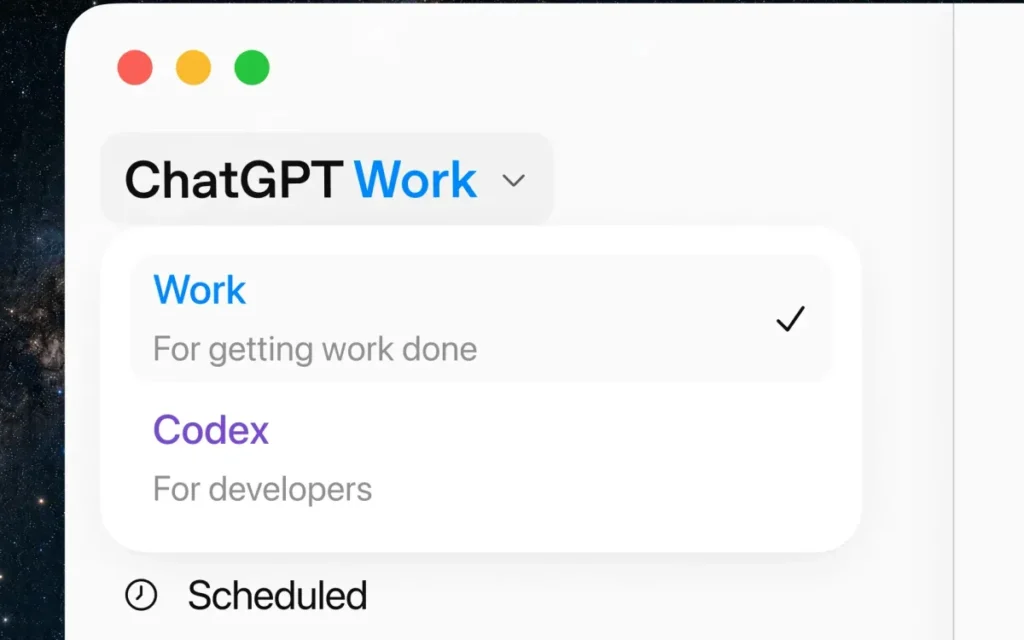
The Agentic Pivot: OpenAI Consolidates Ecosystem into ‘ChatGPT Work’ as Atlas Browser Is Retired
By Editorial Staff
July 10, 2026
In a decisive strategic maneuver that signals a new era for artificial intelligence in the workplace, OpenAI announced on July 9, 2026, the discontinuation of its standalone Atlas web browser, just nine months after its high-profile launch. In its place, the company has unveiled "ChatGPT Work," a sophisticated agentic system integrated directly into a newly unified ChatGPT desktop application. This transition marks a departure from the "browser-first" approach to AI and shifts the industry toward a model of deeply embedded, multi-step autonomous task completion.
The move, which also consolidates the company’s Codex coding agent into the main ChatGPT interface, represents one of the most significant product overhauls in OpenAI’s history. It effectively merges the firm’s most powerful consumer and professional tools into a single, cohesive ecosystem powered by the newly debuted GPT-5.6 model.
The Strategic Consolidation: Main Facts
OpenAI’s announcement is defined by a shift from single-purpose, standalone applications to a centralized, "agentic" architecture. ChatGPT Work is designed to act as an autonomous digital employee, capable of executing complex workflows—such as analyzing budget variances, generating marketing briefs, and creating interactive web applications—across a user’s existing software stack.
By folding the functionality of the Atlas browser and the Codex coding agent into a single interface, OpenAI is attempting to eliminate the friction inherent in switching between specialized tools. The new desktop application features three distinct, side-by-side modes:
- Chat: The familiar, conversational interface for ad-hoc queries.
- Work: The new agentic mode for multi-step office productivity.
- Codex: The developer-focused engine, now integrated into the primary workflow to support pull requests, inline code editing, and repository management.
The prior iteration of the ChatGPT desktop app has been relegated to "ChatGPT Classic," a move intended to preserve the user experience for those who prefer a traditional, non-agentic chat interface.
A Brief Chronology: The Rise and Fall of Atlas
The lifecycle of the Atlas browser serves as a case study in the volatile nature of the generative AI market.
- October 21, 2025: OpenAI launches Atlas, aiming to redefine the browser experience with built-in agentic capabilities. Sam Altman, CEO of OpenAI, characterizes the launch as a "once-a-decade" opportunity to rethink web interaction.
- May 2026: Market data from HUMAN Security highlights a struggle for adoption. Atlas captures only 20.3% of "agentic web traffic," lagging significantly behind Perplexity’s Comet browser, which commands 47%.
- July 9, 2026: OpenAI officially sunsets the standalone Atlas browser. Features such as built-in browsing are migrated directly into the ChatGPT desktop application. The company simultaneously introduces a Chrome sidebar extension to ensure parity for users who prefer not to switch browsers.
This trajectory underscores a broader market trend: specialized "AI-first" browsers have struggled to displace entrenched incumbents, leading developers to pivot toward embedding agentic capabilities within the platforms where users already spend their time.
Supporting Data: Why OpenAI Changed Course
The decision to abandon the standalone browser was not merely a reaction to low market share; it was informed by the unexpected evolution of the Codex platform. Initially designed strictly for software engineers, Codex has seen its user base explode to over 5 million weekly active users.
Crucially, internal OpenAI metrics revealed that over 1 million of these users were leveraging Codex for tasks entirely unrelated to software development—such as data parsing, file manipulation, and automated report generation. This usage pattern provided the "proof of concept" required for the company to believe that the technology underpinning its coding agent could be successfully adapted for general office productivity.
The efficiency gains reported by early adopters are substantial. Within OpenAI’s own finance department, the transition to ChatGPT Work allowed teams to reduce month-end forecasting from multiple days to mere hours. Similarly, external partners like Zapier have reported significant breakthroughs; Angela Ferrante, Head of Enterprise Marketing, utilized the agent to automate lead-scoring workflows, identifying seven figures in potential sales that had previously been buried in disjointed datasets.
Official Responses and Operational Mechanics
OpenAI describes GPT-5.6, the engine behind ChatGPT Work, as a leap forward in multi-step reasoning. Unlike previous models that required constant user input, GPT-5.6 can remain active on a single project for hours. It decomposes large, abstract requests into granular sub-tasks, delegates these to plugins (such as Slack, Microsoft Teams, and Google Drive), and executes them independently.
The Role of "Computer Use"
Perhaps the most ambitious feature of the new desktop application is "Computer Use." This functionality grants the agent the ability to interact with a user’s desktop environment directly—moving the mouse, typing in external applications, and managing local files. While powerful, this feature has already prompted significant discussions regarding security, which OpenAI is attempting to address through its "Auto-review" layer. In this framework, the model’s most advanced iterations perform a secondary "sanity check" on high-stakes actions before they are executed, mitigating the risk of unauthorized data leaks or destructive errors.
Implications: The New Standard for Knowledge Work
The consolidation of these tools has profound implications for the advertising and marketing technology sectors. As OpenAI, Meta, and other industry leaders move toward an agentic model, the "log-in" model of software interaction is being replaced by the "agent connector" model.
1. Governance vs. Autonomy
For marketing organizations, the primary hurdle remains the tension between agency and oversight. As ChatGPT Work begins to handle sensitive customer data and manage advertising budgets, the burden of governance falls on the organization. OpenAI’s new Compliance API is a direct response to this, offering administrators the ability to audit actions and set granular spend controls. However, the industry is still grappling with the question of "post-hoc accountability"—how a firm proves that an autonomous agent acted in accordance with brand guidelines once it has completed a complex, unmonitored task.
2. The End of "Tool Fatigue"
The integration of plugins and the new "Sites" feature—which allows users to turn workflows into interactive web applications—suggests that the future of enterprise software is not in the software itself, but in the AI’s ability to orchestrate it. By moving away from a browser-centric product, OpenAI is betting that the most successful AI tools will be those that act as an "operating system layer" rather than a destination website.
3. Developer and Enterprise Adoption
The move to force a unified desktop app for all tiers (including the free plan) is a calculated effort to build a massive, standardized user base. By providing enterprise-grade controls—such as workspace-level spend limits and specific user-group permissions—OpenAI is making a play to become the "default" productivity stack for the Fortune 500.
Conclusion: A Shift in Strategy
The discontinuation of Atlas is not a failure in the traditional sense, but a strategic "fail-fast" evolution. By folding the browser into the desktop application, OpenAI has moved to address the core problem of user experience: the friction of context-switching.
As of July 9, 2026, the industry has shifted. The competition is no longer about who can build the best browser or the best coding assistant; it is about who can build the most effective "agentic hub." With GPT-5.6 and the unified ChatGPT Work interface, OpenAI has signaled that the future of work is not just about writing a prompt, but about delegating the entire, multi-step lifecycle of a project to an autonomous, context-aware system. Whether the market is ready for this level of machine autonomy—and whether the security frameworks can keep pace with the agents—will remain the defining question for the remainder of the year.
