
The Death of the "Link in Bio": Meta’s Strategic Overhaul of the Creator Commerce Ecosystem
The digital landscape is undergoing a tectonic shift. For years, the "link in bio"—a clunky, bridge-like navigation tool—has served as the primary tether between social media inspiration and e-commerce conversion. However, that era is rapidly drawing to a close.
"The era of link in bio is finally over," declared Nicola Mendelsohn, Meta’s Head of Global Business Group, during the Shoptalk conference earlier this year. This was not merely a rhetorical flourish; it was a mission statement. At the Cannes Lions 2026, Meta solidified this vision by unveiling a suite of commerce updates across Facebook and Instagram designed to dissolve the barriers between content discovery and point-of-sale.
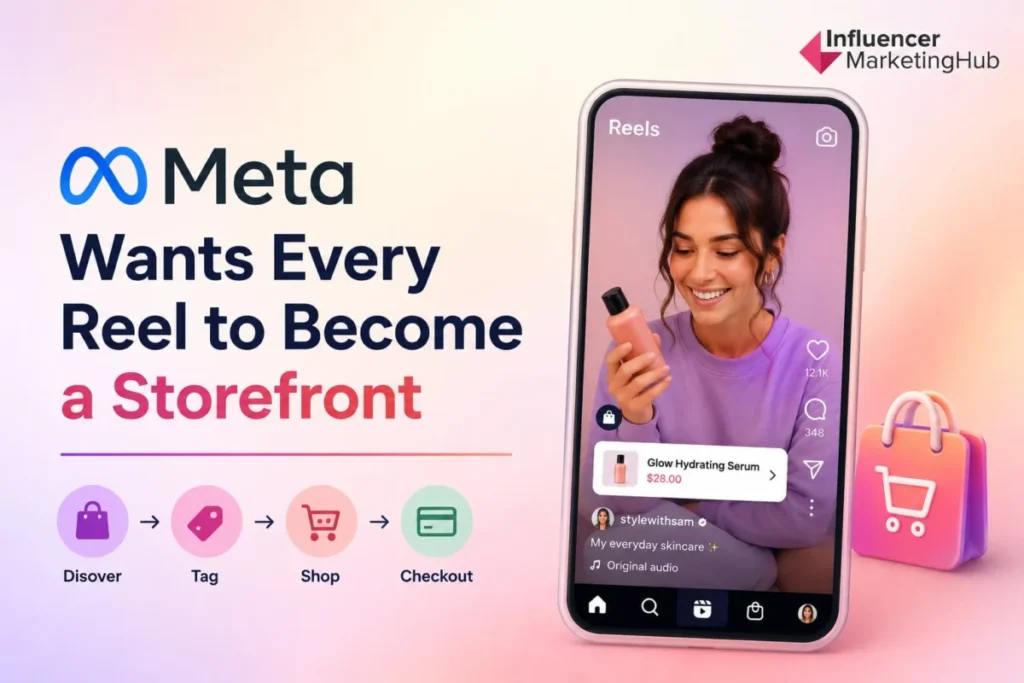
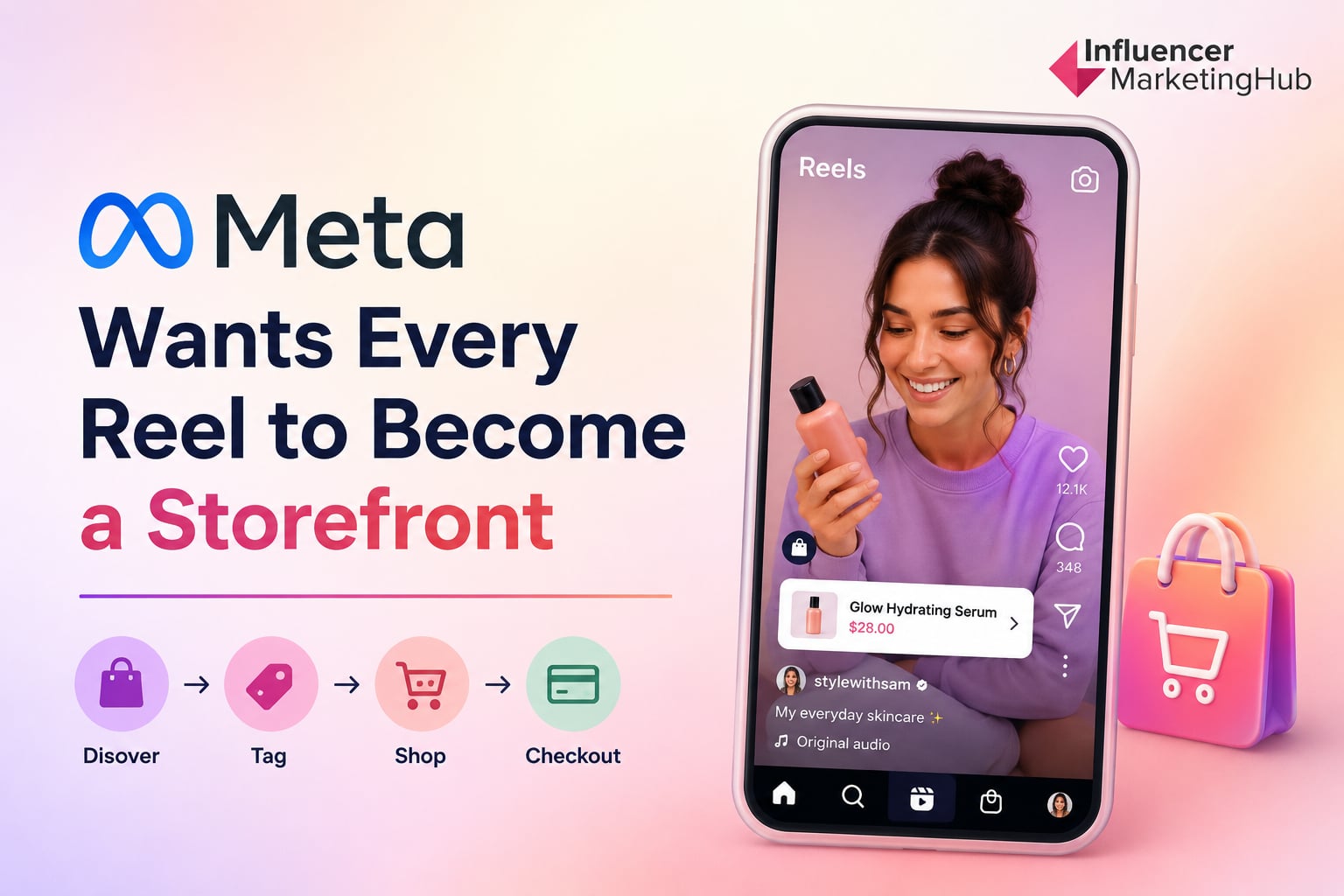
By integrating shopping directly into the fabric of the user experience, Meta is positioning itself to own the entire consumer journey, effectively turning every Reel, livestream, and post into a seamless storefront.
The Core Transformation: Frictionless Commerce
The fundamental problem with modern social commerce has always been "friction." When a user discovers a product through a creator’s video, the path to purchase is often a gauntlet of hurdles: navigating to a profile, clicking an external link, loading a third-party website, searching for the specific item, and manually entering payment details. Every step is an opportunity for consumer fatigue to set in, leading to abandoned carts and lost revenue.
Meta’s latest update systematically removes these obstacles. Eligible creators in 22 countries can now embed affiliate links or tag products directly from a brand’s catalog within Instagram Reels and Feed posts.
Key Capabilities of the Update:
- Deep Integration: Creators can tag up to 30 products per Reel, allowing for complex, multi-item showcases such as "Get Ready With Me" (GRWM) videos or comprehensive tech reviews.
- Direct Conversion: Rather than navigating to a "Linktree" or a brand’s website, the purchase experience occurs within the Meta ecosystem, keeping the user engaged in the app.
- Measurement and Attribution: For brands, this creates a closed-loop system where influencer recommendations can be tracked directly to sales, providing a level of ROI transparency that was previously difficult to achieve.
Chronology of a Shift: From Discovery to Transaction
To understand why this is a turning point, one must look at the evolution of social commerce over the last decade.
- 2015–2018 (The Awareness Era): Influencer marketing was primarily a top-of-funnel activity. Brands paid for reach and engagement, but attributing a direct sale to a specific creator post was largely guesswork.
- 2019–2022 (The "Link in Bio" Era): The rise of third-party landing page aggregators became the industry standard. This was a "patch" solution that highlighted how disconnected social platforms were from actual e-commerce infrastructure.
- 2023–2025 (The Integration Phase): Platforms began experimenting with native checkout and limited in-app shopping features. However, these were often siloed, inconsistent, and lacked broad creator adoption.
- 2026 (The Ecosystem Era): With the Cannes Lions announcement, Meta has transitioned from "facilitating" links to "owning" the purchase flow. By layering AI-driven catalog management over creator content, Meta has turned its platforms into a fully functional, end-to-end retail marketplace.
Supporting Data: Why Influencer Trust is the New Currency
The push for native shopping is backed by significant consumer behavioral shifts. Data indicates that social media is no longer just a place to see what friends are doing; it is a primary destination for discovery.
Research shows that as much as 27% of all beauty and luxury shoppers rely on influencer recommendations as their primary source of information before making a purchase. This is a staggering statistic that validates the creator economy’s power. When a trusted voice endorses a product, the conversion intent is already high.
However, the "leakage" in the traditional funnel is costly. Conversion rates on external websites are historically lower than on native platforms because of the time required to re-authenticate or re-enter payment information. By keeping the user in-app, Meta aims to capture this lost revenue, effectively increasing the "conversion value" of every creator collaboration.
Official Responses and Strategic Rationale
Meta’s leadership has been vocal about the necessity of this pivot. Nicola Mendelsohn’s comments at Shoptalk underscore the company’s realization that social commerce must be "native or bust."
The strategy is further bolstered by the expansion of Live Video Ads on Facebook and their introduction to Instagram. During live shopping events, viewers can now browse products, compare prices, and complete purchases without the stream ever pausing or disappearing.
"We are moving toward a model where the discovery, the recommendation, and the transaction happen in a single, fluid motion," a Meta spokesperson noted during the Cannes briefing.
Furthermore, the expansion of partnerships with global retail giants—including Flipkart, Mercado Libre, and Lazada—demonstrates that Meta is not trying to replace existing retailers, but rather provide the digital infrastructure that makes those retailers’ inventory instantly accessible to billions of global users.
The AI Backend: Behind the Scenes of the New Ad Engine
Perhaps the most significant change is invisible to the consumer. Starting this summer, Meta is shifting its advertising model to leverage product catalog data as a "foundational input."
Previously, advertisers had to manually curate creative assets for different formats (Stories, Feed, Reels, etc.). Now, brands simply upload their product catalog and their creative assets. Meta’s AI engine then takes over, dynamically assembling the most relevant shopping experience for each individual user.
If the AI detects that a user is more likely to convert on a "How-to" video than a static image, it will prioritize that format. This turns every brand’s product catalog into a living, breathing asset that the algorithm can deploy with surgical precision.

Implications for the Industry: What This Means for Brands
This evolution demands a complete restructuring of the traditional influencer marketing playbook.
1. Data Integrity is Paramount
Brands can no longer treat their product feeds as secondary. With AI driving ad delivery, the quality of your product data—descriptions, images, pricing accuracy, and stock availability—is now just as critical as the quality of the influencer’s video. If the metadata is wrong, the AI cannot effectively sell the product.
2. The Death of the "One-Off" Campaign
The era of the "one-off" sponsored post is ending. Because commerce is now embedded in the platform’s DNA, brands should look to build long-term, affiliate-based partnerships with creators. A steady stream of tagged content creates a more consistent sales funnel than a single, high-budget launch event.
3. The Shift in Measurement
Marketers must pivot their KPIs. Success should no longer be measured solely by "likes" or "reach." With direct tagging and in-app checkout, "Cost Per Acquisition" (CPA) and "Return on Ad Spend" (ROAS) become the primary metrics for influencer collaborations.
Conclusion: The Future is Native
The death of the "link in bio" is a victory for consumer convenience and a massive opportunity for brands that are ready to adapt. By removing the friction between "I want that" and "It’s on its way," Meta is effectively commodifying the influence of the creator economy.
As we move through the latter half of 2026, the brands that win will be those that treat their social presence not as a billboard, but as a digital storefront. The influencers who thrive will be those who master the art of blending authentic storytelling with high-converting, native commerce tools.
The barrier between content and commerce has finally collapsed. In this new ecosystem, every piece of content is an invitation to buy, and the checkout process is just a tap away. The "link in bio" was a necessary stepping stone, but the future is far more integrated, immediate, and, for the brands that pivot quickly, significantly more profitable.
