
The Great Divide: Choosing Between HubSpot Service Hub and Zendesk for Modern E-commerce
In the current digital landscape, the difference between a thriving e-commerce brand and one struggling with churn often comes down to the quality of customer experience. Today, it is nearly impossible to find a successful business that does not rely on sophisticated support software. For smaller e-commerce operations and enterprise-level retailers alike, the ability to track customer tickets, analyze purchase histories, and provide rapid resolutions is not just an operational necessity—it is a competitive mandate.
However, navigating the crowded market of service tools can be daunting. As someone who has spent years stress-testing platforms under heavy workloads, I have learned that some systems are designed to master the inherent chaos of modern support workflows, while others are merely digitized filing cabinets. HubSpot and Zendesk remain the two titans of the industry, but they represent fundamentally different philosophies on what "support" actually means.
The Core Philosophy: CRM-Centric vs. Queue-Centric
To understand the choice between HubSpot and Zendesk, one must look at their origin stories. HubSpot began as a pioneer of "Inbound Marketing," a philosophy focused on attracting and delighting customers through value rather than disruption. Consequently, their Service Hub is an extension of their massive CRM, designed to keep the customer at the center of a 360-degree data loop.
Zendesk, conversely, was built as a specialized ticket management powerhouse. It is a "grown-up" contact center solution designed for high-volume environments where efficiency, speed, and queue management are the primary metrics of success. If your business is defined by a non-stop influx of customer queries, Zendesk acts as the extra set of hands your team desperately needs.
Chronology of Evolution: From Simple Tools to AI Powerhouses
Historically, these two platforms occupied distinct niches. HubSpot was the "all-in-one" marketing platform, while Zendesk was the gold standard for IT and customer support desks.
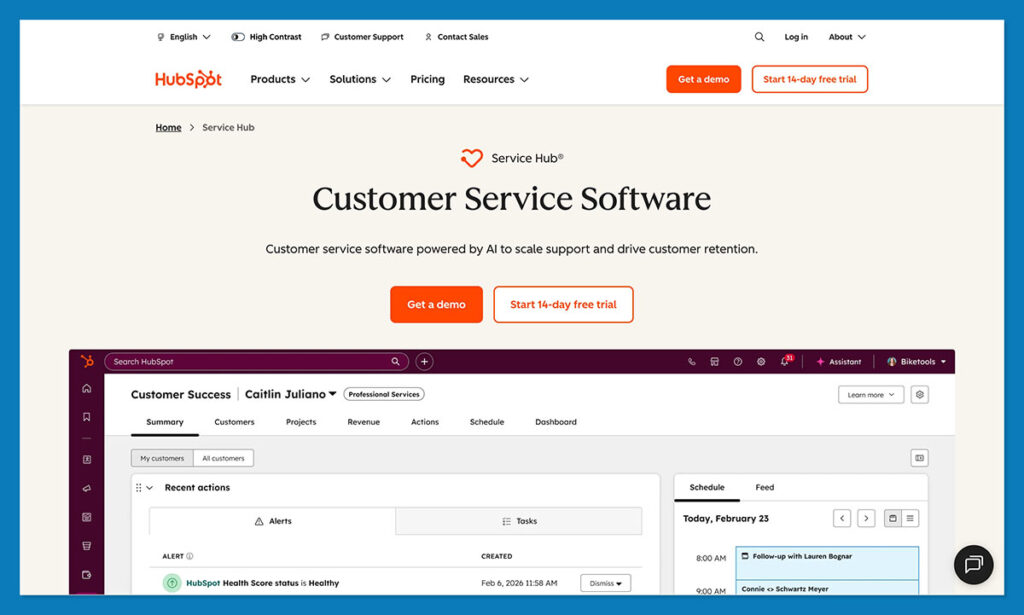
In recent years, the lines have blurred. HubSpot has aggressively expanded its Service Hub, integrating its "Breeze AI" to automate responses and provide context-aware support. Simultaneously, Zendesk has attempted to broaden its appeal by acquiring CRM capabilities (Zendesk Sell) to better compete with the unified data model of its rivals.
Despite these expansions, the core architecture remains unchanged. HubSpot’s evolution has been defined by consolidation—bringing marketing, sales, and service under one roof. Zendesk’s evolution has been defined by specialization—adding more robust AI and workforce management tools to help massive teams handle larger volumes of interactions without breaking a sweat.
Deep Feature Comparison: Analyzing the "Under the Hood" Mechanics
Ease of Use and Onboarding
Zendesk offers an environment that feels like a well-oiled machine. For support managers, the workspace is clean, fast, and highly predictable. It is built for agents who live inside queues for eight hours a day. The mobile app is particularly impressive, allowing for seamless ticket reassignment and voice interaction management on the go.
HubSpot is equally intuitive but feels less like a "queue" and more like a "customer journey." The learning curve is surprisingly gentle because the platform relies on a single source of truth: the CRM record. Once an agent understands the CRM, they understand the Service Hub. While HubSpot lacks the human-assisted onboarding found in high-tier Zendesk plans, its "HubSpot Academy" provides a comprehensive self-serve training library that is arguably the best in the SaaS industry.
AI and Automation: Breeze vs. Service AI
AI is no longer a luxury; it is the backbone of modern support. HubSpot’s Breeze AI is deeply integrated into the platform’s CRM. Because the AI is trained on your specific customer data, it produces suggestions that sound like your brand voice. The "Customer Agent" feature is a standout, capable of automating end-to-end tasks and, as reported by many users, resolving up to 65% of incoming conversations without human intervention.
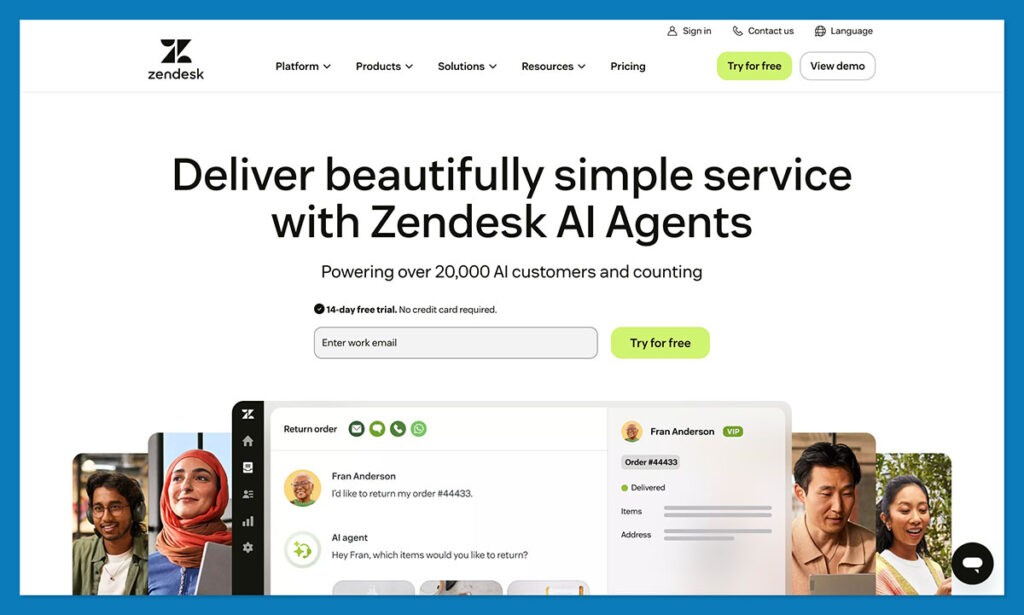
Zendesk’s AI is geared toward high-volume throughput. It excels at auto-triage, call summarization, and Quality Assurance (QA) scoring. While HubSpot’s AI connects the dots between marketing and support, Zendesk’s AI focuses on making the agent faster. For teams managing thousands of tickets per day, Zendesk’s automated routing and workforce management tools provide a level of granular control that is difficult to replicate.
Omnichannel Support and Ticket Management
When it comes to omnichannel support, both platforms are heavy hitters. HubSpot funnels email, chat, WhatsApp, Messenger, and web forms into one interface. The benefit here is context: an agent can see if a customer is complaining about a shipment while simultaneously seeing their recent marketing email interactions.
Zendesk boasts a broader list of channel integrations. If your brand relies heavily on SMS, specialized in-app messaging, or niche social channels, Zendesk’s support suite is often more comprehensive. However, the catch remains: without deep, custom integration, Zendesk often struggles to pull full CRM context from other business tools, whereas HubSpot provides this by default.
Supporting Data: Why Context Matters
In a 2024 study of e-commerce performance, companies that utilized unified platforms—where support agents had immediate access to sales and order history—reported a 25% reduction in "Average Handling Time" (AHT).
Consider the case of Liquidity Services, which successfully consolidated its support operations onto the HubSpot platform. By moving away from fragmented, siloed tools, they managed to cut overall support costs by 50%. This is the primary argument for the HubSpot model: by eliminating the "data gap" between teams, you save time, reduce human error, and improve customer satisfaction scores (CSAT).
Conversely, Zendesk users report higher satisfaction regarding Voice Support. For organizations that rely on high-volume phone support, Zendesk’s IVR (Interactive Voice Response) and queue management capabilities remain superior. The ability to manage complex phone trees and monitor live call volume is where Zendesk truly justifies its reputation as the enterprise-grade king of contact centers.
Official Stances and Industry Implications
Both companies have publicly stated their intent to continue moving toward "Autonomous Service." HubSpot’s leadership emphasizes that the future of service is "pre-emptive"—using data to solve problems before the customer even submits a ticket.
Zendesk’s official roadmap focuses on "Intelligent Triage," highlighting the need to handle the sheer scale of global customer service. They argue that as companies grow, the sheer volume of data becomes less important than the speed of resolution.
The Implications:
- For the SMB (Small/Medium Business): HubSpot is generally the better long-term investment. Its free CRM provides a foundation that can scale from one user to one hundred, and the ability to add marketing and sales tools later prevents the need for a total tech-stack migration.
- For the Enterprise Contact Center: Zendesk is often the safer, more stable choice. When you have a team of 500 agents, the performance of the UI and the robustness of the queue management features in Zendesk become more valuable than the CRM benefits of HubSpot.
Verdict: The Final Decision
Choosing between HubSpot Service Hub and Zendesk is not a question of which tool is "better," but which is better for your specific growth stage.

Choose HubSpot Service Hub if:
- Your e-commerce store thrives on repeat customers and high LTV (Lifetime Value).
- You want your marketing, sales, and support teams to share a single, unified database.
- You are looking to consolidate costs and reduce the "glue work" required to keep different software platforms talking to each other.
Choose Zendesk if:
- You are running a high-volume contact center where phone support and queue management are your primary concerns.
- Your support team operates independently from your marketing and sales departments.
- You need granular, enterprise-level reporting on agent performance, SLA compliance, and QA scoring.
Frequently Asked Questions
Q: Does HubSpot offer a free version?
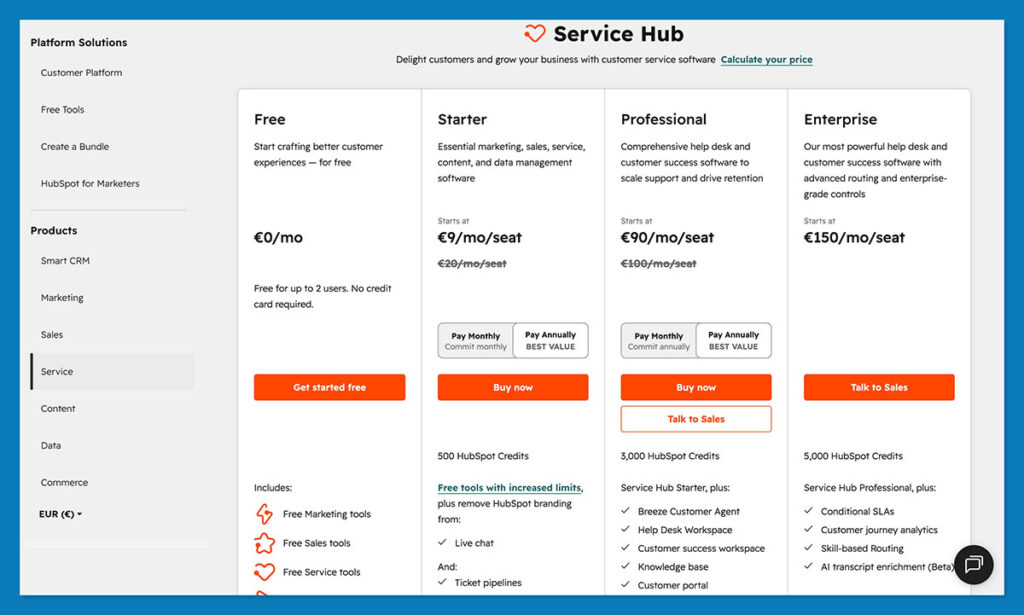
A: Yes. HubSpot provides a robust free CRM and basic ticketing features. It is arguably the best entry point for small businesses, allowing them to scale into paid tiers (Starter, Professional, Enterprise) only when they require advanced automation and reporting.
Q: Is Zendesk harder to learn than HubSpot?
A: Not necessarily, but it is more specialized. Zendesk is built specifically for support, meaning it is dense with features that a generalist might find overwhelming. HubSpot is designed to be user-friendly for non-support staff as well, making it easier for cross-departmental adoption.
Q: How do the integrations compare?
A: HubSpot’s integration ecosystem is designed for data synchronization, ensuring that information flows between your store and your CRM seamlessly. Zendesk has a larger marketplace of "plug-ins," but these often serve as patches for a platform that is not inherently built to share data with a CRM, leading to potential data lag during peak traffic times.
In conclusion, for the modern e-commerce brand, the winner is usually the one that prioritizes the customer experience over the queue. While Zendesk offers the best-in-class tools for pure support, HubSpot’s unified approach to the entire customer journey makes it the most effective tool for long-term growth and retention.
