
The Growth Playbook: How Disruptors Like Uber, Airbnb, and Spotify Scaled to Global Dominance
In the modern digital economy, the chasm between a promising startup and a global industry titan is bridged by one thing: a relentless commitment to growth strategy. Companies such as Uber, Spotify, and Airbnb did not achieve their current valuations merely through luck or timing. They succeeded by fundamentally altering consumer behavior and perfecting a methodology of aggressive, data-backed expansion.
By dissecting the DNA of these unicorns, we can identify a blueprint for modern business success. This analysis explores the five pillars of their growth—experimentation, data-driven decision-making, risk-taking, cross-functional synergy, and user-centric design—that have become the gold standard for scaling in the 21st century.
1. The Culture of Constant Iteration: Testing and Learning
At the heart of the growth success of these three giants lies a departure from traditional "waterfall" business planning. Instead, they operate on a cycle of "Build, Measure, Learn."
Uber’s Pivot-Heavy Evolution
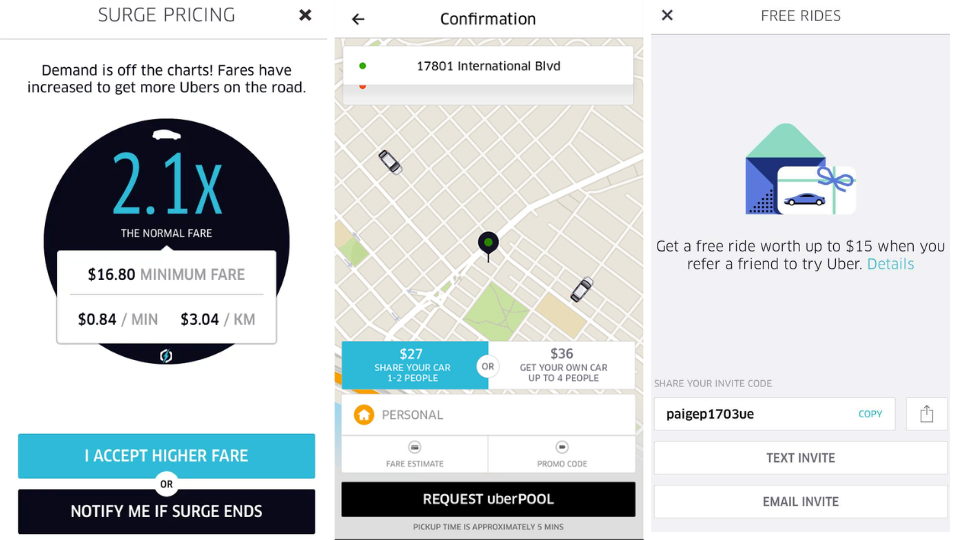
Uber’s journey from a high-end black car service to a global mobility platform is a testament to the power of constant experimentation. Initially, the platform was exclusive and expensive. However, through continuous testing, the company identified massive untapped demand in the middle market. This led to the launch of UberX, followed by UberPOOL, which utilized shared-ride algorithms to lower costs for consumers while increasing driver utilization. Every service tier added was an experiment in market elasticity.

Airbnb’s Photography Experiment
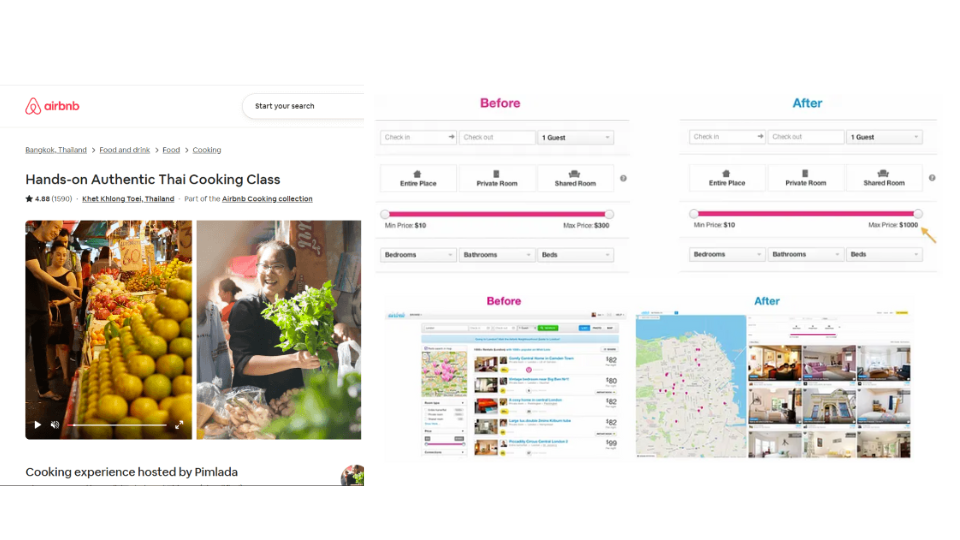
In its infancy, Airbnb faced a massive trust hurdle: users were hesitant to stay in strangers’ homes based on grainy, amateur photos. Rather than just suggesting better photos to hosts, the company conducted a high-stakes experiment by sending professional photographers to listings. The result was an immediate, statistically significant spike in booking rates. This "experiment" became a core pillar of their operational model, proving that high-quality visual assets were not just marketing—they were a product necessity.
Spotify’s Algorithmic Curation
Spotify transformed music discovery from a chore into a seamless experience. By constantly testing machine-learning models, they developed the "Discover Weekly" and personalized playlist engine. These were not mere features; they were continuous experiments in retention. By analyzing which songs kept users on the platform longer, Spotify evolved from a simple music library into a predictive, personalized entertainment hub.
2. Data-Driven Decision Making: The New Strategic Compass
In the digital age, intuition is secondary to empirical evidence. These companies treat data not just as a reporting tool, but as the primary driver of their product roadmap.
Dynamic Optimization
- Uber: Their "Surge Pricing" model is the ultimate application of real-time data. By balancing supply (drivers) and demand (riders) through dynamic pricing algorithms, they ensure market equilibrium.
- Airbnb: Smart Pricing tools utilize hyper-local data—seasonality, local events, and historical demand—to help hosts maximize earnings. This data-driven empowerment ensures that the platform remains competitive against hotels.
- Spotify: A/B testing is ingrained in the Spotify engineering culture. Every UI tweak, from the layout of the homepage to the color of a "Play" button, is tested against user engagement metrics before a global rollout.
3. The Philosophy of "Fail Fast": Embracing Risk
Innovation inherently requires the possibility of failure. Uber, Airbnb, and Spotify have successfully institutionalized a "fail fast" mindset, where the stigma of failure is replaced by the value of the data gained from the attempt.
The "Fail Fast" Mindset in Practice
For Airbnb, the road to success was paved with unsuccessful attempts to break into new markets or feature sets. Their leadership understands that if 100% of their experiments succeed, they are not taking enough risks. By encouraging teams to launch, test, and pivot quickly, they ensure that the company never becomes stagnant.
Similarly, Spotify’s expansion into podcasts—marked by high-profile acquisitions like The Joe Rogan Experience—was a calculated risk. While the move was controversial, it was rooted in the data that showed a massive crossover between music listeners and podcast enthusiasts. By treating this expansion as an experiment, they were able to refine their offering until they became a dominant force in audio, not just music.
4. Breaking Silos: The Power of Cross-Functional Collaboration
Growth is rarely the result of a single department. It requires the breakdown of internal silos so that engineering, marketing, and product design work toward a singular goal.
Building Cohesive Teams
Airbnb’s cross-functional approach is legendary. When launching a new feature, they don’t just rely on software engineers. They assemble "pods" that include designers, customer support representatives, and marketers. This ensures that a new feature isn’t just technically sound, but also resonates with the community and is supportable by the customer service team.
Spotify’s organizational structure—often referred to as the "Spotify Model"—utilizes "Squads" and "Tribes." These small, autonomous groups contain all the skills necessary to own a feature from inception to delivery. This reduces bureaucracy and allows the company to move with the agility of a startup despite having thousands of employees.
5. The Obsession with Seamless User Experience (UX)
Ultimately, growth is impossible without retention, and retention is built on the foundation of an effortless user experience.
The Standard of Ease
- Uber: They turned the friction of hailing a cab, haggling over prices, and paying with cash into a "one-tap" experience. By removing every possible barrier between the user and the ride, they made the service indispensable.
- Airbnb: They standardized the "stay." Through verified profiles, secure payment gateways, and a robust review system, they transformed the terrifying prospect of sleeping in a stranger’s home into a trusted, premium experience.
- Spotify: They solved the piracy problem by providing a service that was "better than free." By making music discovery instant and cross-device functionality seamless, they set a benchmark for what a subscription service should feel like.
Chronology of Disruption: Scaling from Zero to One
The growth paths of these companies follow a distinct pattern:
- Phase 1: Validation (The "Hair on Fire" Problem): Each company started by solving a specific, acute pain point. Uber: "I can’t get a cab." Airbnb: "I can’t afford a hotel." Spotify: "I can’t find new music easily."
- Phase 2: Growth Hacking (The Feedback Loop): Once the product-market fit was established, they moved into rapid experimentation. They used referral programs (Uber), professional photography (Airbnb), and social integration (Spotify) to drive viral loops.
- Phase 3: Operational Excellence (Scaling Data): As they reached millions of users, the focus shifted to optimization. This is when data-driven pricing, routing, and recommendation algorithms became the primary drivers of revenue.
- Phase 4: Market Dominance (Platform Expansion): Finally, they diversified their core business. Uber moved into food delivery; Airbnb moved into travel experiences; Spotify moved into podcasts and audiobooks.
Implications for Modern Businesses
The lessons from these giants are clear:
- Avoid Analysis Paralysis: Perfection is the enemy of progress. Launch, measure, and iterate.
- Data as a North Star: Decisions should be backed by numbers, but interpreted through the lens of user empathy.
- Collaborate or Die: In a complex market, the "silo" mentality is a death sentence. Cross-functional teams are the only way to maintain the speed of a startup at scale.
Conclusion
The success of Uber, Airbnb, and Spotify is not a mystery—it is a replicable methodology. While the specific tactics of 2010 might not work in 2024, the underlying principles of constant experimentation, data-driven strategy, and an obsession with user experience remain the universal pillars of growth. As the technological landscape continues to shift, those who prioritize these five lessons will not only survive the disruption—they will lead it.
