
Beyond the Algorithm: Uncovering the Hidden Trends Shaping the Future of Social Video
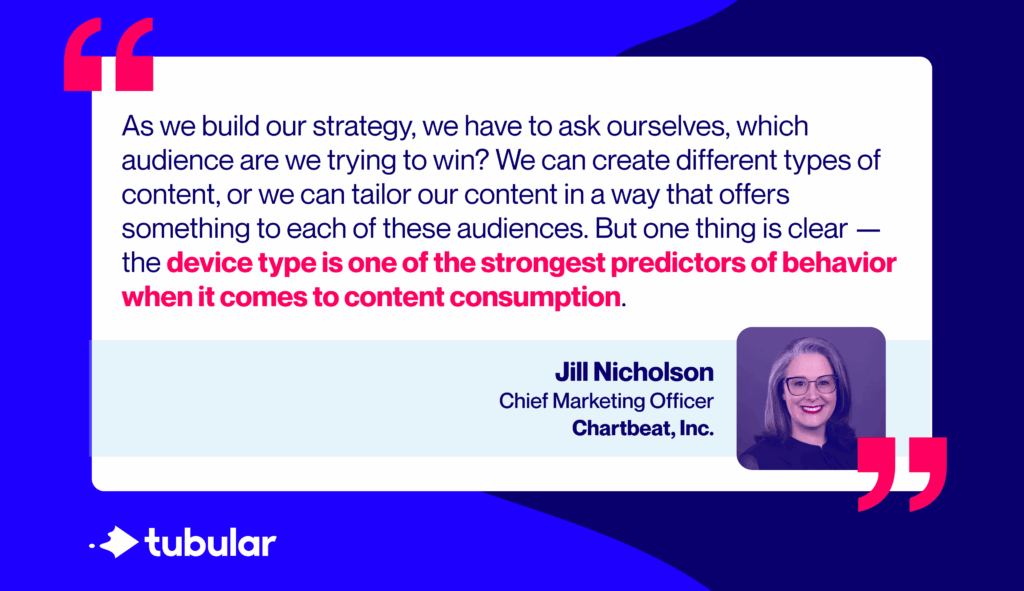
The creator economy is no longer a fringe movement; it is the dominant engine of global media consumption. Yet, as the landscape matures, the strategies that worked even twelve months ago are losing their efficacy. At this year’s VidCon, Jill Nicholson, CMO of Tubular Labs, pulled back the curtain on the subtle, under-the-radar shifts that are currently dictating which creators thrive and which brands fade into the background.
In a comprehensive new report, Nicholson argues that the next wave of the creator economy will not be defined by raw viral potential, but by a nuanced understanding of device-specific consumption, the strategic utility of "unexpected" brand partnerships, and the complex trade-off between AI-assisted volume and human-centric quality.
The Device-First Paradigm: Why Length Still Matters
For years, the industry mantra was simple: shorter is better. As TikTok and Instagram Reels conquered the attention span of a generation, brands and creators alike raced to produce bite-sized content. However, data from the first half of 2025 suggests a more complex reality. The “one size fits all” approach to video duration is officially obsolete.
According to Nicholson’s presentation at VidCon, the primary factor determining optimal video length is no longer the platform alone, but the hardware being used to consume the content. When users are on mobile devices, they are frequently in a "snackable" mindset—scrolling quickly, looking for instant gratification. In these instances, brevity remains king.

However, the surge in Connected TV (CTV) viewership has fundamentally altered the playing field. When viewers transition to a larger, living-room screen, their psychological profile shifts. They are no longer in a "discovery" mode; they are in a "viewing" mode. The data indicates that on CTV, audiences are increasingly settling in for long-form content that exceeds the 20-minute mark.
This creates a dual-strategy imperative: brands must curate their video assets based on where they expect the primary engagement to occur. Relying on a single cut for both mobile and living-room distribution is a failure to respect the audience’s intent. To capture the CTV audience, creators must lean into narrative depth and higher production values that reward a sustained time investment.
The Strategy of the Unexpected: Cross-Pollinating Audiences
Perhaps the most intriguing revelation from the Tubular Labs report is the evolution of brand collaborations. Traditional influencer marketing relied on the "like-for-like" approach—a beauty brand would sponsor a beauty influencer, and a gaming company would partner with a gaming streamer. While this offers safe alignment, it often results in diminishing returns as audiences become fatigued by predictable marketing.
The new frontier, according to Nicholson, is the "unexpected collaboration." By stepping outside of their traditional vertical, brands can reach untapped demographics that are currently under-served by legacy advertising.

A standout case study cited by the report involves the global skincare brand Nivea. By shifting its focus away from traditional beauty-only channels and instead partnering with TikToker @Onezwambola—a creator primarily known for Food & Drink content—Nivea achieved a 300% increase in engagements within the first seven days of the campaign. This success demonstrates that audiences are less interested in rigid category boxes than they are in authentic entertainment. When a creator’s personality is compelling, the brand’s specific vertical becomes secondary to the narrative, allowing for a more organic and effective integration of product placement.
The Gaming Dilemma: AI Volume vs. Human Resonance
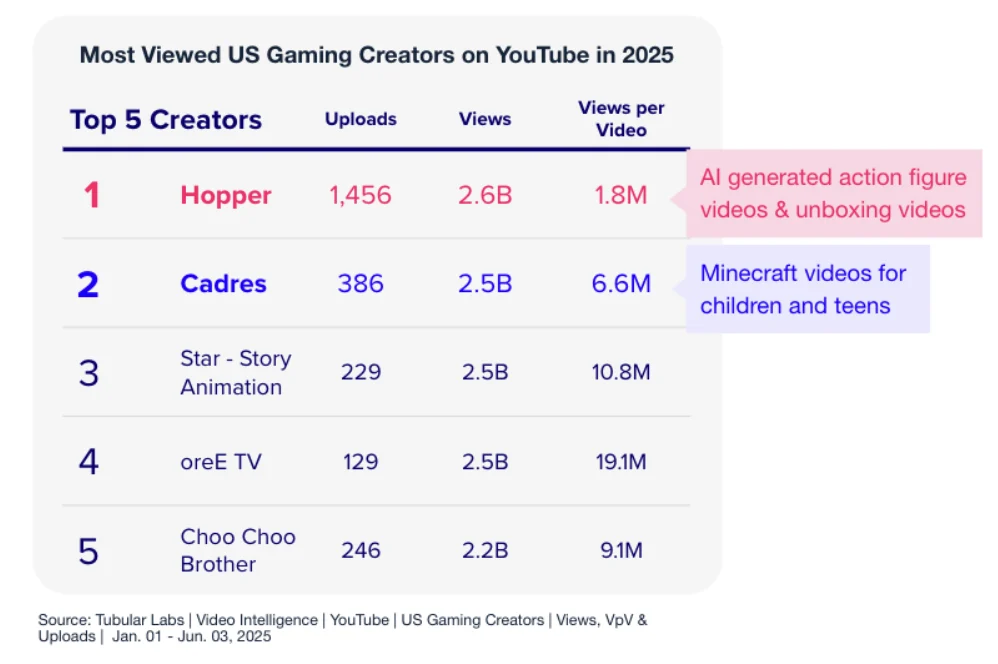
In the gaming sector, the debate over AI-assisted content vs. human-led storytelling has reached a boiling point. The Tubular Labs data from H1 2025 provides a fascinating, data-driven look at the trade-offs involved in high-frequency posting.
The analysis of top US gaming creators reveals a stark dichotomy. Some creators, such as Hopper, have leaned heavily into AI-assisted production to maximize output. By utilizing automation, these creators can maintain a relentless upload schedule. While this strategy successfully drives high overall view counts, it comes at a significant cost: individual video performance.
The data suggests that while AI can help a creator win the "volume game," it often struggles to build the deep, emotional connection required for high engagement per video. When comparing AI-reliant creators to those who produce human-centric, high-touch content, the difference in "views per video" is profound. If a high-volume AI creator were to match the engagement-per-video rate of their human-centric competitors, their reach would theoretically expand by billions.
The lesson for creators is clear: volume is a tool, not a strategy. If a creator opts for an AI-heavy workflow, they must accept that they will need to post significantly more often to compensate for the lower per-video engagement. Conversely, creators who invest in human-produced, high-quality storytelling can afford a more measured, less frequent posting schedule. In the first half of 2025, the most successful creators—those who managed to dominate both in total views and views-per-video—maintained a high bar, averaging four uploads per day. This "sweet spot" suggests that there is a threshold of frequency that, when combined with quality, creates a virtuous cycle of algorithmic preference and audience loyalty.
Implications for the Future of the Creator Economy
The insights shared by Nicholson at VidCon signal a maturation of the creator economy. We are moving away from the "Wild West" era of social video, where simply being present was enough to build an audience. Today, success is predicated on a scientific approach to audience data.
For brands, the implications are three-fold:
- Device-Contextualization: Audit your content library to ensure you have specific assets optimized for the lean-back experience of Connected TV.
- Radical Collaboration: Challenge your marketing teams to look for partners outside of your immediate industry. The most engaged audiences are found where your brand is least expected.
- The Quality/Quantity Balancing Act: Do not fall into the trap of mindless automation. If you use AI to scale, ensure your core output retains the human element that keeps viewers returning.
As the industry moves into the second half of 2025, these "hidden" trends are becoming the new baseline for market leaders. Brands that fail to adapt their strategies to these behavioral shifts risk becoming invisible in an increasingly crowded feed.

Conclusion: Turning Data into Action
The data provided by Tubular Labs serves as a roadmap for navigating the complexities of modern social video. By analyzing device-specific viewing habits, embracing cross-category partnerships, and finding the right balance between AI-assisted production and human creativity, stakeholders can ensure their content remains relevant and impactful.
The creator economy is not dying; it is refining itself. The creators and brands that win will be those that treat their data with the same level of care as their creative process. For those looking to dive deeper into the specific metrics and trends discussed at VidCon, the full report is available via Tubular Labs’ official research portal.
As we look toward 2026, the question is no longer whether you are producing content—it is whether that content is aligned with the sophisticated, fragmented, and rapidly evolving habits of the global digital audience.
