
Beyond the Contact List: How Modern Agencies Are Choosing the Right CRM for 2026
"Pick a CRM and the rest will follow." It is a seductive mantra for agency owners, yet it often leads to a hollow reality: onboarding bottlenecks, fractured pipelines, and critical client communications lost in the digital ether. For agencies, the true cost of a sub-optimal Customer Relationship Management (CRM) system isn’t the monthly subscription fee—it’s the "hidden tax" of context switching, data inconsistency, and the slow, manual handoffs that drain team morale and client trust.
In 2026, the agency landscape is more complex than ever. To thrive, agencies must stop viewing the CRM as a glorified rolodex and start treating it as the central nervous system of their operations. This guide explores how to evaluate, select, and integrate the right CRM to ensure your agency scales without sacrificing the quality of your client delivery.

The Strategic Role of the CRM in Agency Operations
"CRM" is an abstract term until it is mapped to the daily reality of agency life. At its core, an agency CRM must solve five fundamental operational challenges:
- Standardizing Client Onboarding: Capturing leads from web forms is only the beginning. A robust CRM should automate the qualification process, move new clients through a standardized pipeline, and trigger the necessary backend workflows—access requests, asset collection, and kickoff scheduling—without human intervention.
- Bridging the Sales-to-Delivery Gap: The most dangerous point in the agency lifecycle is the handoff. By keeping scopes, timelines, and client expectations in a centralized CRM, you eliminate the reliance on fragmented email threads and ephemeral Slack messages.
- Real-Time Revenue and Capacity Tracking: Leaders need more than just "deal counts." They need to know which service lines are growing, which clients present a churn risk, and where team bandwidth is currently stretched.
- Reporting for QBRs and Renewals: Instead of spending hours every quarter manually scraping data for Quarterly Business Reviews, a mature CRM allows you to pull performance and activity data into reusable dashboards, turning reporting into a simple, data-backed conversation.
- Automating Retention: Rather than relying on a project manager to "remember" a renewal date, modern CRMs trigger automated reminders and personalized nurture sequences, ensuring no contract lapses due to oversight.
2026 Agency CRM Landscape: A Comparative Overview
When selecting a tool, agencies must stress-test platforms against their actual workflows. Below is a snapshot of the current market leaders tailored for agency environments.
| CRM | Best For | Key Strengths |
|---|---|---|
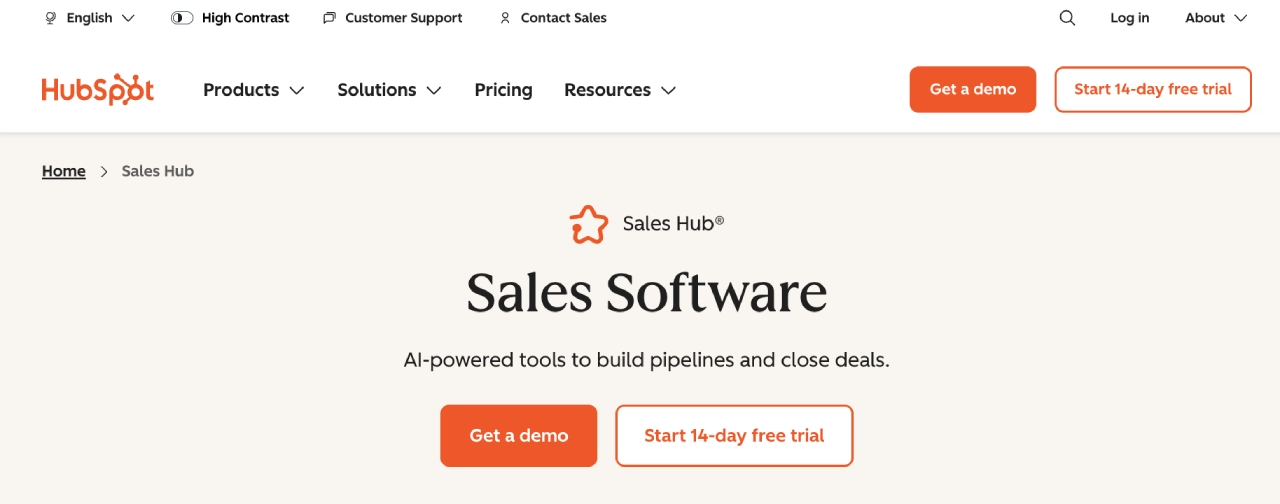
| HubSpot Sales Hub | Scaling Multi-Service Agencies | Deep automation, robust reporting, native email tools. |
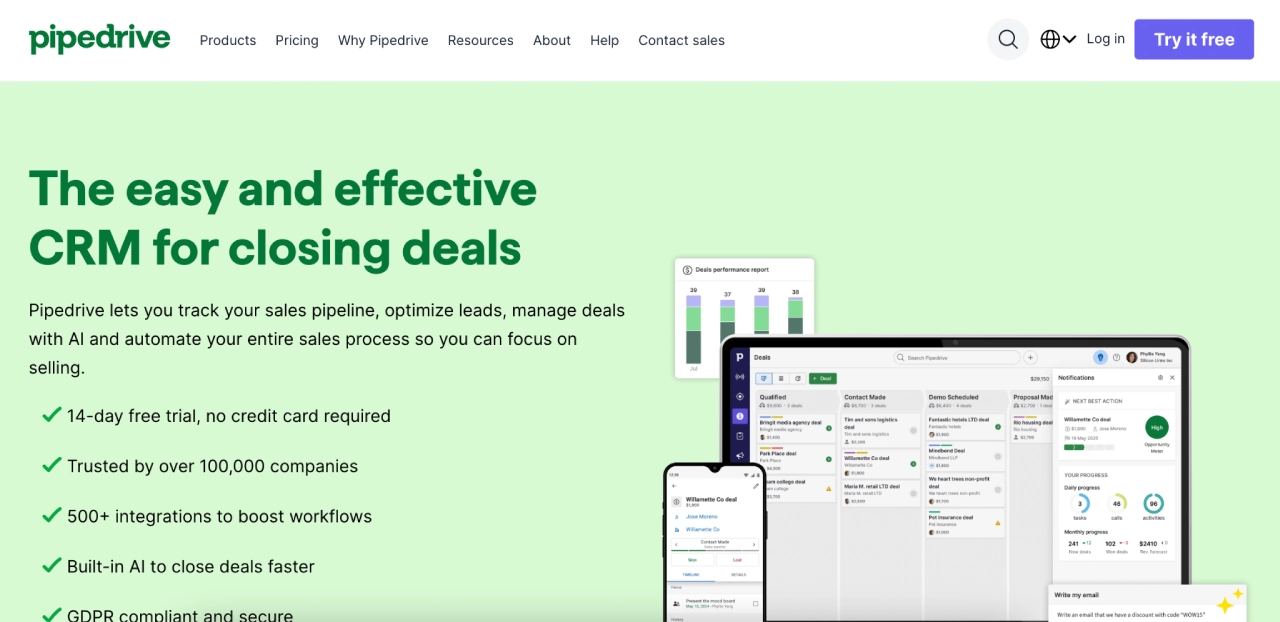
| Pipedrive | Sales-Centric Teams | Intuitive visual pipelines, minimal configuration friction. |
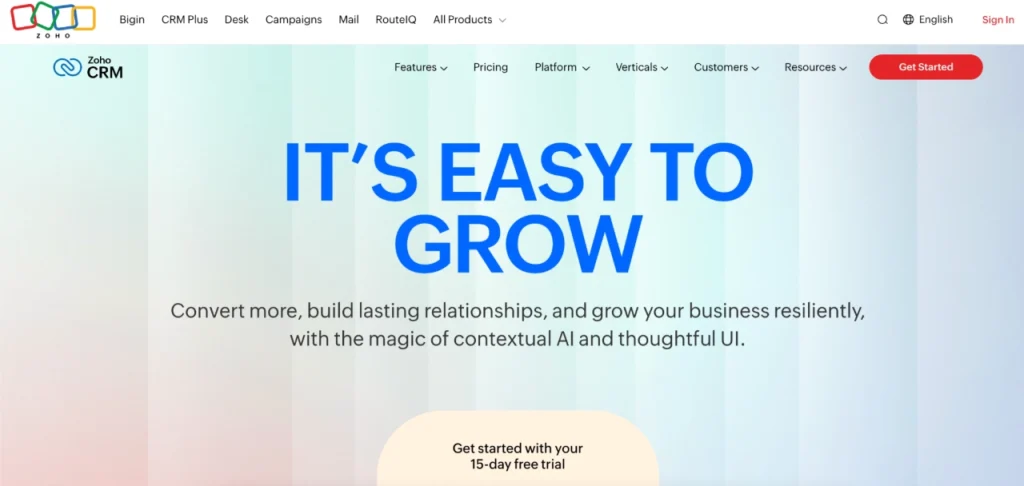
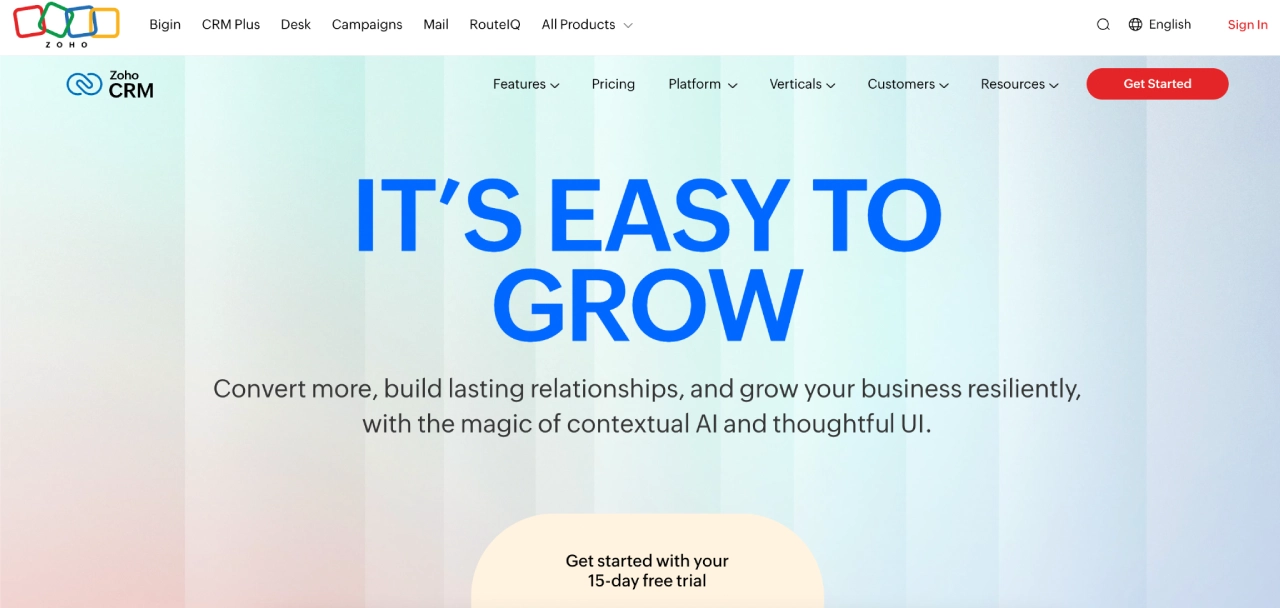
| Zoho CRM | Value & Customization | Highly modular, AI-driven insights (Zia), budget-friendly. |
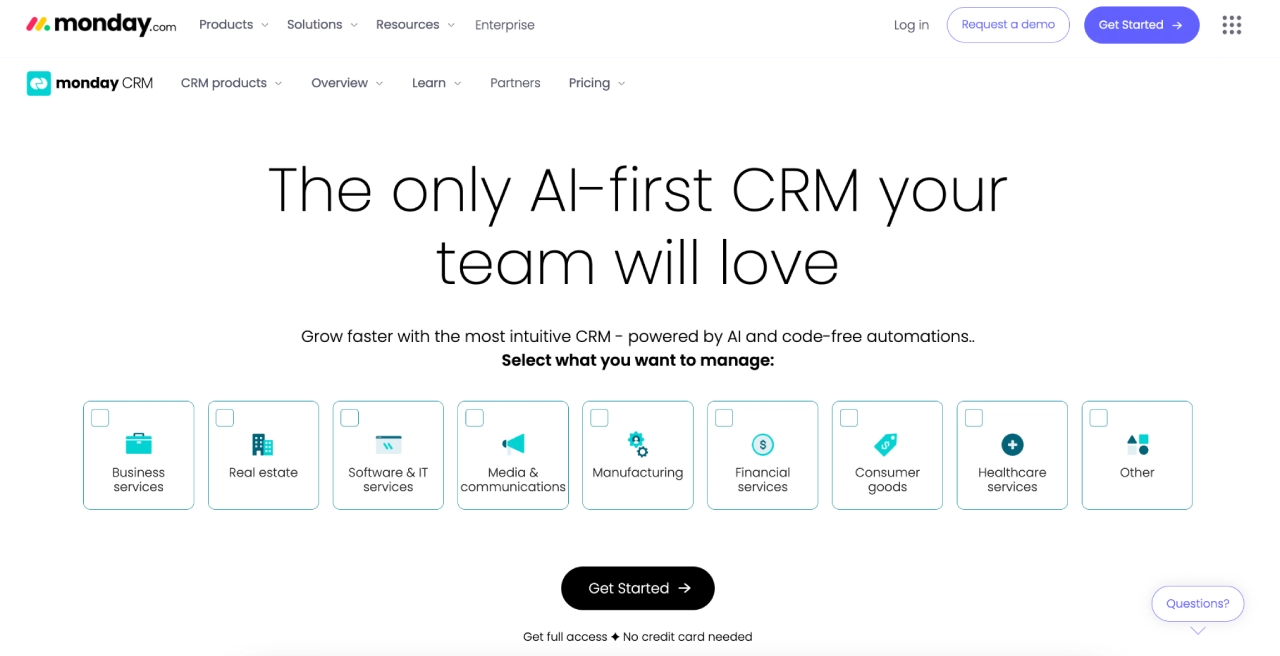
| monday sales CRM | Work + CRM Hybrid | Unified workspace for sales, ops, and delivery. |
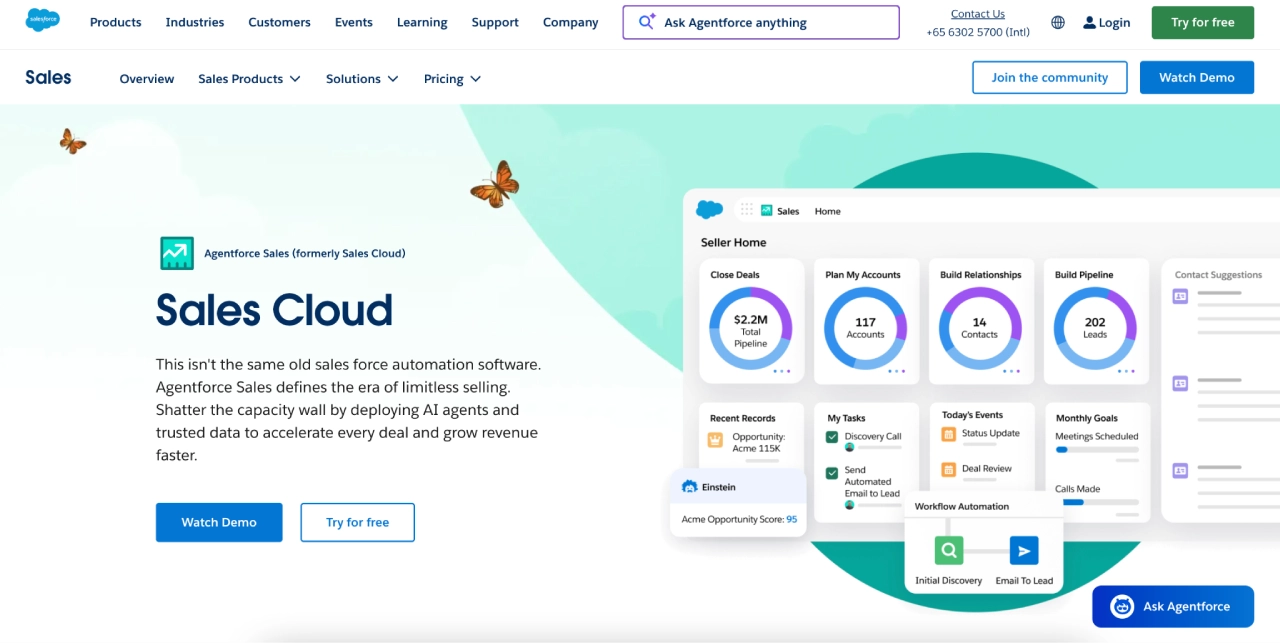
| Salesforce | Enterprise Operations | Unlimited scalability, complex governance, and custom objects. |
| Productive.io | Full Agency OS | Direct integration of CRM, time tracking, and profitability. |
Evaluating the "4C" Model for Agency Success
Most CRMs look identical on a demo screen. To avoid the "implementation trap," we recommend evaluating every candidate against the 4C Model:
1. Clarity
Can your team understand the status of a deal at a glance? An agency CRM should offer role-specific views. A creative lead needs to see project stages, while a salesperson needs to see contract status. If the interface is cluttered, it will suffer from low adoption rates.
2. Collaboration
Does the tool support teamwork? Look for granular permissions. You need to control what internal staff, freelancers, and clients can see. Features like @mentions and standardized tagging (e.g., #AtRisk, #UpsellOpportunity) are non-negotiable for distributed teams.
3. Customization
Does the CRM force you to adapt to its logic, or can it adapt to yours? The best tools allow you to build custom modules that mirror your unique service lines, whether that’s SEO, paid media, or full-stack development.
4. Connectivity
A CRM is only as strong as its integrations. If your CRM cannot seamlessly sync with your email platform (like Campaign Monitor), your accounting software, and your project management tools, you are setting yourself up for "data drift"—where your CRM says one thing and your bank account says another.
The Strategic Power of Pairing: CRM + Campaign Monitor
A CRM acts as the "Source of Truth," but for agencies, the "Source of Action" is often the communication stack. Pairing a robust CRM with Campaign Monitor allows agencies to deliver high-touch communication at scale.
The Playbook: Integrating CRM with Email Journeys
By using your CRM to track stages and triggers, you can feed data directly into Campaign Monitor to automate the client journey:
- Onboarding: When a deal moves to "Closed-Won," trigger a welcome sequence in Campaign Monitor that educates the client on your processes.
- Weekly Status: Instead of manually writing status emails, use CRM fields to update health metrics and trigger a consistent, branded template through Campaign Monitor.
- Renewal Nudges: When a contract is 60 days from expiration, trigger a personalized nurture sequence that highlights the agency’s value, reducing the likelihood of churn.
As Stuart S., an agency owner and digital strategist, notes: "We manage 40+ clients within Campaign Monitor… The Canvas builder automatically resolves most of our mobile display issues, and their support is fantastic—we always get an answer within an hour."
Red Flags: When to Walk Away
Not all CRMs are built for the agency model. Be wary of these "Red Flag" scenarios during the demo phase:
- The "One-Way" Integration Trap: If a tool requires manual CSV exports or relies on fragile, third-party middleware to connect to your core stack, avoid it. You need robust, native two-way API syncs.
- Volume Caps: Many CRMs look cheap at the entry tier but hit "hard walls" on contact counts or automation triggers. These caps are often designed to force a painful migration once you are already dependent on the platform.
- The "All-in-One" Illusion: Beware of platforms that promise to replace your CRM, project manager, billing software, and website builder. If your team finds the modules clunky, adoption will fail, and you will be left paying for a bloated system that no one uses.
- Opaque Pricing: If you cannot calculate your costs for seats, add-ons, and onboarding support within 15 minutes, the total cost of ownership will likely spiral once you are locked into a contract.
When to Stay the Course
Switching CRMs is a high-stakes operation. Sometimes, the problem isn’t the tool—it’s the process. You should not switch CRMs if:

- Your team hasn’t been trained on the current system’s full capabilities.
- The data in your current system is dirty (migrating bad data just creates "new" bad data in a "new" system).
- Your current CRM lacks integrations that you have never actually tried to build.
Conclusion: Building a Scalable Future
Choosing the right CRM is an investment in your agency’s future. It is about creating an environment where the administrative burden is minimized so your team can focus on what they do best: delivering creative, strategic work.
Follow these four steps to finalize your decision:
- Audit your current workflow: Identify the exact moments where manual work or data silos are causing friction.
- Score with the 4C Model: Rank your top three candidates on Clarity, Collaboration, Customization, and Connectivity.
- Test the Handoff: Run a mock "Sales to Delivery" process during the trial period. If it feels clunky, it will feel disastrous when under a deadline.
- Integrate for Scale: Connect your chosen CRM to your communication stack—such as Campaign Monitor—to ensure that your client touchpoints are as organized as your internal pipeline.
When your CRM handles the operational heavy lifting and your communication tools handle the client experience, your agency achieves a rare state: predictable growth. The result is a business that doesn’t just manage more clients, but manages them better, faster, and with more consistent results.
