
The New Digital Frontier: Why LLM Ranking Is the Next Evolution of SEO
The way the world accesses information is undergoing a tectonic shift. For over two decades, the "search journey" followed a predictable path: a user enters a query into Google, scans a list of ten blue links, clicks a website, and conducts their own research. Today, that model is being dismantled by Large Language Models (LLMs).
If Google Search was the digital map, LLMs like ChatGPT, Claude, and Gemini have become the personal tour guide. They don’t just provide links; they synthesize, recommend, and conclude—often making the purchase decision for the user before they ever visit a brand’s website. For marketers and business owners, this is no longer a "tech buzzword." It is the new battleground for digital visibility. If your brand is not appearing in the AI-generated answers, you are effectively invisible to a growing segment of high-intent consumers.
What Are LLM Rankings?
At its core, "LLM Ranking" can be described as SEO for AI Assistants.
Traditional SEO focuses on optimizing content to rank on a Search Engine Results Page (SERP). Conversely, LLM ranking focuses on ensuring your brand is cited, recommended, or acknowledged within the conversational output of AI models. When a user asks, "What is the best CRM for a small startup?" or "Which software provider has the best security features?", the AI performs a synthesis of its training data and real-time search capabilities to provide an answer.
If your competitor is mentioned in that response and you are not, you haven’t just lost a click—you have lost a highly qualified lead. Because AI answers are perceived as authoritative and objective, they hold immense persuasive power.
A Brief Chronology: The Shift from Links to Answers
The transition to LLM-centric discovery has been rapid:
- 2005–2015: The Era of Organic Dominance. Brands focused on keyword stuffing, backlink building, and technical SEO to dominate the Google SERP.
- 2015–2022: The Rise of Featured Snippets. Google began pulling direct answers to the top of results. This was the first warning shot that users preferred "answers" over "links."
- Late 2022: The ChatGPT Explosion. The launch of ChatGPT signaled a paradigm shift. Users discovered they could bypass search engines entirely, asking questions in natural language and receiving human-like responses.
- 2023–2024: The Integration Phase. Google introduced "AI Overviews," while competitors like Perplexity and Claude gained massive market share by offering cleaner, citation-heavy interfaces.
- 2025 and Beyond: The Age of AIO. We are now entering the era of AI Optimization (AIO). Businesses are beginning to recognize that ranking in an AI model requires a fundamentally different strategy than traditional web crawling.
Why You Must Care: The Implications for Business
Ignoring LLM rankings is akin to ignoring the internet in 2005. The consequences of inaction are threefold:
- Diminished Brand Authority: If an AI consistently suggests your competitors when asked about your industry, your brand loses its perceived status as a market leader.
- Loss of "Zero-Click" Traffic: As users get their answers directly from the AI, they are less likely to visit websites. You must capture the user’s attention within the chat.
- Customer Acquisition Cost (CAC) Inflation: When you lose visibility in AI, you are forced to rely on expensive paid ads to win back the traffic you otherwise would have captured organically.
The "Big Four" Ecosystem
While there are many models, four platforms dominate the current landscape. Because you cannot predict which tool your customer uses, a cross-platform strategy is essential.
1. OpenAI (ChatGPT)
The industry standard. Its ability to provide comprehensive, nuanced answers makes it a primary source for both professional and consumer research.
2. Google Gemini
With its deep integration into the Google ecosystem, Gemini acts as a bridge between traditional search and generative answers. It is arguably the most critical for brands already dependent on Google traffic.
3. Anthropic Claude
Favored for its sophisticated reasoning and "human-like" writing style, Claude is increasingly used by professionals for deep-dive research and data analysis.
4. Perplexity
Often called the "Google killer," Perplexity focuses on real-time search and citation. It is the most transparent of the platforms, clearly showing the sources it used to formulate an answer.
The Necessity of API-Driven Monitoring
One of the biggest misconceptions in marketing is that you can track LLM rankings by simply typing into the chat box. This is insufficient. LLM behavior is dynamic; it is affected by temperature settings, system prompts, and training data updates.
To get a reliable snapshot, you must use API access. By querying these models through their official APIs, you can automate thousands of tests, normalize the results, and track trends over time. API access allows for:
- Consistency: Removing the "human element" of browser history and personalization.
- Scalability: Running thousands of keyword variations across multiple models simultaneously.
- Actionable Data: Creating a database of results that can be analyzed for sentiment and frequency.
The Process: How to Track Your AI Visibility
Since there is no "LLM Search Console," you must build your own infrastructure:
- Define Your Query Set: Create a list of high-intent keywords and "comparison" questions (e.g., "Brand A vs. Brand B").
- Execute via API: Use a tool or script to feed these queries to ChatGPT, Gemini, Claude, and Perplexity.
- Capture the Output: Save the full response in a structured format (JSON or CSV).
- Sentiment and Mention Analysis: Determine if your brand is mentioned, and if so, what the "vibe" is. Are you being framed as a budget option, a premium leader, or an outdated legacy player?
- Benchmarking: Compare your results against your top three competitors.
Shaping the Narrative: The Importance of Prompts
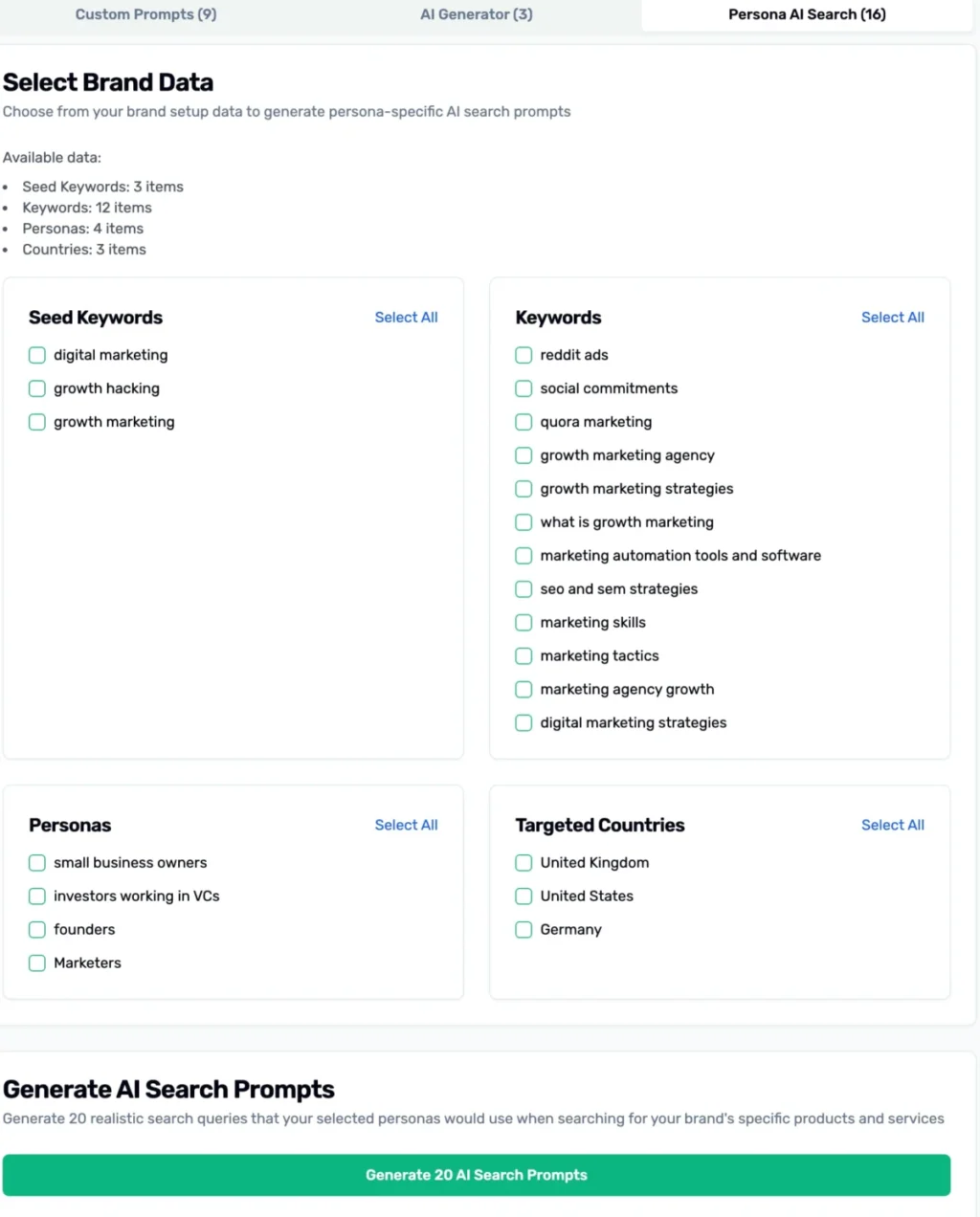
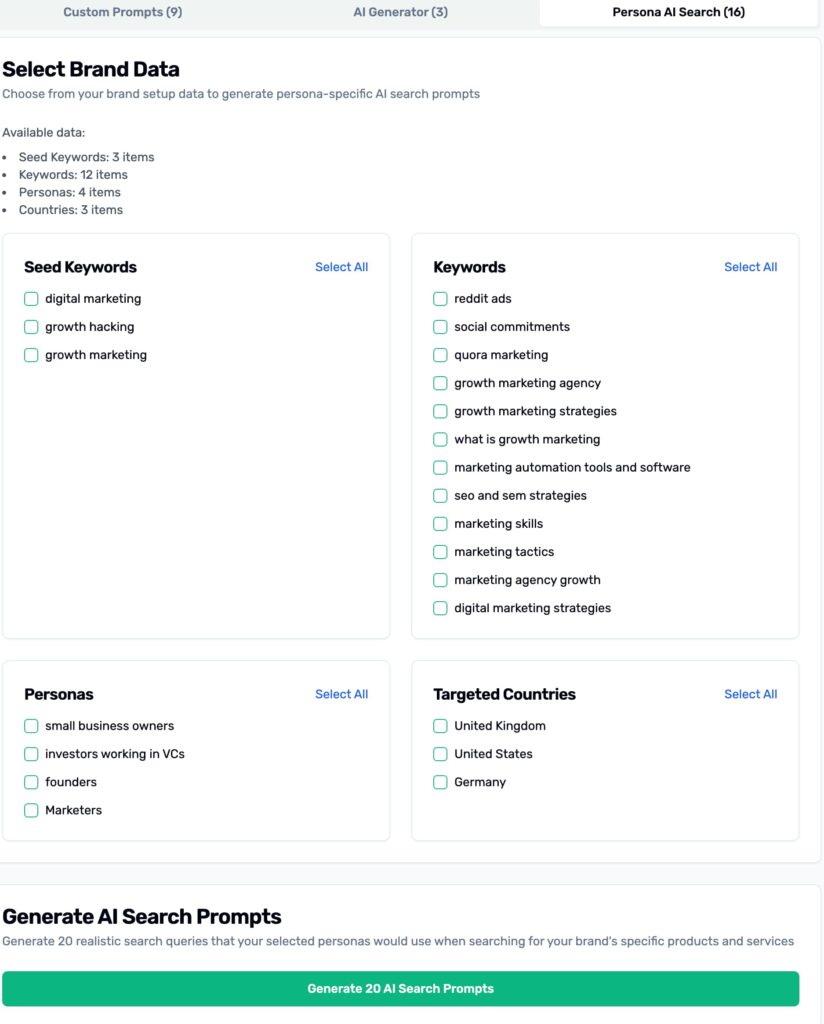
The quality of your data is entirely dependent on the quality of your prompts. To understand your true visibility, you must mimic the way users search:
- Transactional: "Where can I buy [Product]?"
- Comparison: "Compare [Brand] and [Competitor]."
- Informational/Problem-Solving: "How do I fix [Problem]?"
- Niche/Long-tail: "Best [Product] for [Specific Industry]."
Pro Tip: Even if you think "no one would search for that," test it anyway. AI models often make connections between niche problems and brand solutions. Finding these "hidden" mentions can reveal early warning signs of a competitor gaining ground in a specific market segment.
The Economics of AIO: Is It Worth the Cost?
Tracking LLM rankings is not free. It involves:
- API Usage Costs: Every query sent to a model incurs a fee.
- Infrastructure Costs: Storing and indexing millions of tokens of data requires cloud storage.
- Human Analysis: You need skilled personnel (or sophisticated AI tools) to interpret the sentiment and formulate a response strategy.
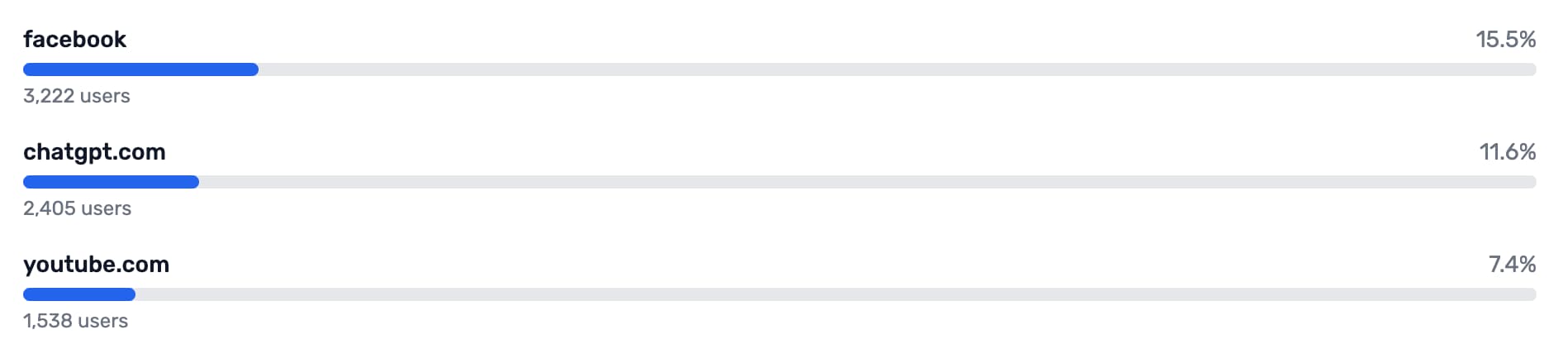
However, the ROI is high. Current data suggests that 10–13% of total inbound traffic is already being influenced by AI. More importantly, this traffic is high-intent. A user asking an AI for a recommendation is further along in the sales funnel than a user clicking a random link on a search page.
What Comes After the Analysis?
Once you have identified your gaps, the work of AI Optimization (AIO) begins. Unlike SEO, which focuses on metadata and link building, AIO focuses on Brand Representation and Knowledge Graphs.
To influence an LLM, you must:
- Improve Your Digital Footprint: Ensure your brand is cited in high-authority, reputable publications that AI models use as training data.
- Optimize Your Core Website Content: Provide clear, concise answers to questions in your own documentation. Use structured data that makes it easy for AI to "read" your value proposition.
- Engage in "Brand Narrative" Management: If an LLM consistently describes you as "expensive," you need to update your public-facing copy to emphasize value, ROI, or unique features that justify your pricing.
Conclusion: The New Battleground
We are witnessing the end of the "ten blue links" era. The future of discovery is conversational, synthesized, and instantaneous. Brands that recognize this shift—and begin actively tracking their visibility within the black box of LLMs—will secure their place in the next generation of commerce.
Those who wait for a "Search Console for AI" to be built by Google or OpenAI will find themselves at a severe disadvantage. The tools to monitor this landscape exist today; the brands that master them will own the conversation of tomorrow. The question is no longer "How do I rank on Google?" but "What does the AI say when a customer asks about my brand?"
Your answer to that question determines your future.
