
The Innovation Engine: How Industry Titans Gamify Growth to Drive Bottom-Up Transformation
In the modern corporate landscape, the concept of "growth" has evolved from a mere financial metric into a foundational operational philosophy. A successful growth operation functions as a bridge, connecting the visionary directives of the C-suite with the tactical ingenuity of the front-line workforce. When implemented effectively, growth initiatives incite innovation from the bottom up: the associate on the warehouse floor or the developer in a cubicle gains the agency to propose hypotheses, while the growth team operationalizes these ideas through rigorous testing. Executives remain the ultimate decision-makers, but they do so with a newfound clarity, fueled by data-driven insights rather than gut instinct.
Yet, bridging the gap between companies that attempt growth and those that possess growth in their DNA remains one of the most formidable challenges in management. True success rarely happens in isolation; it requires a top-down mandate where high-level leadership is educated on the methodology, middle management aligns their strategies to support it, and growth teams execute the process. To span this chasm, many industry giants are moving beyond standard KPIs, turning to "gamification" and cultural programming to secure company-wide commitment.
The Chronology of Cultivated Innovation
The history of corporate innovation is marked by deliberate attempts to decentralize creativity. As early as the mid-20th century, companies like 3M recognized that innovation could not be dictated by a central R&D lab alone. This shift gained momentum through the 1990s and 2000s, as companies like Amazon and Google institutionalized "permission to experiment."
This transition—from a rigid, hierarchical command structure to a fluid, experimental model—represents a significant cultural pivot. It requires the removal of the fear of failure, transforming the workplace into a laboratory where the cost of a "failed" experiment is viewed as the price of a future breakthrough.
Amazon’s "Just Do It" Awards: Rewarding the Bias for Action
The story of the "Just Do It" award is now part of corporate legend. In 1998, a customer service associate at Amazon found themselves staring at a backlog of 250 open tickets. Faced with an insurmountable queue, they proposed a radical challenge: if anyone could clear all 250 inquiries within 24 hours, they would receive a $200 prize.
The result was an immediate, successful clearing of the queue. Jeff Bezos, recognizing the cultural potential of this event, deconstructed the success into two core pillars: innovation and a "bias for action." This spawned the "Just Do It" award.

Implications of the Award
The award is not merely a bonus; it is a prestigious recognition bestowed only twice a year across a workforce now exceeding 600,000 employees. By having Bezos personally grant the award, Amazon reinforces the message that innovation is not a peripheral activity—it is the primary duty of every employee. It signals that even the smallest operational fix can be celebrated at the highest level of the organization, provided it demonstrates initiative.
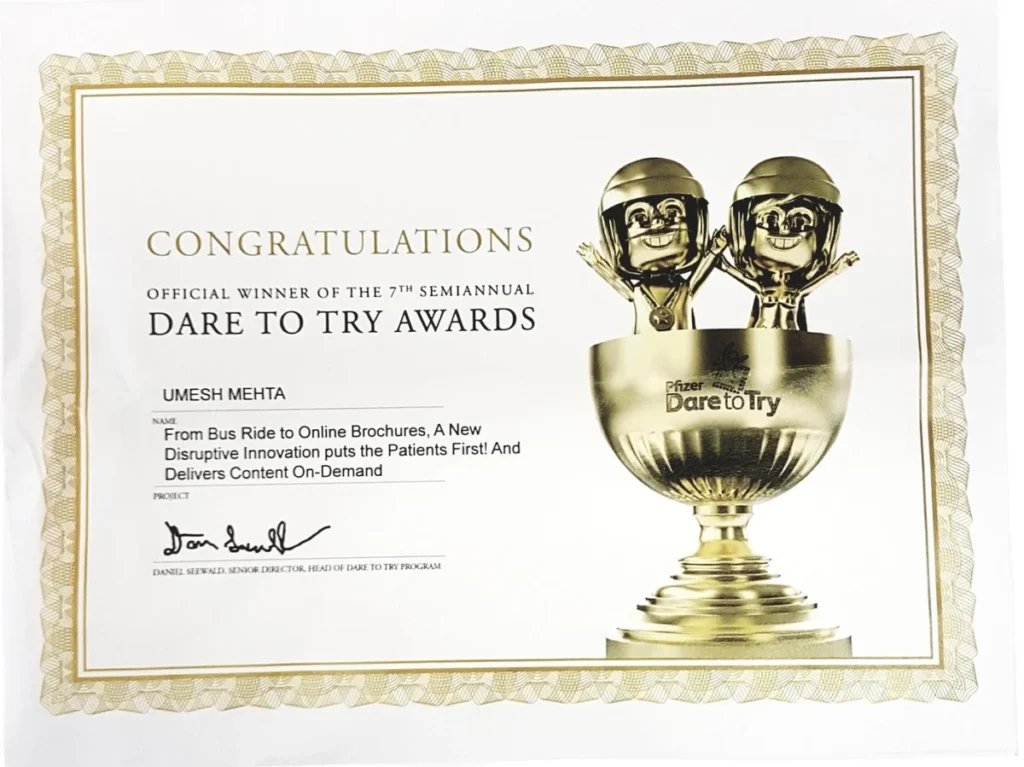
Pfizer’s "Dare to Try": Pharma’s Gamble on Experimentation
For a multinational pharmaceutical corporation, the environment is inherently risk-averse. Compliance, regulatory hurdles, and extreme capital intensity usually stifle radical experimentation. However, a decade ago, Pfizer launched "Dare to Try," a program designed to normalize failure as a necessary precursor to medical and operational breakthroughs.
The Mechanism of Change
"Dare to Try" is less of a standard corporate program and more of a cultural movement. Pfizer utilizes a network of self-nominated "Champions"—employees who act as evangelists for innovation. These champions facilitate training sessions and help colleagues "fail freely but inexpensively."
By providing the infrastructure to test ideas in a sandbox environment, Pfizer has successfully decoupled the concept of "failure" from the concept of "incompetence." This has allowed the company to pivot quickly in response to shifting global health needs, ensuring that their internal processes remain as agile as their scientific research.
3M: The 30% Rule and the Culture of Persistence
3M remains the gold standard for long-term, sustained innovation. Often cited for their contribution to everything from adhesives to advanced medical materials, their ability to remain relevant in commoditized markets is rooted in a specific, measurable discipline: the "30% Rule."
Sustaining Innovation via Data
3M mandates that 30% of each division’s total revenue must come from products introduced within the last four years. This creates a perpetual state of "constructive tension." It forces divisions to innovate not because it is "nice to do," but because the business model demands it for survival.
Furthermore, 3M’s reward system acknowledges that innovation is a process of persistence. They utilize a variety of internal fellowships and grants that allow employees to pursue projects that fall outside their core job descriptions, effectively turning their entire employee base into a decentralized innovation engine.
Google’s 20% Project: The Architecture of Creativity
Perhaps the most famous iteration of the "innovation time" model is Google’s 20% Project. Built upon the foundation of 3M’s earlier concepts, Google formalized the idea that employees should spend 20% of their paid work time pursuing side projects.
The Products of Autonomy
This policy was not merely an act of corporate benevolence; it was a strategic investment. The results speak for themselves:
- Gmail: Originally an internal experiment to improve search and storage.
- Google News: Born from the desire to aggregate information more effectively.
- AdSense: An effort to monetize the long tail of the web.
These products, which now represent multi-billion dollar pillars of the company’s revenue, were all products of this "20% time." By granting employees the autonomy to explore, Google ensured that innovation was not restricted to the top of the pyramid but was bubbling up from the engineers who understood the platform’s limitations and possibilities best.
Supporting Data: Why Gamification Works
The effectiveness of these programs is not anecdotal; it is rooted in behavioral psychology. According to research on organizational growth, companies that foster a culture of experimentation see, on average, a 20-30% higher success rate in new product launches compared to their more rigid competitors.
Furthermore, data suggests that employees who feel they have the agency to influence their work environment report significantly higher levels of job satisfaction and retention. In a competitive labor market, "innovation autonomy" acts as a non-monetary incentive that attracts high-caliber talent.

Official Responses and Strategic Shifts
Leadership experts note that these initiatives are shifting the definition of the "Growth Manager." In the past, a manager’s job was to minimize variance and maximize consistency. Today, a manager’s job is to manage the variance of experimentation.
As noted by industry observers, "The role of the leader has changed from being the ‘source of all ideas’ to the ‘architect of the environment where ideas flourish.’" This sentiment is echoed in the annual reports of companies like 3M and Pfizer, where "innovation culture" is now listed as a core business risk and a core business asset, necessitating the same level of reporting and scrutiny as financial liquidity.
Key Takeaways: Implementing a Growth Culture
As we synthesize these case studies, several critical lessons emerge for organizations looking to implement a growth-oriented culture:
- Top-Down Mandate, Bottom-Up Execution: Growth programs fail when they are treated as an "add-on." They must be integrated into the strategic goals of the company by leadership, while the actual testing should be delegated to those closest to the product or the customer.
- Gamification Creates Momentum: Whether through awards (Amazon), branding (Pfizer), or time-allocation rules (3M/Google), making innovation visible and rewarding keeps the initiative at the top of employees’ minds.
- Redefine Failure: Organizations must explicitly reward the learning gained from a failed experiment. If the cost of failure is social or professional shame, innovation will cease. If the cost of failure is the cost of the test, innovation will thrive.
- Measurement is Mandatory: Just as 3M measures revenue from new products, growth teams must measure the velocity and the insights gained from their tests. What gets measured gets managed; what gets rewarded gets repeated.
In conclusion, the gap between a standard company and a "growth-native" company is the presence of a deliberate, gamified, and supported culture of experimentation. By empowering the base of the pyramid to propose hypotheses and by providing the executive support to test them, companies can transform from static organizations into dynamic, evolving engines of innovation.
