
The Digital Piste: Decoding the Social Video Trends Defining the 2026 Milano-Cortina Olympic Games
As the global sporting community sets its sights on the Italian Alps for the 2026 Olympic Winter Games in Milano-Cortina, the traditional landscape of sports viewership is undergoing a seismic shift. While live television remains the bedrock of the Olympic experience, a secondary, highly engaged, and decentralized digital economy—powered by social video—is already dictating the narratives that will define the upcoming Games.
Data from 2025 reveals that the "Olympic effect" is no longer confined to the two-week event window. Instead, a year-long cycle of content creation, influencer participation, and behind-the-scenes storytelling is priming global audiences. For publishers, athletes, and brands, the question is no longer just about who will win the gold, but which sports will win the digital attention war.
The Foundation: Why 2025 Data Predicts a Digital Winter Surge
Olympic years historically act as a tide that lifts all boats, drawing casual observers into the orbit of niche winter sports. However, the lead-up to the Milano-Cortina Games suggests that the "breakout" winners are not being chosen by broadcasters, but by the algorithmic preferences of global social media users.
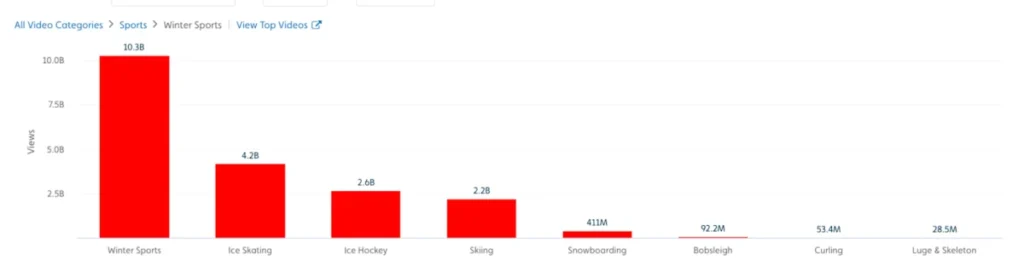
According to comprehensive viewership analytics provided by Tubular Labs, 2025 served as a massive rehearsal for the 2026 Winter Games. While the events themselves are technically "ice-cold," the digital heat surrounding them has been intense. The data indicates that audience interest is increasingly bifurcated: there is a high-volume demand for aesthetic, high-skill disciplines like figure skating, and a high-velocity demand for extreme, adrenaline-fueled sports like freestyle skiing and bobsledding.
Figure Skating: The Aesthetic Powerhouse of Digital Engagement
Ice skating has cemented its status as the undisputed heavyweight of winter sports content. In 2025 alone, ice skating videos generated a staggering 4.2 billion views across major social platforms. To put this in perspective, this figure dwarfs the reach of almost every other winter sport, signaling that figure skating occupies a unique cultural space that transcends traditional sports fandom.
The Anatomy of Engagement
Figure skating’s dominance is driven by a unique trifecta: technical prowess, high-stakes drama, and an undeniable aesthetic appeal. The data confirms this, with figure skating alone accounting for 2.2 billion of those 4.2 billion views, resulting in an impressive 36.8 million total engagements.
For content creators, figure skating represents a "gateway" sport. It is one of the few athletic disciplines where the intersection of sports, high fashion, hair, and beauty content creates a massive, cross-pollinated audience. Beauty creators are increasingly leveraging the glitter, performance makeup, and intricate costuming of skaters to create "Get Ready With Me" (GRWM) content that reaches viewers who might otherwise never watch an athletic competition.
Furthermore, the surge in "how-to" content—teaching the fundamentals of blade maintenance, basic footwork, and balance—has democratized the sport. Even in regions without natural ice rinks, the digital "learn to skate" movement is fostering a global appreciation for the mechanics of the sport, ensuring that when the Milano-Cortina Games begin, the audience will have a higher baseline of technical understanding than in previous cycles.
The Skiing Ecosystem: From Niche to Mainstream
With over 20 distinct skiing disciplines scheduled for the 2026 Games, the sheer variety of events provides a massive surface area for content creators to explore. In 2025, skiing content on YouTube amassed a monumental 2.2 billion views, proving that the sport is no longer just for enthusiasts.
The Velocity of Ski Jumping and Freestyle
While alpine skiing and freestyle skiing combined to make up roughly one-third of the total viewership, the "long tail" of the sport tells a more interesting story. Ski jumping, despite having a lower volume of total video uploads, recorded a staggering 426,000 views per video. This indicates an incredibly high "stickiness"—when a viewer finds a ski jumping video, they are far more likely to watch it to completion and share it.
The success of creators like Anthony Robert, who has effectively utilized the skiing lifestyle as a content lens, offers a blueprint for the future of sports marketing. Robert’s ability to maintain high viewership throughout the summer months demonstrates that the lifestyle of the skier is just as marketable as the competition of the skier. By focusing on the gear, the travel, and the training, brands are finding that they can sustain interest year-round, effectively decoupling the sport from the seasonal constraints of winter.
Niche Narratives: The Bobsled Effect and Behind-the-Scenes Storytelling
Perhaps the most compelling trend in the 2025 data is the rise of the "narrative-heavy" sport. Bobsledding, a sport famously elevated to pop-culture status by the 1993 film Cool Runnings, has found a new life through direct-to-consumer storytelling.
The Great Britain bobsled team has become a benchmark for this approach. By utilizing social video to document the grueling, often unglamorous process of training, the team has turned a niche, high-speed sport into a relatable human interest story. The data backs this strategy: bobsleigh content achieved 317,000 views per video throughout 2025. This proves that audiences are not just looking for the three minutes of action on the track; they are looking for the four years of discipline leading up to it.
This shift toward "humanizing" the athlete is a direct response to the democratization of media. When the audience feels they have a relationship with the athlete through behind-the-scenes content, the stakes of the Olympic event itself become significantly higher.
Chronology: The Road to Milano-Cortina
- Early 2025: Initial planning for Olympic content strategies; rise in educational "how-to" skating content.
- Summer 2025: Unexpected peak in skiing-related content, driven by lifestyle influencers and off-season training vlogs.
- Late 2025: Consolidation of influencer partnerships; brands begin finalizing athlete sponsorships for the 2026 cycle.
- Early 2026 (The Games): The expected "conversion" phase, where the massive digital interest built over the previous 18 months converts into record-breaking viewership for official Olympic broadcasts.
Official Responses and Strategic Implications
Industry experts and sports marketing agencies are increasingly advising clients to move away from "event-only" advertising. The data suggests that the "Olympic window" is effectively a year-long event.
"Brands that wait for the Opening Ceremony to begin their marketing campaigns are already too late," says one analyst familiar with the Tubular Labs report. "The audience has already decided who they are rooting for based on the training videos and personality-driven content they consumed six months prior."
For NBC and other rights holders, the challenge remains balancing exclusive broadcast rights with the vibrant, decentralized ecosystem of social media. The consensus is that social video does not cannibalize television viewership; rather, it acts as a massive funnel. By engaging with short-form content on platforms like TikTok and YouTube, viewers are primed to seek out the long-form, high-production-value coverage provided by official Olympic broadcasters.
Key Takeaways for Publishers and Brands
- Embrace the Off-Season: As seen with Anthony Robert’s skiing content, interest in winter sports is not confined to the winter months. Brands should invest in long-term, non-competitive content to build an audience before the Games begin.
- Cross-Category Potential: Sports are no longer silos. By leaning into the fashion, beauty, and travel aspects of sports like figure skating, creators can reach audiences that are typically invisible to traditional sports media.
- Humanize the Athlete: High-performance athletes are the best content creators. Behind-the-scenes access to training and personal struggles creates a deeper emotional investment that translates directly to viewership numbers.
- The Educational Pivot: "How-to" content is a powerful tool for growth. Demystifying complex sports like ski jumping or bobsledding lowers the barrier to entry for new fans and creates a more knowledgeable and loyal spectator base.
Conclusion: The Digital Podium
As we approach February 2026, the digital landscape of the Milano-Cortina Games is already taking shape. It is a landscape defined by high-skill aestheticism, narrative-driven extreme sports, and an audience that demands intimacy with the athletes. The viewership data from 2025 provides a clear roadmap: the winners of the next Olympics will be those who understood that the competition doesn’t start in Italy—it started on our screens a year ago.
For brands and creators, the message is clear: the digital piste is open, and the race for attention is well underway. Those who can synthesize the technical brilliance of winter sports with the personal, behind-the-scenes stories that social media users crave will find themselves on the digital podium when the Games conclude in 2026.
